
NEWS
Senate tinkers with Terrorism Act, outlaws payment of ransom to kidnappers

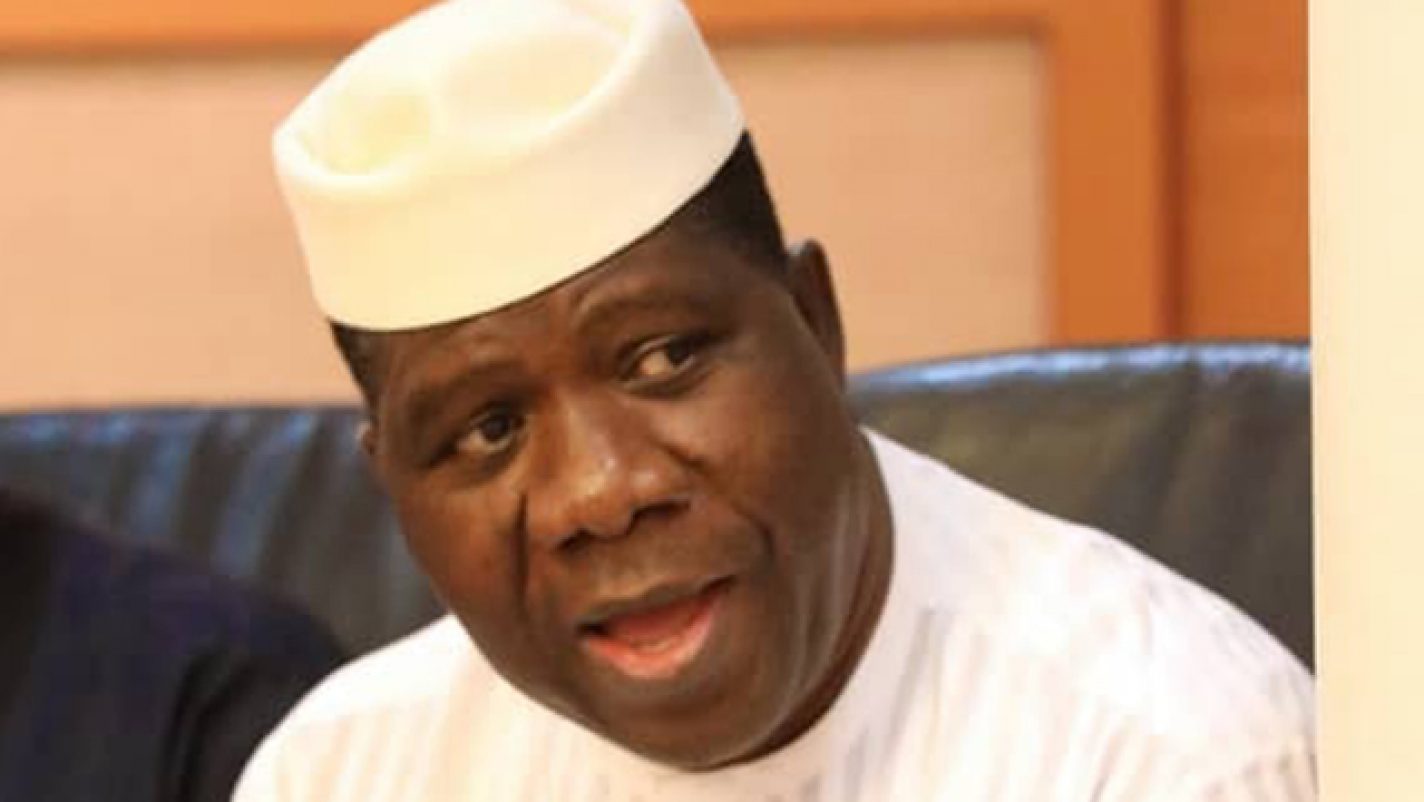
A bill seeking to amend the Terrorism (Prevention) Act, 2013, and prohibit the payment of ransom to kidnappers in Nigeria has been passed by the Senate on Wednesday.
The passage of the Terrorism (Prevention) Act 2013 (Amendment) Bill, 2022, came after the consideration of a report by the Committee on Judiciary, Human Rights, and Legal Matters.
The Committee’s Chairman, Senator Opeyemi Bamidele (APC, Ekiti Central), laid the report before consideration.
While presenting the report, he said the bill seeks to outlaw the payment of ransom to abductors, kidnappers, and terrorists for the release of any person who has been wrongfully confined, imprisoned, or kidnapped.
According to the lawmaker, “the overall import of this bill is to discourage the rising spate of kidnapping and abduction for ransom In Nigeria, which is fast spreading across the country”
He disclosed that in the memoranda presented to the Committee, a plethora of issues relating to the subject matter of terrorism and terrorism financing in line with global best practices were raised.
He assured that the amendment to the Terrorism Act would set standards and regulatory system intended to prevent terrorist groups from laundering money through the banking system and other financial networks.
He added that, “having policies in place to combat financing of terrorism will surely reduce or eliminate privacy and anonymity in financial and other sundry transactions as it relates to the subject in our society.”
He explained further that the need to comprehensively review the Terrorism Prevention Act arose from the unfavorable ratings of Financial Act Task Force (FATF) recommendations of Nigeria’s Mutual Evaluation Report and consequent placement of Nigeria in FATF’S International Cooperation and Review Group Process with its impending sanctions on Nigeria’s economy.
He stated that the National Task Force on improving Nigeria’s Anti-Money Laundering and Countering the Financing of Terrorism (AML/CFT) regime in Nigeria, a proposed improvement on the Act in order to address the deficiencies noted in its provisions so as to align with the required standard as obtainable in other jurisdictions.
He emphasized that the proposed repeal and enactment Bill was geared toward improving the effectiveness of countermeasures against terrorism, terrorism financing, and proliferation financing.
The lawmaker noted that the repeal is aimed at providing an adequate framework for improved international collaboration, inter-agency cooperation and freezing of terrorist funds/assets.
Read Also >> #EndSARS Panel Orders Police Commissioner’s Arrest
Bamidele said that “the passage of this Bill will save Nigeria from being included among countries in the Financial Action Task Force (FATF) Grey List with its attendant negative consequences, which might ultimately result to international sanctions that would affect the image of the country in the comity of nations.”
The Senate President, Ahmad Lawan, in his remarks after the bill was passed, said the bill would complement the federal government’s efforts in the fight against insecurity when signed into law by the President.
He said, “It is our belief here in the Senate, that this bill, by the time signed into an Act by Mr. President, will enhance the efforts of this government in the fight against terrorism, kidnapping, and other associated and related vices.
“This is one piece of legislation that can turn around not only the security situation in Nigeria but even the economic fortunes of our country.
“We have done so much as a government, in terms of infrastructural development across all parts of this country, but because the security situation is not the kind of situation that we all want, this tends to overshadow all the tremendous and massive developments in our country.
“I believe that the Executive will waste no time in signing this bill into law, and it is our hope that this additional piece of legislation will achieve the purpose for which it has been worked upon by the Senate, and, indeed, the National Assembly and, for the reason for which it would also be signed by Mr. President.
“Let me make it very clear here, that the fight against insecurity, whether it is kidnapping, terrorism or whatsoever, is not the sole role of a government.
“The contribution and support by citizens are essential because our security agencies need vital and critical information against terrorism and other things that make life difficult for us.”
The bill was passed by the chamber after it scaled third reading on the floor.
The Senate, thereafter, adjourned the plenary session till May 10, 2022, for the Sallah break.









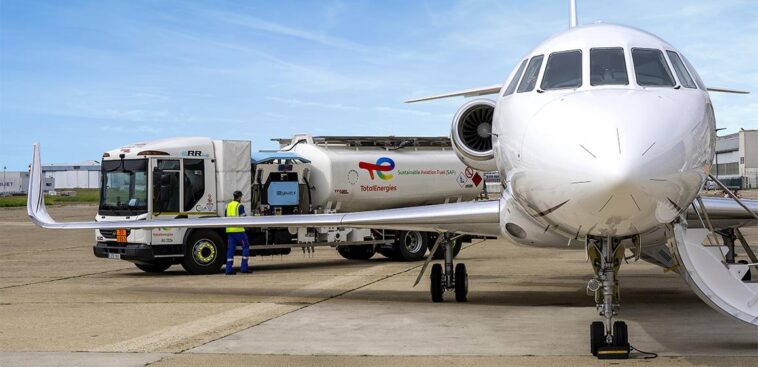
The Airline Operators of Nigeria (AON) has declared that airlines operating in Nigeria have come under financial pressure following a sharp increase in the price of Jet-A1, also known as aviation fuel.
According to the group, the price of aviation fuel, has surged to about N1,800 per litre in many parts of the country, from about N1,000 per litre two weeks ago. This amounts to almost an 80 per cent increase within a short period.
Aviation fuel remains the largest cost component in airline operations, accounting for about 30 to 35 per cent of total operating expenses.
Industry stakeholders have linked the latest spike to the ongoing conflict in the Middle East, which has pushed up global energy prices.
ALSO READ: Shell Completes Turnaround Maintenance on FPSO, Resumes Production at Bonga
Speaking on Channels Television on Friday, the spokesperson for the Airline Operators of Nigeria, Prof Obiora Okonkwo, said the surge had placed airlines under severe financial strain.
According to him, most carriers have so far refrained from immediately transferring the additional cost burden to passengers, despite the pressure on their operations.
“Two weeks ago, we were getting Jet-A1 at about N1,000 per litre, which today is about N1,800, and even more in some stations. We have experienced an increase of about 80 per cent. That’s quite a spike,” Okonkwo said.
He explained that airlines were currently absorbing the losses in order to avoid worsening the economic burden on the travellers.
“We are not in a business where you can easily adjust your ticket price. Right now what we are doing is that we are bleeding. We are taking the blow. We are selling tickets at very non-profitable prices. We are losing a lot of money,” he said.
Okonkwo warned that the situation might not be sustainable if fuel prices continue to rise without government intervention.
“Obviously, adjustments will be expected anytime soon. But again, we are very sensitive to the economic situation of Nigerians and our travellers,” he added.
He noted that developments in the global oil market, particularly the recent release of reserve crude oil, could influence fuel prices in the coming weeks.
Okonkwo also urged the Federal Government to explore engagement with the Dangote Refinery as part of efforts to stabilise aviation fuel supply locally.
“We were more hopeless in a situation where there was no refinery in Nigeria in the last two years. Now that we have a refinery, we are hopeful that we can find a solution around it,” he said.
According to him, if the spike persists, some airlines may struggle to continue absorbing the losses associated with the rising cost of aviation fuel.
Meanwhile, the AON spokesperson also reacted to the decision by the Federal Competition and Consumer Protection Commission to sanction about five airlines over alleged price fixing.
Okonkwo said while the commission has regulatory powers, the aviation sector remains deregulated, making coordinated price fixing unlikely.
“There is no meeting of airlines where they agree to fix prices. Fixing prices would mean operating as a cartel, and that is not the case,” he said.
He explained that airline ticket pricing varies widely because different aircraft types attract different operating costs.
“Each airline determines its fares based on its own operational costs,” he said.
Okonkwo added that airlines must also demonstrate financial viability to regulators as part of the conditions for maintaining their operating licences.
“At every point in time, you must prove to the regulators that you are financially viable and capable of sustaining operations,” he said.
He urged regulators to take into account the fragile nature of the aviation industry when making policy decisions affecting airlines.

Modupe Asudo
Sahara Group, a leading global energy and infrastructure conglomerate, has commissioned MT Asharami Ghana, a 40,000‑cubic‑metre Liquefied Petroleum Gas (LPG) carrier, expanding its fleet capacity, while strengthening Ghana’s clean energy supply chain and LPG distribution network.
The dual‑fuel vessel improves operational efficiency, enhances supply reliability, and supports lower‑emission LPG logistics as consumption grows across Ghana and the wider sub‑region.

Ghanaian President Mahama and Sahara Executive Directors
Speaking at the commissioning in Ulsan, South Korea, President John Dramani Mahama described the vessel as “a significant milestone in strengthening the infrastructure that underpins the global LPG supply chain,” noting that expanded shipping capacity is critical to improving supply security, reliability and efficiency for countries that rely partly on LPG imports.
He commended Sahara Group, WAGL Energy and all partners involved for their “leadership, technical expertise and strategic foresight,” adding that the project reflects “the power of partnership” in advancing safe, efficient, and responsible energy distribution.
President Mahama wished the MT Asharami Ghana safe sails, expressing confidence that the vessel would inspire further investment and collaboration across Africa’s energy value chain.
According to Wale Ajibade, Executive Director, Sahara Group, the vessel supports Ghana’s clean energy ambitions through integrated infrastructure.
“MT Asharami Ghana is more than a vessel; it is part of a deliberate strategy to strengthen LPG supply security and support Ghana’s clean energy ambitions. It secures an additional 25,000-Metric-tonne stock security for the Ghana economy, alongside the soon to be commissioned 6000-metric-tonee of 12.000-metric-tonne land storage in Tema,” he said.
With the addition of Asharami Ghana, Sahara Group’s LPG carrier fleet now comprises six delivered vessels with a combined capacity of 202,000 cubic metres. Supported by partnerships with WAGL Energy, NNPC Limited and other stakeholders, an additional 270,000 cubic metres of capacity is under construction and due for delivery by September 2028.
Temitope Shonubi, Executive Director, Sahara Group, said Asharami Ghana is part of Sahara’s integrated LPG infrastructure strategy spanning shipping, storage, and downstream distribution globally, including the development of a 12,000‑metric‑tonne land‑based LPG storage terminal in Tema, with a 6,000‑metric‑tonne first phase scheduled for completion in May 2026.
He thanked Yaa Serwaa Alifo, MD of Asharami Ghana, for her resilience and insistence to dedicate a ship of “this magnitude solely to the Ghana Market and its landlocked neighbours.”
Ghana is targeting LPG adoption of 50 per cent of households by 2030, up from about 30 per cent today. Sahara’s investments will support clean energy access for more than 35 million people, while strengthening Ghana’s role in regional LPG trade to neighbouring and landlocked West African markets.
The commissioning comes in Sahara Group’s 30th anniversary year, guided by the Sahara Beyond XXX milestone, underscoring Sahara’s focus on building an enduring enterprise that delivers responsible growth, shared prosperity and long‑term impact across its markets.

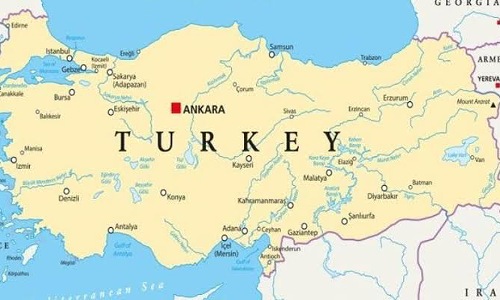
NATO air defence systems have intercepted a third ballistic missile believed to have been launched from Iran after it entered Turkish airspace, Turkey’s Defence Ministry confirmed on Friday, raising fresh concerns about the growing tensions in the Middle East.
In a statement, the ministry said the missile was neutralised by NATO air and missile defence assets deployed in the eastern Mediterranean after it crossed into Turkish territory.
SEE MORE: WHO Releases Alarming Casualty Figures From US‑Israel‑Iran Conflict
The latest interception triggered security alerts across parts of southern Turkey.
Air raid sirens reportedly sounded at the strategic Incirlik Air Base, a key NATO military facility that hosts United States troops and other allied personnel.
Residents in the nearby city of Adana were awakened around 3:25 a.m. by the warning alarms. Some locals reportedly captured footage showing what appeared to be a fast-moving object on fire streaking across the sky.
Similar sirens were also heard in the eastern Turkish city of Batman around 4:00 a.m., with reports indicating the alarm may have been linked to a nearby military drone base located close to the city’s airport.
The incident marks the third time NATO defence systems have intercepted missiles linked to Iran in recent weeks. The first missile was shot down on March 4, while a second was intercepted earlier this week.
Following Monday’s incident, the United States temporarily shut down its consulate in Adana and urged American citizens to leave southeastern Turkey due to security concerns.
Iranian President Masoud Pezeshkian, however, reportedly denied that the missile had been launched from Iran during a telephone conversation with Turkish President Recep Tayyip Erdogan.
The rising tensions come amid the ongoing conflict that erupted on February 28 involving the United States, Israel and Iran. Since the outbreak of hostilities, Tehran has reportedly carried out retaliatory strikes across several locations in the Middle East.
Incirlik Air Base remains one of NATO’s most important strategic military facilities in the region. The base has hosted US troops for decades and also accommodates military personnel from other NATO member states including Spain and Poland.
Another key NATO installation is located in Kurecik, in Turkey’s Malatya province, where US troops operate an early-warning radar system capable of detecting missile launches from Iran. The radar facility forms part of NATO’s broader ballistic missile defence shield.
Although Turkish authorities have consistently denied that radar data from the base has been shared with Israel, its presence has reportedly raised concerns in Tehran.
Earlier this week, Turkey also confirmed the deployment of a Patriot missile defence system in Malatya as NATO strengthens its regional missile defence posture amid the escalating conflict.






Airfares Likely to Rise as Aviation Fuel Price Spikes by 80%

Shell Completes Turnaround Maintenance on FPSO, Resumes Production at Bonga

Sahara Group expands fleet with new 40,000 cbm LPG Carrier

NATO Shoots Down Third Iranian Missile in Turkey

Inside Tinubu’s Closed-Door Meeting With Opposition Leaders – SDP, IPAC Reveal Details

Defections Won’t Break PDP in Sokoto, Says Former Senator Gada

Trump’s Family Unveils New Cryptocurrency Platform

Reps Recommend 3-year Jail Term For Aviation minister

Dangote Cement Lights Up Benue Host Communities With CSR Initiatives

Senate Denies Receiving Petitions Against Tinubu’s Ambassadorial Nominees

Tems Sets New Record On Billboard Hot 100 Chart
