
International News
Shock In Indonesia As Couple Receives 140 Public Lashes In Aceh

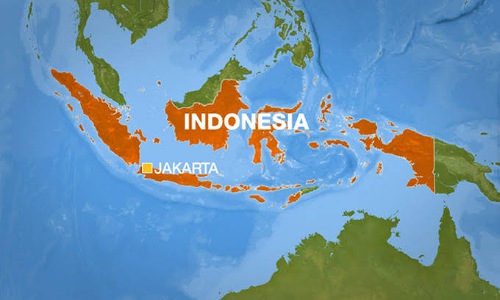
An unmarried couple has been publicly caned 140 times in Indonesia’s Aceh province after being found guilty of engaging in sexual relations outside marriage and consuming alcohol, in what officials described as one of the harshest punishments imposed in recent years.
The sentence was carried out on Thursday in Banda Aceh by the Sharia police, who enforce Islamic law in the deeply conservative province.
Aceh is the only region in Indonesia permitted to implement a version of Sharia law, following the special autonomy granted to it in 2001.
SEE ALSO: No Place For Sharia Court In Ogun State, Says Gov Abiodun
According to authorities, the couple received 100 lashes for sexual relations outside wedlock and an additional 40 lashes for drinking alcohol.
The punishment took place in a public park and was witnessed by dozens of onlookers.
An AFP reporter at the scene said the female convict collapsed during the punishment and was later escorted to an ambulance for medical attention.
The head of Banda Aceh’s Sharia police, Muhammad Rizal, confirmed the punishment, noting that it was among the highest number of lashes handed down since the implementation of Sharia law in the province.
On the same day, six individuals were punished for violating Aceh’s Islamic code, including a Sharia police officer and his female partner who were found together in a private location. That pair received 23 lashes each.
Rizal said the involvement of a law enforcement officer was embarrassing for the agency but stressed that no one would be exempt from punishment.
“As promised, we make no exceptions, especially not for our own members,” he said.
Public caning remains widely supported in Aceh as a deterrent against offences such as gambling, alcohol consumption, same-sex relations and extramarital sex.
Last year, two men were also publicly flogged after being convicted by a Sharia court for sexual offences.








Federal agents raided the Washington, D.C., home of Democratic Congresswoman Ilhan Omar early Monday morning as part of an ongoing federal criminal investigation, the United States Department of Justice (DOJ) has confirmed.
Homeland Security Investigations agents arrived at the Minnesota congresswoman’s residence at about 6:00 a.m. Eastern Time, according to a report by Fox News.
SEE MORE: Trump Sparks Outrage With Shock Proposal to Rename New Mexico
The report said both the Department of Homeland Security (DHS) and the DOJ are involved in the investigation.
A DOJ spokesperson confirmed the operation, stating: “Today in the Washington, D.C. area, Homeland Security Investigations executed a judicially authorized search warrant secured by the Department of Justice.”
The spokesperson added: “This enforcement action is part of an ongoing federal criminal investigation.”
Details later……….
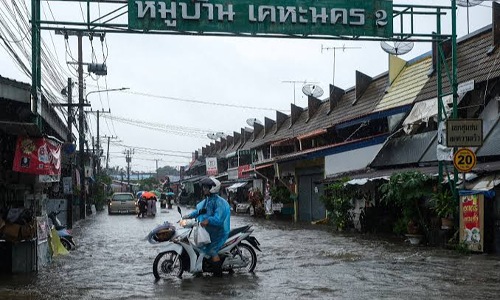
Heavy rains have triggered severe flooding across parts of Bangkok, Thailand, forcing nearly 4,900 residents to evacuate to shelters as floodwaters swept through roads and residential areas.
The flooding has disrupted movement across parts of the Thai capital, with motorists and pedestrians forced to navigate submerged roads and seek alternative routes.
SEE ALSO: NAFDAC Warns Nigerians As Fake Cowbell Milk Floods Market
According to the Bangkok Metropolitan Administration, about 52,000 households have been affected by the flooding, prompting authorities to declare a flood disaster and intensify emergency response efforts.
Emergency teams have been deployed to assist affected communities and move residents from vulnerable areas to safer locations as water levels rise.
Bangkok is accustomed to seasonal heavy rainfall, but intense downpours can overwhelm drainage systems, particularly in low-lying areas, resulting in widespread flooding and disruption.
Authorities are continuing to monitor affected locations while coordinating evacuations and other emergency measures.
For thousands of residents, the immediate priority remains securing safe shelter and protecting homes and livelihoods as authorities work to manage the situation and restore normal activities once the floodwaters recede.
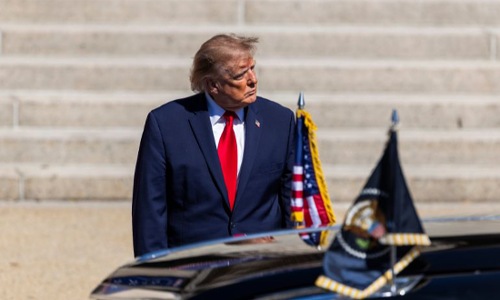
US President Donald Trump has explained his decision to reject Iran’s latest proposal to reopen the Strait of Hormuz, saying Tehran was seeking an agreement because it was losing revenue.
Speaking to reporters at the White House, Trump said Iran wanted to immediately reopen the strategically important waterway but argued that the proposal was not acceptable to his administration.
“They want to make a deal, and I think that’s fine. I like making a deal, too, but that deal would not be acceptable,” Trump said.
SEE ALSO: How the Strait of Hormuz Attack Could Trigger a Fresh Global Oil Shock
According to the US president, Iran’s push to reopen the strait was driven by the economic pressure it was facing.
“What they want to do is immediately open the Hormuz Strait. Do you know why? Because they are dying,” Trump said.
“You know why they’re dying? Because they have no money coming in, because they get their money from the Hormuz Strait.”
Trump also claimed that the US had established an unprecedented naval blockade against Iran, describing it as “a wall of steel.”
“So they outsmarted themselves. We put up the greatest blockade ever in military history. It’s a wall of steel,” he said.
“And guess what? They don’t have any money now because they wanted to close the strait.”
The Strait of Hormuz is a major global energy shipping route, and disruption to traffic through the waterway has significant implications for international oil markets and countries that depend on energy imports.
Trump’s remarks came amid continued tensions between Washington and Tehran over the reopening of the strategic waterway and negotiations involving Iran.





Alausa Hails Dangote Foundation’s Plan to Give Four Million Students IPO Shares

APC Campaign Council Sets Inaugural Meeting for Tuesday Ahead of Kaduna Flag-Off

Renaissance Capital Sees Significant Upside in Dangote Refinery, Lifts Valuation by 33.4%

Dangote Refinery IPO Elicits Participation in 90 Countries Globally

Makinde Fires Back at Presidency, Insists on ₦9tn NLNG Dividend Shortfall

‘NELFUND Is Not an Excuse for School Fees Hikes’ – NANS Warns Universities

Trump’s Family Unveils New Cryptocurrency Platform

Senate Denies Receiving Petitions Against Tinubu’s Ambassadorial Nominees

Dangote Cement Lights Up Benue Host Communities With CSR Initiatives

Reps Recommend 3-year Jail Term For Aviation minister

Tems Sets New Record On Billboard Hot 100 Chart
