
International News
South-west US Experiences Extreme Heat

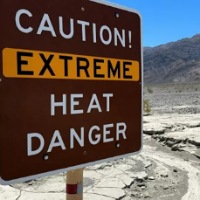
Over 110 million people continue to be affected by extreme heat warnings as a result of a heat dome over the south-west of the US.
Up to 38 cities might see temperature records smashed.
The extreme heat wave in Las Vegas poses a threat to surpass or tie the city’s all-time high temperature of 117F (47.2C) on Sunday.
It happens at a time when southern Europe is also experiencing record-high temperatures and Canada is coping with its worst wildfire season ever.
Scientists have long warned that the frequency and intensity of extreme weather events will rise as a result of climate change brought on by human activity.
Elsewhere in the south-western US, hundreds of firefighters have been battling brush fires in blistering heat and low humidity on the outskirts of Los Angeles.
Temperatures in Death Valley in California hit 128F (53.9C) on Sunday, according to the National Weather Service (NWS). It is the site of the hottest temperature ever reliably recorded on Earth: 134F (56.7C).
The usually crowded streets of Las Vegas were considerably emptier than normal on Sunday, with security guards guarding the fountains of upscale casinos and hotels to prevent people from jumping in.
The famous strip was a quiet inferno. Some people walked outside, but mostly just to cross the street to the next casino. And those who did exit were mostly intoxicated.
When one couple was asked why they were outside, they said “All roads lead to the Bellagio,” referring to one of the most popular hotels and casinos on the strip. Another group of young men shouted, “It’s Vegas baby! The heat’s not going to stop us!”
But elsewhere in Las Vegas, people were hanging on to any bit of shade, whether it came from the shadow of a building or even a small tree. At a taco shop on the strip, the tables were all full of patrons dripping with sweat and looking utterly wiped out from the heat. Workers too were draped in the booths, not speaking to each other, but fanning themselves down.
Inside the casinos though, business continued. The air conditioning was blasting so high, people were wearing jumpers to stay warm, and there was no indication of devastating temperatures, other than the people walking in off the street with sweat streaming down their faces.
El Paso, in Texas, has seen temperatures of 100.4F (38C) and above for more than a month now, with no respite in sight.
In Phoenix, Arizona, temperatures have remained above 109.4F (43C) for 17 days. Thick cloud cover on Sunday meant the city was granted a modest reprieve from recent peaks, but daytime temperatures still reached highs of 114F (45.5C).
The heat is set to continue for the foreseeable future, and authorities are warning that vulnerable people – including children, pregnant women and the elderly – are at serious risk of heat-related illness.
Mobile clinics report treating homeless people suffering from third-degree burns. Public buildings in some parts of California and Nevada have been turned into “cooling centres” where people can take refuge from the heat.
Amid the extreme temperatures being seen in Death Valley, Park Ranger Matthew Lamar said: “We hadn’t hit 130F (54.4C) here for over 100 years. And then in 2020, we got 130, in 2021 we got 130, and then we might hit it again this weekend.”
He added that the weather was attracting tourists who wanted to “experience the extremes”.
But some visitors said others should not lose sight of the fact that those extremes are a symptom of climate change.
Speaking to Reuters on Saturday, Tom Comitta said: “People are coming out here to celebrate this. People are excited. It’s not a milestone. I’m calling it Happy Death Day.”










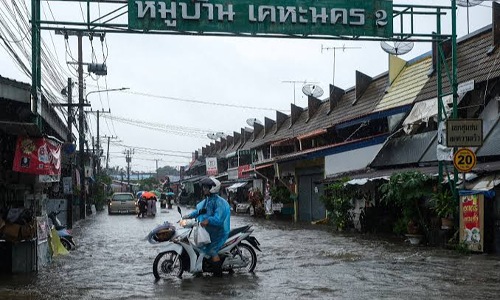
Heavy rains have triggered severe flooding across parts of Bangkok, Thailand, forcing nearly 4,900 residents to evacuate to shelters as floodwaters swept through roads and residential areas.
The flooding has disrupted movement across parts of the Thai capital, with motorists and pedestrians forced to navigate submerged roads and seek alternative routes.
SEE ALSO: NAFDAC Warns Nigerians As Fake Cowbell Milk Floods Market
According to the Bangkok Metropolitan Administration, about 52,000 households have been affected by the flooding, prompting authorities to declare a flood disaster and intensify emergency response efforts.
Emergency teams have been deployed to assist affected communities and move residents from vulnerable areas to safer locations as water levels rise.
Bangkok is accustomed to seasonal heavy rainfall, but intense downpours can overwhelm drainage systems, particularly in low-lying areas, resulting in widespread flooding and disruption.
Authorities are continuing to monitor affected locations while coordinating evacuations and other emergency measures.
For thousands of residents, the immediate priority remains securing safe shelter and protecting homes and livelihoods as authorities work to manage the situation and restore normal activities once the floodwaters recede.

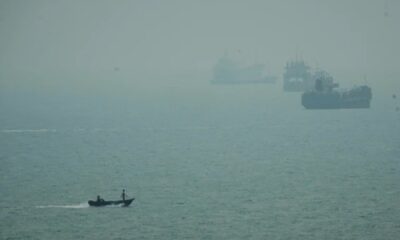
US President Donald Trump has explained his decision to reject Iran’s latest proposal to reopen the Strait of Hormuz, saying Tehran was seeking an agreement because it was losing revenue.
Speaking to reporters at the White House, Trump said Iran wanted to immediately reopen the strategically important waterway but argued that the proposal was not acceptable to his administration.
“They want to make a deal, and I think that’s fine. I like making a deal, too, but that deal would not be acceptable,” Trump said.
SEE ALSO: How the Strait of Hormuz Attack Could Trigger a Fresh Global Oil Shock
According to the US president, Iran’s push to reopen the strait was driven by the economic pressure it was facing.
“What they want to do is immediately open the Hormuz Strait. Do you know why? Because they are dying,” Trump said.
“You know why they’re dying? Because they have no money coming in, because they get their money from the Hormuz Strait.”
Trump also claimed that the US had established an unprecedented naval blockade against Iran, describing it as “a wall of steel.”
“So they outsmarted themselves. We put up the greatest blockade ever in military history. It’s a wall of steel,” he said.
“And guess what? They don’t have any money now because they wanted to close the strait.”
The Strait of Hormuz is a major global energy shipping route, and disruption to traffic through the waterway has significant implications for international oil markets and countries that depend on energy imports.
Trump’s remarks came amid continued tensions between Washington and Tehran over the reopening of the strategic waterway and negotiations involving Iran.
International News
‘Another Oil Shock Is Coming’ — Badenoch Calls for North Sea Drilling Amid Middle East Supply Disruptions


Conservative Party leader Kemi Badenoch has warned that another global oil shock could be looming amid disruptions to key energy infrastructure and shipping routes in the Middle East.
Badenoch made the warning in a post on X on Sunday, September 20, while pointing to the recent drone attack on Saudi Arabia’s East-West oil pipeline, restrictions affecting the Strait of Hormuz and threats to shipping around the Red Sea.
“Saudi Arabia’s East-West oil pipeline has been damaged by drone attacks. The strait of Hormuz is restricted, Houthi bandits threaten shipping routes into the Red Sea. Another oil shock is coming,” Badenoch wrote.
SEE MORE: Middle East Crises Pump Fuel Prices Upwards with Attacks on Iran, Saudi Arabia
She criticised the UK government’s handling of the situation and argued that Britain should increase domestic oil and gas production.
“Yet our Prime Minister and his Cabinet are behaving like a flock of ostriches, heads buried so deep in the sand they could strike oil themselves,” she added.
“The answer is simple: DRILL OUR OWN OIL AND GAS IN THE NORTH SEA.”
Saudi oil pipeline hit by drone attack
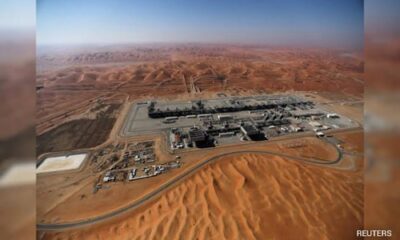
The warning comes after Saudi Arabia’s critical East-West oil pipeline was damaged in a drone attack earlier this month.
The 1,200-kilometre pipeline, operated by Saudi Aramco, transports crude oil across Saudi Arabia to the Red Sea port of Yanbu, providing an alternative export route when shipping through the Strait of Hormuz is disrupted.
Saudi officials said the September 11 attack involved drones coming from Iraq. No group had claimed responsibility for the attack in initial reports.
A subsequent Reuters analysis of satellite imagery found that three pumping stations, rather than two previously identified, had been damaged.
Industry sources disclosed that repairs could take between five and six weeks, although partial operations could resume sooner.
The pipeline had been carrying around 4 million to 5 million barrels of crude oil per day, equivalent to approximately 4% to 5% of global oil supply. Its shutdown has therefore raised concerns about additional pressure on already-disrupted global energy supplies.
The attack also affected Saudi oil exports.
Reuters reported on September 18 that Saudi Aramco had informed at least two European refining customers that they would receive no Saudi crude deliveries in October, following the pipeline disruption.
Hormuz and Red Sea disruptions
The pipeline attack has occurred against the backdrop of continuing disruption around the Strait of Hormuz, a major route for global oil shipments.
The East-West pipeline had become particularly important because it allowed Saudi Arabia to move crude to the Red Sea without relying entirely on the Strait of Hormuz. Reuters reported that the pipeline had served as a major alternative route while the strait was largely shut by the ongoing conflict.
Shipping through the Red Sea is also facing renewed security concerns following advances and attacks by Yemen’s Iran-aligned Houthi movement.
According to report on September 17, there is continued tensions involving the Houthis and Saudi Arabia were adding to concerns over regional energy infrastructure and shipping.
Earlier today, there are fresh Houthi claims of missile and drone attacks targeting strategic sites in Riyadh, with the developments contributing to renewed pressure on Saudi and Gulf markets.






Adeshina Hinges Nigeria’s Energy Growth on Technical Expertise, Quality Investment

NNPC Ltd Anchors Meeting Crude Production Target on Sustained Drilling
World Bank Report: ‘Nigeria Needs 10% Growth for 20 Years to Reduce Poverty’ — Ekpo

Yenagoa Hosts NCDMB 2026 Content Forum

IPO: ADF Opens Wealth Creation Pathway for 2m Vulnerable Nigerian Women

2027: Tinubu Will Beat Atiku, Obi by Wide Margin, Says Bwala

Trump’s Family Unveils New Cryptocurrency Platform

Senate Denies Receiving Petitions Against Tinubu’s Ambassadorial Nominees

Dangote Cement Lights Up Benue Host Communities With CSR Initiatives

Reps Recommend 3-year Jail Term For Aviation minister

Tems Sets New Record On Billboard Hot 100 Chart
