
International News
Strong Quake Hits Central Japan, Prompts Tsunami Alerts

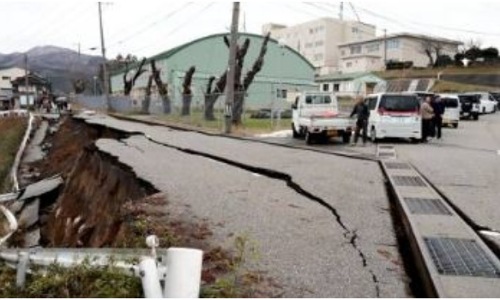
Monday saw a forceful 7.5 magnitude earthquake hitting central Japan, according to the USGS.
The tremor triggered tsunami warnings, compelling local authorities to encourage residents in the vicinity to seek safer, elevated areas.
“All residents must evacuate immediately to higher ground,” national broadcaster NHK said after the quake hit the Noto region in Ishikawa prefecture around 4:10 pm (0710 GMT).
The Hawaii-based Pacific Tsunami Warning Center cautioned that dangerous tsunami waves could occur within 300 kilometres (190 miles) from the earthquake’s epicentre along the Japanese coast.
A confirmed tsunami measuring 1.2 metres was reported to have reached Wajima city in Ishikawa prefecture.
The Japan Meteorological Agency (JMA) anticipated a considerably higher tsunami of five meters to hit Noto in the same region.
The JMA reported a rapid sequence of earthquakes in the Noto region, situated on the Sea of Japan side of Japan’s main island of Honshu, starting with a 5.7 magnitude tremor at 4:06 pm local time.
Subsequent to this, a 7.6-magnitude quake occurred at 4:10 pm, followed by a 6.1 magnitude quake at 4:18 pm, a 4.5 magnitude quake at 4:23 pm, a 4.6 magnitude quake at 4:29 pm, and a 4.8 magnitude quake at 4:32 pm.
Shortly after, the US Geological Survey reported another quake with a magnitude of 6.2.
Broadcasters swiftly switched to special programming following the largest of the quakes, issuing urgent calls for affected residents to immediately move to higher ground.
A presenter on broadcaster NHk told viewers “We realise your home, your belongings are all precious to you, but your lives are important above everything else. Run to the highest ground possible.”
Japan has maintained a stringent construction regulations aimed at ensuring buildings are capable of withstanding powerful earthquakes and regularly conducts emergency drills to prepare for significant seismic events.
However, the country is haunted by the recollection of a colossal 9.0-magnitude undersea quake off northeastern Japan in March 2011.
This seismic event triggered a devastating tsunami, resulting in approximately 18,500 people reported dead or missing.
The 2011 tsunami additionally caused three reactors at the Fukushima nuclear plant to undergo meltdowns, resulting in Japan’s worst post-war disaster and the most severe nuclear incident since Chernobyl.
In March 2022, a 7.4-magnitude earthquake off the coast of Fukushima shook extensive regions of eastern Japan, resulting in the loss of three lives.
Tokyo suffered significant devastation from a massive earthquake a century ago in 1923.


Federal agents raided the Washington, D.C., home of Democratic Congresswoman Ilhan Omar early Monday morning as part of an ongoing federal criminal investigation, the United States Department of Justice (DOJ) has confirmed.
Homeland Security Investigations agents arrived at the Minnesota congresswoman’s residence at about 6:00 a.m. Eastern Time, according to a report by Fox News.
SEE MORE: Trump Sparks Outrage With Shock Proposal to Rename New Mexico
The report said both the Department of Homeland Security (DHS) and the DOJ are involved in the investigation.
A DOJ spokesperson confirmed the operation, stating: “Today in the Washington, D.C. area, Homeland Security Investigations executed a judicially authorized search warrant secured by the Department of Justice.”
The spokesperson added: “This enforcement action is part of an ongoing federal criminal investigation.”
Details later……….
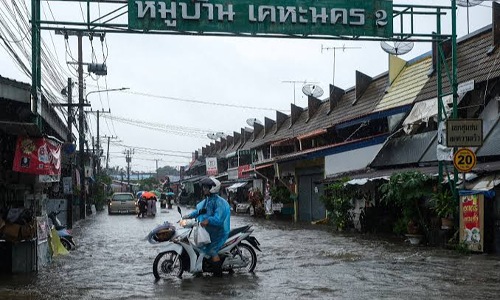
Heavy rains have triggered severe flooding across parts of Bangkok, Thailand, forcing nearly 4,900 residents to evacuate to shelters as floodwaters swept through roads and residential areas.
The flooding has disrupted movement across parts of the Thai capital, with motorists and pedestrians forced to navigate submerged roads and seek alternative routes.
SEE ALSO: NAFDAC Warns Nigerians As Fake Cowbell Milk Floods Market
According to the Bangkok Metropolitan Administration, about 52,000 households have been affected by the flooding, prompting authorities to declare a flood disaster and intensify emergency response efforts.
Emergency teams have been deployed to assist affected communities and move residents from vulnerable areas to safer locations as water levels rise.
Bangkok is accustomed to seasonal heavy rainfall, but intense downpours can overwhelm drainage systems, particularly in low-lying areas, resulting in widespread flooding and disruption.
Authorities are continuing to monitor affected locations while coordinating evacuations and other emergency measures.
For thousands of residents, the immediate priority remains securing safe shelter and protecting homes and livelihoods as authorities work to manage the situation and restore normal activities once the floodwaters recede.
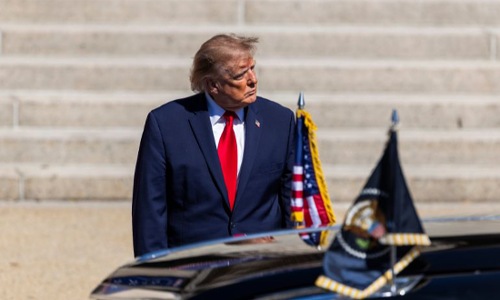
US President Donald Trump has explained his decision to reject Iran’s latest proposal to reopen the Strait of Hormuz, saying Tehran was seeking an agreement because it was losing revenue.
Speaking to reporters at the White House, Trump said Iran wanted to immediately reopen the strategically important waterway but argued that the proposal was not acceptable to his administration.
“They want to make a deal, and I think that’s fine. I like making a deal, too, but that deal would not be acceptable,” Trump said.
SEE ALSO: How the Strait of Hormuz Attack Could Trigger a Fresh Global Oil Shock
According to the US president, Iran’s push to reopen the strait was driven by the economic pressure it was facing.
“What they want to do is immediately open the Hormuz Strait. Do you know why? Because they are dying,” Trump said.
“You know why they’re dying? Because they have no money coming in, because they get their money from the Hormuz Strait.”
Trump also claimed that the US had established an unprecedented naval blockade against Iran, describing it as “a wall of steel.”
“So they outsmarted themselves. We put up the greatest blockade ever in military history. It’s a wall of steel,” he said.
“And guess what? They don’t have any money now because they wanted to close the strait.”
The Strait of Hormuz is a major global energy shipping route, and disruption to traffic through the waterway has significant implications for international oil markets and countries that depend on energy imports.
Trump’s remarks came amid continued tensions between Washington and Tehran over the reopening of the strategic waterway and negotiations involving Iran.






Navy Recovers 98,000 Litres of Suspected Stolen Crude in Rivers

DPRP’s Appeal Against Fuel Import Licence Ruling Earns Stakeholder Backing

State Govs, Wike Endorse One-Party State, Join APC Campaign Council

2027: ‘Tinubu Has Done Well’ – Wike Tells Opposition to Speak the Truth

‘Celebrate This Poor Man’ – Shettima Defends Tinubu Over Economic Crisis
FG Withdraws Charges Against ‘Fake Agency’ DG, Adeniyi Adeyemi

Trump’s Family Unveils New Cryptocurrency Platform

Senate Denies Receiving Petitions Against Tinubu’s Ambassadorial Nominees

Dangote Cement Lights Up Benue Host Communities With CSR Initiatives

Reps Recommend 3-year Jail Term For Aviation minister

Tems Sets New Record On Billboard Hot 100 Chart
