
International News
North Korea: Kim Jong Un Orders Military To Prepare For Possible War

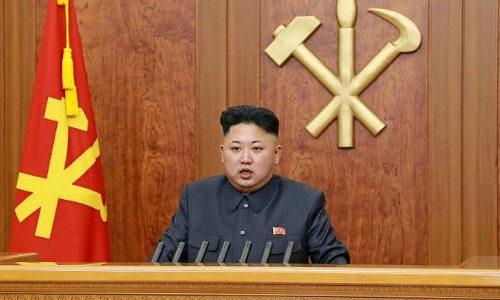
North Korean leader Kim Jong Un has escalated tensions with fresh threats of a potential nuclear strike on Seoul and a directive for a significant buildup of the country’s military.
In a lengthy speech concluding five days of crucial year-end party meetings shaping North Korea’s policy decisions for 2024, Kim Jong Un directed scathing remarks toward the United States.
These meetings revealed a blueprint for extensive military development in the upcoming year, as outlined by the official Korean Central News Agency (KCNA).
Plans include launching three new spy satellites, advancing unmanned drone technology, enhancing electronic warfare capabilities, and fortifying the nation’s nuclear and missile forces.
Following the meeting, Kim Jong Un accused the United States of presenting “various types of military threat.
He directed North Korea’s armed forces to uphold an “overwhelming war response capability,” emphasizing readiness in the face of perceived threats from the United States.
Kim said “It is a “fait accompli that a war can break out at any time on the Korean peninsula due to reckless moves by the enemies to invade us.”
In an attempt to dissuade Pyongyang, Washington recently deployed a nuclear-powered submarine in the South Korean port city of Busan and engaged in joint drills with Seoul and Tokyo, involving long-range bombers.
The North has previously condemned the deployment of Washington’s strategic weapons, like B-52 bombers, in joint exercises on the Korean peninsula, labeling them as “intentional nuclear war provocative moves.”
Kim said “We must respond quickly to a possible nuclear crisis and continue to accelerate preparations to pacify the entire territory of South Korea by mobilising all physical means and forces, including nuclear force, in case of emergency.”
During the meeting, Kim Jong Un declared a shift in strategy, stating that North Korea would no longer pursue reconciliation or reunification with South Korea.
He attributed the ongoing “persisting uncontrollable crisis situation” to actions taken by Seoul and Washington.
Inter-Korean relations have reached a nadir this year, aggravated by Pyongyang’s spy satellite launch, leading Seoul to partially suspend a 2018 military agreement designed to ease tensions between the two nations.
“I believe that it is a mistake that we should no longer make to consider the people who declare us as the ‘main enemy’… as a counterpart for reconciliation and unification,” KCNA cited Kim as saying.
Kim Jong Un has directed the formulation of plans to restructure departments handling cross-border affairs, aiming to “fundamentally shift the direction.”
Leif Easley, an international relations professor at Ewha University in Seoul, suggested that North Korea’s emphasis on its “significant military capabilities” might be a strategic move to divert attention from its poor economic performance this year.
Easley highlighted that much of the content published by state-controlled media constitutes recycled propaganda.
He remarked that Pyongyang’s aggressive rhetoric likely serves purposes beyond deterrence, potentially involving domestic politics and international influence.
Having declared itself an “irreversible” nuclear power last year, Pyongyang has consistently reiterated its refusal to abandon its nuclear program, considering it vital for the regime’s survival.
Since its initial nuclear test in 2006, the United Nations Security Council has issued numerous resolutions urging North Korea to cease its nuclear and ballistic missile programs






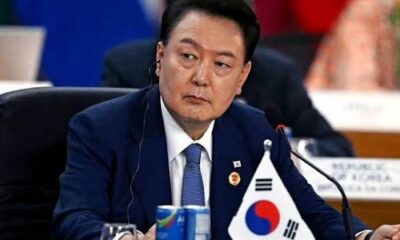


Federal agents raided the Washington, D.C., home of Democratic Congresswoman Ilhan Omar early Monday morning as part of an ongoing federal criminal investigation, the United States Department of Justice (DOJ) has confirmed.
Homeland Security Investigations agents arrived at the Minnesota congresswoman’s residence at about 6:00 a.m. Eastern Time, according to a report by Fox News.
SEE MORE: Trump Sparks Outrage With Shock Proposal to Rename New Mexico
The report said both the Department of Homeland Security (DHS) and the DOJ are involved in the investigation.
A DOJ spokesperson confirmed the operation, stating: “Today in the Washington, D.C. area, Homeland Security Investigations executed a judicially authorized search warrant secured by the Department of Justice.”
The spokesperson added: “This enforcement action is part of an ongoing federal criminal investigation.”
Details later……….
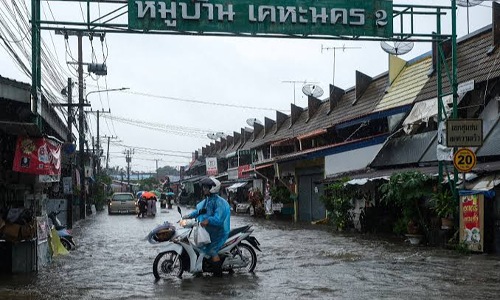
Heavy rains have triggered severe flooding across parts of Bangkok, Thailand, forcing nearly 4,900 residents to evacuate to shelters as floodwaters swept through roads and residential areas.
The flooding has disrupted movement across parts of the Thai capital, with motorists and pedestrians forced to navigate submerged roads and seek alternative routes.
SEE ALSO: NAFDAC Warns Nigerians As Fake Cowbell Milk Floods Market
According to the Bangkok Metropolitan Administration, about 52,000 households have been affected by the flooding, prompting authorities to declare a flood disaster and intensify emergency response efforts.
Emergency teams have been deployed to assist affected communities and move residents from vulnerable areas to safer locations as water levels rise.
Bangkok is accustomed to seasonal heavy rainfall, but intense downpours can overwhelm drainage systems, particularly in low-lying areas, resulting in widespread flooding and disruption.
Authorities are continuing to monitor affected locations while coordinating evacuations and other emergency measures.
For thousands of residents, the immediate priority remains securing safe shelter and protecting homes and livelihoods as authorities work to manage the situation and restore normal activities once the floodwaters recede.
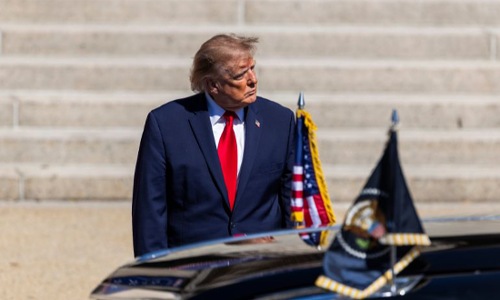
US President Donald Trump has explained his decision to reject Iran’s latest proposal to reopen the Strait of Hormuz, saying Tehran was seeking an agreement because it was losing revenue.
Speaking to reporters at the White House, Trump said Iran wanted to immediately reopen the strategically important waterway but argued that the proposal was not acceptable to his administration.
“They want to make a deal, and I think that’s fine. I like making a deal, too, but that deal would not be acceptable,” Trump said.
SEE ALSO: How the Strait of Hormuz Attack Could Trigger a Fresh Global Oil Shock
According to the US president, Iran’s push to reopen the strait was driven by the economic pressure it was facing.
“What they want to do is immediately open the Hormuz Strait. Do you know why? Because they are dying,” Trump said.
“You know why they’re dying? Because they have no money coming in, because they get their money from the Hormuz Strait.”
Trump also claimed that the US had established an unprecedented naval blockade against Iran, describing it as “a wall of steel.”
“So they outsmarted themselves. We put up the greatest blockade ever in military history. It’s a wall of steel,” he said.
“And guess what? They don’t have any money now because they wanted to close the strait.”
The Strait of Hormuz is a major global energy shipping route, and disruption to traffic through the waterway has significant implications for international oil markets and countries that depend on energy imports.
Trump’s remarks came amid continued tensions between Washington and Tehran over the reopening of the strategic waterway and negotiations involving Iran.






Renaissance, Sterling Bank Back Indigenous Oil and Gas Contractors Financially
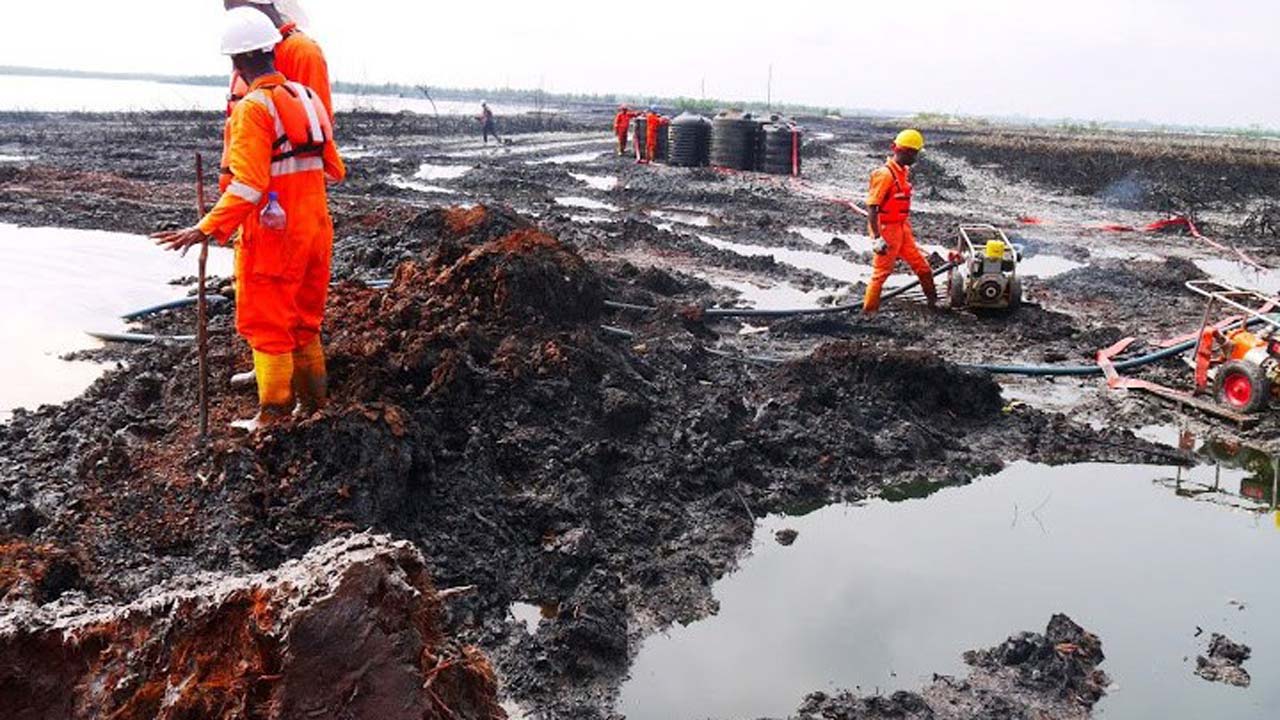
Group Demands Fair Share of NNPC Jobs for Ogoni Oil Exploration

NNPC Ltd Exploration Spending Down 87%

200 Imo Teachers Benefit from NCDMB’s Effective Curriculum Training
FG to Launch National Lead Poisoning Prevention Plan Wednesday

EndSARS Memorial: ‘Nigerians Still Deserve Answers’ – Atiku

Trump’s Family Unveils New Cryptocurrency Platform

Senate Denies Receiving Petitions Against Tinubu’s Ambassadorial Nominees

Dangote Cement Lights Up Benue Host Communities With CSR Initiatives

Reps Recommend 3-year Jail Term For Aviation minister

Tems Sets New Record On Billboard Hot 100 Chart
