
NEWS
Tinubu Appoints Ali Nuhu, 10 Others To Lead Creative Agencies

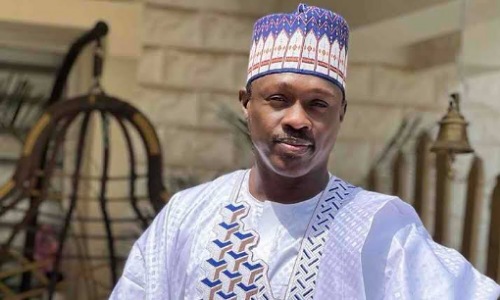
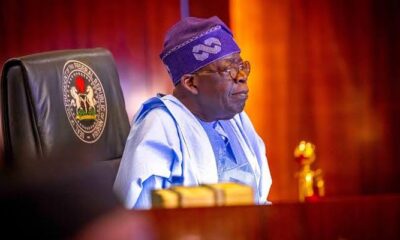
President Bola Tinubu has appointed 11 new Chief Executive Officers (CEOs) to head key agencies within the Federal Ministry of Art, Culture, and Creative Economy.
The announcement was conveyed in a statement released by presidential spokesman Ajuri Ngelale on Friday.
The statement discloses that Ali Nuhu, renowned Kannywood actor, producer, and director, assumes the role of Managing Director at the Nigerian Film Corporation.
Additionally, Shaibu Husseini, a versatile Nigerian journalist, cultural administrator, PR and Media Expert, and film curator, has been designated as the Director-General of the National Films and Censors Board.
Tola Akerele takes on the position of Director-General at the National Theatre, and Aisha Adamu Augie is appointed Director-General of the Centre for Black and African Arts and Culture (CBAAC).
According to the statement, Tinubu has instructed the newly appointed officials to fulfill their responsibilities with the utmost professionalism, diligence, and patriotism.
The directive aims to enhance the vibrancy and robustness of the creative sector.
The appointed executives for various agencies are as follows:
1. Tola Akerele – Director-General, National Theatre
2. Dr. Shaibu Husseini – Director-General, National Films and Censors Board
3. Mr. Obi Asika – Director-General, National Council for Arts and Culture
4. Aisha Adamu Augie – Director-General, Centre for Black and African Arts and Culture
5. Ekpolador-Ebi Koinyan – Chief Conservator, National War Museum
6. Ahmed Sodangi – Director-General, National Gallery of Art
7. Chaliya Shagaya – Director-General, National Institute of Archeology and Museums Studies
8. Hajiya Khaltume Bulama Gana – Artistic Director, National Troupe of Nigeria
9. Otunba Biodun Ajiboye – Director-General, National Institute for Cultural Orientation
10. Ali Nuhu – Managing-Director, Nigerian Film Corporation
11. Ramatu Abonbo Mohammed – Director-General, National Commission for Museums and Monuments






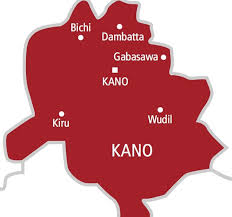
The Kano State Police Command has warned residents of a potential terror attack, targeting public gatherings in strategic locations across the state.
In a statement issued on Friday, the command’s Public Relations Officer, SP Abdullahi Haruna, disclosed that intelligence reports indicated suspected terrorists were planning to carry out attacks.
“The Kano State Police Command, in liaison with other security agencies, has received intelligence reports of suspected terrorists planning to launch attacks on public gatherings in strategic locations within Kano State.
READ MORE: Savannah Energy Provides Unaudited FY 2024 Trading Updates
“In response, we hereby urge residents to exercise caution and avoid crowded places and environments until further notice as a preventive measure to enable security operatives to identify and dislodge possible attackers,” the statement read.
To address the threat, the police command has enhanced security arrangements across the state. SP Haruna revealed that specialized units, including the Explosive Ordinance Disposal (EOD) and the Chemical, Biological, Radiological, and Nuclear (CBRN) teams, have been deployed to strategic locations and are on high alert.
“A team of experts from the command’s Explosive Ordinance Disposal, Chemical, Biological, Radiological, and Nuclear units have been deployed to strategic locations and are on high alert.
“The unit can be contacted through: 08169884988 or 07067157218 for report of suspicious persons or item(s),” Haruna stated.
Residents have been urged to remain vigilant and report any suspicious activities to the nearest police station or contact the command through the designated hotlines.
“The command remains committed to protecting lives and properties as well as maintaining law and order in Kano State.
“We appreciate the support and cooperation of the good people of Kano State and urge everyone to remain vigilant. Your vigilance and cooperation are crucial in ensuring public safety,” the statement concluded.
NEWS
Ifon-Ilobu-Erin Osun Land Disputes: Osun Constitutes A 100-Member Boundary Resolution Committee


In the bid to resolve the incessant land disputes between the communities of Ifon, Ilobu and Erin Osun, the Governor of Osun State, Senator Ademola Adeleke has constituted an enlarged 100-member high powered land crisis resolution committee in which each of the affected communities has 25 representatives, and the state government represented by 25 members.
The Osun State Commissioner for Information and Public Enlightenment, Oluomo Kolapo Alimi made the disclosure in a statement in Osogbo, on Friday.
He revealed that the Ataoja of Osogbo land, Oba Jimoh Adetunji Olanipekun Larooye is the Chairman of the Committee, while a retired judge of Osun State Judiciary and Chairman, Osun State Boundary Commission, Justice Moshood Adekunle Adeigbe, would serve as the Co-Chairman.
According to Alimi, Gov Adeleke put in place the Committee with a view to bringing a lasting end to the incessant land disputes among the three affected communities.
ALSO READ: Leadership Newspaper Backs Adeleke For Second Tenure, Names Him ‘Gov Of The Year’
It was gleaned from the statement that there were four other traditional rulers on the panel, including His Royal Majesty; Oba Abioye Oyebode, the Olokuku of Okuku, His Royal Majesty; Oba Adams Iyiola Bamidele Yusuf, the Oloba of Oba Oke, His Royal Majesty; Oba Adekeye Oyedare, the Oloyan of Oyan and His Royal Majesty, Oba Akeem Ogungbamgbe,The Owaloko of Iloko-Ijesha.
Other members are Umar Abba Mohammed, Osun State Commissioner of Police, Ayoola Kehinde, Osun State Director, Department of State Services( DSS) Brigadier General, Aliu Mohammed, Commander E.C.C, Ede, Sotiyobo Igbalawola, Osun State Commander, Nigeria Security and Civil Defence Corps( NSCDC), Anthony Chikezie, Commander, Immigration Service, Osun State, Adekunle Omoyele, Osun State Commander, Amotekun Corps, and Special Adviser to Osun State Governor on Security, Barrister Dare Ojo.
Also on the enlarged Committee, where members are enjoined by Gov Adeleke to bring in their wealth of experience to bear on the highly critical assignment, are the Chairman, NBA Osogbo branch, Yemi Abiona, Esq; the Chairman, NBA, Ikirun, Niyi Akinsola, Esq; the Chairman, NBA, Ile Ife, Tope Olajoko, Esq; the Chairman, NBA, Ilesha, Raymond Oki, Esq; Others appointed to serve on the Ifon- Ilobu- Erin Osun Peace Resolution Committee are; Soladoye Abioye, the Surveyor General of Osun State – Dr Sodiq Olohunde, Office of Chief of Staff to the Governor, Marufat Adekemi Bello, Permanent Secretary , Ministry of Justice – Femi Ogundun,- Permanent Secretary, Ministry of Local Govt and Chiertincy Affairs, Dr Fritz Mobolaji Olaoye, Permanent Secretary, Ministry of Lands and Physical Planning.
Completing the list of the Committee members are Comrade Wasiu Ajadosu, Osun NUJ Council Chairman, Comrade Waheed Lawal, Osun Civil Society Coalition and Comrade Saka Mao, a Public Affairs Analyst
The statement has it that Gov Adeleke, will on Tuesday, the 28th of January, 2025 perform the swearing in ceremony of the 100-member enlarged Ifon, Ilobu, Erin Osun Land Crisis Resolution Committee, at the Multi purpose hall of Local Government Service Commission, State Government Secretariat, Abere Osogbo by 11:00am.
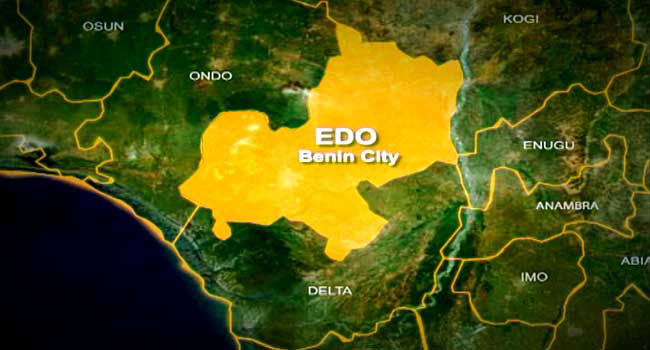
Edo State Governor, Senator Monday Okpebholo, has charged the Managing Director of the Edo State Traffic Control Management Agency (EDSTMA), Engr. Stainless Ijeghede on indiscriminate parking and traffic gridlock, especially in market areas.
According to a statement in Benin City on Friday, by Chief Press Secretary to Edo State Governor, Fred Itua, his principal gave the charge while decorating Ijeghede with his new rank as the head of EDSTMA.
He noted that while addressing the new Managing Director and his personnel at the Exco Chambers in Government House, Gov Okpebholo pointed out that the agency should do its job well by ensuring free flow of traffic across the state.
He called on Ijeghede and men of the agency to ensure they checked indiscriminate parking of vehicles and buses, especially in market areas.
“Edo State belongs to all of us and whatever we are doing, we should do it with care not to harm anybody. I appeal to EDSTMA to ensure that the city is well kept because whenever I drive round town, I see vehicles everywhere as the city is not well kept.
“This is your primary assignment. You should ensure the city is well kept as vehicles park indiscriminately and they are causing obstruction. Traffic is not flowing as it should and it is causing serious gridlock. Is it that you are not doing your job well?
ALSO READ: Leadership Newspaper Backs Adeleke For Second Tenure, Names Him ‘Gov Of The Year’
“Is it that you are not doing your job well or because you have a new leader that is why traffic is not flowing, or because you don’t know your job?
“You people should wake up and keep the state clean. Make sure that vehicles are parked well especially in the market areas. Monitor markets very well as these areas are looking really unkempt with vehicles and buses parked indiscriminately, causing traffic gridlock. Edo people are worst hit. They suffer from this. Ensure free flow of traffic so that the people will be happy,” Governor Okpebholo emphasized.
The EDSTMA boss, thanked Gov Okpebholo for the opportunity to serve the people of Edo State and assured him of the loyalty of the agency.
He added that his men will do their job professionally and ensure that the is free flow of traffic across the state.






Kano Police Warn Residents Of Imminent Terror Attack Threats
TCN Completes Relocation Of 8 Towers, Ends Power Rationing In Abuja
Ifon-Ilobu-Erin Osun Land Disputes: Osun Constitutes A 100-Member Boundary Resolution Committee
Savannah Energy Provides Unaudited FY 2024 Trading Updates

Okpebholo Moves To End Indiscriminate Parking, Gridlock In Edo State
Leadership Newspaper Backs Adeleke For Second Tenure, Names Him ‘Gov Of The Year’
OSSG Raises Alarm Over Murder Plot By APC Chieftain

NCC, SMEDAN, NAICOM, SEC, Others Set for SUPERNEWS SMEs Conf June 13
Sahara’s Tonye Cole resigns from GPHCDA
Niger Delta Avengers: President Buhari Reads riot Act …considers the carrot and stick option

Oando opens ultra-modern petrol station in Lagos
Elwin Spencer
January 14, 2024 at 12:34 am
What i do not understood is in truth how you are not actually a lot more smartlyliked than you may be now You are very intelligent You realize therefore significantly in the case of this topic produced me individually imagine it from numerous numerous angles Its like men and women dont seem to be fascinated until it is one thing to do with Woman gaga Your own stuffs nice All the time care for it up