
NEWS
Tinubu Proposes Two-State Solution To Israeli-Palestinian Conflict

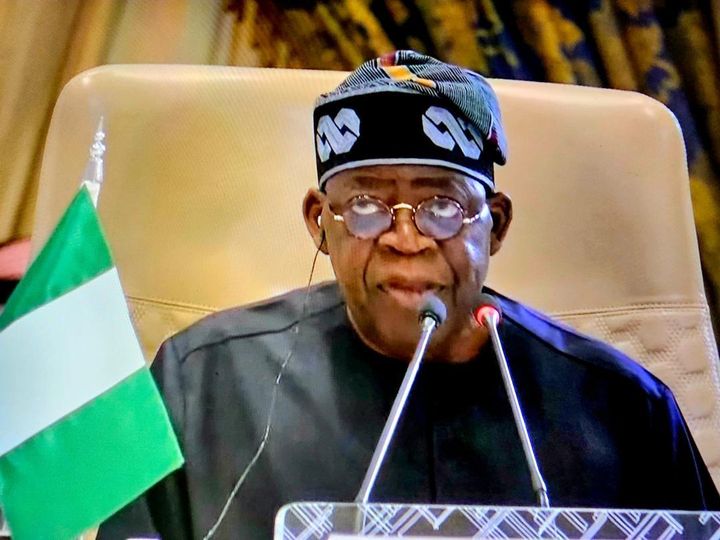
Nigeria’s President Bola Tinubu, on Monday in Riyadh, Saudi Arabia, called for an end to Israeli aggression in Gaza, warning that “the conflict in Palestine has persisted for far too long, inflicting immeasurable suffering.”
This was revealed in a statement by the Special Adviser to the President (Information & Strategy), Bayo Onanuga.
Biztellers reports that President Tinubu was addressing the extraordinary Arab-Islamic Summit, convened with a view to resolving the current situation in the Middle East.
He expressed deep concern about the humanitarian conditions in Gaza.
ALSO READ: Trump Presidency An Opportunity For African Leaders, Says Yemi Adeoye
The one-day summit was a follow-up to the Riyadh summit last year and was attended by Heads of State and Government of the Organization of Islamic Cooperation (OIC) and the League of Arab States.
Reiterating Nigeria’s call for an immediate ceasefire in Gaza, President Tinubu affirmed the country’s support for a two-state solution where both Israelis and Palestinians can coexist in security and dignity.
He noted that this solution remained a viable part to lasting peace in the region.
”The conflict in Palestine has persisted for far too long, inflicting immeasurable suffering on countless lives.
”As representatives of nations that value justice, dignity, and the sanctity of human life, we have a moral obligation to collectively bring about an immediate end to this conflict.
”It is not enough to issue empty condemnations. The world must work towards an end to Israeli aggression in Gaza, which has persisted for far too long.
“No political aim, no military strategy, and no security concern should come at the expense of so many innocent lives,” he said.
The Nigerian leader called on parties in the conflict in the Middle East to respect the principles of proportionality and the basic rights of civilians, consistent with global legal and diplomatic frameworks.
”In a rules-based international order, States have the right of self-defence. But self defence must take proportionality into account, in line with global legal, diplomatic – and moral – frameworks.
”An entire civilian population, their dreams and futures, cannot be dismissed as collateral,” he said.
Explaining Nigeria’s principled and consistent stance on the two-state solution, President Tinubu noted that it stands as a beacon of hope, representing the rights of both Israelis and Palestinians to self-determination and peace.
”It is not just a diplomatic article of faith; it is a vision grounded in the principles of equality and mutual recognition.
”Achieving this vision requires a commitment to dialogue and respect for history. We all know this conflict did not begin on October 7 in 2023. It can only be resolved through principled compromise, based on appreciation of the proper context.
”This conflict, in the cradle of history, is so visceral that the ripples of division spread far and quickly. The corrosive impact of the images of endless violence, repeated on a billion smart phones around the world is huge. We need to find new pathways to peace, without delay,” he said.
The Nigerian leader commended King Salman of Saudi Arabia and Crown Prince Mohammed bin Salman for convening the summit, describing it as a vital opportunity to renew diplomatic efforts and work toward a sustainable peace.
He assured that Nigeria, given its own experiences, would continue to support international efforts that advance peace and stability in the Middle East.
”Our own experiences, domestically and regionally, have taught us that identity politics are no substitute for respecting the nuances of diversity,” he said.
According to President Tinubu ”the path to reconciliation may be fraught with challenges, but it is through honest conversation that we can foster understanding.
”The international community has the opportunity to bring to bear new thinking on this most relentless challenge.
”It is our duty to engage in this dialogue with sincerity and resolve, recognising the complexities that each side faces.”
President Tinubu called for the establishment of a secretariat to implement the resolutions of the Summit.
He urged the leaders to mandate a select group of Heads of Government to canvass support globally and oversee the implementation of the Summit resolutions. These heads would provide regular reports to a joint OIC and Arab League leadership until permanent peace is achieved in the Middle East.
In his opening remarks, Saudi Arabia’s Crown Prince Mohammed bin Salman condemned Israeli actions in Gaza and Lebanon, including the targeting of civilians and the continued violation of the Al-Aqsa mosque.
He also condemned the Israeli ban on the United Nations Relief and Works Agency for Palestine Refugees (UNRWA) from delivering relief aid to Palestinians and the displacement of Lebanese people.
He emphasised the importance of preserving Lebanon’s sovereignty and territorial integrity.
The Crown Prince highlighted Saudi Arabia’s role in promoting Palestinian statehood based on the 1967 borders, mentioning international recognition and the establishment of a Global Coalition with the European Union and Norway.
President Tinubu urged more states to join the Global Coalition.







Former Delta State Governor, Dr Emmanuel Uduaghan, has reportedly died, according to sources said to be close to his family.
The sources confirmed the development on Monday, October 19, 2026, although details surrounding the circumstances of his death remained unclear as of the time of filing this report.
“Uduaghan is no more; he is dead,” one of the sources reportedly said.
SEE ALSO: Document reveals Akpoti-Uduaghan demanded N10b damages from husband before marriage, firm reacts
The reported death comes months after claims that the former governor had died circulated on social media before being dismissed by his media aide, Henry Unini.
In June, reports of Uduaghan’s alleged death spread across Facebook and WhatsApp, prompting Unini to publicly debunk the claims and assure the public that the former governor was alive.
“I can tell you for a fact that Dr. Emmanuel Uduaghan is alive,” Unini said at the time.
“Frankly, I don’t know where the writer got his information from. The death of someone is not something you take and write about casually,” he added.
Unini acknowledged at the time that Uduaghan had been experiencing health challenges but maintained that he was receiving medical attention.
“It is now common knowledge that Dr. Emmanuel Uduaghan has been sick, but he is receiving proper medical care,” the media aide said.
He also stated that the former governor was recuperating, assuring the public that there was no immediate cause for concern.
“There is no cause for alarm whatsoever,” Unini said.
The media aide thanked friends, well-wishers and residents of Delta State who contacted the family to verify the former governor’s condition. He also urged the public to avoid spreading unverified information.
“The rumour was uncalled for,” he said while addressing the earlier reports.
As of the time of filing this report, further details about the circumstances surrounding Uduaghan’s reported death had yet to emerge.
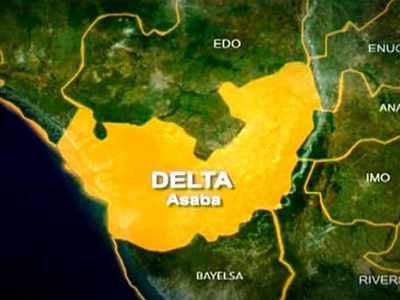
The Delta State Government has commenced a ₦5 billion grassroots empowerment programme targeting 100,000 small-scale business owners and other beneficiaries across the state’s 500 wards.
The initiative, announced on Monday, will see each beneficiary receive ₦50,000 to support small businesses, strengthen household finances and stimulate economic activities across the state.
SEE ALSO: Two Arrested as Delta Police Uncover Cache of Illegal Weapons
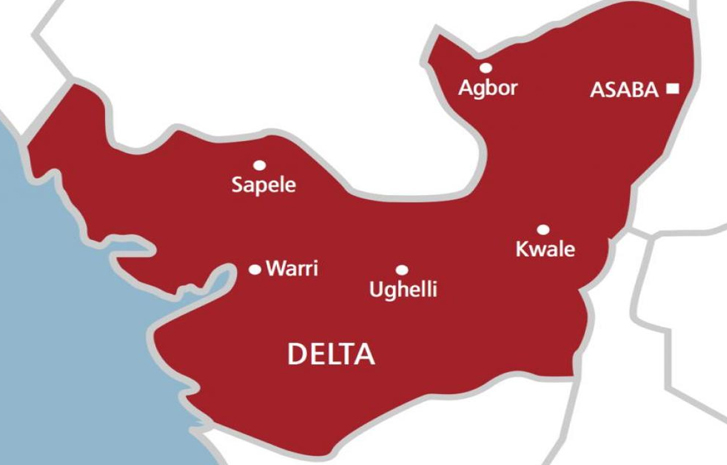
The Executive Assistant to the Governor on Public Enlightenment (Projects and Policies), Mr Olisa Ifeajika, disclosed this while speaking with journalists in Asaba.
Ifeajika explained that the programme was designed to complement the state government’s investments in critical infrastructure with direct financial assistance to residents.
According to him, Governor Sheriff Oborevwori directed local government councillors to facilitate the distribution of the funds, with each of the 500 wards expected to reach at least 200 beneficiaries.
He added that the initiative reflects the administration’s commitment to improving livelihoods and expanding economic opportunities for Deltans, in line with the people-centred objectives of the MORE Agenda.
The Minister of Education, Dr Maruf Tunji Alausa, has commended Alhaji Aliko Dangote and the Aliko Dangote Foundation for plans to acquire Initial Public Offering (IPO) shares of Dangote Refinery on behalf of eligible Nigerian tertiary institution students.
Alausa described the initiative as an innovative approach to promoting financial literacy, youth empowerment and wealth creation among young Nigerians.
According to a press release issued by the Federal Ministry of Education on Monday, October 19, 2026, the initiative is expected to benefit up to four million students aged 18 and above, with each eligible student expected to receive 10 IPO shares without requiring prior investment or share purchase.
The minister said the programme would expose students to capital markets, responsible investing and long-term financial planning, preparing them for greater economic participation and financial independence.
He noted that the initiative aligns with the Nigeria Education Sector Renewal Initiative (NESRI) and President Bola Ahmed Tinubu’s Renewed Hope Agenda by connecting education with enterprise, human capital development and inclusive economic growth.
According to Alausa, the initiative reflects the importance of partnerships between the education sector and private organisations in equipping young Nigerians with the knowledge and skills needed to participate in the economy.
He said the Federal Ministry of Education remained committed to strengthening private-sector partnerships to improve educational quality, relevance, equity and efficiency while preparing learners for a changing economy.
While appreciating the foundation’s contribution to youth development, the minister clarified that the ministry’s commendation was based on the initiative’s educational and developmental value.
He stressed that the ministry’s position “does not constitute an endorsement of any particular investment decision.”
Alausa also encouraged other corporate organisations to support similar initiatives that promote financial awareness, economic productivity and entrepreneurship among young Nigerians.
He urged businesses to support NESRI and the Renewed Hope Agenda in building a financially informed and economically productive generation.






JUST IN: Ex-Delta Governor Emmanuel Uduaghan Is Dead

Delta Begins ₦5bn Empowerment Scheme for 100,000 Beneficiaries
Alausa Hails Dangote Foundation’s Plan to Give Four Million Students IPO Shares
APC Campaign Council Sets Inaugural Meeting for Tuesday Ahead of Kaduna Flag-Off

Renaissance Capital Sees Significant Upside in Dangote Refinery, Lifts Valuation by 33.4%

Dangote Refinery IPO Elicits Participation in 90 Countries Globally

Trump’s Family Unveils New Cryptocurrency Platform

Senate Denies Receiving Petitions Against Tinubu’s Ambassadorial Nominees

Dangote Cement Lights Up Benue Host Communities With CSR Initiatives

Reps Recommend 3-year Jail Term For Aviation minister

Tems Sets New Record On Billboard Hot 100 Chart
