
Business
Tough Times: NANTA’s Annual Revenue Drop by $500m

Exorbitant airfares amidst a tough economy and harsh operating environment saw the annual ticket sales revenue of the National Association of Nigeria Travel Agencies (NANTA) members drop by up to $500 million in 2022.
National President, NANTA, Susan Akporiaye, stated this at a media briefing in Lagos over the weekend.
She decried that NANTA witnessed an appreciable decrease in ticket sales during the period because Nigerian travellers came under the burden of exorbitant ticket fares.
It was gathered that this was compounded because foreign airlines operating in Nigeria had blocked all low ticket inventories on their websites and resorted to selling the highest inventories to passengers in the course of 2022.
There was also the issue of increase in airfares. Akporiaye noted that airfares had risen to over 400 percent to all international destinations.
She traced the development to the trapped ticket proceeds running into about $550, and alleged that these issues had compelled Nigerian travellers to take patronage to foreign agents.
In her words, “The situation at hand has made Nigerian travellers to patronise agents in other African countries.
“Only less than 30 percent tickets sold in Nigeria were done by local agents, with this, the Nigerian government is losing a lot of tax.
“To reduce the amount of money that would be trapped in Nigeria, the foreign airlines have also stopped local travel agents from issuing tickets emanating from other countries into Nigeria.”
According to her, NANTA was pained, anxious, and worried, because of the consequences, which include job losses.
She urged the government to consider the security risks to Nigerians travelling across borders to connect cheaper flights, which she described as worrisome.
On other factors that contributed to the dwindling fortunes of NANTA members, she listed the forex, neglect of the aviation sector by successive government, and disregard of bilateral agreements.
“Also, the shame of a parallel dollar monetary policy in the travel sector against established national naira monetary policy.
”We are also worried that none of our political parties have deemed it necessary to look at aviation economics, particularly, its homogeneous socio-economic and security opportunities.
“We advise the new government to follow-up keenly on Bilateral Air Services Agreement (BASA) and other extant aviation laws which will open our economy to serious local and foreign investors, we are also remain available for consultation,” Akporiaye said.
In his contribution, National Auditor, NANTA, Yinka Olapade, said that developments in the travel sector had gone so bad that over 720,000 job losses were recorded during the period under review.
He said that the travel sector contributed over 3.6 per cent to the Gross Domestic Product (GDP) of the nation in 2021 but this dropped drastically in 2022.
He called on the Federal Government to look into the problems in the industry further deterioration which could have more negative impact on the national economy.
“This industry should be taken seriously, it is a goldmine that is capable of repositioning the nation in different capacities,” Olapade said.
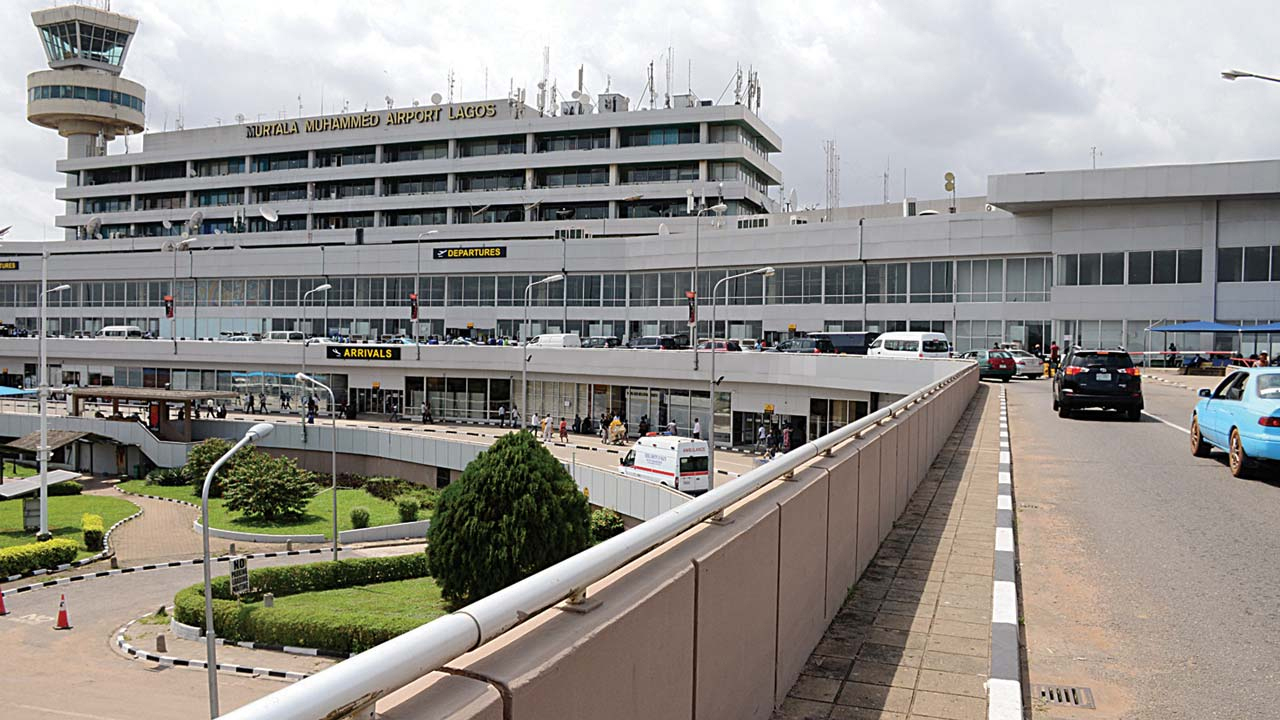










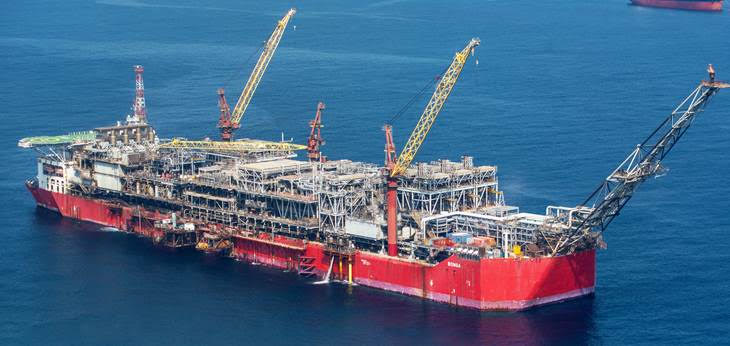
Standard Chartered says it acted as the sole financial adviser to Shell International Limited on the sale of Shell Nigeria Gas Limited to Vaaris Energy Limited, in a transaction expected to be completed in the first half of 2027.
The bank disclosed this in a statement announcing its advisory role in the transaction, which involves one of Nigeria’s leading gas distribution platforms.
Shell entered into an agreement to sell the business on 13 October, 2026, with the transaction expected to provide Vaaris Energy with an established gas infrastructure network serving industrial and commercial customers.
Shell Nigeria Gas provides gas supply solutions to businesses through its extensive distribution infrastructure, positioning the company to benefit from growing domestic gas demand.
READ ALSO: NALPGAM Preaches Innovation, Safety to LPG Operators
Standard Chartered explained that it provided strategic and financial advice throughout the transaction, managing the entire sale process, including transaction preparation and positioning, buyer engagement, deal structuring, negotiations, due diligence coordination and transaction documentation.
Commenting on the transaction, the Chief Executive Officer and Head of Coverage for Africa at Standard Chartered, Dalu Ajene, stated that Nigeria’s gas sector had an important role to play in supporting the country’s economic ambitions and meeting rising domestic energy demand.
“Nigeria’s gas sector has an important role to play in supporting the country’s economic ambitions and meeting growing domestic energy demand. Across Africa, investment in critical energy infrastructure is essential to unlocking industrial growth and long-term development, and this transaction demonstrates the role strategic investment can play in advancing that opportunity. At Standard Chartered, connecting our clients in Nigeria and across Africa to global capital and investors remains a priority. We are pleased to have supported Shell by bringing together the strength of our international network, deep local knowledge and sector expertise.”
The Head of Mergers and Acquisitions for Africa at Standard Chartered, Yemisi Deji-Bejide, said the transaction demonstrated the bank’s capacity to execute complex deals by combining international expertise with local market knowledge.
“We are proud to have advised Shell on the sale of one of Nigeria’s leading gas distribution platforms. As sole financial adviser, we brought together end-to-end M&A execution, deep sector expertise and strong buyer connectivity. This transaction demonstrates the strength of our Africa M&A franchise and our ability to combine global capabilities with local market insight to execute complex, strategically important transactions for our clients.”
The bank said the transaction supported Shell’s ongoing portfolio optimisation strategy while providing a platform for the continued development of Shell Nigeria Gas under Vaaris Energy.
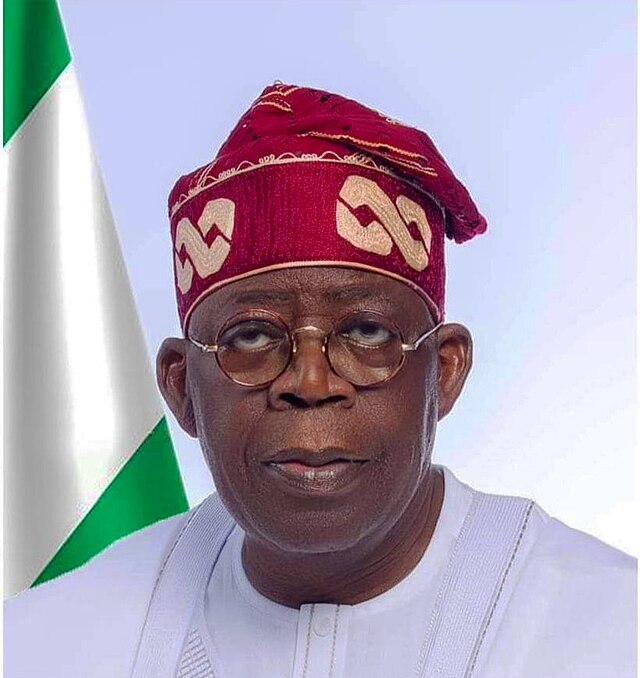
Given the growing capacity of private refiners and their impact on local supplies, Nigeria’s president, Bola Ahmed Tinubu has assured of his government’s commitment to rehabilitating and repositioning Nigeria’s dormant national refineries.
Represented by the Permanent Secretary of the Ministry of Petroleum Resources, Patience Oyekunle, at the 20th OTL Africa Downstream Energy Week in Lagos, on Monday, Tinubu revealed his government’s priorities for the petroleum industry.
He made it clear that the facilities will not be allowed to become stranded investments.
Recall that three government refineries, including the Port Harcourt, Warri and Kaduna refineries, being managed by the Nigerian National Petroleum Company Limited (NNPC Ltd), have been moribund despite billions of naira spent on turnaround maintenance over the years.
READ ALSO: NUPRC Sets Revocation Date for Undeveloped Oil Licences
Speaking at OTL conference, Tinubu said the government was pursuing a more rigorous and commercially sustainable approach to the rehabilitation of the national refineries, with technical assessments, stronger partnerships and improved operational discipline expected to guide the process.
“At the same time, the government remains committed to ensuring that existing national refining assets are not allowed to become stranded investments.
“We are pursuing a more rigorous, commercially sustainable approach to the rehabilitation and repositioning of our refineries, supported by technical assessment, stronger partnerships, and improved operational discipline,“ she stated.
Tinubu emphasised that the objective is to ensure Nigeria refines more of its crude and a fuel supplier to other nations.
“Our objective is clear. Nigeria must first refine more of its crudes, create more value domestically, and become a reliable supplier of energy to Africa,” he said.
The President’s position comes as Nigeria seeks to increase domestic refining capacity and reduce its historical dependence on imported petroleum products, despite having substantial crude oil resources.
He said the country was transitioning from an industry historically characterised by import dependence and infrastructure constraints to one increasingly driven by domestic refining, private investment, market efficiency, value addition and regional competitiveness.
According to him, the reforms introduced under the Petroleum Industry Act (PIA) are intended to create a transparent, commercially viable and investment-friendly industry capable of delivering greater value to Nigerians.
“The reforms under the PIA are designed to create a petroleum industry that is transparent, commercially viable, investment-friendly, and capable of delivering value to Nigerians. Today, we are beginning to see the results,” he said.
Tinubu described the emergence of large-scale private refining capacity as an important turning point for Nigeria’s petroleum industry, citing the Dangote Petroleum Refinery as a major development in the country’s ambition to become a net exporter of refined petroleum products.
He said the refinery had reached its nameplate capacity of 650,000 barrels per day, strengthening Nigeria’s prospects of supplying refined products to other African countries.
“The emergence of large-scale private refining capacity represents an important turning point. The Dangote Refinery has reached its 650,000-per-day main-plate capacity, strengthening Nigeria’s prospect of becoming a net exporter of refined petroleum products and creating opportunities for regional supply,” he said.
The president said the government’s ambition extended beyond increasing crude oil production, stressing that Nigeria needed to develop an energy economy in which its petroleum resources would support industrialisation, manufacturing and other productive activities.
For decades, Nigeria exported crude oil while importing a substantial portion of the petroleum products required to power its economy. Tinubu said his administration wanted to change that pattern by retaining more value within the country through refining, petrochemicals, gas processing and other energy-intensive industries.
He said the government was also seeking to ensure that the country’s oil and gas resources translated into jobs, investment, technology and broader economic prosperity.
“Our commitment is therefore not to simply produce hydrocarbons. It is to create an ecosystem in which hydrocarbons catalyse industrialisation, jobs, investment, technology, and prosperity,” he said.
Tinubu also called on operators across the petroleum value chain to contribute more to domestic industrial development, particularly through investment in local content, technology, infrastructure and human capital.
He said industry stakeholders were expected to take greater responsibility for environmental protection and community development, warning that extracting resources without creating additional value was no longer consistent with the government’s expectations.
“To our industry stakeholders, I say, the era of extracting value without building value is changing. We expect greater investment in local content, technology, infrastructure, human capital, environmental responsibilities, and boost community development,” he said.
The president further urged investors to take advantage of opportunities in Nigeria’s petroleum industry, saying the country remained open to businesses with the technical competence and financial capacity to develop its oil and gas resources.
In his opening speech, the Chairman of the OTL Advisory Board, Adetunji Oyebanji, said Africa’s downstream petroleum industry had made significant progress since the organisation began in 2007, with developments in refining, logistics and market liberalisation expanding the continent’s capacity to meet its energy needs.
Oyebanji said the emergence of large-scale private refining in Nigeria, particularly the Dangote refinery, had changed the prospects for domestic petroleum supply and regional trade.
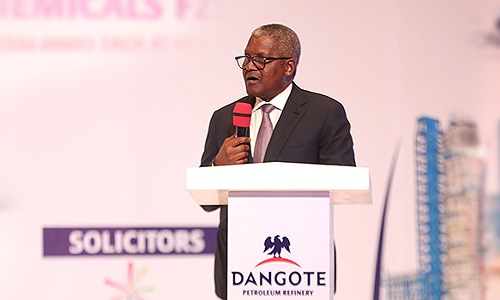
Africa’s ambition of becoming a global industrial powerhouse hinges on its ability to mobilise long-term financing, deliver reliable electricity and adopt policies that turn its vast natural resources into manufactured products.
The President/Chief Executive, Dangote Industries Limited, Aliko Dangote expressed these views in London at the Financial Times Africa Summit during a conversation with David Pilling the Africa Editor of the newspaper.
Dangote, who has outlined a $50 billion investment programme for 2026 to 2030, said the continent must build stronger financial institutions capable of funding large-scale industrial projects, expand electricity infrastructure and establish policies that encourage domestic manufacturing, value addition and economic diversification.
The industrialist maintained that Africa possessed the natural resources, population and investment opportunities required to become a global manufacturing powerhouse, but needed stronger institutions and infrastructure to translate those advantages into sustainable economic prosperity.
Responding to a question on why Africa had produced relatively few industrial enterprises of global scale despite its enormous economic potential, Dangote stressed the need for deliberate policies and institutions capable of supporting long-term industrial investment.
READ ALSO: Thor Empowers Host Communities with 10 Cassava, Palm Oil Processing Plants
The Africa Summit by the FT is a prestigious platform for Africa’s most influential leaders and this year’s Summit lived up to its billing convening leading policymakers, business leaders, financiers and visionaries to explore how Africa can contribute meaningfully to shape the next era of global development.
Dangote said, “I think the number one thing that the continent has to concentrate on doing is having very strong financial institutions, their own financial institutions, and also to have very strong agricultural policy, and also industrial policy”.
He maintained that infrastructure development was equally important but singled out electricity as perhaps the most urgent requirement for unlocking Africa’s industrial potential, adding; “For Africa, what we need the most today is actually power,” he declared.
Dangote explained that inadequate electricity supply continued to undermine Africa’s ability to process its mineral resources locally, forcing countries to export raw materials rather than capture the greater economic value associated with manufacturing and processing. He cited the mining industry as a particularly striking example, noting that companies frequently identified unreliable electricity supply as a major reason for their inability to establish processing facilities close to extraction sites.
According to him, approximately 650 million Africans remain without access to electricity, a deficit he described as fundamentally incompatible with the continent’s industrial ambitions.
He argued that resolving the power crisis would transform Africa’s manufacturing prospects, encourage investment in mineral processing and create substantial employment opportunities.
The industrialist also drew on his experience developing the Dangote Petroleum Refinery and Petrochemicals (DPRP) in Lagos to illustrate how Africa’s financing environment could frustrate even commercially promising projects.
He disclosed that the Group had been compelled to finance the refinery against its own balance sheet rather than depend on conventional project financing, which he described as extremely difficult to secure for major African industrial investments.
He explained that prolonged financing negotiations could undermine the viability of industrial projects by delaying execution, increasing costs and exposing investors to changing economic conditions.
For the Dangote Group, the decision to proceed with the refinery without conventional project finance involved extraordinary financial risks, compounded by severe currency depreciation and the enormous cost of developing supporting infrastructure. Dangote said the exchange rate moved from approximately ₦136 to the dollar to as high as ₦1,800 during the refinery’s development, while about 90 percent of the Group’s revenue was denominated in naira.
Dangote said the Group’s proposed $50 billion investment programme was designed partly to encourage other Africans to recognise the opportunities available across the continent.
“The legacy we are trying to set up is how do we industrialise our continent?” he said.
He explained that the Group intended to expand its investments between 2026 and 2030 to demonstrate that African businesses could execute large-scale projects and encourage other investors to participate in developing the continent. The ambition, he stressed, extended beyond the growth of one conglomerate to creating a wider industrial ecosystem capable of supporting businesses, generating employment and retaining more economic value within Africa.
Dangote also challenged African governments to reconsider their approach to industrial protection, warning that allowing cheap imported products to undermine domestic manufacturing could permanently weaken the continent’s productive capacity. He argued that emerging African industries required appropriate policy support to compete against established international manufacturers, particularly where imported products were sold at prices that discouraged investment in local factories.
He, however, distinguished industrial protection from restrictions on trade between African countries, advocating a regional approach that would strengthen manufacturing while preserving the objectives of the African Continental Free Trade Area. He maintained that African economies should trade more freely among themselves while establishing a common framework to protect their industries against unfair external competition.
The industrialist also questioned why Africa continued to experience widespread poverty despite its extensive agricultural land, mineral resources and youthful population.
He cited the continent’s natural endowments as evidence that Africa’s economic challenges were not principally the result of inadequate resources but of insufficient productive investment and industrial capacity. “Why should we remain poor?” he asked.
Dangote expressed confidence that the continent was entering a period in which African governments, entrepreneurs and investors were becoming increasingly determined to develop their own productive capabilities.






Standard Chartered Inks Deal for Shell Gas Sale
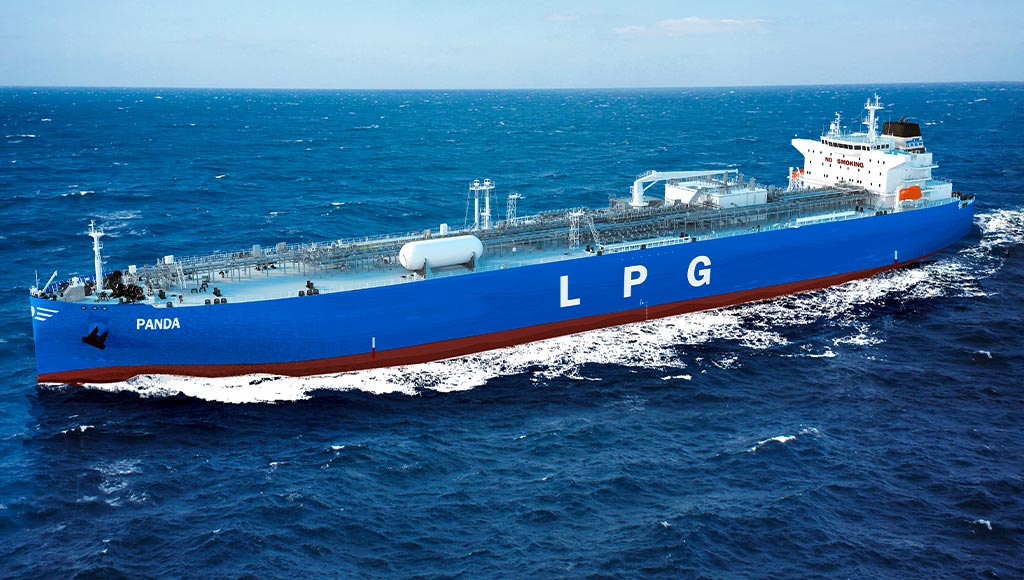
NALPGAM Preaches Innovation, Safety to LPG Operators

Tinubu Promises to Boost Local Production with NNPC Refineries

INEC Opens Online Access to Voters’ Register After Public Outcry

ADC Replies Alake, Says APC’s ‘Falsehood’ Cannot Hide Tinubu’s Failures

‘How Did Tinubu Graduate Before School Existed?’ – ADC Challenges Shettima Over Atiku

Trump’s Family Unveils New Cryptocurrency Platform

Senate Denies Receiving Petitions Against Tinubu’s Ambassadorial Nominees

Dangote Cement Lights Up Benue Host Communities With CSR Initiatives

Reps Recommend 3-year Jail Term For Aviation minister

Tems Sets New Record On Billboard Hot 100 Chart
