
International News
Trump Nears Historic Comeback As Republicans Sweep Key Swing States

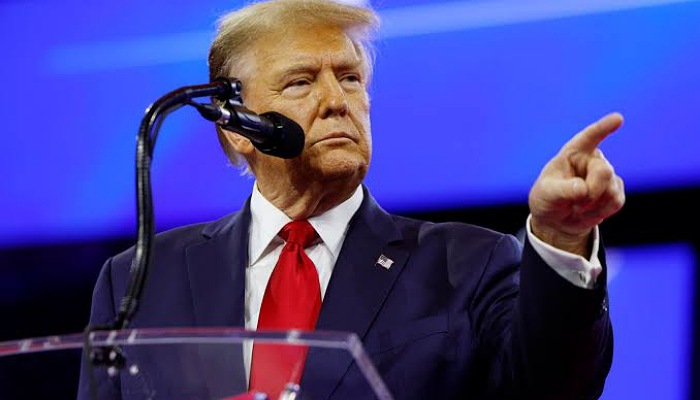
Following Tuesday’s high-stakes election, former President Donald Trump appears set to return to the White House, with Republicans also on track to secure majorities in both the House and Senate.
Trump’s victories in key battleground states, including Georgia and North Carolina, have moved him closer to the 270 electoral votes required to win the presidency.
READ ALSO: Sustainability: Dangote Eyes Planting 10,000 Mangrove Trees In Nigeria
As of early Wednesday, his lead continues to grow as ballots are counted and media outlets project his advantage across crucial states.
For the third election in a row, the American electorate remains nearly evenly divided over Trump’s polarizing presence.
The race between Trump and Vice President Kamala Harris has narrowed in several pivotal states, including Michigan, Pennsylvania, and Wisconsin.
These three states, which were critical in both Trump’s 2016 victory and President Joe Biden’s win in 2020, once again look poised to determine the outcome.
Current vote patterns in the Rust Belt indicate that Trump may be on the verge of flipping these states back into the Republican column.
In 2016, his victories in these industrial regions disrupted the Democratic “Blue Wall” that had held for six consecutive elections from 1992 to 2012, with a razor-thin margin of about 80,000 votes across the three states.
Four years later, Biden reclaimed them for the Democrats by roughly 260,000 votes.
This time, early returns suggest the Rust Belt may swing back to Trump, bolstered by his renewed support in rural and exurban areas where culturally conservative, non-college-educated white voters continue to dominate.
If Trump holds on to his leads in North Carolina and Georgia and secures Arizona, his path to victory becomes all but certain with just one of the three Rust Belt states tipping in his favor.
Should he succeed, he would become only the second president in U.S. history—following Grover Cleveland in the late 1800s—to lose the presidency and regain it in a later election.
Results as of midnight highlight ongoing trends familiar to Trump’s base and Harris’s supporters alike.
Trump is building strong numbers in smaller towns, rural areas, and exurban counties, while Harris has captured significant—albeit, in some places, diminished—support in affluent, diverse suburbs around Philadelphia, Detroit, and Milwaukee.
A new factor this year is Trump’s modest gains among Black and Latino voters, particularly men, according to exit polls from Edison Research.
These shifts are evident in the former “Blue Wall” states as well as in other key regions.
The overall election landscape, despite Trump’s unique role, underscores the historical challenge of retaining the White House when an outgoing president leaves with low approval ratings.
Since World War II, the White House has often flipped to the opposite party in similar situations, as occurred in 1952, 1968, and 2008.
While popular presidents have not always guaranteed a win for their successors, historically unpopular leaders have presented significant barriers to their parties.













Federal agents raided the Washington, D.C., home of Democratic Congresswoman Ilhan Omar early Monday morning as part of an ongoing federal criminal investigation, the United States Department of Justice (DOJ) has confirmed.
Homeland Security Investigations agents arrived at the Minnesota congresswoman’s residence at about 6:00 a.m. Eastern Time, according to a report by Fox News.
SEE MORE: Trump Sparks Outrage With Shock Proposal to Rename New Mexico
The report said both the Department of Homeland Security (DHS) and the DOJ are involved in the investigation.
A DOJ spokesperson confirmed the operation, stating: “Today in the Washington, D.C. area, Homeland Security Investigations executed a judicially authorized search warrant secured by the Department of Justice.”
The spokesperson added: “This enforcement action is part of an ongoing federal criminal investigation.”
Details later……….

Heavy rains have triggered severe flooding across parts of Bangkok, Thailand, forcing nearly 4,900 residents to evacuate to shelters as floodwaters swept through roads and residential areas.
The flooding has disrupted movement across parts of the Thai capital, with motorists and pedestrians forced to navigate submerged roads and seek alternative routes.
SEE ALSO: NAFDAC Warns Nigerians As Fake Cowbell Milk Floods Market
According to the Bangkok Metropolitan Administration, about 52,000 households have been affected by the flooding, prompting authorities to declare a flood disaster and intensify emergency response efforts.
Emergency teams have been deployed to assist affected communities and move residents from vulnerable areas to safer locations as water levels rise.
Bangkok is accustomed to seasonal heavy rainfall, but intense downpours can overwhelm drainage systems, particularly in low-lying areas, resulting in widespread flooding and disruption.
Authorities are continuing to monitor affected locations while coordinating evacuations and other emergency measures.
For thousands of residents, the immediate priority remains securing safe shelter and protecting homes and livelihoods as authorities work to manage the situation and restore normal activities once the floodwaters recede.
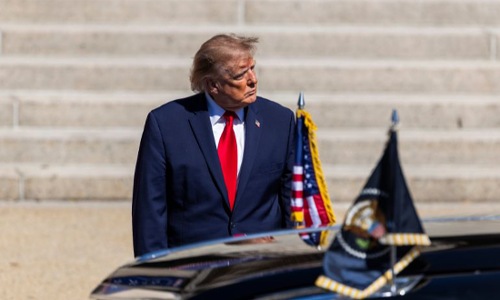
US President Donald Trump has explained his decision to reject Iran’s latest proposal to reopen the Strait of Hormuz, saying Tehran was seeking an agreement because it was losing revenue.
Speaking to reporters at the White House, Trump said Iran wanted to immediately reopen the strategically important waterway but argued that the proposal was not acceptable to his administration.
“They want to make a deal, and I think that’s fine. I like making a deal, too, but that deal would not be acceptable,” Trump said.
SEE ALSO: How the Strait of Hormuz Attack Could Trigger a Fresh Global Oil Shock
According to the US president, Iran’s push to reopen the strait was driven by the economic pressure it was facing.
“What they want to do is immediately open the Hormuz Strait. Do you know why? Because they are dying,” Trump said.
“You know why they’re dying? Because they have no money coming in, because they get their money from the Hormuz Strait.”
Trump also claimed that the US had established an unprecedented naval blockade against Iran, describing it as “a wall of steel.”
“So they outsmarted themselves. We put up the greatest blockade ever in military history. It’s a wall of steel,” he said.
“And guess what? They don’t have any money now because they wanted to close the strait.”
The Strait of Hormuz is a major global energy shipping route, and disruption to traffic through the waterway has significant implications for international oil markets and countries that depend on energy imports.
Trump’s remarks came amid continued tensions between Washington and Tehran over the reopening of the strategic waterway and negotiations involving Iran.






Renaissance, Sterling Bank Back Indigenous Oil and Gas Contractors Financially
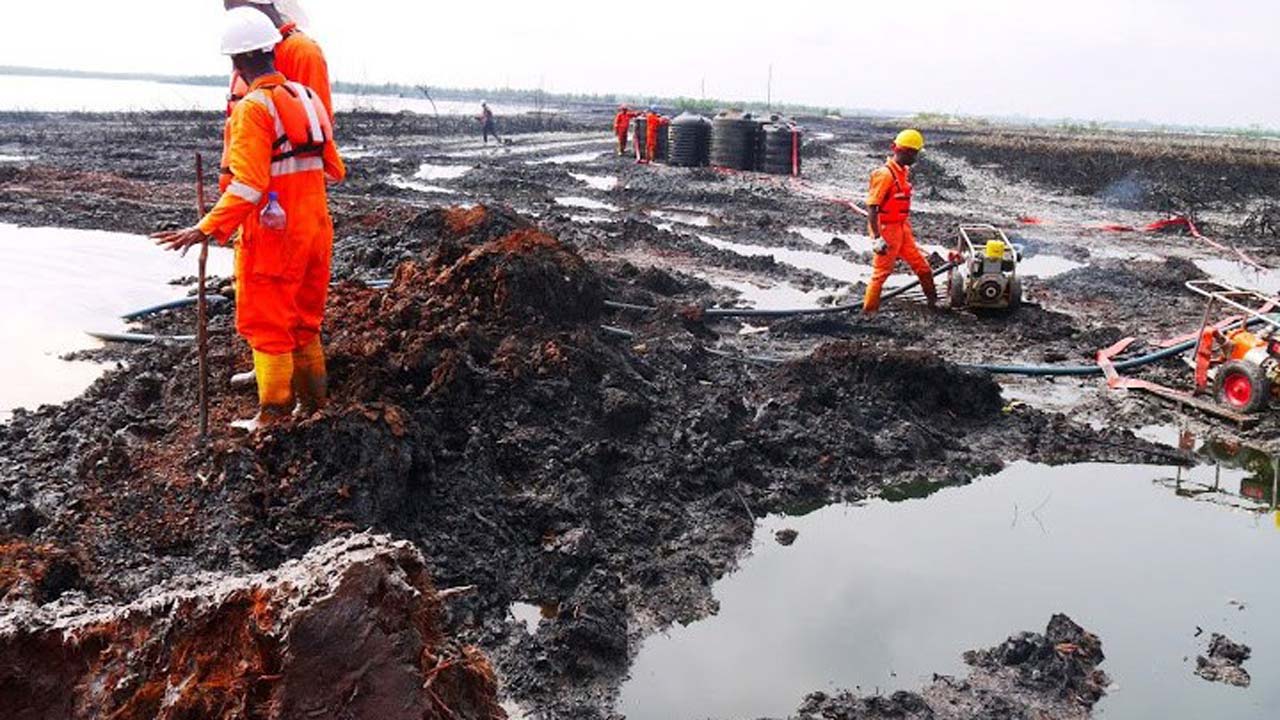
Group Demands Fair Share of NNPC Jobs for Ogoni Oil Exploration

NNPC Ltd Exploration Spending Down 87%

200 Imo Teachers Benefit from NCDMB’s Effective Curriculum Training

FG to Launch National Lead Poisoning Prevention Plan Wednesday

EndSARS Memorial: ‘Nigerians Still Deserve Answers’ – Atiku

Trump’s Family Unveils New Cryptocurrency Platform

Senate Denies Receiving Petitions Against Tinubu’s Ambassadorial Nominees

Dangote Cement Lights Up Benue Host Communities With CSR Initiatives

Reps Recommend 3-year Jail Term For Aviation minister

Tems Sets New Record On Billboard Hot 100 Chart

208951 574300Wonderful site, determined several something completely new! Subscribed RSS for later, aspire to see far more updates exactly like it. 441829
870647 213476Really interesting topic , regards for putting up. 908975
183371 951238I likewise conceive so , perfectly written post! . 810253
887258 964898Wow, great blog layout! How lengthy have you ever been running a weblog for? you make running a blog glance effortless. The total appear of your web website is magnificent, nicely the content material! 235981
7838 33237Hi. Cool write-up. Theres an issue together with your web site in firefox, and you might want to check this The browser may be the market chief and a great section of folks will pass over your fantastic writing because of this problem. 790838