
International News
Trump Travels To DC Ahead Of Third Arraignment

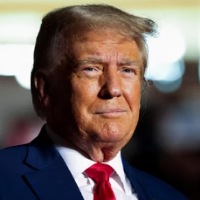
Donald Trump, a former US president, is traveling to Washington, DC, to make his third appearance in a criminal court in four months.
In New Jersey, he boarded Trump Force One, his personal aircraft, for the brief flight to Washington.
Prior to his court appearance on allegations of plotting to obstruct and invalidate the 2020 election results, he is anticipated to have his fingerprints taken.
Mr Trump, 77, is expected to indicate a non-guilty plea.
The new allegations laid out early this week in an indictment, or charge sheet, included a count of “conspiracy to impair, obstruct, and defeat the federal government function through dishonesty, fraud and deceit”.
Thursday’s arraignment is scheduled for 16:00 local time (21:00 BST). Mr Trump will appear before Magistrate Judge Moxila Upadhyaya, while another judge, Tanya Chutkan, will handle the criminal trial.
The Republican politician has already been charged in two other cases: with mishandling classified files and falsifying business records to cover up a hush-money payment to a porn star.
Earlier, Bill Barr, appointed by Mr Trump as attorney general, the most senior US lawyer, said that the ex-president “knew well he lost the election”.
Trump lawyer John Lauro has called the latest indictment an attack on free speech and said: “There’s nothing more protected under the First Amendment [the right to free speech] than political speech.”
But Mr Barr, who quit the top job in the US legal system shortly after Joe Biden won that election in November 2020, said free speech is not a valid defence.
“They are not attacking his First Amendment right. He can say whatever he wants, he can even lie. He can even tell people that the election was stolen when he knew better,” Mr Barr told CNN.










Federal agents raided the Washington, D.C., home of Democratic Congresswoman Ilhan Omar early Monday morning as part of an ongoing federal criminal investigation, the United States Department of Justice (DOJ) has confirmed.
Homeland Security Investigations agents arrived at the Minnesota congresswoman’s residence at about 6:00 a.m. Eastern Time, according to a report by Fox News.
SEE MORE: Trump Sparks Outrage With Shock Proposal to Rename New Mexico
The report said both the Department of Homeland Security (DHS) and the DOJ are involved in the investigation.
A DOJ spokesperson confirmed the operation, stating: “Today in the Washington, D.C. area, Homeland Security Investigations executed a judicially authorized search warrant secured by the Department of Justice.”
The spokesperson added: “This enforcement action is part of an ongoing federal criminal investigation.”
Details later……….
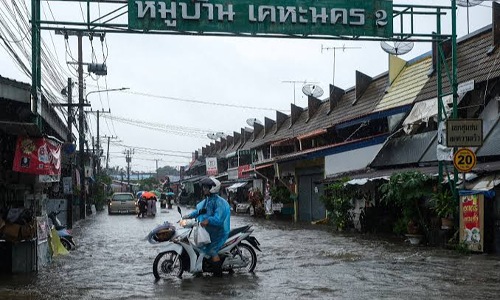
Heavy rains have triggered severe flooding across parts of Bangkok, Thailand, forcing nearly 4,900 residents to evacuate to shelters as floodwaters swept through roads and residential areas.
The flooding has disrupted movement across parts of the Thai capital, with motorists and pedestrians forced to navigate submerged roads and seek alternative routes.
SEE ALSO: NAFDAC Warns Nigerians As Fake Cowbell Milk Floods Market
According to the Bangkok Metropolitan Administration, about 52,000 households have been affected by the flooding, prompting authorities to declare a flood disaster and intensify emergency response efforts.
Emergency teams have been deployed to assist affected communities and move residents from vulnerable areas to safer locations as water levels rise.
Bangkok is accustomed to seasonal heavy rainfall, but intense downpours can overwhelm drainage systems, particularly in low-lying areas, resulting in widespread flooding and disruption.
Authorities are continuing to monitor affected locations while coordinating evacuations and other emergency measures.
For thousands of residents, the immediate priority remains securing safe shelter and protecting homes and livelihoods as authorities work to manage the situation and restore normal activities once the floodwaters recede.
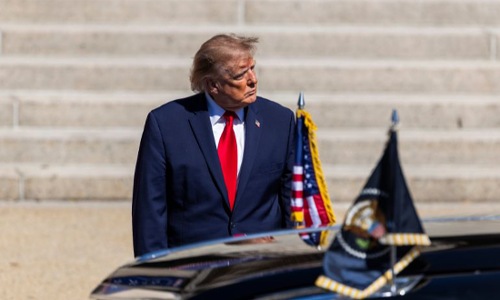
US President Donald Trump has explained his decision to reject Iran’s latest proposal to reopen the Strait of Hormuz, saying Tehran was seeking an agreement because it was losing revenue.
Speaking to reporters at the White House, Trump said Iran wanted to immediately reopen the strategically important waterway but argued that the proposal was not acceptable to his administration.
“They want to make a deal, and I think that’s fine. I like making a deal, too, but that deal would not be acceptable,” Trump said.
SEE ALSO: How the Strait of Hormuz Attack Could Trigger a Fresh Global Oil Shock
According to the US president, Iran’s push to reopen the strait was driven by the economic pressure it was facing.
“What they want to do is immediately open the Hormuz Strait. Do you know why? Because they are dying,” Trump said.
“You know why they’re dying? Because they have no money coming in, because they get their money from the Hormuz Strait.”
Trump also claimed that the US had established an unprecedented naval blockade against Iran, describing it as “a wall of steel.”
“So they outsmarted themselves. We put up the greatest blockade ever in military history. It’s a wall of steel,” he said.
“And guess what? They don’t have any money now because they wanted to close the strait.”
The Strait of Hormuz is a major global energy shipping route, and disruption to traffic through the waterway has significant implications for international oil markets and countries that depend on energy imports.
Trump’s remarks came amid continued tensions between Washington and Tehran over the reopening of the strategic waterway and negotiations involving Iran.






Ebola: IGP Warns Nigerians Against Contact With Suspected Patients’ Body Fluids
‘Nigeria Cannot Do What China Did’ – Oxford Economist Warns

Peter Obi Demands Release of Rilwan Olawale, Accuses Tinubu of Undermining Democracy
Fears of Fresh US Strikes on Iran Fuels Crude Price Surge

Navy Uncovers 132,000 Litres of Stolen Crude Oil in Bonny

Delta Police Arrest School Bus Driver Over Alleged Kidnap, Rape of 14-Year-Old Student

Trump’s Family Unveils New Cryptocurrency Platform

Senate Denies Receiving Petitions Against Tinubu’s Ambassadorial Nominees

Dangote Cement Lights Up Benue Host Communities With CSR Initiatives

Reps Recommend 3-year Jail Term For Aviation minister

Tems Sets New Record On Billboard Hot 100 Chart
