NEWS
UAE Ends Visa Ban On Nigerians Following Meeting With Tinubu

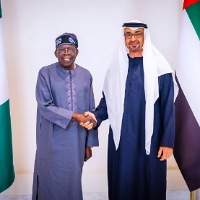

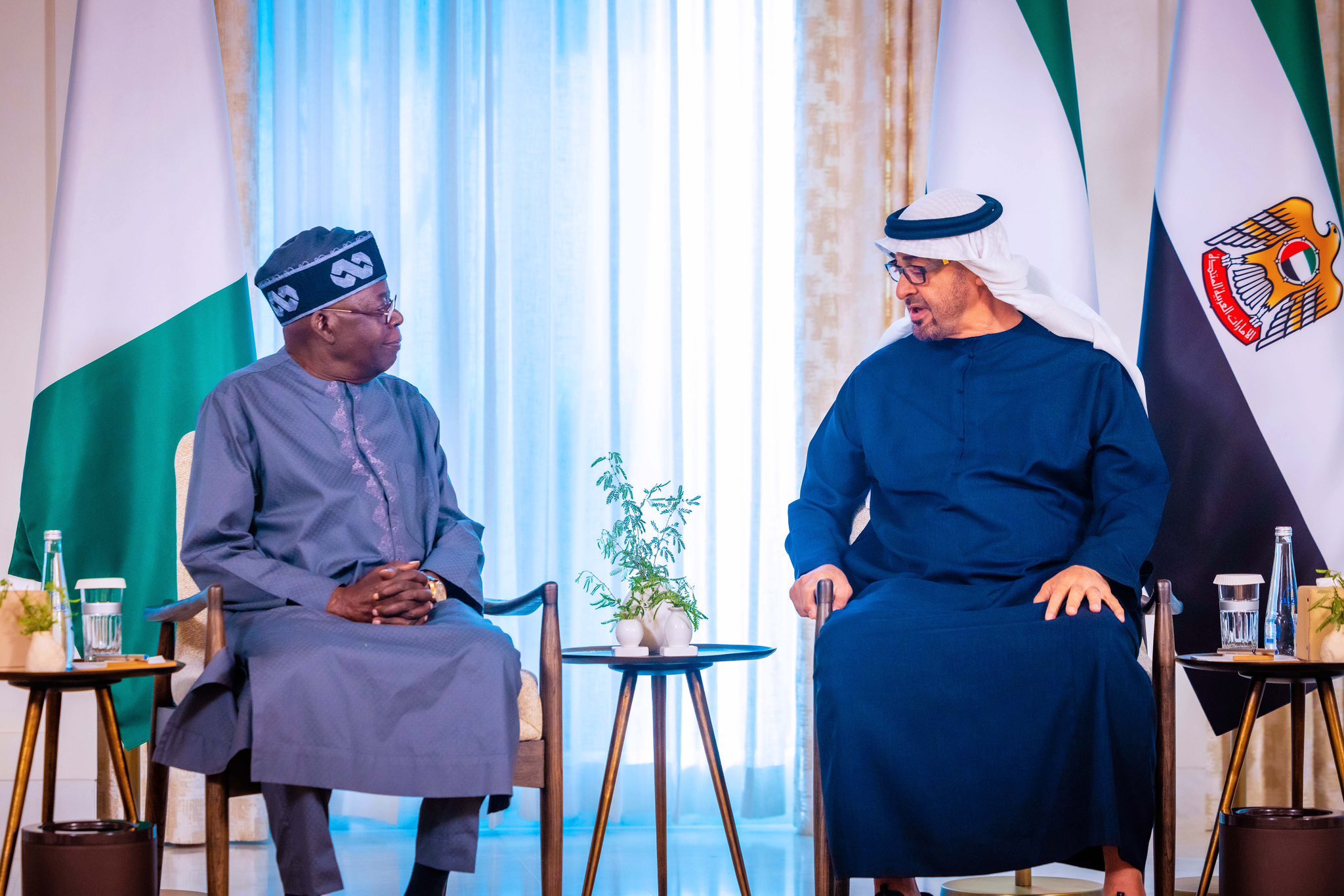
On Monday, the United Arab Emirates ended its lengthy prohibition on granting Nigerians visas.
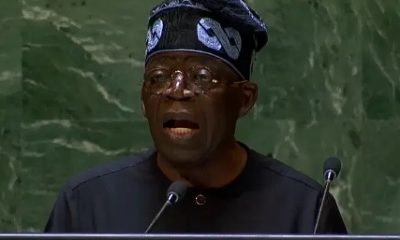
President Bola Tinubu has just signed a historic agreement with the UAE government spanning several sectors.
The choice was made as a result of discussions between Tinubu and Mohamed bin Zayed Al Nahyan, his Emirati counterpart, on Monday in Abu Dhabi.
According to a statement issued by Ajuri Ngelale, Special Adviser to the President
(Media & Publicity), the agreement does not involve any immediate payment by the Nigerian government.
It added: “Furthermore, by this historic agreement, both Etihad Airlines and Emirates Airlines are to immediately resume flight schedules into and out of Nigeria, without any further delay.
“As negotiated between the two Heads of State, this immediate restoration of flight activity, through these two airlines and between the two countries, does not involve any immediate payment by the Nigerian government.”
The statement said that an agreed framework has been established, which will involve several billions of U.S. dollars worth of new investments into the Nigerian economy across multiple sectors, including defense, agriculture and others, by the investment arms of the Government of the United Arab Emirates.
“Additionally, President Tinubu is pleased to have successfully negotiated a joint, new foreign exchange liquidity programme between the two Governments, which will be announced in detail in the coming weeks,” the statement added.
It said Tinubu commended the UAE President for his unalloyed friendship and his determined effort to join hands with him to fully normalize and reset to excellence, the standard of relations between the two important countries.
UAE announced a visa ban on Nigerians in October 2022, following which all submitted applications were rejected and fees not refunded.
The country’s immigration authorities announced that all applications were halted until problems between the governments of the UAE and Nigeria were dealt with.
The authorities had said: “All Dubai applications submitted are now rejected. It is general for Nigerians and approvals are on hold at the moment.
“Kindly advise your clients to resubmit C2=A0 applications when the issue is resolved between both governments.”








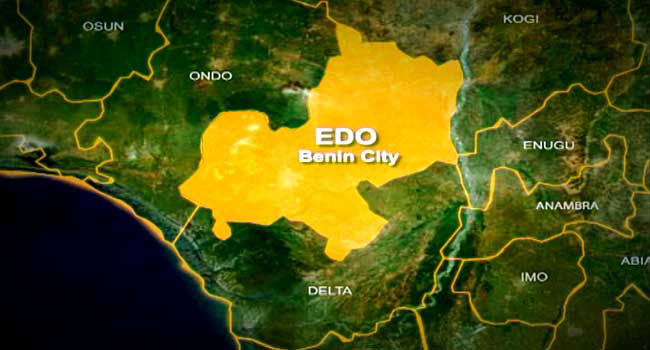
Edo State Governor, Senator Monday Okpebholo, has charged the Managing Director of the Edo State Traffic Control Management Agency (EDSTMA), Engr. Stainless Ijeghede on indiscriminate parking and traffic gridlock, especially in market areas.
According to a statement in Benin City on Friday, by Chief Press Secretary to Edo State Governor, Fred Itua, his principal gave the charge while decorating Ijeghede with his new rank as the head of EDSTMA.
He noted that while addressing the new Managing Director and his personnel at the Exco Chambers in Government House, Gov Okpebholo pointed out that the agency should do its job well by ensuring free flow of traffic across the state.
He called on Ijeghede and men of the agency to ensure they checked indiscriminate parking of vehicles and buses, especially in market areas.
“Edo State belongs to all of us and whatever we are doing, we should do it with care not to harm anybody. I appeal to EDSTMA to ensure that the city is well kept because whenever I drive round town, I see vehicles everywhere as the city is not well kept.
“This is your primary assignment. You should ensure the city is well kept as vehicles park indiscriminately and they are causing obstruction. Traffic is not flowing as it should and it is causing serious gridlock. Is it that you are not doing your job well?
ALSO READ: Leadership Newspaper Backs Adeleke For Second Tenure, Names Him ‘Gov Of The Year’
“Is it that you are not doing your job well or because you have a new leader that is why traffic is not flowing, or because you don’t know your job?
“You people should wake up and keep the state clean. Make sure that vehicles are parked well especially in the market areas. Monitor markets very well as these areas are looking really unkempt with vehicles and buses parked indiscriminately, causing traffic gridlock. Edo people are worst hit. They suffer from this. Ensure free flow of traffic so that the people will be happy,” Governor Okpebholo emphasized.
The EDSTMA boss, thanked Gov Okpebholo for the opportunity to serve the people of Edo State and assured him of the loyalty of the agency.
He added that his men will do their job professionally and ensure that the is free flow of traffic across the state.

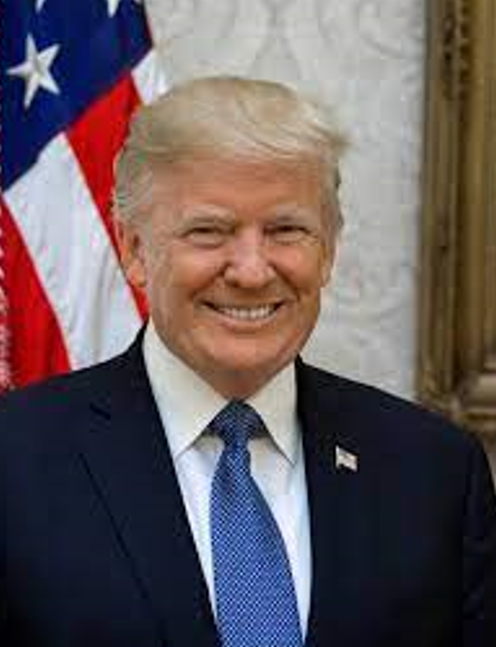
In a controversial move, Republican Representative Andy Ogles has introduced a resolution aimed at amending the U.S. Constitution to permit former and current President Donald Trump to run for a third term in office.
The proposal, announced on Thursday, seeks to revise the 22nd Amendment, which limits presidents to two terms.
Ogles argued that Trump is uniquely equipped to address the nation’s challenges and lead a turnaround for the United States.
READ MORE: EDO: SUBEB Chair, 6 Commissioners, Board Chairs Take Oath Of office
“No person shall be elected to the office of the President more than three times,” Ogles said in his statement. “He has proven himself to be the only figure in modern history capable of reversing our nation’s decay and restoring America to greatness. He must be given the time necessary to accomplish that goal.”
The congressman also underscored the importance of giving Trump the tools needed to address what he described as damage caused by the Biden administration.
“We must provide Trump with every resource necessary to correct the disastrous course set by the Biden administration,” he added.
“He is dedicated to restoring the republic and saving our country, and we, as legislators and as states, must do everything in our power to support him.”
The resolution calls for a constitutional amendment to modify the 22nd Amendment, which was ratified in 1951 following Franklin D. Roosevelt’s unprecedented four-term presidency from 1933 to 1945.
Roosevelt’s extended time in office spurred fears of presidential overreach, leading to the adoption of term limits.
Trump, who won the 2024 presidential election and returned to office, has previously downplayed the idea of seeking a third term.
However, during a conversation with Republican lawmakers, he humorously alluded to the possibility.
“I suspect I won’t be running again unless you do something,” Trump said. “Unless you say, ‘he’s so good, we have to just figure it out.’”
Ogles lauded Trump’s actions during his second term, citing executive orders aimed at securing the southern border, restricting gender identities to male and female, boosting energy production, and withdrawing the U.S. from the World Health Organization.
These measures, according to Ogles, demonstrate Trump’s ability to restore America’s standing and address critical issues.
The 22nd Amendment, proposed in 1947 and ratified four years later, was designed to uphold the principle of limited presidential terms first established by George Washington, the nation’s first president.
Washington voluntarily stepped down after two terms, warning against any president serving so long as to resemble a monarch or dictator.
Republicans currently hold a slim three-seat majority in the House of Representatives, but amending the Constitution is a daunting task.
The proposed amendment would require approval from two-thirds of both the House and Senate, as well as ratification by three-fourths of the states—a high bar in today’s deeply divided political climate.
While Ogles’ proposal is unlikely to succeed, it reflects the enduring loyalty Trump commands among his supporters and within the Republican Party.
The resolution has already drawn criticism from opponents who argue it undermines democratic principles, while supporters insist it is necessary to allow Trump to complete what they view as his mission to “restore America’s greatness.”
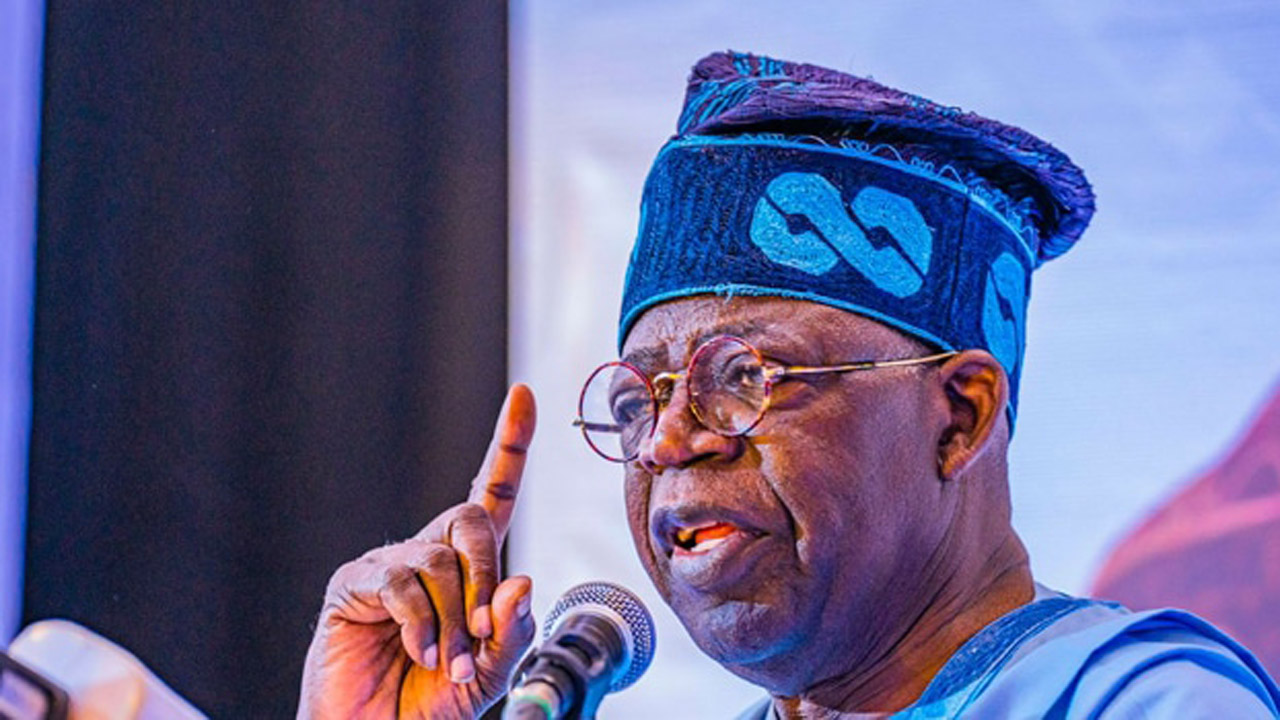
President Bola Ahmed Tinubu has approved the appointment of board chairpersons for 42 federal organizations, alongside other key leadership positions, as part of his administration’s efforts to strengthen governance structures across the country.
Among the notable appointees is Abdullahi Ganduje, National Chairman of the All Progressives Congress (APC), who has been named Chairman of the Federal Airports Authority of Nigeria (FAAN).
Similarly, APC National Secretary, Senator Bashiru Ajibola, has been appointed Chairman of the National Sugar Development Council (NSDC).
READ MORE: Tragic School Bus Fire In Thailand Kills 23, Investigation Launched
The appointments, announced on Friday by the Special Adviser to the President on Information and Strategy, Bayo Onanuga, include key figures from diverse sectors of the country.
In the statement, Onanuga revealed that President Tinubu had also appointed a new Managing Director for the Nigerian Railway Corporation and a Director-General for the National Board for Technology Incubation (NBTI).
“President Bola Ahmed Tinubu has appointed board chairpersons for 42 federal organizations and a secretary to the board of the Civil Defence, Immigration, and Prisons Services,” the statement read.
“The President has also appointed a new managing director for the Nigerian Railway Corporation and a director-general for the National Board for Technology Incubation (NBTI).”
Here is the full list of the appointments announced by President Bola Ahmed Tinubu:
1. Federal Airports Authority of Nigeria (FAAN) – Abdullahi Ganduje (Chairman)
2. National Sugar Development Council (NSDC) – Senator Bashiru Ajibola (Chairman)
3. Nigeria Bulk Electricity Trading Company – Sulaiman Argungu (Chairman)
4. National Agency for Great Green Wall – Senator Magnus Abe (Chairman)
5. National Youth Service Corps (NYSC) – Hillard Eta (Chairman)
6. Nigerian Institute of International Affairs – Prof. Bolaji Akinyemi (Chairman)
7. National Board for Technology Incubation (NBTI) – Kazeem Kolawole Raji (Director-General)
8. Nigerian Railway Corporation – Dr. Kayode Isiak Opeifa (Managing Director)
9. Federal Mortgage Bank of Nigeria – Nasiru Gawuna (Chairman)
10. National Teachers Institute – Festus Fuanter (Chairman)
11. Teachers Registration Council of Nigeria – Mustapha Salihu (Chairman)
12. Industrial Training Fund – Hamma Adama Ali Kumo (Chairman)
13. Nigerian Institute of Educational Planning and Administration – Victor Tombari Giadom (Chairman)
14. Nigerian Postal Service – D.J. Kekemeke (Chairman)
15. National Inland Waterways Authority – Musa Sarkin Adar (Chairman)
16. National Steel Council – Prof. Abdulkarim Kana Abubakar (Chairman)
17. National Environmental Standards and Regulations Enforcement Agency (NESREA) – Garba Datti Muhammad (Chairman)
18. National Bio-Safety Management Agency – Mu’azu Bawa Rijau (Chairman)
19. Nigerian Building and Road Research Institute – Durosimi Meseko (Chairman)
20. Nigerian Institute of Science Laboratory Technology – Donatus Enyinnah Nwankpa (Chairman)
21. Sheda Science and Technology Complex – Senator Abubakar Maikafi (Chairman)
22. Federal Teaching Hospital, Gombe – Zainab A. Ibrahim (Chairman)
23. Federal Teaching Hospital, Ido-Ekiti – Durotolu Oyebode Bankole (Chairman)
24. Federal Medical Centre, Abeokuta – Abdullahi Dayo Israel (Chairman)
25. Federal Medical Centre, Asaba – Dr. Mary Alile Idele (Chairman)
26. Federal Medical Centre, Lokoja – Nze Chidi Duru (Chairman)
27. Federal Medical Centre, Owerri – Emma Eneukwu (Chairman)
28. Federal Medical Centre, Umuahia – Uguru Mathew Ofoke (Chairman)
29. Federal Medical Centre, Yenagoa – Felix Chukwumenoye Morka (Chairman)
30. Federal Medical Centre, Yola – Bashir Usman Gumel (Chairman)
31. David Umahi Federal University Teaching Hospital, Ubuhu, Ebonyi State – Dr. Ijeoma Arodiogbu (Chairman)
32. Nigerian Maritime Administration and Safety Agency (NIMASA) – Yusuf Hamisu Abubakar (Chairman)
33. Federal Scholarship Board – Babatunde Fakoyede (Chairman)
34. National Oil Spill Detection and Response Agency – Edward Omo-Erewa (Chairman)
35. Raw Materials Research and Development Council (RMRDC) – Isa Sadiq Achida (Chairman)
36. Federal Medical Centre, Birnin Kudu – Mohammed Gusau Hassan (Chairman)
37. National Building and Road Research Institute – Yahuza Ado Inuwa (Chairman)
38. Sokoto-Rima River Basin Development Authority – Abubakar Shehu Wurno (Chairman)
39. Aminu Kano Teaching Hospital – Augustine Chukwu Umahi (Chairman)
40. Nnamdi Azikiwe University Teaching Hospital, Nnewi – Ali Bukar Dalori (Chairman)
41. Ahmadu Bello University Teaching Hospital, Shika, Zaria – Lawal M. Liman (Chairman)
42. Civil Defence, Immigration, and Prisons Services Board – Jubril Abdulmalik (Secretary)
43. Nigerian Social Insurance Trust Fund – Shola Olofin (Chairman)
All appointments take immediate effect and the President has directed all board chairpersons to refrain from interfering in the day-to-day management of the agencies, emphasizing that their roles are strictly non-executive.
“President Tinubu directs the board chairpersons not to interfere with the management of the organizations, emphasizing that their positions are non-executive,” Onanuga added.





Savannah Energy Provides Unaudited FY 2024 Trading Updates

Okpebholo Moves To End Indiscriminate Parking, Gridlock In Edo State
Leadership Newspaper Backs Adeleke For Second Tenure, Names Him ‘Gov Of The Year’
$345,000 Fraud: EFCC Withdraws Arrest Warrant For Mercy Chinwo’s Ex-Manager

Lawmaker Introduces Bill To Allow Trump A Third Presidential Run

Belgium Appoints Rudi Garcia As National Team Coach

OSSG Raises Alarm Over Murder Plot By APC Chieftain

NCC, SMEDAN, NAICOM, SEC, Others Set for SUPERNEWS SMEs Conf June 13
Sahara’s Tonye Cole resigns from GPHCDA
Niger Delta Avengers: President Buhari Reads riot Act …considers the carrot and stick option

Oando opens ultra-modern petrol station in Lagos