
Finance
UK investigators in Nigeria, join EFCC to probe Diezani •Ex-minister’s probe began in 2013 –Britain


LAGOS-THE British National Crime Agency has dispatched a team of detectives to Nigeria who are now working with the operatives of the Economic and Financial Crimes Commission to probe Diezani Alison-Madueke, Nigeria’s former Petroleum Minister, during the administration of ex-President Goodluck Jonathan.
Findings by SUNDAY PUNCH revealed that the team of investigators from the UK Police was drawn from the Seizures Organised Crimes Agency.
A top operative of the EFCC, who spoke to one of our correspondents on condition of anonymity on Saturday, said the SOCA team had been involved in a discreet investigation of Alison-Madueke for two months before they finally moved against her.
 The former petroleum minister left Nigeria shortly before the inauguration of President Muhammadu Buhari in May.
It was further gathered that the team from SOCA had been working alongside a team of EFCC operatives from the Subsidy Unit led by a Chief Superintendent of Police.
The EFCC team was constituted in August 2015 by the Chairman of the anti-corruption agency, Ibrahim Lamorde, to investigate the activities of Alison-Madueke and the Nigerian National Petroleum Corporation.
The SU team was mandated to probe all the accounts of the Nigerian National Petroleum Corporation, which were under the supervision of the former minister.
SUNDAY PUNCH gathered on Saturday that the intensified investigation into the activities of the former minister was being supervised by Lamorde and the Director of Operations of the EFCC, Mr. Olusola Adegbite.
Investigations further showed that the operatives from the subsidy unit of the EFCC carried out the operation at Alison-Madueke’s Asokoro residence in Abuja, following her arrest on Friday.
An operative of the commission, who spoke on condition of anonymity, disclosed that the EFCC’s subsidy team ransacked the residence of the former minister for hours.
The operatives were said to have recovered several files from the ex-minister’s residence and they were carted away for further analysis by the combined team of investigators from the EFCC and the SOCA.
It was gathered that the operatives did not find anybody within the residence to guide them, so they had to get some security personnel who had worked with the former minister to gain access into the building through one of the windows.
It was further stated that the operatives later got the keys and searched all the rooms in the house for hours before they carted away the files.
The source said, “When our operatives got there, there was nobody in the building. What they did was to get the security men who were working with her to guide them through the building.
“They entered the building through one of the windows and later found the keys with which they accessed all the rooms. They found some documents in some files and they carted them away.”
Ex-minister’s probe began in 2013 — Britain
Similarly, the NCA has revealed that contrary to speculations that the corruption investigation leading to the arrest of Nigeria’s former Petroleum Minister started in 2013.
The Nigerian media, both the traditional and social media platforms, were awash with reports that it was President Buhari’s recent meeting with the Prime Minister of the United Kingdom, David Cameron, and other world leaders that led to the investigation and arrest of Alison-Madueke.
The ex-minister and current President of the Organisation of the Petroleum Exporting Countries was arrested on Friday by the NCA’s recently formed International Corruption Unit, along with four other persons.
She was arrested in London as part of an investigation into suspected bribery and money laundering offences.
Alison-Madueke was, however, granted bail but her passport was withheld by the British authorities, pending further investigations, both in the UK and other countries.
In an update on its website, the NCA noted that the investigation started about two years ago.
“The investigation commenced in 2013 under the Proceeds of Corruption Unit, and transferred to the NCA earlier this year (2015). The International Corruption Unit investigates bribery of foreign public officials by individuals or companies from the UK and money laundering by corrupt foreign officials and their associates,” it stated.
The UK crime agency added that the ICU would also trace and recover the proceeds of Alison-Madueke’s alleged corruption and support Nigeria’s law enforcement agencies with international anti-corruption investigations.
Meanwhile, the Coordinator of a UK-based group, Security in Africa, Mr. Ben Oguntala, told SUNDAY PUNCH that the arrest and possible prosecution of Alison-Madueke would only scratch the problem of corruption in Nigeria at its surface.
He said, “To have a simple Police Unit in the UK bring up partial evidence of corruption against a former minister is barely scratching the surface. You cannot fight corruption in this manner; it is far too complicated for ordinary corruption prosecution.
“What would have made this case extraordinary would be if Mrs. Madueke decides to reveal all. However, she is unlikely to do that, if your strategy is to arrest her first, embarrass her and drag her through the UK courts with little or insufficient evidence. Now, she will get a good lawyer and make the process the lengthiest as legally permissible.”
According to Oguntala, what President Buhari needs to do is not to allow a UK-led corruption charges.
He noted that the British government’s approach at fighting corruption cases emanating from Nigeria is putting the cart before the horse.
Also reacting to the ex-minister’s arrest, the Executive Director of Coalition Against Corrupt Leaders, Mr. Debo Adeniran, told SUNDAY PUNCH that the news of Alison-Madueke’s arrest in the UK was a good one.
According to him, the news will show the world that Nigeria is serious about fighting corruption and impunity usually perpetrated by its public officials.
“It came as a cheering news when we heard about her arrest in the UK. I felt relieved; at least a big fish has been caught in the cause of our anti-corruption crusade. It also shows that President Buhari is intent on bringing to book those who have looted the country’s treasury.
“We also want the Organisation of Petroleum Exporting Countries as an august organisation to deem it fit to replace Alison-Madueke as its president. She does not enjoy the trust and respect of Nigerians,” Adeniran stated.
Checks on the webesite of OPEC on Saturday night showed that the organisation had been quoting its alternate president, Dr. Mohammed Bin Saleh Al Sada, lately.
There was no recent mention of Alison-Madueke.
Efforts to get the Presidency to comment on the incident failed on Saturday.
The Special Adviser to the President on Media and Publicity, Mr. Femi Adesina, kept mum.
He also refused to speak on whether or not the Federal Government would seek the ex-minister’s extradition.
PUNCH-
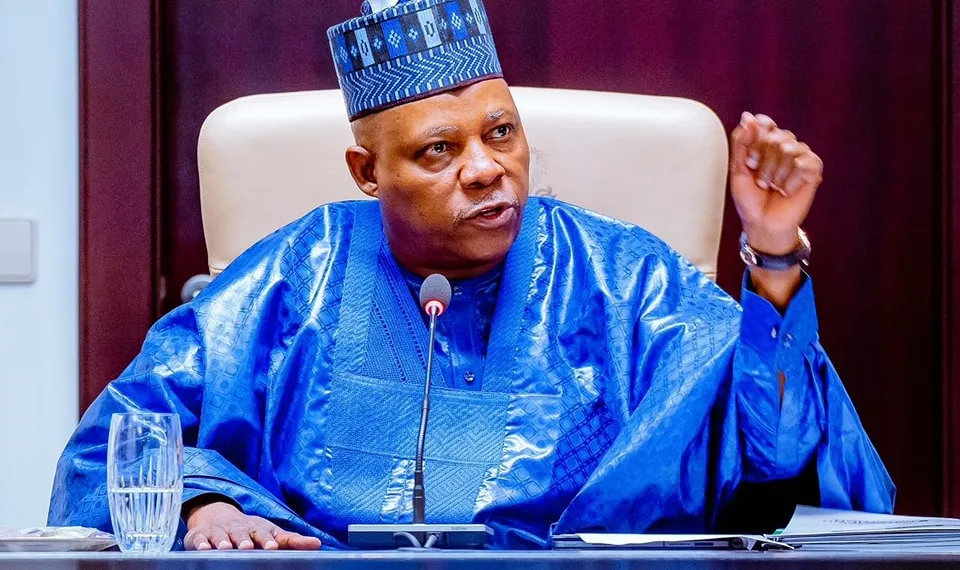
Nigerisa’s Vice President Kashim Shettima
By Modupe Asudo
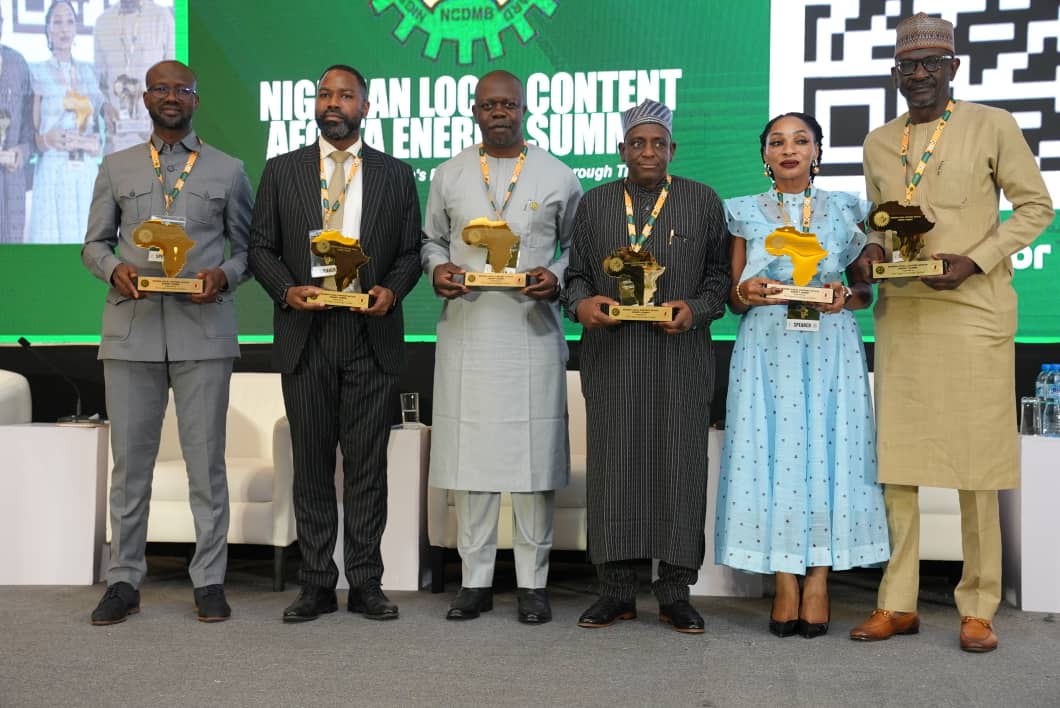
The 2026 edition of the African Continental Free Trade Agreement (AfCFTA) Summit got underway in Lagos on Monday with regulatory agencies, project promoters, and financial institutions focused on deepening intra-Africa trade, a unified code of standards for professional qualifications and manufactured goods, and expansion of the frontiers of technological development and innovation.
Critical questions addressed include how AfCFTA’s 1.4 billion population and $3.4 trillion economy could achieve “a strategic shift from fragmented economies towards a globally competitive supply chain system”; how Africa could leverage its vast mineral resources, including copper, iron ore, petrochemical, for domestic production of hardware such as Christmas tree (an assembly of valves, fittings on top of a wellhead to control oil production), and how, hypothetically, Tema Shipyard in Ghana could be designated the vessel construction, assembly and repairs hub for Africa.
Related questions were how cables manufactured in Nigeria, hypothetically, could benefit from favourable trade terms in Angola; what compliance requirements a sacrificial anode producer in Nigeria would have to meet in regard to the rule of origin requirement to export anodes to Algeria for protection and longevity of pipelines, storage tanks, offshore platforms, etc., and what other support levers would be required to achieve energy security for Africa besides expanded refining capabilities in Dangote Refinery, laying of continental gas transmission pipelines, and establishment of industrial parks and other support infrastructure.
In a keynote address at the event, the Executive Secretary of the NCDMB, Engr. Felix Omatsola Ogbe, represented by the Director, Corporate Services, Dr. Abdulmalik Halilu, disclosed that Nigeria’s oil and gas industry embraced AfCFTA and developed a framework for domesticating the policy in 2022.
According to him, implementing AfCFTA in the industry was anchored on three broad pillars, namely, Opportunities Identification, Capacity Development, and Capacity Exportation. In regard to opportunities, he said Nigeria’s strength lies in formidable supply chain in oil field services, refining capacity, oil field logistics base, gas supply pipelines, and a pool of qualified oil field technical workforce.
On capacity development, he pointed out that Nigeria’s oil and gas industry, through the local content law, has developed capabilities in the oil and gas value chain spanning marine vessel asset ownership, fabrication, assembly and installation of production systems, including Christmas trees, pressure vessels, and pumps.
What remains unresolved, described by the Executive Secretary as “the next frontier and the reason for convening the Summit,” is capacity exportation. He posited for consideration a unified work permit and visa that would enable, say, “a welder in Senegal to be engaged in Arlec Engineering Works, Johannesburg, South Africa, for fabrication of heat exchangers, storage tanks, pressure tanks, pressure vessels, etc.”
In examining the importance of achieving continental economic integration, Engr. Ogbe explained that strong regional supply chains would shift Africa from exporting raw materials to producing high-value goods. For pathways to integration, he listed regional value chains, infrastructure connectivity, regulatory harmonization, industrial clusters, and small and medium scale enterprises (SME) inclusion.
He assured industry stakeholders and participants maximum support by the NCDMB.
By Modupe Asudo
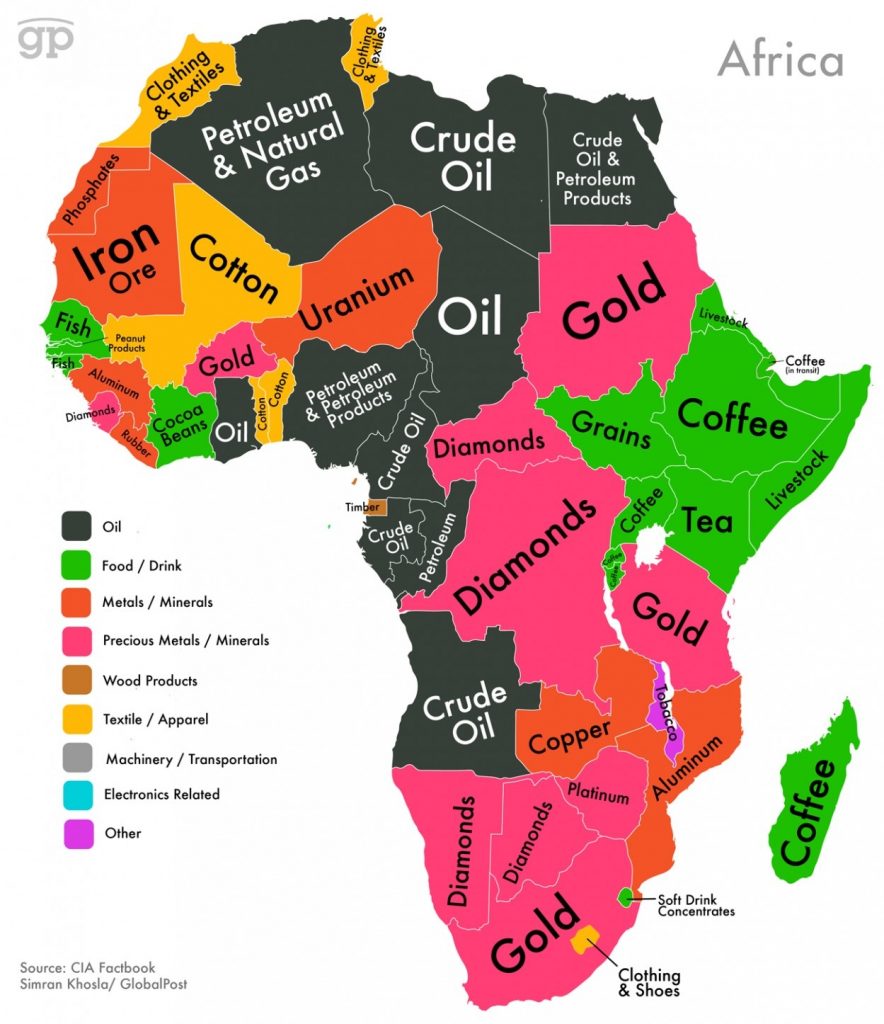
The Nigerian Content Development and Monitoring Board has outlined a practical framework for positioning Nigeria’s energy sector to access the African Continental Free Trade Area, following a strategic webinar focused on meeting rules-of-origin requirements for continental trade.
The Board held a pre-conference webinar on Wednesday ahead of the Nigeria Local Content AfCFTA Energy Summit scheduled for Monday, February 9, 2026.
The engagement was attended by stakeholders from the oil and gas, power and renewable energy sectors, and they addressed how Nigerian products and services can qualify for preferential market access across 54 African countries with a combined gross domestic product of $3.4tn and a population of about 1.4 billion people.
 Entitled ‘Meeting AfCFTA Origin Requirements in Energy Trade’, the webinar focussed on one of the major barriers facing Nigerian exporters under AfCFTA — structuring production and operations to meet origin requirements that determine eligibility for duty-free and preferential trade.
The initiative was supported by the Executive Secretary of NCDMB, Engr. Felix Omatsola Ogbe, and the Acting Director of Planning, Research and Statistics, Mr. Ene Ette, as part of preparations for the forthcoming Nigeria Local Content AfCFTA Energy Summit, with the theme ‘Unlocking Africa’s Energy Future through AfCFTA: Trade, Innovation and Regional Integration’.
Speaking during the session, a communications analyst, Joseph Nwokedi, representing the Acting National Coordinator of Nigeria’s AfCFTA Coordination Office, Mrs Patience Okala, stressed the central role of energy in Africa’s economic integration under AfCFTA.
He urged Nigerian companies to shift their focus from Nigeria’s domestic market of about 200m people to the wider continental market of 1.4bn consumers.
“Without energy, there’s no industrialisation. Without energy, regional value chains remain aspirational,” Nwokedi said. “With AfCFTA, energy transforms from a domestic infrastructure issue into a tradable, investable and exportable sector within an integrated African market.”
He noted that even one per cent penetration of the African market translates to about 14m consumers, underscoring the scale of opportunity available to Nigerian energy firms.
The webinar identified four key pathways through which Nigeria’s energy sector can participate in AfCFTA-enabled trade. First, Nigeria’s Electricity Act of 2023 allows independent power producers to supply electricity directly to industrial clusters and export processing zones, positioning power generation as a foundation for trade-ready manufacturing.
Second, the country has submitted commitments under AfCFTA that enable professionals such as engineers, electricians, geophysicists and energy auditors to export services across Africa, subject to mutual recognition of qualifications.
Third, refined petroleum products, gas derivatives, electricity and renewable energy components can be traded across borders under preferential tariffs, provided they meet AfCFTA rules of origin.
Fourth, AfCFTA’s investment protocol, combined with recent domestic reforms, including the Presidential Directives on Investment Incentives for 2024–2025, strengthens Nigeria’s credibility for attracting cross-border investments in power generation, transmission, renewable energy and storage infrastructure.
Delivering a technical presentation, Assistant Comptroller of Customs, Burhan Sulaiman, explained that AfCFTA would eliminate tariffs on 90 per cent of goods traded within the bloc over five to 10 years, with an additional seven per cent liberalised over 13 years. However, he stressed that these benefits were conditional on meeting origin requirements.
“Companies lose benefits because origin was treated as an afterthought,” Sulaiman said. “You must build in origin compliance from the beginning, not while already running your project. Origin determines whether you export duty-free or pay full tariffs.”
He clarified that origin is determined by where economic production takes place, not by company ownership or registration. Foreign-owned companies producing in Nigeria can export as Nigerian origin, while Nigerian companies importing finished goods cannot claim AfCFTA preferences.
Sulaiman explained that products qualify for preferential access through two routes. “Wholly obtained” goods are entirely produced within AfCFTA member states, such as crude oil and natural gas extracted in Nigeria, as well as locally generated electricity regardless of fuel source.
The second route, “substantial transformation”, applies where foreign inputs are used and requires compliance with one of three tests: a change in tariff classification; a value-addition threshold limiting foreign content to between 30 and 60 per cent of ex-works price; or completion of specific prescribed processes such as distillation, cracking or reforming for petroleum products.
He provided sector-specific guidance, noting that in oil and gas, locally extracted crude and gas qualify, just as refined petroleum products that meet processing requirements. However, simple blending, basic distillation operations and modular refineries using imported crude without substantial transformation do not qualify.
In the power sector, he explained, locally generated electricity and regionally manufactured equipment with deep component transformation qualify, while installation-only activities, imported turbines, transformers and switchgear mounting do not.
“For renewables, regional solar cell and battery cell manufacturing with deep component processing qualify,” he said, adding that panel installation alone, simple module assembly and packaging imported batteries do not meet the thresholds.
Sulaiman warned that without regional manufacturing accumulation, power equipment exports fail origin tests.
According to him, the Nigeria Customs Service applies a five-step verification process for origin claims, including confirming accurate HS codes, reviewing production records, testing for minimal operations, verifying African input origins and ensuring consistency across certificates, production records and cost documentation.
“Weak documentation kills origin claims. Even genuinely originating products can be denied if documentation is incomplete or inaccurate,” he noted.
Both speakers emphasised that origin compliance should be treated as a core business strategy rather than a regulatory formality.
“Origin is not paperwork; it is strategy,” Sulaiman said. “It shapes where you locate facilities, how you source inputs, and where you sign regional contracts. Treat it as strategic from day one.”
Nwokedi urged Nigerian firms to act early. “AfCFTA is happening now. Early movers will shape supply chains, standards and partnerships. Are you going to lead, or simply follow?”
Officials also provided updates on AfCFTA implementation, noting that 92 per cent of rules of origin had been agreed, with negotiations ongoing in the textiles and automotive sectors.
An online dispute resolution mechanism has been established to coordinate Customs authorities, standards bodies and complainants.
Nigeria has deployed a fully operational electronic certification system for paperless trade, while Nigerian Customs is introducing risk-management frameworks that could allow exporter self-certification on commercial invoices.
Following a five-year implementation review led by the Minister of Industry and Investment, Dr Jumoke Oduwole, government sensitisation efforts have intensified through partnerships with the Nigerian Association of Chambers of Commerce, Industry, Mines, and Agriculture; Women’s Chambers of Commerce; zonal outreach programmes and ‘P3 engagements’ involving the press, private sector and public institutions.
“The government will not trade under AfCFTA — our exporters will,” officials said. “If they win, we win.”
Nigerian Customs also reiterated its open-door policy for pre-export origin verification to help businesses avoid delays and additional costs at the border.
The webinar highlighted Nigeria’s potential as a regional energy and transition-fuel hub, building on frameworks such as the West African Power Pool to support cross-border electricity trade.
Key recommendations included structuring projects for origin compliance from inception, forming regional joint ventures, aligning with continental standards and leveraging AfCFTA service commitments to export Nigerian energy expertise.
The session ended with confirmation that the webinar was a technical precursor to the Nigeria Local Content AfCFTA Energy Summit, which will convene policymakers, industry leaders and trade experts to develop strategies for maximising Africa’s energy potential under the AfCFTA framework.






Nigeria Wants to Export Electricity to Togo While Citizens Face Outages

Leadership Shakeup: ADC Kicks Off Nationwide Elections

‘Why My Retirement Came at the Perfect Time’ — Ex-IGP Kayode Egbetokun

Airfares Likely to Rise as Aviation Fuel Price Spikes by 80%

Shell Completes Turnaround Maintenance on FPSO, Resumes Production at Bonga

Sahara Group expands fleet with new 40,000 cbm LPG Carrier

Trump’s Family Unveils New Cryptocurrency Platform

Reps Recommend 3-year Jail Term For Aviation minister

Dangote Cement Lights Up Benue Host Communities With CSR Initiatives

Senate Denies Receiving Petitions Against Tinubu’s Ambassadorial Nominees

Tems Sets New Record On Billboard Hot 100 Chart

667166 78031You produced some decent points there. I looked on the net to the concern and located most people go together with together along with your web website. 482704
449725 109059Hello. Great job. I did not anticipate this. This really is a excellent story. Thanks! You produced certain fine points there. I did a search on the topic matter and found the majority of folks will have exactly the same opinion with your blog. 909755
483549 554477Good read. I just passed this onto a buddy who was performing some research on that. He just bought me lunch since I found it for him! Thus let me rephrase: Thanx for lunch! 475762
830096 415883Great information several thanks sharing and reaching us your subscriber list. 667177
750370 836529I appreciate you taking the time to speak about them with people. 963661
70260 721571The write-up posted was quite informative and helpful. You individuals are performing a great job. Maintain going. 60899