
International News
Ukraine Embraces December 25 For Christmas After 100 Years


Ukraine has decided to mark a noteworthy change this year by opting to celebrate Christmas on December 25, a departure from the long-held tradition of observing it on January 7 since 1917.
This shift underscores Ukraine’s ongoing cultural divergence from Russia.
Although both Russia and the West adhere to the Gregorian calendar, Russia maintains the use of the Julian calendar for certain religious observances.
Kyiv’s decision to adopt the December 25 date signals its persistent endeavor to align more closely with Europe.
In his daily address, Ukrainian President Volodymyr Zelenskyy highlighted Ukraine’s resilience as the week before Christmas concluded.
He referenced the recent downing of three Russian Su-34 fighter-bomber aircraft on the southern front as a significant success in Ukraine’s ongoing 22-month-long conflict against Russia’s invasion.
He said “This week once again demonstrated the effectiveness of bolstering our air defense. It is not only for protecting cities and villages from Russian drones and missiles but also for front-line operations.
“The capability to shoot down Russian fighter jets is one of the keys to ending this war justly.”
Zelenskyy expressed gratitude to Ukraine’s supportive partners in the war effort, thanking Germany for its military assistance and acknowledging the Netherlands’ aid package exceeding $110 million, alongside Finland’s equivalent contribution.
Zelenskyy emphasized Kyiv’s anticipation for the approval of a U.S. support package for the upcoming year, acknowledging the bipartisan understanding of the necessity for prompt decisions.
He also appreciated the United States’ implementation of new economic sanctions against Russia and its allies.
Moreover, Zelenskyy extended his gratitude to Ukrainian soldiers serving in combat brigades across various fronts, from Kharkiv to Kherson, recognizing their efforts in defending against Russian sabotage, countering reconnaissance groups, neutralizing Shahed drones, and maintaining the front-lines.









Federal agents raided the Washington, D.C., home of Democratic Congresswoman Ilhan Omar early Monday morning as part of an ongoing federal criminal investigation, the United States Department of Justice (DOJ) has confirmed.
Homeland Security Investigations agents arrived at the Minnesota congresswoman’s residence at about 6:00 a.m. Eastern Time, according to a report by Fox News.
SEE MORE: Trump Sparks Outrage With Shock Proposal to Rename New Mexico
The report said both the Department of Homeland Security (DHS) and the DOJ are involved in the investigation.
A DOJ spokesperson confirmed the operation, stating: “Today in the Washington, D.C. area, Homeland Security Investigations executed a judicially authorized search warrant secured by the Department of Justice.”
The spokesperson added: “This enforcement action is part of an ongoing federal criminal investigation.”
Details later……….
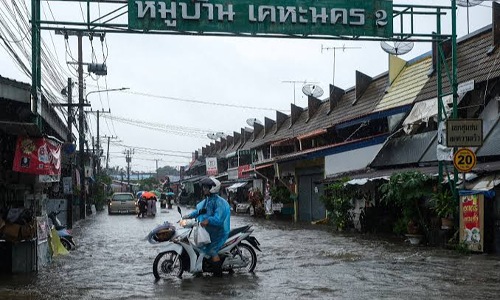
Heavy rains have triggered severe flooding across parts of Bangkok, Thailand, forcing nearly 4,900 residents to evacuate to shelters as floodwaters swept through roads and residential areas.
The flooding has disrupted movement across parts of the Thai capital, with motorists and pedestrians forced to navigate submerged roads and seek alternative routes.
SEE ALSO: NAFDAC Warns Nigerians As Fake Cowbell Milk Floods Market
According to the Bangkok Metropolitan Administration, about 52,000 households have been affected by the flooding, prompting authorities to declare a flood disaster and intensify emergency response efforts.
Emergency teams have been deployed to assist affected communities and move residents from vulnerable areas to safer locations as water levels rise.
Bangkok is accustomed to seasonal heavy rainfall, but intense downpours can overwhelm drainage systems, particularly in low-lying areas, resulting in widespread flooding and disruption.
Authorities are continuing to monitor affected locations while coordinating evacuations and other emergency measures.
For thousands of residents, the immediate priority remains securing safe shelter and protecting homes and livelihoods as authorities work to manage the situation and restore normal activities once the floodwaters recede.
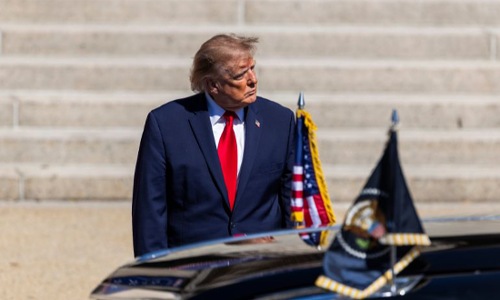
US President Donald Trump has explained his decision to reject Iran’s latest proposal to reopen the Strait of Hormuz, saying Tehran was seeking an agreement because it was losing revenue.
Speaking to reporters at the White House, Trump said Iran wanted to immediately reopen the strategically important waterway but argued that the proposal was not acceptable to his administration.
“They want to make a deal, and I think that’s fine. I like making a deal, too, but that deal would not be acceptable,” Trump said.
SEE ALSO: How the Strait of Hormuz Attack Could Trigger a Fresh Global Oil Shock
According to the US president, Iran’s push to reopen the strait was driven by the economic pressure it was facing.
“What they want to do is immediately open the Hormuz Strait. Do you know why? Because they are dying,” Trump said.
“You know why they’re dying? Because they have no money coming in, because they get their money from the Hormuz Strait.”
Trump also claimed that the US had established an unprecedented naval blockade against Iran, describing it as “a wall of steel.”
“So they outsmarted themselves. We put up the greatest blockade ever in military history. It’s a wall of steel,” he said.
“And guess what? They don’t have any money now because they wanted to close the strait.”
The Strait of Hormuz is a major global energy shipping route, and disruption to traffic through the waterway has significant implications for international oil markets and countries that depend on energy imports.
Trump’s remarks came amid continued tensions between Washington and Tehran over the reopening of the strategic waterway and negotiations involving Iran.






With Crude at $111, IEA Sees Prolonged Crisis

NCDMB Joins Hand with Manufacturers to Boost Local Oil, Gas Components Production

Dangote Preaches Ambition, Africa First to Nigerian Creatives

Protest Against Oil Company’s Vessel in Rivers Takes 10 Lives

FRSC Warns Drivers After Brake Failure Kills Two in Kano Crash

AAC Seeks Tinubu’s Approval, Logistical Support for 5,000 at Campaign Event

Trump’s Family Unveils New Cryptocurrency Platform

Senate Denies Receiving Petitions Against Tinubu’s Ambassadorial Nominees

Dangote Cement Lights Up Benue Host Communities With CSR Initiatives

Reps Recommend 3-year Jail Term For Aviation minister

Tems Sets New Record On Billboard Hot 100 Chart
