
International News
Ukrainian Drone Strikes Hit Two Non-residential Buildings In Moscow

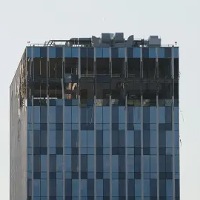
Ukrainian drones struck two non-residential buildings in Moscow in the early hours of Monday and were “suppressed” by defenses there, according to Russian authorities, who described the incident as a “thwarted” attack.
The strikes caused no serious damage or casualties, as stated by Moscow Mayor Sergei Sobyanin on Telegram on Monday.
Russia’s Ministry of Defence blamed Ukraine, describing the strike as a “terrorist attack of the Kiev regime” and reported that the two drones were “suppressed” and crashed in Moscow.
“On the morning of July 24, an attempt by the Kyiv regime to launch a terrorist attack using two unmanned aerial vehicles against facilities on the territory of the city of Moscow was thwarted,” the ministry said on Telegram.
“Two Ukrainian UAVs (Unmanned Aerial Vehicles) were suppressed by electronic warfare means and crashed,” the ministry added.
According to Russian state media outlet, TASS, a drone hit a high-rise business center on Likhacheva Avenue in Moscow.
TASS is reporting drone debris was found on Komsomolsky Avenue in Moscow on Monday morning. TASS said that based on initial reports, there were no casualties.
Law enforcement agencies and emergency services are currently working on the scene.
A resident who was the area at the time of the alleged attack told Reuters she was asleep and woken by an explosion.
“Everything started to shake. It felt like the whole building had come down. I looked out of the window, I live (in the neighboring building) on the side where there’s less damage. And it felt strange – the damage was so minor,” the resident, who gave her name as Polina, said.
“It sounded worse than it looked, as it seemed like the whole mall had exploded,” she added.
A second resident, who identified themselves to Reuters as Sergei, said he heard a bang “and then nothing.”
“We did not see anything flying, even though the windows were open … and we should have heard the sound (of something flying), but no, nothing,” he said.
Russia’s Ministry of Defense also on Monday accused Ukraine of launching 17 drones towards Russian-occupied Crimea overnight. The drones had been downed by its air defenses, with no casualties, the ministry said.
The reported attacks comes after Russian missiles badly damaged a historic Orthodox cathedral in the southern Ukrainian port city of Odesa, sparking outrage and prompting Ukrainian President Volodymyr Zelensky to vow retaliation.
The Odesa strikes killed at least one person and injured several others, Ukrainian officials said, the latest in a wave of attacks on the port city. The attacks also destroyed other historic buildings, Ukraine’s culture ministry said.








Federal agents raided the Washington, D.C., home of Democratic Congresswoman Ilhan Omar early Monday morning as part of an ongoing federal criminal investigation, the United States Department of Justice (DOJ) has confirmed.
Homeland Security Investigations agents arrived at the Minnesota congresswoman’s residence at about 6:00 a.m. Eastern Time, according to a report by Fox News.
SEE MORE: Trump Sparks Outrage With Shock Proposal to Rename New Mexico
The report said both the Department of Homeland Security (DHS) and the DOJ are involved in the investigation.
A DOJ spokesperson confirmed the operation, stating: “Today in the Washington, D.C. area, Homeland Security Investigations executed a judicially authorized search warrant secured by the Department of Justice.”
The spokesperson added: “This enforcement action is part of an ongoing federal criminal investigation.”
Details later……….
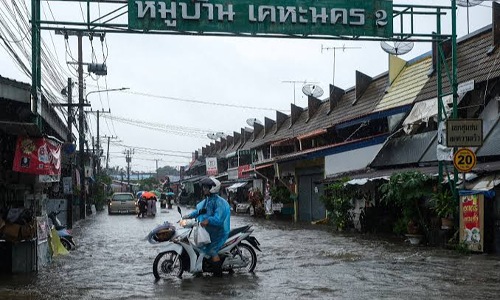
Heavy rains have triggered severe flooding across parts of Bangkok, Thailand, forcing nearly 4,900 residents to evacuate to shelters as floodwaters swept through roads and residential areas.
The flooding has disrupted movement across parts of the Thai capital, with motorists and pedestrians forced to navigate submerged roads and seek alternative routes.
SEE ALSO: NAFDAC Warns Nigerians As Fake Cowbell Milk Floods Market
According to the Bangkok Metropolitan Administration, about 52,000 households have been affected by the flooding, prompting authorities to declare a flood disaster and intensify emergency response efforts.
Emergency teams have been deployed to assist affected communities and move residents from vulnerable areas to safer locations as water levels rise.
Bangkok is accustomed to seasonal heavy rainfall, but intense downpours can overwhelm drainage systems, particularly in low-lying areas, resulting in widespread flooding and disruption.
Authorities are continuing to monitor affected locations while coordinating evacuations and other emergency measures.
For thousands of residents, the immediate priority remains securing safe shelter and protecting homes and livelihoods as authorities work to manage the situation and restore normal activities once the floodwaters recede.
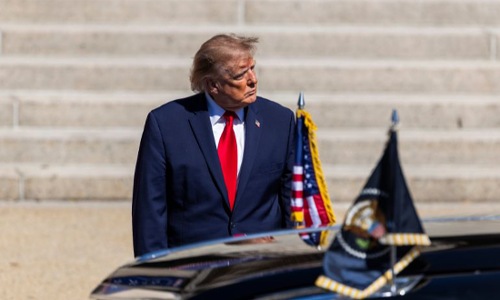
US President Donald Trump has explained his decision to reject Iran’s latest proposal to reopen the Strait of Hormuz, saying Tehran was seeking an agreement because it was losing revenue.
Speaking to reporters at the White House, Trump said Iran wanted to immediately reopen the strategically important waterway but argued that the proposal was not acceptable to his administration.
“They want to make a deal, and I think that’s fine. I like making a deal, too, but that deal would not be acceptable,” Trump said.
SEE ALSO: How the Strait of Hormuz Attack Could Trigger a Fresh Global Oil Shock
According to the US president, Iran’s push to reopen the strait was driven by the economic pressure it was facing.
“What they want to do is immediately open the Hormuz Strait. Do you know why? Because they are dying,” Trump said.
“You know why they’re dying? Because they have no money coming in, because they get their money from the Hormuz Strait.”
Trump also claimed that the US had established an unprecedented naval blockade against Iran, describing it as “a wall of steel.”
“So they outsmarted themselves. We put up the greatest blockade ever in military history. It’s a wall of steel,” he said.
“And guess what? They don’t have any money now because they wanted to close the strait.”
The Strait of Hormuz is a major global energy shipping route, and disruption to traffic through the waterway has significant implications for international oil markets and countries that depend on energy imports.
Trump’s remarks came amid continued tensions between Washington and Tehran over the reopening of the strategic waterway and negotiations involving Iran.






AAC Seeks Tinubu’s Approval, Logistical Support for 5,000 at Campaign Event

Renaissance, Sterling Bank Back Indigenous Oil and Gas Contractors Financially
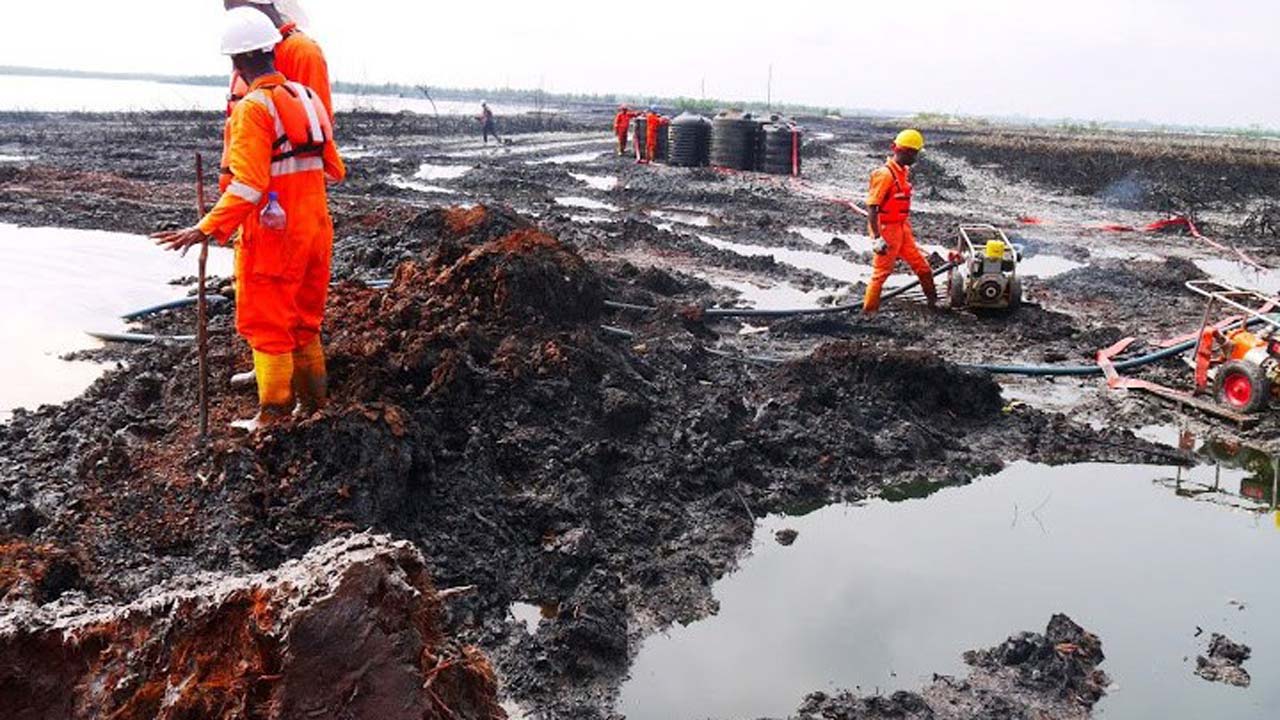
Group Demands Fair Share of NNPC Jobs for Ogoni Oil Exploration

NNPC Ltd Exploration Spending Down 87%

200 Imo Teachers Benefit from NCDMB’s Effective Curriculum Training

FG to Launch National Lead Poisoning Prevention Plan Wednesday

Trump’s Family Unveils New Cryptocurrency Platform

Senate Denies Receiving Petitions Against Tinubu’s Ambassadorial Nominees

Dangote Cement Lights Up Benue Host Communities With CSR Initiatives

Reps Recommend 3-year Jail Term For Aviation minister

Tems Sets New Record On Billboard Hot 100 Chart
