
International News
Three Afghan Women Mourn Closure Of Beauty Salon

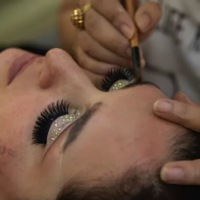
The Taliban has ordered that all hair and beauty salons in Afghanistan close their doors in the upcoming weeks.
An estimated 60,000 jobs will be lost as a result of their closure.
Since the Taliban retook power two years ago, salons had been allowed to continue operating, but this month, they changed their mind.
Afghan women are already not allowed in schools, gyms, or parks, so this ruling further limits their access to these areas.
Zarmina, 23, was getting her hair dyed a dark brown color when she learned of the impending shutdown.
“The owner got a big shock and started to cry. She is the breadwinner for her family,” the mother of two said.
“I couldn’t even look at the mirror when my eyebrow was being done. Everyone was in tears. There was silence.”
Beauty salons gave women a safe space to share their joys and sorrows
Zarmina lives in Kandahar in southern Afghanistan, the Taliban’s conservative citadel where the supreme leader resides.
She says it’s common here for men to ban their daughters from wearing make-up or going for a beauty treatment.
“Most women walk around in a burqa or hijab here. We have accepted it as part of our culture.”
Zarmina was married at 16. She says a chat at the beautician was enough to give her a rare sense of freedom.
“I wasn’t allowed to leave my house on my own, but I managed to persuade my husband, and was allowed to visit the beauty salon two or three times a year.”
She used to go to the salon with a woman from her neighbourhood, developing a deep friendship with one of its workers.
“In the past, women used to talk about ways to influence their husbands. Some were open about their insecurities.”
But the economic crisis had gradually intruded into their lives after the Taliban retook power in August 2021 following the withdrawal of US forces from the country.
Women’s freedoms have steadily shrunk since then.
“Now women only talk about unemployment, discrimination and poverty,” Zarmina says.
Madina covers her head with a scarf when she leaves home. Only her husband and female members of her family can see her coloured hair.
The 22-year-old lives in Kabul, and keenly follows the latest beauty trends online.
“Every woman I know loves to improve her style. I love the latest fashion and wearing make-up.”
Many Afghan women choose elaborate make-up for their wedding day
She says going to the beauty salon has kept her marriage fresh.
“My husband really loves to see my hair in different colours and cut in different styles.
“He always takes me to the beauty salon and waits patiently at the door,” she says proudly.
“He compliments my looks when I walk out, which makes me feel good.”
Her ambition was to become a lawyer but the Taliban stopped women going to university. She’s been unable to find work since as women are also banned from many other roles.
Madina used to accompany her mum to the salon as a child and vividly recalls how women would openly share their life stories with each other.
“Women employees in the salon no longer wear skirts or jeans, they’re all in hijabs.”
And fear is everywhere.
“No-one knows who is a Taliban supporter and no-one wants to say anything about politics.”
In the past, grooms were allowed to watch their bride get ready. Madina even remembers some men taking photos inside the salon. This is all now banned.
The Taliban says beauty salons are forbidden by Islam
But Madina says she at least has joyful memories of her “big day” to cherish.
“I went to the beauty salon and got full bridal make-up before my wedding last year,” she says.
“When I looked at myself in the mirror, I was so beautiful. It transformed me. I couldn’t describe my happiness.”
For 27-year-old Somaya from the north-western city of Mazar-i-Sharif, a beauty salon is a necessity.
Three years ago she suffered burns to her face, losing her eyebrows and eyelashes after a heater in her room exploded.
“I couldn’t bear to look at my face. I looked ugly,” she says, her voice full of emotion.
“I thought everyone was looking at me and laughing at me because my eyebrows were gone. I didn’t go out for a couple of months. I cried a lot during that time.”
Medical treatment healed her wounds, while the beauty salon helped her recover her sense of self.
“I went to the beauty salon and had micro-blading [a semi-permanent form of cosmetic tattooing]. It made me look much better,” she says.
“When I looked at my eyebrows, I started to cry. They are tears of joy. The beauty salon gave me my life back.”
Somaya has a master’s degree in psychology and works as a mental health counsellor. She has seen the number of women seeking her services swell since the Taliban imposed sweeping restrictions. She is not alone in using the beauty parlour for “therapy”.
“For us, salons are more than places to do your make-up. It helped us hide our sorrows. It gave us energy and hope.”
Zarmina concurs. That June day, after making what would be her final trip to the salon, she kept gazing back as she made her way home.
She knew exactly what she was losing—her meager attempt at independence.
“I paid for myself at the salon and it gave me strength and power. I have money but I can’t spend it on myself in the beauty salon. This makes me feel poor.”
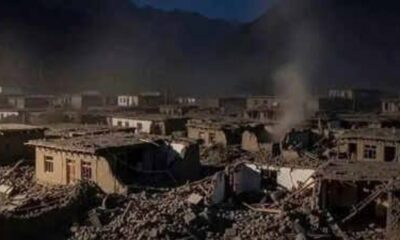


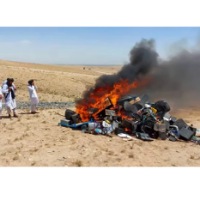


Federal agents raided the Washington, D.C., home of Democratic Congresswoman Ilhan Omar early Monday morning as part of an ongoing federal criminal investigation, the United States Department of Justice (DOJ) has confirmed.
Homeland Security Investigations agents arrived at the Minnesota congresswoman’s residence at about 6:00 a.m. Eastern Time, according to a report by Fox News.
SEE MORE: Trump Sparks Outrage With Shock Proposal to Rename New Mexico
The report said both the Department of Homeland Security (DHS) and the DOJ are involved in the investigation.
A DOJ spokesperson confirmed the operation, stating: “Today in the Washington, D.C. area, Homeland Security Investigations executed a judicially authorized search warrant secured by the Department of Justice.”
The spokesperson added: “This enforcement action is part of an ongoing federal criminal investigation.”
Details later……….
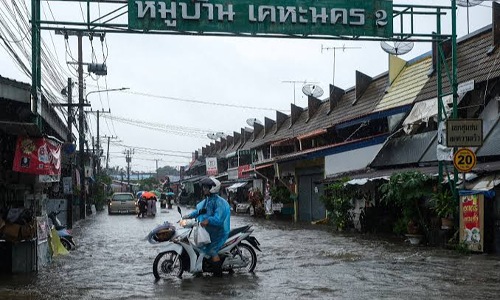
Heavy rains have triggered severe flooding across parts of Bangkok, Thailand, forcing nearly 4,900 residents to evacuate to shelters as floodwaters swept through roads and residential areas.
The flooding has disrupted movement across parts of the Thai capital, with motorists and pedestrians forced to navigate submerged roads and seek alternative routes.
SEE ALSO: NAFDAC Warns Nigerians As Fake Cowbell Milk Floods Market
According to the Bangkok Metropolitan Administration, about 52,000 households have been affected by the flooding, prompting authorities to declare a flood disaster and intensify emergency response efforts.
Emergency teams have been deployed to assist affected communities and move residents from vulnerable areas to safer locations as water levels rise.
Bangkok is accustomed to seasonal heavy rainfall, but intense downpours can overwhelm drainage systems, particularly in low-lying areas, resulting in widespread flooding and disruption.
Authorities are continuing to monitor affected locations while coordinating evacuations and other emergency measures.
For thousands of residents, the immediate priority remains securing safe shelter and protecting homes and livelihoods as authorities work to manage the situation and restore normal activities once the floodwaters recede.
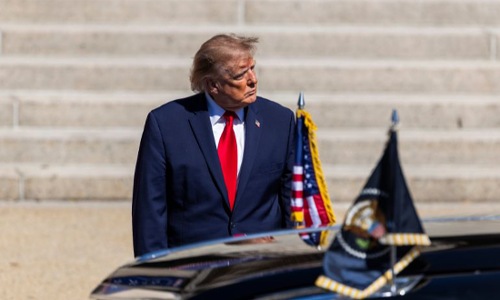
US President Donald Trump has explained his decision to reject Iran’s latest proposal to reopen the Strait of Hormuz, saying Tehran was seeking an agreement because it was losing revenue.
Speaking to reporters at the White House, Trump said Iran wanted to immediately reopen the strategically important waterway but argued that the proposal was not acceptable to his administration.
“They want to make a deal, and I think that’s fine. I like making a deal, too, but that deal would not be acceptable,” Trump said.
SEE ALSO: How the Strait of Hormuz Attack Could Trigger a Fresh Global Oil Shock
According to the US president, Iran’s push to reopen the strait was driven by the economic pressure it was facing.
“What they want to do is immediately open the Hormuz Strait. Do you know why? Because they are dying,” Trump said.
“You know why they’re dying? Because they have no money coming in, because they get their money from the Hormuz Strait.”
Trump also claimed that the US had established an unprecedented naval blockade against Iran, describing it as “a wall of steel.”
“So they outsmarted themselves. We put up the greatest blockade ever in military history. It’s a wall of steel,” he said.
“And guess what? They don’t have any money now because they wanted to close the strait.”
The Strait of Hormuz is a major global energy shipping route, and disruption to traffic through the waterway has significant implications for international oil markets and countries that depend on energy imports.
Trump’s remarks came amid continued tensions between Washington and Tehran over the reopening of the strategic waterway and negotiations involving Iran.






FRSC Warns Drivers After Brake Failure Kills Two in Kano Crash

AAC Seeks Tinubu’s Approval, Logistical Support for 5,000 at Campaign Event

Renaissance, Sterling Bank Back Indigenous Oil and Gas Contractors Financially
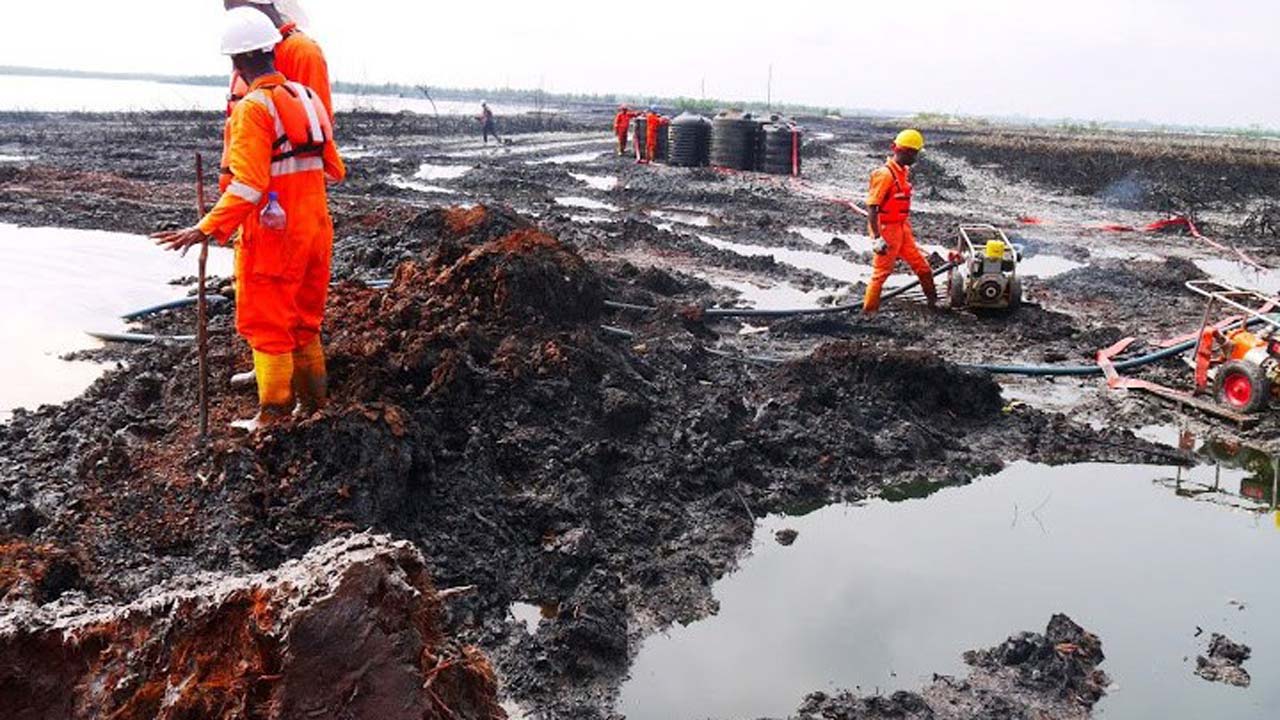
Group Demands Fair Share of NNPC Jobs for Ogoni Oil Exploration

NNPC Ltd Exploration Spending Down 87%

200 Imo Teachers Benefit from NCDMB’s Effective Curriculum Training

Trump’s Family Unveils New Cryptocurrency Platform

Senate Denies Receiving Petitions Against Tinubu’s Ambassadorial Nominees

Dangote Cement Lights Up Benue Host Communities With CSR Initiatives

Reps Recommend 3-year Jail Term For Aviation minister

Tems Sets New Record On Billboard Hot 100 Chart
