
NEWS
Unexpected revenue losses threaten N17.126trillion 2022 budget implementation

****Customs, Immigration raises alarm over possible incapacitation
….NAFDAC Warehouses three year capital votes
Funding for the N17.126trillion 2022 budget may not be realizable as some of the revenue generating agencies are complaining of different forms of hiccups.
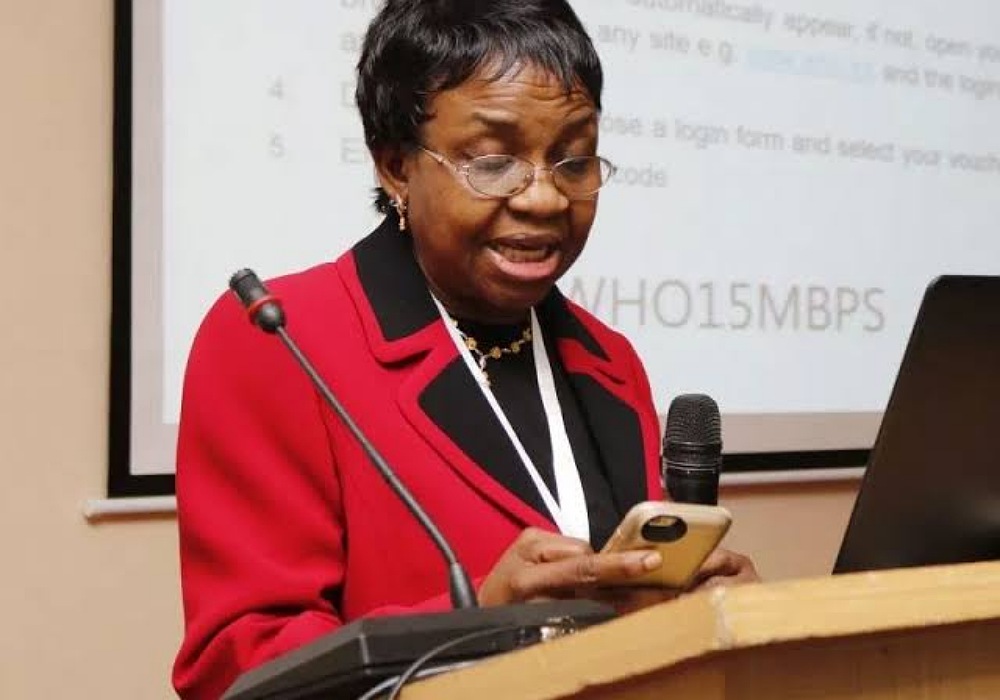
This was happening as the Director General of National Agency for Food and Drug Administration Control ( NAFDAC), Professor Mojisola Adeyeye, lamented that the 2018, 2019 and 2020 budget of the agency were not passed by the National Assembly leading to warehousing of revenues generated by it for capital expenditure.
Complaints on meeting revenue targets by affected revenue generating agencies came to the fore during the one day interactive session the Senate leadership and its Finance Committee had with them .
The Comptroller General of Nigeria Customs Service ( NIS), Col Hameed Ali ( Rtd), said some provisions of the 2022 Finance Act, have robbed Customs of its operational mandate on some revenue collections.
He specifically cited section 22 and 61(a) of the Act , incapacitating Customs from collecting some taxes like import duties.
“Mr President of the Senate , Distinguished Senators , I thank you for organising this interactive session on the need for improvement by all revenue generating agencies as far as internally generated revenues are concerned and funding of the 2022 budget are concerned .
“However let me bring to the notice of this gathering that some provisions of he Finance Act 2022, are incapacitating Customs from such revenue drive .
“Section 22 of the Finance Act 2022 seeks to amend the Federal Inland Revenue Service law Section 68 (1), (2), (3), (4) and (6) by allowing the Act to takes precedent over any other laws with regards to the administration of taxes, assessment, accounting, collection and enforcement of taxes and levies due to the Federal Government and the federation of Nigeria.
“When the law was signed, it did not state clearly, the extent and scope of the taxes and levies in question. We are aware that the taxes and levies under the responsibilities of the FIRS are income tax, personal income tax, capital gain tax, VAT and so on.
“However, the amendment is so wide and open that we in the Nigerian Customs Service took it that it had hindered our ability to collect levies and other collections.
“Our understanding of the provisions is that all other laws which mandated us to collect are inconsistent with the new Act, then they are voided.
This means that the law that mandates us to collect as revenue generating agencies, are voided completely. This means that we do not have the responsibilities to collect levies. If we don’t have the responsibilities to collect, what are we going to discuss here.
“We have consulted with lawyers and the conclusion is that the Act is confusing and if other revenue generating agencies decided to act on the provisions, they may decide not to collect duties and levies”.
Making similar lamentation, the Director of Finance, Nigeria Immigration Service ( NIS), Professor Aba Georg, said the N400billion the agency supposed to be generating as revenue on yearly basis is being cornered by UK based firm, handing most of its outsourced services and operations .
According to him, contract on the outsourced services and operations given to the UK based firm on behalf of Nigeria Immigration Service in 2003 , gives government 33% of proceeds , Immigration 7% while the remaining 60% is cornered by the firm .
” This is our 7th time of tabling this complaint before the Senate or the House of Representatives . Please rescue us from the hook of this firm.
“The contract was entered into without the knowledge of Immigration since 2003 and those behind it , keep on renewing it and denying us about N400billion revenue on yearly basis .
“It is a rip-off and purely one sided contract bleeding Immigration and Nigeria financially on yearly basis “, he lamented .
Apparently piaued by the submission , the President of the Senate , Ahmad Lawan , directed the Committee Chairman, Senator Olamilekan Adeola ( APC Lagos West), to summon the Ministry of Interior for all the contract documents.
“This is unacceptable . We cannot continue like this. We must see the end of this contract in the National Interest “, he said.
On complaints made by the Customs boss, Lawan said, “I wonder why the Ministry of Finance is not here because we need their intervention now. Their presence here would have provided some clarifications. We took it for granted that since it was an executive bill, that there were some engagements among the agencies of the Federal Government.
“We also called for public hearing so that we could exrayed it. You are saying that you don’t have the legal mandate to collect taxes and it is a scary revelation.
“The Senate Committee on Finance and the Ministry of Finance and other agencies would look at the Act. If it is established beyond reasonable doubts that we need to amend it, we will do so without delay.
‘It will be the fastest amendment because we need you to collect more monies for the Federal Government”
But Senator Adeola in his own response said the section cited by the Customs boss , was not targeted at the agency .
“What necessitated that singular act was as a result of the issue between the Revenue Mobilisation and Fiscal Commission and the FIRS.
There were clashes between them from time to time. Some activities of RMFAC were not in tandem with the Act that established it. We discovered that the only way that we can make their roles explicit is through the Finance Act concerning the assessment and accounting of taxes.
“We discovered that RMFAC are going to agencies to audit their tax accounts which is not part of their responsibilities based on the law that established RMFAC.
“The only agencies saddled with that responsibility is the FIRS. That was what that law tends to address. We are ready to look into it again if other revenue generating agencies believe that it has hindered them from performing their responsibilities and we would amend it accordingly”, he said






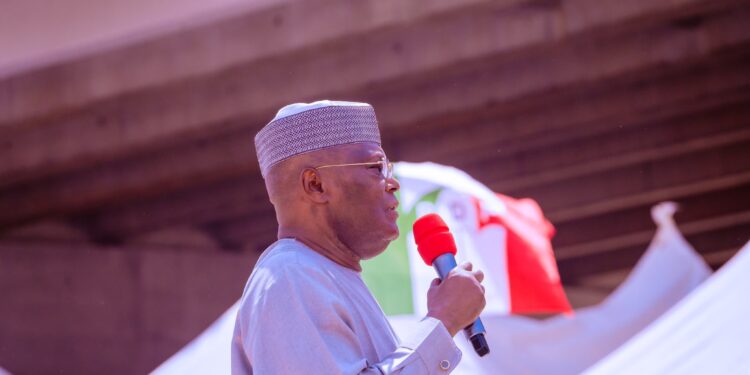
Former Vice President and African Democratic Congress (ADC) presidential candidate, Atiku Abubakar, has said Nigerians still deserve answers six years after the October 20, 2020, EndSARS shooting at the Lekki Toll Gate in Lagos.
Atiku made this known in a statement on Tuesday marking the sixth anniversary of the incident, in which he called for accountability over the shooting and criticised the Federal Government’s handling of the unresolved questions surrounding the tragedy.
He questioned who gave the order for the operation against protesters, insisting that the country could not continue to commemorate the victims without addressing the circumstances surrounding the incident.
RELATED NEWS: EndSARS Memorial: ‘We Must Never Normalise Injustice’ – Peter Obi
Atiku also recalled President Bola Tinubu’s remarks in October 2020, when he questioned the circumstances surrounding the casualties recorded during the shooting.
Tinubu had asked: “How were they there? How long were they there? What kind of characters are they?”
According to Atiku, the remarks appeared to focus on questioning the victims rather than demanding answers from those responsible for the violence against peaceful protesters.
He said the anger surrounding the anniversary reflected the unresolved grief of affected families and the distrust of young Nigerians who had demanded accountability and a better future.
“The APC has governed Nigeria through these six years. It cannot keep asking Nigerians to remember the dead while refusing to confront the unanswered questions,” Atiku said.
The ADC presidential candidate also linked the unresolved questions surrounding the Lekki shooting to the economic hardship confronting Nigerians, particularly young people struggling with rising living costs.
Citing petrol prices of ₦1,405 per litre, Atiku said transportation costs were making it increasingly difficult for Nigerians to afford basic necessities, including food, rent, education and commuting to work.
He illustrated the situation with the account of a young woman who reportedly resigned from her job because her salary could no longer cover her transportation expenses.
According to Atiku, one of his aides shared the woman’s experience earlier on Tuesday.
The woman reportedly said: “The pay no longer covers transport. Everything in Nigeria just dey increase in price. Feels like I’m working for Bolt guys.”
Atiku described the experience as an example of the difficulties faced by employed Nigerians whose earnings could no longer adequately cover the cost of getting to work.
He argued that the economic situation was affecting not only unemployed Nigerians but also workers struggling to survive on salaries weakened by rising costs.
The former vice president also highlighted his Economic Recovery Plan, which he said was designed to make Nigeria more affordable.
The proposed measures include providing support tied to fuel refined in Nigeria, passing savings on to consumers, increasing local production to create jobs, protecting minimum-wage earners, supporting students and cutting government waste rather than imposing additional taxes.
Atiku maintained that young Nigerians deserved answers about the Lekki shooting, a government that protects human life and an economy in which employment could provide a path to a better standard of living.
He added that Nigerians were entitled to question the APC’s record on accountability and economic opportunities six years after the incident.
The EndSARS protests began in October 2020, with young Nigerians demanding an end to police brutality and reforms to policing in the country. The shooting at the Lekki Toll Gate on October 20 became one of the most prominent events associated with the protests.
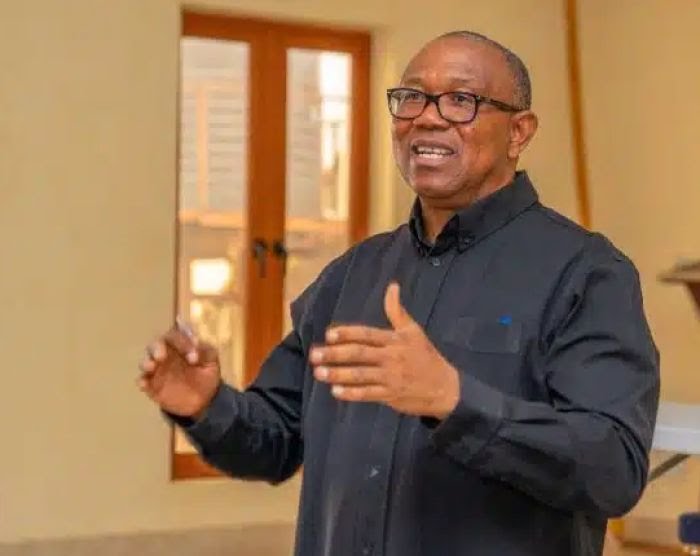
National Democratic Congress (NDC) presidential candidate, Peter Obi, has called on Nigerians never to normalise injustice as the country marks the sixth anniversary of the Lekki Toll Gate shootings during the #EndSARS protests.
Obi made the call in a statement posted on his X account on Tuesday, October 20, 2026, in which he reflected on the events of October 20, 2020, and renewed his call for a Nigeria where citizens’ rights are protected.
He expressed appreciation for Nigerian youths who participated in the protests, describing the anniversary as a painful reminder of the sacrifices made in the demand for a better country.
SEE ALSO: BREAKING: Activists Arrested For Commemorating #Endsars Released
According to him, peaceful #EndSARS protesters were met with gunfire at the Lekki Toll Gate on that fateful night, leaving people dead and others injured.
He noted that the incident raised questions about justice, accountability and respect for human life.
“We must never forget. We must never normalise injustice,” Obi said.
He also reaffirmed his belief that a New Nigeria is possible, describing it as a country where citizens are protected rather than brutalised, young people are heard rather than silenced, and government power is exercised responsibly and with respect for human rights.
The former Anambra State governor stressed that Nigeria must become a nation where no citizen is punished for demanding good governance and a better future.
As the country marks six years since the incident, Obi prayed for the repose of the souls of those who lost their lives and called for their sacrifices to strengthen efforts towards building a better nation.
“May the souls of the departed continue to rest in peace. May their sacrifice strengthen our resolve to build a Nigeria where this tragedy will never be repeated,” he stated.
He concluded by reiterating his belief in the possibility of a New Nigeria, insisting that the country must become one where every life matters.
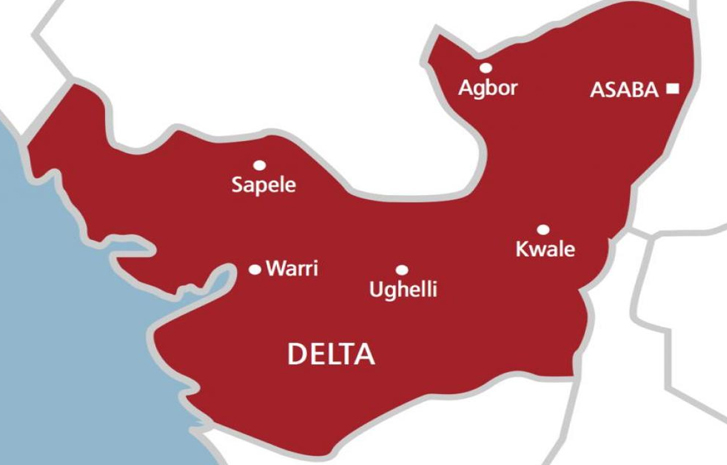
Former Delta State Governor, Dr Emmanuel Uduaghan, has reportedly died, according to sources said to be close to his family.
The sources confirmed the development on Monday, October 19, 2026, although details surrounding the circumstances of his death remained unclear as of the time of filing this report.
“Uduaghan is no more; he is dead,” one of the sources reportedly said.
SEE ALSO: Document reveals Akpoti-Uduaghan demanded N10b damages from husband before marriage, firm reacts
The reported death comes months after claims that the former governor had died circulated on social media before being dismissed by his media aide, Henry Unini.
In June, reports of Uduaghan’s alleged death spread across Facebook and WhatsApp, prompting Unini to publicly debunk the claims and assure the public that the former governor was alive.
“I can tell you for a fact that Dr. Emmanuel Uduaghan is alive,” Unini said at the time.
“Frankly, I don’t know where the writer got his information from. The death of someone is not something you take and write about casually,” he added.
Unini acknowledged at the time that Uduaghan had been experiencing health challenges but maintained that he was receiving medical attention.
“It is now common knowledge that Dr. Emmanuel Uduaghan has been sick, but he is receiving proper medical care,” the media aide said.
He also stated that the former governor was recuperating, assuring the public that there was no immediate cause for concern.
“There is no cause for alarm whatsoever,” Unini said.
The media aide thanked friends, well-wishers and residents of Delta State who contacted the family to verify the former governor’s condition. He also urged the public to avoid spreading unverified information.
“The rumour was uncalled for,” he said while addressing the earlier reports.
As of the time of filing this report, further details about the circumstances surrounding Uduaghan’s reported death had yet to emerge.





FG to Launch National Lead Poisoning Prevention Plan Wednesday

EndSARS Memorial: ‘Nigerians Still Deserve Answers’ – Atiku

EndSARS Memorial: ‘We Must Never Normalise Injustice’ – Peter Obi

Petrol Price Hike Looms as Oil Hits $110/barrel

NIPCO Gas Licences, NNPC Ltd Management Face Reps Probe
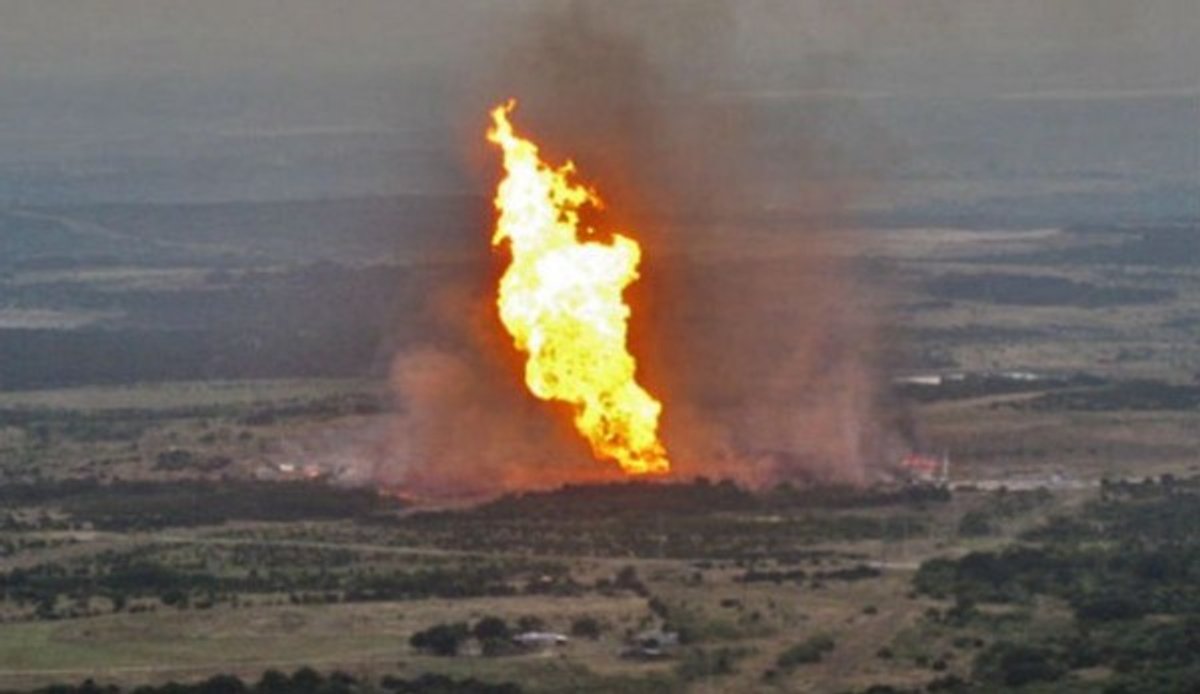
UNDC Assures on Readiness to Protect Oil, Gas Pipelines

Trump’s Family Unveils New Cryptocurrency Platform

Senate Denies Receiving Petitions Against Tinubu’s Ambassadorial Nominees

Dangote Cement Lights Up Benue Host Communities With CSR Initiatives

Reps Recommend 3-year Jail Term For Aviation minister

Tems Sets New Record On Billboard Hot 100 Chart
