
NEWS
US Hails DPRP as Nigeria’s Petroleum Exports Surge Seven Times


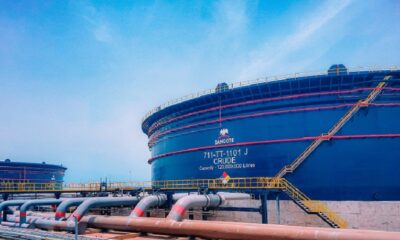
The Dangote Petroleum Refinery and Petrochemicals (DPRP) has been identified as the key driver behind a seven-fold increase in Nigeria’s seaborne petroleum product exports since 2023, according to the latest report by the United States Energy Information Administration (EIA).
The U.S. agency disclosed that Nigeria’s seaborne petroleum product shipments averaged 561,000 barrels per day (bpd) in the second quarter of 2026, a significant increase from the annual average of 79,000 bpd recorded in 2023.
According to the EIA, the growth in exports has strengthened Nigeria’s position in the international petroleum products market at a time when supplies from several other regions have faced constraints.
The agency noted that the increase was largely underpinned by the commencement of operations at the Dangote Petroleum Refinery in January 2024. Data from energy intelligence firm Vortexa showed that of the 561,000 bpd shipped during the second quarter of 2026, about 350,000 bpd were exported, compared to an annual average of 46,000 bpd in 2023.
READ ALSO: MOSOP Cautions Against Secret Drilling in Ogoniland
The EIA stated that increased production from the refinery has transformed Nigeria’s petroleum products market by reducing dependence on imports and boosting domestic supply.
“With increased supply of petroleum products from the country’s largest refinery, imports fell, exports increased, and Nigeria became more self-sufficient in refined petroleum products,” the agency said.
Before the start-up of the Dangote Refinery, Nigeria’s state-owned refineries collectively shipped less than 100,000 bpd of petroleum products, both domestically and internationally. The EIA observed that shipments rose significantly following the refinery’s commencement of operations and received a further boost after maintenance and expansion activities were completed in February 2026.
The agency explained that the refinery’s crude distillation capacity increased from 650,000 bpd to 700,000 bpd following the completion of the expansion programme, enabling higher output and greater product availability.
According to the report, total petroleum product shipments increased further as supply disruptions through the Strait of Hormuz created additional demand for alternative sources of refined products.
The EIA reported that intra-Nigerian shipments reached 211,000 bpd in the second quarter of 2026, compared with 81,000 bpd in 2025 and 33,000 bpd in 2023, reflecting the refinery’s growing role in supplying fuel across the country.
By providing refined petroleum products to different regions of Nigeria, the Dangote Refinery has significantly reduced the nation’s reliance on imported fuels. Nigeria, which imported nearly 400,000 bpd of petroleum products in 2023, saw seaborne imports decline to less than 130,000 bpd by the second quarter of 2026, according to the report.
The EIA also highlighted growing demand for Nigerian petroleum products in international markets. Vortexa data cited in the report showed that exports to Europe averaged 130,000 bpd in the second quarter of 2026, compared with 40,000 bpd in 2025 and 15,000 bpd in 2023.
The report underscores the increasing importance of the Dangote Petroleum Refinery in enhancing Nigeria’s energy security, supporting regional fuel supply, and positioning the country as a major exporter of refined petroleum products to global markets.
Recall that Dangote Refinery has announced plans to bring an additional 700,000 barrels per day (bpd) of fully complex refining capacity on stream by the end of 2028. This would be added to its current capacity of about 700,000 bpd, potentially taking total capacity to around 1.4 million bpd. The refinery’s CEO, David Bird, said long-lead equipment has already been procured and construction contracts are being awarded




The 15th edition of the Practical Nigerian Content Forum (PNCF) is billed for Yenagoa, Bayelsa State from November 30.
This edition of the initiative of the Nigerian Content Development and Monitoring Board (NCDMB) would hold be in collaboration with the Bayelsa State Government as disclosed on Tuesday when a delegation of the NCDMB and DMG Events met with the Deputy Governor of Bayelsa State, Dr Peter Pereotubo Akpe, at the Government House, Yenagoa.
Leading the delegation, the General Manager, Corporate Communications Division of NCDMB, Dr Obinna Ezeobi, conveyed the appreciation of the Executive Secretary of the board, Felix Omatsola Ogbe, to the state government for its continued support for the forum.
He said, “We appreciate the Bayelsa State Government for its continued partnership and support for the PNC Forum”.
READ ALSO: 40 Oil Blocks up for Grabs as NUPRC Opens 2026 Bid Round
According to him, the Youth PNC was designed to expose young people in the Niger Delta to emerging opportunities in the oil and gas industry and the competencies required to build successful careers in other sectors of the economy.
Ezeobi added, “We have introduced new initiatives into this year’s programme to ensure that the PNC continues to deliver greater value to participants and address emerging issues in the Nigerian content space.”
The Senior Manager, Zonal Coordination, NCDMB, Mr Adebayo Joseph, spoke on plans for the Youth PNC, while the leader of the DMG Events delegation, Ms Olamide Oloko, outlined the major activities planned for the conference.
Oloko said the new initiatives would include a Local Content Roundtable and a two-day programme for Local Community Contractors aimed at helping them scale up their operations.
She added, “The 2026 edition will also feature a breakout session to collate stakeholders’ views on the future direction of Nigerian Content over the next decade.”
Responding, Akpe assured the NCDMB and DMG Events of the state government’s continued support for the PNC Forum.
Akpe said, “The Bayelsa State Government is committed to ensuring that the event is successful and that participants have a conducive and secure environment throughout their stay in the state.”
He said the initiative demonstrated the practical impact of the programme and urged the board to sustain efforts aimed at creating opportunities for young people in the region.

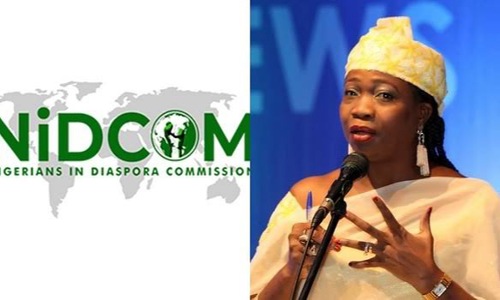
Nigerian women allegedly being held at a deportation facility in India have cried out over their treatment, with a video circulating online showing some of them displaying injuries and alleging that security personnel flogged detainees.
The video began circulating online on Wednesday and shows a group of Nigerian women inside and around what they described as a deportation camp.
Several of the women pointed to marks, bruises and apparent injuries on their legs, feet and bodies while alleging that they were beaten with sticks or canes.
SEE ALSO: Rufai Oseni Row: NiDCOM Breaks Silence on Nigerians Detained in India, Addresses Ekene’s Case
“See my video, see my leg,” one of the women could be heard saying in the footage.
Another woman said, “Mona see wetin dem dey do for deportation camp.”
“Deportation camp, na dem flog person, see,” another woman said while showing what appeared to be an injury.
The women further alleged that female detainees were beaten with sticks.
“Dem dey use stick dey flog women, mona dey see am,” one of them said.
Another woman, while pointing at an injured detainee, said, “Dem carry cane flog o… see her body, dem flog am.”
The women also alleged that police officers carried sticks inside the facility.
“Police carry stick like say dem dey cut firewood,” one of the women said.
The footage shows the women appearing distressed as they moved through the facility and gathered in an outdoor area.
They repeatedly appealed to Nigerians to share the video and draw attention to their situation.
“Make una see… make this video trend/go,” one woman said.
“Make una share am,” another added.
One of the women also expressed frustration over their alleged experience at the facility, saying, “We don suffer, every time, every time.”
The footage comes amid ongoing concerns over Nigerians detained at the Lampur detention centre, also known as Sewa Sadan, in New Delhi.
Recall that in September, reports emerged that more than 200 Nigerians were being held at the facility, with some detainees alleging poor food, inadequate medical care and prolonged detention.
The Nigerians in Diaspora Commission (NiDCOM) subsequently defended its handling of the situation and said the Nigerian High Commission in India was seeking another amnesty period to facilitate the departure of Nigerians without proper immigration documentation.
No official response from the Indian authorities or the Nigerian government specifically addressing the allegations in the latest video had been made available at the time of publication.
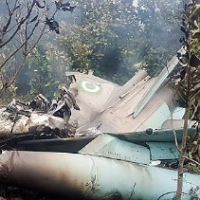
Rights activist, public affairs analyst and Chief Executive Officer of The Dialogue, Shehu Muhammad, has questioned the continued occurrence of military aircraft crashes despite the huge budgetary allocations to the country’s defence and security sector.
Muhammad spoke while reacting to the recent Nigerian Navy aircraft crash in Irele Local Government Area of Ondo State during an interview on Channels Television’s The Morning Brief.
Describing the incident as “one incident too many,” he recalled that Nigeria had recorded several military aircraft crashes involving the Nigerian Air Force and Nigerian Army over the years.
RELATED NEWS: Military Gear Found at Ondo Crash Site as Helicopter Burns to Rubble
He said the recurring incidents had raised concerns among members of the public about the condition of military aircraft and the process through which military hardware is procured.
“People have begun to cast aspersions as to the honesty, sincerity, and openness in the purchase of military hardware, including airplanes,” Muhammad said.
According to him, the concerns are heightened by the substantial funds allocated to the military and other security agencies over the years.
“There are insinuations by the public that, after all, the military receive the highest amount of money from the budget year in, year out,” he said.
Muhammad also questioned the transparency of defence procurement, particularly the process of selecting contractors for the supply of military equipment.
He argued that the repeated crashes should prompt authorities to examine military aviation operations, aircraft procurement and the management of defence resources.
The latest crash occurred in Irele, Ondo State, with recovery efforts reportedly complicated by the difficult terrain around the crash site.
Muhammad said the latest incident should not be treated in isolation, but should lead to broader questions about military aviation safety and the management of resources allocated to the defence sector.
He called for greater transparency and accountability in the procurement and management of military hardware to restore public confidence.





World Bank Report: ‘Nigeria Needs 10% Growth for 20 Years to Reduce Poverty’ — Ekpo
Yenagoa Hosts NCDMB 2026 Content Forum

IPO: ADF Opens Wealth Creation Pathway for 2m Vulnerable Nigerian Women

2027: Tinubu Will Beat Atiku, Obi by Wide Margin, Says Bwala

‘Dem Dey Use Stick Dey Flog Women’ — Nigerians in India Camp Cry Out

2027: I’ll Bring Petrol Price Down to ₦300, Says Donald Duke

Trump’s Family Unveils New Cryptocurrency Platform

Senate Denies Receiving Petitions Against Tinubu’s Ambassadorial Nominees

Dangote Cement Lights Up Benue Host Communities With CSR Initiatives

Reps Recommend 3-year Jail Term For Aviation minister

Tems Sets New Record On Billboard Hot 100 Chart
