
Entertainment
What I Mean By “Aboru Aboye” – Tope Alabi Explains


Popular Nigerian gospel singer Tope Alabi has responded to the controversy that has surrounded her viral video in which she can be heard singing in Yoruba using the word “Aboru Aboye,” a form of greeting among Ifa initiates.
Alabi sang the line, “Abiye ni mi, Oruko mi ni yen” in the viral video, referring to herself as “ebo,” which is a word that literally means sacrifice. “I am a sacrifice, that’s my name,” said Mo de bo, “Mo ru, Mo ye. I go by the name “I am a sacrifice accepted by God.”
The lyrics had since triggered a flurry of reactions in the media space as her fans and some Christian leaders took sides over her choice of words.
In a video sighted by Biztellers, the award-winning singer who was seen ministering in a white garment church said, “Aboru Aboye” is a pure Yoruba language and not an exclusive preserve of traditionalists.
Alabi who explained with bible reference also clarified that her deft use of the language remained her peculiar style as a gospel artiste.
She said, “It was recorded that David made a sacrifice of faithfulness to God. Why was the word sacrifice not written as the same English word in the Yoruba version of the Bible? It is a Yoruba language. There is no special language for traditionalists. We are all speaking the Yoruba language.
“If some people say they want to use the language in their own style, it is not bad. We have also decided to use it in our own style.”
While reiterating that sacrifices were rendered in the bible, she further queried saying, “Was Abraham’s sacrifice accepted or not? Was it not the same with Isaac?”
In establishing her points with specific reference to a bible passage which is Romans 12:1, she said, “Brethren, by the mercies of God, that you present your bodies a living sacrifice, holy, acceptable unto God, which is your reasonable service. The word ‘acceptable’ is the ‘Aboru’ while ‘living sacrifice’ is Aboye.”
Prior to this, Ifa-priest, Oluwo Jogbodo Orunmila, had told the award-winning singer to conduct an ancestry Deoxyribo Nucleic Acid (DNA) to be sure of her origin.
Orunmila who is the chief priest of Iledi Imule Agba in Oyan, Odo Otin North Local Council Development Authority in Osun State while speaking with Punch in an exclusive interview noted that Alabi has always been enmeshed in the usage of traditionalists’ lexicons.
He mentioned the singer’s use of ‘Eledumare’ and several other appraisals usually meant for Orunmila (god of wisdom) and Yoruba deities.
He maintained that whoever has come out to tag Alabi as an idol worshipper is just fuelling public opinion and is particularly not knowledgeable enough to know that Ifa only identifies those who want to be identified because it embraces secrecy.
When asked if the term was common lexicon that everyone could use, Orunmila responded, “It is not. The Ifa initiates undoubtedly use it.
He explained that Odu Ifa’s “Ogunda meji” in the Ifa corpus gave birth to the tales of three women, Aboru, Aboye, and Abosise, who provided special assistance to Orunmila, explaining how the phrase came to be used as a welcome among Ifa initiates.


![Gospel Singer, Moses Bliss Announces Engagement [Photos]](https://biztellers.com.ng/wp-content/uploads/2024/01/IMG_20240119_143217_400_x_300_pixel-400x240.jpg)
![Gospel Singer, Moses Bliss Announces Engagement [Photos]](https://biztellers.com.ng/wp-content/uploads/2024/01/IMG_20240119_143217_400_x_300_pixel-80x80.jpg)







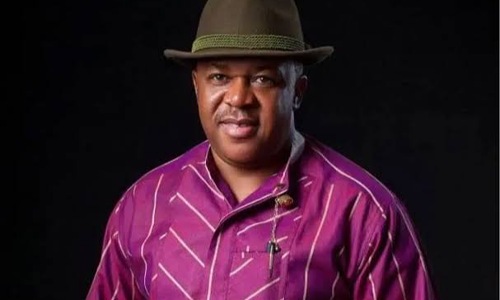
The Nigerian film industry has been thrown into mourning following the death of veteran Nollywood actor Francis Duru, who died at the age of 57 after a brief illness.
Duru’s family announced his death on Friday in a statement shared on the actor’s official Instagram page. The National President of the Actors Guild of Nigeria (AGN), Abubakar Yakubu, also confirmed the development.
Born on July 27, 1969, Duru rose to prominence for his portrayal of Ahanna in Amaka Igwe’s 1995 film Rattlesnake, a role that helped establish him as a recognisable face in Nollywood.
SEE ALSO: JUST IN: Ex-Delta Governor Emmanuel Uduaghan Is Dead
The actor featured in several other productions throughout his career, including Blood Money and Merry Men, earning recognition for his contributions to Nigerian film and television.
Over the years, Duru established himself as a veteran performer whose work contributed to the growth and development of the Nigerian entertainment industry.
His death comes months after he dismissed speculation about his health following the circulation of a video in June that raised concerns among fans.
Duru’s passing marks a loss for Nollywood, with colleagues, fans and other entertainment industry stakeholders expected to pay tribute to the actor and celebrate his contributions to Nigerian cinema.

Nigerian ceramic sculptor and artist, Chris Onaivi Ekuafeh, has opened Unity Forged in Clay, a solo exhibition that draws on clay, culture and personal experience to explore one of humanity’s enduring questions, “How can people remain different and still belong together?”
The exhibition opened on Saturday, September 26, at Quintessence Gallery, Victoria Island, Lagos, and continues until October 10, 2026.
Featuring 13 ceramic works, Unity Forged in Clay is Ekuafeh’s first solo exhibition on Nigerian soil and follows his first solo show in China in 2025, after a residency at the Taoxichuan Arts Centre in Jingdezhen, one of the world’s historic centres of ceramic art. At the heart of the exhibition are two deceptively simple questions: What is unity? And are we united as a people?
Ekuafeh, however, thinks unity does not necessarily have to demand uniformity. “Unity, for me, is not sameness,” he said. The idea is reflected throughout a body of work in which distinct forms, patterns, faces and cultural references coexist while retaining their individual character. “Unity unveils to me bits and pieces of different entities coming together to achieve a thing,” he said.
READ ALSO: NNPC Flaunts $800m Ima FID, as Affirmation of Upstream Viability
Works in the exhibition include Identity, Where We Connect, What the Fire Kept and Kin, with titles across English, Yoruba and Ekuafeh’s native Igarra language. The choice of language, like the forms themselves, is driven by the story and meaning of each piece rather than by a single cultural frame.
The works reflect a creative journey formed across several Nigerian environments and traditions. Born in Kano and trained at Ahmadu Bello University, Zaria, where he studied Industrial Design with a specialisation in ceramics, Ekuafeh says his exposure to northern Nigerian architecture and material culture first awakened his fascination with clay.
The geometric patterns associated with northern architecture continue to appear in his work, while the distinctive faces he carves into some of his pieces draw from his Edo heritage. Lagos, where he now lives and works, has added another layer to the practice, exposing him to contemporary artistic influences and encouraging an increasingly research-driven approach. The result is an artistic vocabulary in which culture, identity, spirituality, emotion, community and human connection repeatedly intersect.
Ekuafeh said clay is more than a convenient artistic medium. His relationship with the material begins from sourcing from the earth, digging, preparing and processing the clay before shaping it into finished work. That physical process has become part of his understanding of both creativity and human experience.
The work captures that connection through scenes of the artist working directly with clay – pressing, shaping, carving and building – alongside reflections on diversity, fracture, belonging and the continuous work required to sustain unity. Rather than provide predetermined answers, Unity Forged in Clay invites viewers to arrive at their own.
Individual works combine sculptural forms with recurring markings, human features and patterns that encourage closer looking. Some begin with sketches and carefully developed ideas; others evolve more organically as Ekuafeh works with the material, allowing the form to develop alongside the thought that inspired it.
This tension between intention and discovery is central to his practice. Clay becomes both material and collaborator. And the exhibition is a visible expression of the process. Unity Forged in Clay is an opportunity to bring years of experimentation, cultural inquiry and technical practice into a focused solo presentation before returning to the studio to develop the next body of work, Ekuafeh said.
Beyond that, however, Unity Forged in Clay leaves its larger question with the audience. “If different particles of earth can be worked, fired and brought together without losing the marks that make each form distinctive, what might that suggest about people, communities and society?”
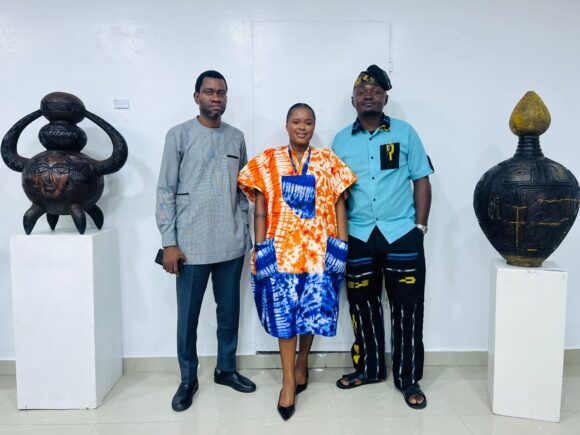
Photo Caption: From Left, Ofuma Agali, Business Lead, The Candella & Company; Saheedat Lawal, Gallery Supervisor, Quintessence Gallery; and Chris Ekuafeh; at Ekuafeh’s ‘Unity Forged in Clay’ exhibition, held at Quintessence Gallery, Victoria Island, Lagos, Saturday, 26 September 2026
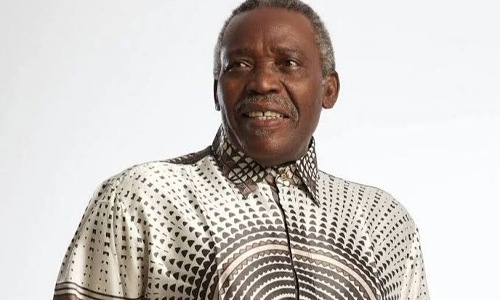
Veteran Nigerian actor and film executive, Oludotun Baiyewu Jacobs, popularly known as Olu Jacobs, has died at the age of 84.
His death was announced by his son, Olusoji Jacobs, in a statement shared on Instagram on Wednesday, September 16, 2026.
The family described the late actor as “The Lion of Lufodo” and appealed to bloggers and social media influencers to respect their privacy as they mourned his passing.
SEE ALSO: Shock as Eagle Online Publisher Dotun Oladipo Dies Suddenly at 56
“It is with gratitude to God for a life well lived and fought, that we announce the passing of our dear husband, father, grandfather and uncle. The Lion of Lufodo,” the statement read.
The family identified him as Oludotun Baiyewun Jacobs, MFR, and gave his dates as July 11, 1942, to September 16, 2026.
Jacobs was one of Nigeria’s most recognised veteran actors, with a career spanning theatre, television and film.






Dangote Refinery Pioneers Honeywell’s AI Technology

Standard Chartered Inks Deal for Shell Gas Sale

NALPGAM Preaches Innovation, Safety to LPG Operators

Tinubu Promises to Boost Local Production with NNPC Refineries

INEC Opens Online Access to Voters’ Register After Public Outcry

ADC Replies Alake, Says APC’s ‘Falsehood’ Cannot Hide Tinubu’s Failures

Trump’s Family Unveils New Cryptocurrency Platform

Senate Denies Receiving Petitions Against Tinubu’s Ambassadorial Nominees

Dangote Cement Lights Up Benue Host Communities With CSR Initiatives

Reps Recommend 3-year Jail Term For Aviation minister

Tems Sets New Record On Billboard Hot 100 Chart
