
Energy
Lagos state ‘Energy Academy’ targets 200,000 graduates


FASHOLA
According to him, the Lagos Energy Academy will provide training for young people to become technicians and electrical engineers and provide training in generation, transmission and distribution.
The Governor who inspected the facilities in the Academy located at the State Electricity Board, Works Yard Road, GRA, Ikeja after the unveiling explained that inside the Academy, there are modules on the sub-station that people see outside which has been simulated as well as transformers and all sorts of learning equipment and tools.
According to the Governor, the State Government’s initiative is significant because it connects the curriculum of the Academy with the needs of the society.
“This really now is connecting our curriculum to the needs of our society, the biggest needs of this society today is power and as the Discos are taking position, they are going to need men and women, boys and girls who
will provide the manpower, the knowledge and this is where we have decided to invest, to connect these young people to jobs that are waiting to be taken so that they do not continue to complain about unemployment.
“So, we have taken them from all levels, from vocational centres, technical colleges and through our schools systems to give them a chance to start out a new career in power sector in Lagos”, he explained.
Speaking on the Mainland Independent Power Project, the Governor said it is the sixth IPP that the State is completing and now going through the pre-commissioning testing, adding that when it is commissioned, hopefully before the end of this month, it would now power LASUTH, the High Court, the Lagos State Police Command and all of the public institutions around Ikeja.
He explained that what is behind the IPP is the sample of the solar installations that are going to be installed in all the public schools in
Lagos State, adding that government already has contracts for 172 of them in partnership with DFID for which it has to provided counterpart funding .
“Very soon you would see this installed in all our schools in Lagos, so we are taking the schools off regular generators, carbon energy.
the energy is going to come from and it would also have charging points for students who need to charge their IPADS.
Speaking on opportunities available for people from other states, the Governor said there is always room to take on people from other states.






The need to unlock Africa’s upstream potential has seen a call for stronger partnerships between governments, regulators, operators, and host communities.
General Manager (GM), Security, Government & External Relations at Oando Energy Resources, Kofo Olagunju, made the call during a panel discussion at the Africa Oil Week (AOW Energy) in Accra, Ghana.
The AOW held with the theme: “Building Dialogue, Leadership: Exploring the Challenges of Both Government and Private Sector Frameworks for Upstream Development,” Olagunju said such collaboration was critical to unlocking investment and driving sustainable growth across Africa’s upstream sector.
The discussion examined how African governments and private sector players can better align policies, regulatory frameworks, and commercial priorities to create the certainty required to attract investment and accelerate upstream development across the continent.
Olagunju argued that the relationship between regulators and operators must evolve beyond traditional oversight towards a more constructive partnership built on mutual understanding and shared responsibility.
“What we have seen in recent years is a growing recognition by both operators and regulators that we are ultimately working towards a shared objective.
Real progress requires genuine partnership, one in which regulators understand the operational realities and challenges faced by the industry, while operators remain mindful of the broader developmental and regulatory priorities governments are seeking to advance.”
READ ALSO: CORAN Counsels FG to Curb Petroleum Imports
Olagunju, was joined on the panel by Cany Jobe, Director General, Petroleum Commission, The Gambia; IK Innocent Kihika, Board Member, Petroleum Authority of Uganda; Joe Kofi Mensah, Senior Vice President (SVP) & Head, Ghana Business Unit, Kosmos Energy; and Liz Ross, GM, New Ventures Exploration & M&A, Africa & Europe, CNOOC International.
From an investor perspective, Joe Kofi Mensah, SVP & Head, Ghana Business Unit, Kosmos Energy, outlined the conditions required to create an environment capable of attracting long-term capital. “Creating an environment that attracts and sustains investment requires four critical elements: regulatory stability, speed, ease of doing business, and competitive fiscal terms. These factors must work together to create the certainty investors need to commit capital for the long term.”
Addressing the regulatory perspective, Cany Jobe, Director General, Petroleum Commission, The Gambia, challenged the notion that governments must choose between protecting national interests and attracting investment. “Protecting national interests and enabling investment should not be viewed as competing objectives. A strong regulatory framework must achieve both, creating value for resource owners while providing investors with the clarity, predictability and commercial viability required to operate successfully.”
Turning to the role of host communities, Olagunju highlighted the shift towards deeper community participation in the success and sustainability of upstream operations. “Host communities have evolved from being neighbours to the resources, to stakeholders in the development process, and increasingly, to shareholders in the success of our operations.”
He stressed that sustainable operations depend on relationships that extend beyond regulatory compliance and transactional engagement. “For our operations to thrive, host communities must be integral partners in the journey. That requires more than compliance. It requires transparency, trust, and a shared understanding of the value that responsible resource development can create.”
The panel concluded with a call for African energy stakeholders to move beyond dialogue towards practical action, strengthening partnerships, and aligning regulatory and commercial frameworks to unlock responsible investment and long-term growth.
The AOW: Energy brings together African governments, energy companies, investors and industry stakeholders for critical dialogue on the opportunities and challenges shaping the continent’s upstream energy sector. Its 2026 edition provided a platform for dialogue on investment, policy, exploration, and the development of Africa’s energy resources.
Oando continues to bring its operational experience and indigenous perspective to critical industry conversations, advocating for the partnerships, policy certainty, and collaborative frameworks needed to unlock Africa’s energy potential, strengthen energy security, and deliver sustainable value for governments, investors, and host communities.
The Nigerian Midstream and Downstream Petroleum Regulatory Authority (NMDPRA) has credited the NLNG/SEPNU with leading the rise in Nigeria’s domestic cooking gas supply, which peaked at 5,332 tonnes per day in July 2026.
The NMDPRA’s July 2026 midstream and downstream statistics showed that total liquefied petroleum gas supply increased from 5,100 tonnes per day in June to 5,332 tonnes per day in July.
The NLNG/SEPNU supplied 2,031 tonnes per day through vessels, representing about 38 per cent of the total supply during the month.
Other processing plants supplied 1,513 tonnes per day through trucks, while the Dangote Petroleum Refinery and Petrochemicals (DPRP) supplied 829 tonnes per day.
Imports accounted for 959 tonnes per day.
The figures showed that domestic sources supplied 4,373 tonnes per day, representing about 82 percent of the total LPG supply in July, while imports accounted for the remaining 18 percent.
The July supply level was the highest recorded in the 13-month period covered by the NMDPRA data.
LPG supply stood at 4,500 tonnes per day in July 2025 before rising to 5,000 tonnes in August and declining to 3,900 tonnes in September last year.
READ ALSO: OB3 Pipeline Set for First Gas, AKK Hits 95% – NNPC Ltd
It subsequently increased to 4,500 tonnes in October, 5,000 tonnes in November and 5,200 tonnes in December.
In January 2026, supply stood at 5,100 tonnes per day before falling to 4,700 tonnes in February and March, 4,500 tonnes in April and 4,100 tonnes in May.
The supply level then rose to 5,100 tonnes per day in June before reaching 5,332 tonnes in July.
The latest figures indicate a continued strengthening of domestic LPG supply, with local sources now accounting for the bulk of the cooking gas available in the country.
However, our correspondent reports that LPG prices have yet to fall below the N1,000 per kilogramme level after the sudden surge in May.
Though prices have plunged from a high of N2,400/kg to between N1,300 and N1,600, depending on location.
The NLNG recently accused some marketers of contributing to the sharp rise in the price of cooking gas by buying liquefied petroleum gas from the company at prices between N800 and N900 per kilogramme and selling it for as much as N2,400/kg in the retail market.
The Managing Director and Chief Executive Officer of NLNG, Adeleye Falade, disclosed this during a recent media briefing in Lagos, where he attributed the price spike to supply shortages, artificial scarcity and distortions in the distribution chain rather than the company’s pricing.
According to him, when the retail price of LPG climbed to N2,400/kg, the NLNG was selling the product to buyers at between N800 and N900/kg. He said the price was supposed to be in the range of N1,000 to N1,200, going by the recommendation of the NMDPRA.
“When the product was being sold at N2,400 in the market, guess how much they (marketers) were lifting it from us? It was between N800 and N900 per kg. And NMDPRA recommended that by the time you put in transportation costs and all other things, it shouldn’t be selling more than N1,000, N1,100 or N1,200. So, there’s also some distortion that happened on the sales side, which I know the regulators are working on right now to get control of it,” he stated.
On Tuesday, renewed escalation of the conflict between the United States and Iran pressured oil prices to over $94/barrel.
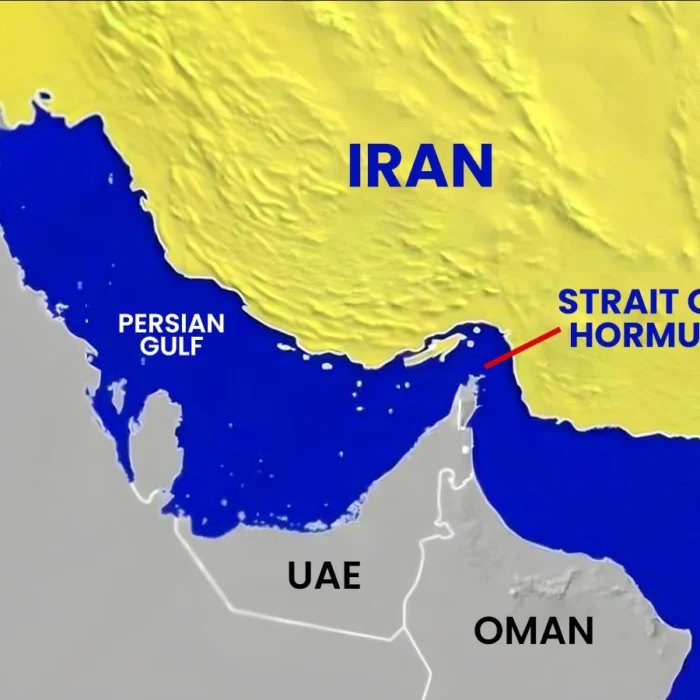
Current hostilities which witnessed American air strikes on Iranian targets and triggered global concerns of disruption to crude supplies through the Strait of Hormuz.
READ ALSO: NLC Decries Lax in Nigeria’s Oil Sector, Inadequate Support for Local Refineries
Brent crude rose $4.06, or 4.49 percent, to $94.55 a barrel, while West Texas Intermediate gained $4.44, or 5.18 percent, to $90.20 a barrel. Murban crude also surged by $7.19, or 7.30 percent, to $105.60 a barrel, according to Oilprice.com.
The rally followed the United States’ fresh strikes on Iran, with Washington saying its forces had targeted the Islamic Revolutionary Guard Corps IRGC).
“Today (Tuesday) at 12 p.m. ET (1600 GMT), US forces began striking Islamic Revolutionary Guard Corps targets in Iran.
“The strikes follow recent attempted attacks by the IRGC against commercial shipping in the Strait of Hormuz and against American service members deployed to the region,” the US Central Command said.
The latest attacks have raised fresh concerns about the security around the Strait of Hormuz, a critical route for global oil supplies. Oil prices had already risen following the exchange of attacks between the two countries over the weekend, while reports of attacks on tankers further fuelled supply concerns.
Reuters reported that two supertankers carrying Saudi oil were struck by unknown projectiles within minutes of each other while travelling outbound through the Strait of Hormuz late on Monday, according to shipping intelligence and tracking firms.
Following the reports, Brent crude futures, which were already up about two percent, jumped by almost another two percent.
Iran has also threatened to prevent oil exports from the Gulf if the US continues its attacks. “If the enemy wants us not to export oil from the Persian Gulf, no one will be able to export oil,” Iranian Parliament Speaker Mohammad Baqer Qalibaf was quoted as saying by Iranian media.
The renewed confrontation has heightened fears that the six-month-old conflict could escalate into a wider war and threaten crude supplies from the oil-rich Gulf region.
The conflict had previously shifted towards sanctions, blockades and economic pressure, but the latest exchange of attacks has raised concerns about a return to sustained military confrontation.
US President Donald Trump warned Iran that it would face a stronger response if it retaliated against the latest American strikes.The US strikes came after Iranian missiles were fired at two US air bases in Jordan in response to an earlier American attack on Iran’s Larak Island.
The latest escalation also coincided with plans by Washington to impose additional economic sanctions on Tehran. US Treasury Secretary Scott Bessent said bank sanctions against Iran were likely to be announced this week and next, while warning that Washington would also target other entities doing business with the Islamic Revolutionary Guard Corps.





Dangote Reveals Date for Much-Awaited Refinery IPO

‘Young Nigerians Now Selling Their Kidneys to Survive’ — Atiku Raises Alarm
NGX N-Zero Begins Corporate Climate Baseline Assessments

2027: Obi Has No Chance Against Tinubu Without Opposition Alliance — Okonkwo

Unlocking Africa’s Upstream Lies in Stronger Partnerships – Oando

Presidency Clears Air on Tinubu’s US Court Case

Trump’s Family Unveils New Cryptocurrency Platform

Senate Denies Receiving Petitions Against Tinubu’s Ambassadorial Nominees

Dangote Cement Lights Up Benue Host Communities With CSR Initiatives

Reps Recommend 3-year Jail Term For Aviation minister

Tems Sets New Record On Billboard Hot 100 Chart
