
Politics
Alison-Madueke’s Loot: SERAP Writes Trump, Seeks Return Of Stolen Assets, Ban On Corrupt Officials

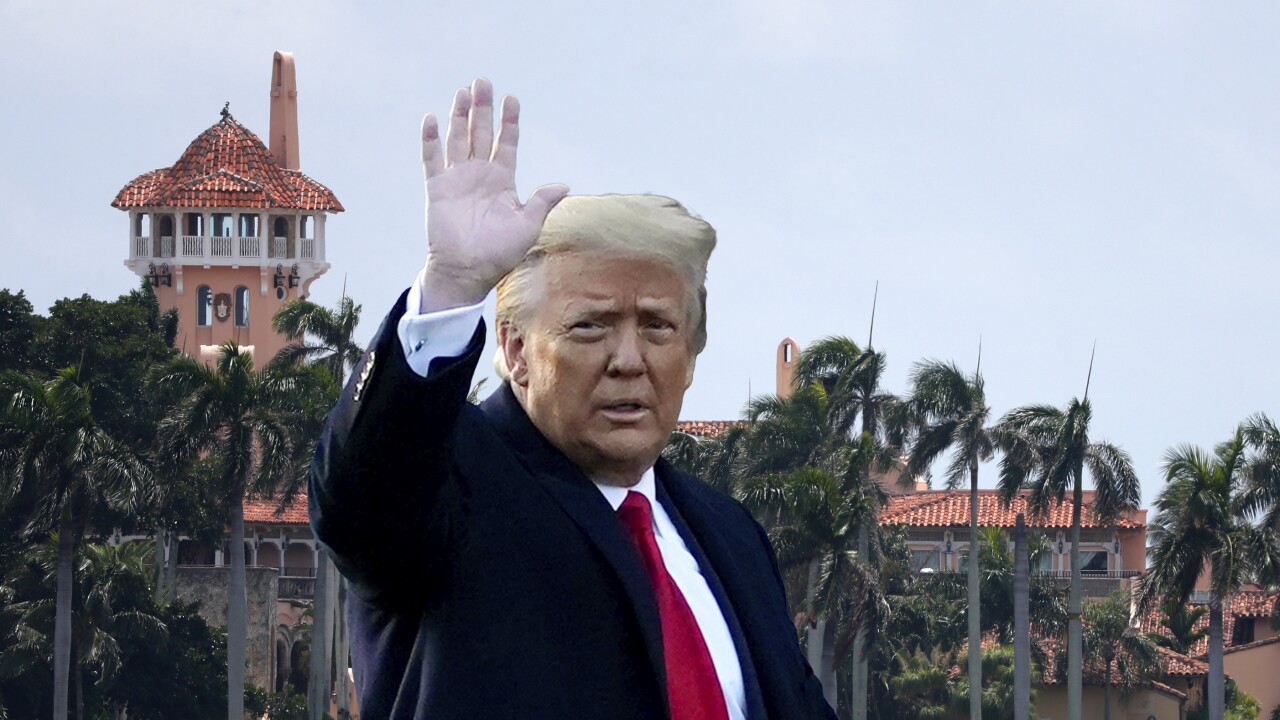
The Socio-Economic Rights and Accountability Project (SERAP) has urged US President-elect Donald Trump and his incoming administration “to promptly identify US-based proceeds of corruption traced to former and current Nigerian public officials and their associates and to ensure the full recovery and return of any such stolen assets to Nigeria.”
The SERAP said, “any return of proceeds of corruption from Nigeria must meet strict transparency and accountability standards to ensure the funds are used solely for the benefit of the Nigerian people.”
The SERAP urged him to “direct the US Department of Justice to promptly initiate civil asset forfeiture proceedings against proceeds of corruption traced to former and current Nigerian public officials and their associates so as to fulfill several non-controversial commitments by the US to assist Nigeria in asset recovery matters.”
ALSO READ: Obasanjo Lauds Adeleke Over Opposition’s Attempts to Thwart Airport Project
The SERAP also urged him “to identify and publish the names of former and current Nigerian public officials suspected to be responsible for corruption and the depositing of its proceeds in US banks, and to apply existing US presidential proclamations to temporarily ban such officials from entering the US.”
In the letter dated 18 January 2025 and signed by SERAP deputy director Kolawole Oluwadare, the organisation said: “Diezani Alison-Madueke’s looted assets and other recently returned assets represent a tiny fraction of the over $500 billions that have been reportedly stolen from Nigeria and located in the US or otherwise subject to US jurisdiction.”
The SERAP said, “Our requests are brought in the public interest, and in keeping with the requirements of the UN Convention against Corruption to which both the US and Nigeria are states parties.”
According to the SERAP, “Proceeds of corruption from Nigeria continue to be deposited in US banks or in other locations subject to US jurisdictions.”
The request followed the recently returned $52.88 million in forfeited corruption proceeds linked to former Petroleum Resources Minister Diezani Alison-Madueke.
The letter, read in part: “We hope you and your incoming government address the legal impediments that have continued to allow corrupt Nigerian government officials to deposit and conceal their ill-gotten assets in the US and other locations subject to US jurisdiction.”
“Returning proceeds of corruption to Nigeria is a development imperative. By returning proceeds of corruption to Nigeria, the US would be contributing to the efforts to address the growing poverty in the country and achieve the Sustainable Development Goals.”
“The US has the obligations under the relevant provisions of the UN Convention against Corruption to trace, freeze and seize proceeds of corruption from Nigeria and located in the US or otherwise subject to US jurisdiction and to return the assets to the Nigerian people.”
“A whole chapter of the Convention is devoted to international cooperation in the recovery and return of stolen assets including from Nigeria (chapter V, comprising 9 articles).”
“SERAP is concerned that corruption remains a major obstacle to sustainable development, the rule of law and the effective enjoyment of socio-economic rights in Nigeria. Implementing the recommended measures would contribute to addressing these governance challenges.
“Corrupt practices have long been accepted as a fact of life and an inalienable part of the country’s ministries, departments and agencies [MDAs] and the governmental power structures across several states.”
“Nigeria’s auditor-general office annually documents widespread and systemic corruption in ministries, departments and agencies (MDAs) including in the petroleum, education, health and water sectors, plunging millions of Nigerians further into poverty. The auditor-general office has declared trillions of naira as missing or diverted.”
“SERAP urges you to promptly share information with relevant Nigerian civil society organizations on stolen assets of Nigerian origin located in the US or otherwise subject to US jurisdiction, as required by Articles 46(4) and 56 of the UN Convention Against Corruption.”
“Imposing a temporary travel ban on former and current Nigerian public officials suspected to be responsible for keeping proceeds of corruption in the US or in locations subject to US jurisdiction would not violate due process and presumption of innocence principles, as long as the reasons for the sanctions are communicated to those that may be affected.”
“According to reports, the U.S. Government and the Federal Government of Nigeria recently announced an agreement to promptly repatriate approximately $52.88 million in forfeited corruption proceeds.”
“These funds were forfeited to the United States as part of the Kleptocracy Asset Recovery Initiative of the U.S. Department of Justice. The forfeited assets had been illegally acquired using funds linked to money laundering and a conspiracy to bribe former Petroleum Resources Minister Diezani Alison-Madueke.”
“In 2007, former Chairman of the Economic and Financial crimes Commission (EFCC) Mallam Nuhu Ribadu alleged that Nigerian politicians stole over $400 billion. Former military dictator General Sani Abacha reportedly collected truck-loads of cash running into billions of naira from the Central Bank of Nigeria.”
“According to the Stolen Asset Recovery Initiative (StAR) estimates, illicit funds associated with bribes received by public officials from developing and transition countries alone are estimated at USD 20 billion to USD 40 billion per year – a figure equivalent to 20 to 40 percent of flows of official development assistance.”
“SERAP notes that Article 51 of the UN Convention against Corruption provides for the return of ‘corrupt’ assets to countries of origin as a fundamental principle. Article 43 provides likewise.”
“Similarly, under Articles 47(3)(a) and (b) states parties have an obligation to return forfeited or confiscated assets in cases of public corruption, as here, or when the requesting party reasonably establishes either prior ownership or damages to the states.”
“A resolution adopted by the Conference of States Parties to the UN Convention Against Corruption in Panama in November 2013 reaffirms this obligation, by requiring state to make ‘every effort’ to return such proceeds. to the victim state.”







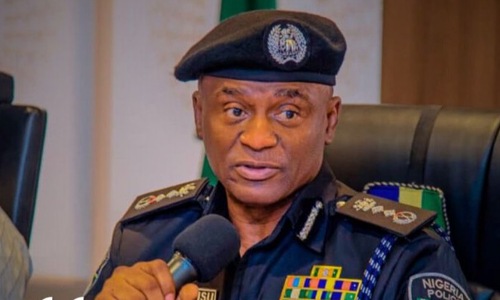
The Nigeria Police Force has warned Nigerian youths against allowing themselves to be used as instruments of political violence ahead of the 2027 general elections, saying their future is more valuable than temporary political inducements.
The warning was contained in a goodwill message delivered by the Force Public Relations Officer, CSP Annie Iniedu, on behalf of the Inspector-General of Police, Olatunji Rilwan Disu, at a National Orientation Agency (NOA) initiative to mobilise Nigerians at the grassroots ahead of the elections on Thursday.
SEE ALSO: IGP Disu Proposes New Police Desk for Nigeria’s Creative Economy, Intellectual Property
The initiative was held under the theme, “Your Vote, Your Voice, Your Future.”
In the message, the Inspector-General urged political parties, candidates and their supporters to embrace issue-based campaigns, tolerance and respect for the rule of law.
“Elections must never become a licence for thuggery, intimidation, vote-buying, ballot-snatching, destruction of electoral materials, or violence,” he said.
Addressing young Nigerians, the police chief warned them against becoming instruments of political violence.
“To our youths in particular: do not allow yourselves to be used as instruments of political violence. Your future is more valuable than any temporary political inducement,” he said.
He also urged eligible voters to reject voter apathy and vote-buying, encouraging them to protect their votes and participate peacefully in the electoral process.
“To all our eligible voters, I urge you to reject voter apathy and vote-buying. Your vote is your voice. Protect it, exercise it peacefully, and allow democracy to work for our nation,” he said.
The Inspector-General assured Nigerians that the police would work with the Independent National Electoral Commission (INEC), other security agencies and relevant stakeholders to protect the integrity of the 2027 elections.
He said the collaboration would involve intelligence sharing, inter-agency cooperation and professional policing to provide a safe and secure environment for voters.
“The Nigerian Police Force assures all Nigerians that we shall remain professional, impartial, and firm against criminal elements seeking to undermine the electoral process,” he said.
The police chief further called for collective efforts to ensure peaceful and credible elections in 2027.
“Let us collectively ensure that in 2027, the ballot defeats the bullet, ideas defeat intimidation, and democracy defeats violence,” he said.
He also urged Nigerians to mobilise for peace, responsible leadership and a credible electoral process ahead of the general elections.

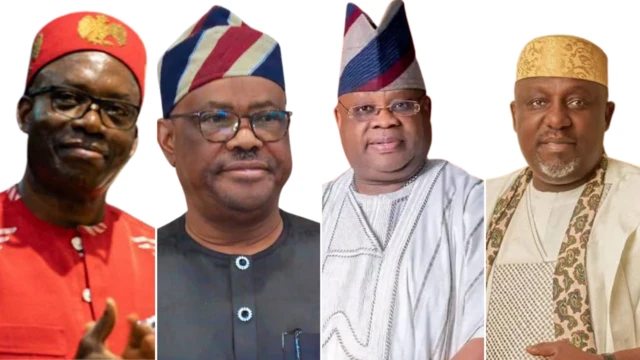
The efforts of the members of the All Progressives Congress (APC) Presidential Campaign Council (PCC) would count for nothing, except for the person who delivers his or her ward at the polls.
Nigeria’s President, and party’s presidential candidate for the 2027 election, Bola Ahmed Tinubu made it clear during the inauguration of the council at the Banquet Hall of the Presidential Villa in Abuja, on Wednesday.
“No one gets credit for an incomplete assignment. So, until you deliver the next election, until you deliver your wards, until you deliver the votes, before we can say thank you,” he said.
READ ALSO:Marketers Eye Portion of FG’s Petrol Discount
The president, who expressed gratitude to party members for their support in the previous election, said the inauguration was more than a formal gathering, describing it as a renewed commitment to Nigerians.
“The APC is ready. We have not gathered merely to inaugurate a council; we have gathered to renew a covenant, a covenant with the Nigerian people and the historic responsibility they have entrusted to us as Nigeria’s governing party. We promise we will not let them down,” he said.
Tinubu also expressed confidence in the party’s ability to secure victory.
“I celebrate you. I celebrate you, no doubt about that. Nigeria will continue to celebrate you. You will see the joy of this victory. You will share in the joy,” he said.
The president also said he would not participate in every aspect of the campaign, stressing that his responsibilities as head of state would remain a priority.
He said party members had cautioned him against allowing the demands of campaigning to distract him from governance, adding that he agreed with their position.
“You have warned me and asked me not to allow the rigour of the campaign to distract me from governance. I hear you. I am in full agreement with your decision. Nigeria needs more attention now than ever before.
“The responsibility of this office does not pause. That responsibility did not recognise our agenda here today. The Constitution allows INEC to make room for parliament but not for the campaign. The job must go on,” he stated.
He, however, pledged to make time to address Nigerians directly while the campaign council coordinates activities across the country.
“However, I will still make time to speak directly with Nigerians even as you lead the campaign in the states and local government areas, so you will excuse me from going everywhere with you,” he said.
The campaign council is chaired by Tinubu, with Vice-President Kashim Shettima and APC National Chairman Nentawe Yilwatda serving as first and second vice-chairmen, respectively.
Senate President Godswill Akpabio, Speaker of the House of Representatives Tajudeen Abbas and Kwara State Governor AbdulRahman AbdulRazaq are the deputy vice-chairmen.
Former Zamfara State Governor Abdulaziz Yari was named director-general of the council.
Other appointments include Femi Gbajabiamila as head of administration, Imo State Governor Hope Uzodimma as secretary, and former APC National Chairman Abdullahi Ganduje as director of stakeholder mobilisation.
Lagos State Governor Babajide Sanwo-Olu was also listed among the party’s campaign officials, while Dele Alake was named spokesman.
The council’s structure includes directorates responsible for mobilisation, election planning and monitoring, finance, fundraising and regional coordination.
The party has also named political figures outside its ranks to coordinate support in some states and regions, including Federal Capital Territory Minister Nyesom Wike for Rivers State and the FCT, Anambra State Governor Chukwuma Soludo for Anambra, and Osun State Governor Ademola Adeleke for Osun.
President Tinubu is seeking a second term in the 2027 presidential election, which the Independent National Electoral Commission has scheduled for January 16, 2027.
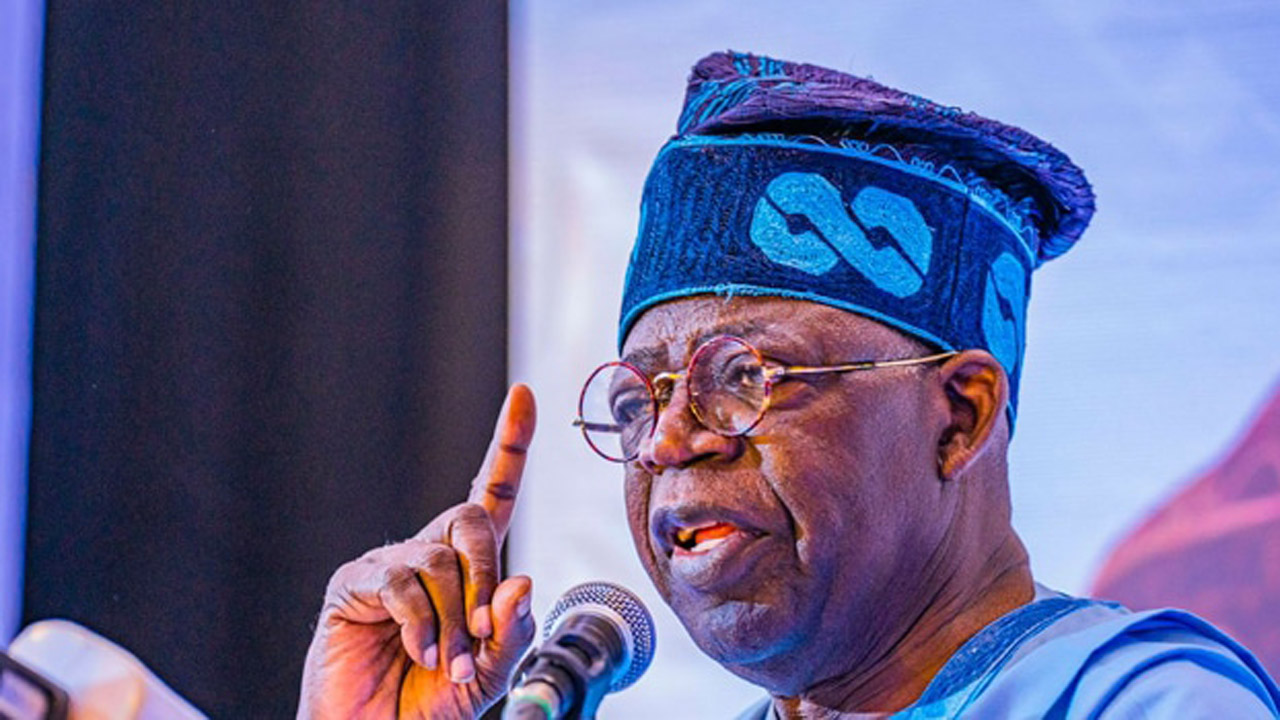
President Bola Tinubu will remain focused on governance despite preparations for the 2027 general elections, according to his Senior Special Assistant on Public Engagement, Fredrick Nwabufo.
Nwabufo made this known in an article titled “Takeaways from the APC Presidential Campaign Inauguration,” in which he highlighted key messages from the inauguration of the All Progressives Congress (APC) Presidential Campaign Council.
He said the decision to maintain governance during the campaign period was important because the President’s mandate would continue until May 29, 2027.
SEE MORE: 2027: ‘Tinubu Has Done Well’– Wike Tells Opposition to Speak the Truth
According to him, campaigns should not come at the expense of governance, stressing that the responsibility of leadership to the people must not be abandoned under any circumstances.
“Campaigns do not have to be run at the expense of governance,” Nwabufo wrote.
He described Tinubu’s decision to remain focused on delivering results to Nigerians while campaigning as both patriotic and judicious.
Nwabufo also highlighted the need for a disciplined and peaceful campaign ahead of the 2027 elections, citing APC National Chairman, Professor Nentawe Yilwatda, who called for a contest based on ideas, records and policies.
“Let the coming election be a contest of ideas, records, and policies and be conducted peacefully and with respect for the Nigerian people,” Yilwatda said.
The presidential aide further pointed to what he described as broad political consensus around Tinubu, noting that political leaders from different platforms had expressed support for the President’s candidacy.
He cited Anambra State Governor, Chukwuma Soludo, as describing the level of elite consensus surrounding the country’s political future as unprecedented.
Nwabufo also highlighted the role of women in the 2027 campaign, noting Tinubu’s pledge to support the Reserved Seats for Women Bill.
He said the President had acknowledged women’s contributions and identified them as important mobilisers for the campaign.
The aide also underscored the importance of young Nigerians to the country’s development, noting that Tinubu and other speakers at the inauguration emphasised the role of youth in shaping Nigeria’s future.
Imo State Governor Hope Uzodimma and House of Representatives Speaker Tajudeen Abbas were among those Nwabufo cited as highlighting the potential of current reforms to avert crises for present and future generations.






2027 Election: ‘Your Future Is More Valuable’ — IGP Warn Youths Against Political Violence

Tinubu Charges PCC Members to Deliver Wards

Marketers Eye Portion of FG’s Petrol Discount

Tanzania Nears Completion of $42bn Equinor, Shell-Led LNG Project

IEA Puts UAE’s Oil Output at 5.3mbpd for September

Africa’s Energy Security Conversations Pull Industry Executives Together

Trump’s Family Unveils New Cryptocurrency Platform

Senate Denies Receiving Petitions Against Tinubu’s Ambassadorial Nominees

Dangote Cement Lights Up Benue Host Communities With CSR Initiatives

Reps Recommend 3-year Jail Term For Aviation minister

Tems Sets New Record On Billboard Hot 100 Chart
