
International News
Australia Bans Chinese AI Chatbot DeepSeek Over Security Fears

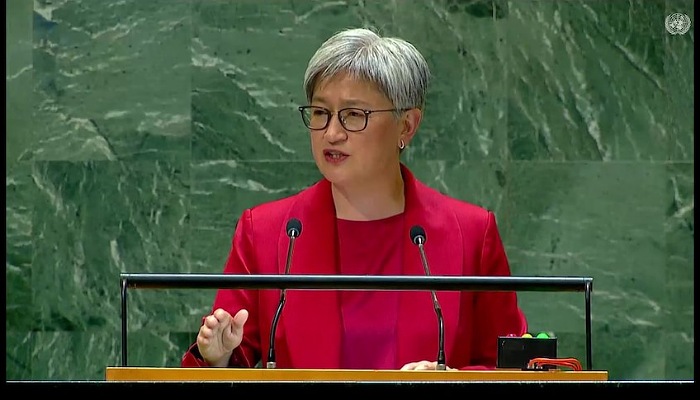
Australia has banned the use of DeepSeek, a rapidly emerging Chinese AI chatbot, from all government devices, citing security and privacy risks.
The move, announced on Wednesday by government cyber security envoy Andrew Charlton, follows similar concerns raised by countries like South Korea, Italy, and France.
Charlton emphasized that the ban was not symbolic but a necessary step based on advice from security agencies.
READ ALSO: Supreme Court Upholds TikTok Ban Law, App Faces Potential Shutdown In U.S.
“We don’t want to expose government systems to these applications,” he told ABC News. The primary risks, according to Charlton, include potential exposure to malware and concerns that data uploaded to DeepSeek may not remain private.
The Department of Home Affairs issued a directive requiring all non-corporate Commonwealth entities to immediately identify and remove all instances of DeepSeek from government systems and mobile devices.
Secretary Stephanie Foster stated that the AI application posed an “unacceptable level of security risk” and mandated government agencies to prevent any further access, use, or installation of DeepSeek products.
This ban marks one of the most stringent actions taken against DeepSeek globally, underscoring Australia’s growing concerns about Chinese tech influence.
It follows past measures such as the 2018 ban on Huawei from Australia’s 5G network and the 2023 prohibition of TikTok on government devices.
China’s foreign ministry swiftly rejected Australia’s security concerns, condemning the “politicisation of economic, trade, and technological issues.”
In a statement, Beijing reiterated that it does not require companies to illegally collect or store data, pushing back against claims that DeepSeek’s data handling poses a national security threat.
Cybersecurity experts, however, support Australia’s caution. Dana McKay, a researcher from the Royal Melbourne Institute of Technology, pointed out that Chinese companies are legally obligated to store data in China, where it is subject to government inspection.
She also raised concerns about DeepSeek’s ability to collect keystroke data, which could potentially be used to track users and compromise security.
DeepSeek, developed by a China-based startup, has taken the AI industry by storm since its release last month, with claims that its R1 chatbot rivals top US AI models at a fraction of the cost.
However, accusations of reverse-engineering US technology and concerns over its data practices have triggered scrutiny from multiple governments.
With Australia joining the list of countries imposing restrictions on DeepSeek, the AI program is becoming the latest flashpoint in ongoing tech and trade tensions between China and Western nations.
While Australia and China recently saw a thaw in relations after a years-long trade war, the DeepSeek ban signals that cybersecurity and data privacy remain contentious issues.













Federal agents raided the Washington, D.C., home of Democratic Congresswoman Ilhan Omar early Monday morning as part of an ongoing federal criminal investigation, the United States Department of Justice (DOJ) has confirmed.
Homeland Security Investigations agents arrived at the Minnesota congresswoman’s residence at about 6:00 a.m. Eastern Time, according to a report by Fox News.
SEE MORE: Trump Sparks Outrage With Shock Proposal to Rename New Mexico
The report said both the Department of Homeland Security (DHS) and the DOJ are involved in the investigation.
A DOJ spokesperson confirmed the operation, stating: “Today in the Washington, D.C. area, Homeland Security Investigations executed a judicially authorized search warrant secured by the Department of Justice.”
The spokesperson added: “This enforcement action is part of an ongoing federal criminal investigation.”
Details later……….
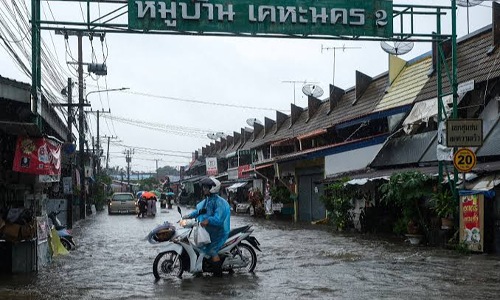
Heavy rains have triggered severe flooding across parts of Bangkok, Thailand, forcing nearly 4,900 residents to evacuate to shelters as floodwaters swept through roads and residential areas.
The flooding has disrupted movement across parts of the Thai capital, with motorists and pedestrians forced to navigate submerged roads and seek alternative routes.
SEE ALSO: NAFDAC Warns Nigerians As Fake Cowbell Milk Floods Market
According to the Bangkok Metropolitan Administration, about 52,000 households have been affected by the flooding, prompting authorities to declare a flood disaster and intensify emergency response efforts.
Emergency teams have been deployed to assist affected communities and move residents from vulnerable areas to safer locations as water levels rise.
Bangkok is accustomed to seasonal heavy rainfall, but intense downpours can overwhelm drainage systems, particularly in low-lying areas, resulting in widespread flooding and disruption.
Authorities are continuing to monitor affected locations while coordinating evacuations and other emergency measures.
For thousands of residents, the immediate priority remains securing safe shelter and protecting homes and livelihoods as authorities work to manage the situation and restore normal activities once the floodwaters recede.
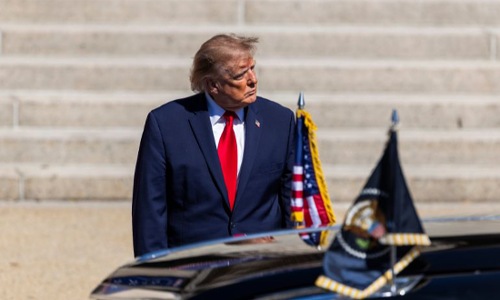
US President Donald Trump has explained his decision to reject Iran’s latest proposal to reopen the Strait of Hormuz, saying Tehran was seeking an agreement because it was losing revenue.
Speaking to reporters at the White House, Trump said Iran wanted to immediately reopen the strategically important waterway but argued that the proposal was not acceptable to his administration.
“They want to make a deal, and I think that’s fine. I like making a deal, too, but that deal would not be acceptable,” Trump said.
SEE ALSO: How the Strait of Hormuz Attack Could Trigger a Fresh Global Oil Shock
According to the US president, Iran’s push to reopen the strait was driven by the economic pressure it was facing.
“What they want to do is immediately open the Hormuz Strait. Do you know why? Because they are dying,” Trump said.
“You know why they’re dying? Because they have no money coming in, because they get their money from the Hormuz Strait.”
Trump also claimed that the US had established an unprecedented naval blockade against Iran, describing it as “a wall of steel.”
“So they outsmarted themselves. We put up the greatest blockade ever in military history. It’s a wall of steel,” he said.
“And guess what? They don’t have any money now because they wanted to close the strait.”
The Strait of Hormuz is a major global energy shipping route, and disruption to traffic through the waterway has significant implications for international oil markets and countries that depend on energy imports.
Trump’s remarks came amid continued tensions between Washington and Tehran over the reopening of the strategic waterway and negotiations involving Iran.






Atiku Launches ‘Ask AA’ Portal, Invites Nigerians to Question His Record
Adamawa SSG Identifies Three Priorities for Tackling Nigeria’s Security Challenges

Ebonyi 2027: Gov Nwifuru Jittery Over My Candidacy, Violating Constitution — Odii

Small Investors Take Centre Stage as Dangote IPO Nears Close
Sahara Champions Global Shipping Collaboration for $20m Mercy Ships Healthcare Impact

30 Nigerians Bag Postgraduate Scholarship from NNPC Ltd, Eni

Trump’s Family Unveils New Cryptocurrency Platform

Senate Denies Receiving Petitions Against Tinubu’s Ambassadorial Nominees

Dangote Cement Lights Up Benue Host Communities With CSR Initiatives

Reps Recommend 3-year Jail Term For Aviation minister

Tems Sets New Record On Billboard Hot 100 Chart
