
International News
DR Congo Conflict: Rwandan-Backed Rebels Announce Ceasefire

As fighting in eastern Democratic Republic of Congo (DRC) threatens to escalate further, the Rwandan-backed armed group M23 has declared a humanitarian ceasefire, effective Tuesday.
The declaration comes just days before a high-stakes crisis summit between Congolese President Félix Tshisekedi and Rwandan President Paul Kagame, set to take place in Tanzania.
The ceasefire follows last week’s dramatic escalation, which saw M23 and Rwandan forces seize Goma, the capital of North Kivu province.
READ MORE: NCSCN Bows To Pressure, Pulls Out Of Protests Against Telcom Tariff Hike
While hostilities have subsided in Goma, home to over a million people, clashes have spread to neighbouring South Kivu province.
Local sources report that M23 and Rwandan forces are now near the mining town of Nyabibwe, approximately 70 kilometres from Bukavu airport, raising concerns of an advance on Bukavu, South Kivu’s capital.
Despite Tuesday’s ceasefire, reports indicate that both M23 and the Congolese army have been deploying reinforcements and military equipment.
In a statement on Monday, M23 claimed it had “no intention of taking control of Bukavu or other localities,” despite previously declaring an ambition to march toward Kinshasa.
The DRC has endured more than three decades of conflict, with M23’s resurgence exacerbating tensions between Kinshasa and Kigali. The United Nations has documented multiple ceasefires in the ongoing conflict, all of which have been short-lived.
The ceasefire follows warnings from international observers that continued violence could worsen an already dire humanitarian crisis.
The United Nations has urged the immediate reopening of Goma airport, calling it a “lifeline” for humanitarian operations. UN Humanitarian Coordinator Bruno Lemarquis stressed that without the airport, evacuating the wounded and delivering medical supplies would be severely hindered.
The humanitarian toll has been devastating. At least 900 people were killed and 2,880 injured in the recent fighting, according to the UN. Meanwhile, over half a million people have been displaced in North and South Kivu since January alone.
The UN Human Rights Council has scheduled a special session on Friday to address the crisis at the request of the Congolese government.
On Tuesday, around 75 Congolese and international NGOs called for investigations into alleged human rights abuses by all parties involved in the fighting.
In Kinshasa, tensions remain high as authorities restrict access to social media and ban protests following previous attacks on embassies.
However, anger has spread beyond the DRC’s borders. Hundreds of Congolese protesters gathered outside the European Union offices in Pretoria, South Africa, demanding sanctions against Rwanda.
South African President Cyril Ramaphosa has reaffirmed his country’s support for the DRC, despite growing pressure to withdraw troops after 14 South African soldiers were killed in the conflict. Their bodies are expected to be repatriated on Wednesday.
The DRC’s eastern regions are rich in valuable minerals, including coltan, gold, and other resources essential for global technology production.
A UN expert report published last year estimated that Rwanda had up to 4,000 troops in the DRC, allegedly to exploit these resources and maintain influence over M23. Rwanda denies military involvement, instead accusing Kinshasa of backing the FDLR, a militia composed of ethnic Hutu fighters linked to the 1994 Rwandan genocide.
With tensions at a boiling point, the upcoming summit of the East African Community (EAC) and the Southern African Development Community (SADC) in Dar es Salaam could prove critical in determining the next steps in this protracted conflict.
However, with a history of failed truces, there is little optimism that this ceasefire will bring lasting peace to the region.







Federal agents raided the Washington, D.C., home of Democratic Congresswoman Ilhan Omar early Monday morning as part of an ongoing federal criminal investigation, the United States Department of Justice (DOJ) has confirmed.
Homeland Security Investigations agents arrived at the Minnesota congresswoman’s residence at about 6:00 a.m. Eastern Time, according to a report by Fox News.
SEE MORE: Trump Sparks Outrage With Shock Proposal to Rename New Mexico
The report said both the Department of Homeland Security (DHS) and the DOJ are involved in the investigation.
A DOJ spokesperson confirmed the operation, stating: “Today in the Washington, D.C. area, Homeland Security Investigations executed a judicially authorized search warrant secured by the Department of Justice.”
The spokesperson added: “This enforcement action is part of an ongoing federal criminal investigation.”
Details later……….
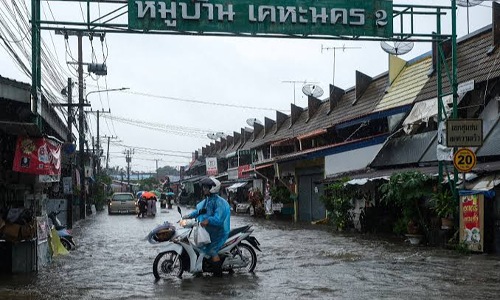
Heavy rains have triggered severe flooding across parts of Bangkok, Thailand, forcing nearly 4,900 residents to evacuate to shelters as floodwaters swept through roads and residential areas.
The flooding has disrupted movement across parts of the Thai capital, with motorists and pedestrians forced to navigate submerged roads and seek alternative routes.
SEE ALSO: NAFDAC Warns Nigerians As Fake Cowbell Milk Floods Market
According to the Bangkok Metropolitan Administration, about 52,000 households have been affected by the flooding, prompting authorities to declare a flood disaster and intensify emergency response efforts.
Emergency teams have been deployed to assist affected communities and move residents from vulnerable areas to safer locations as water levels rise.
Bangkok is accustomed to seasonal heavy rainfall, but intense downpours can overwhelm drainage systems, particularly in low-lying areas, resulting in widespread flooding and disruption.
Authorities are continuing to monitor affected locations while coordinating evacuations and other emergency measures.
For thousands of residents, the immediate priority remains securing safe shelter and protecting homes and livelihoods as authorities work to manage the situation and restore normal activities once the floodwaters recede.
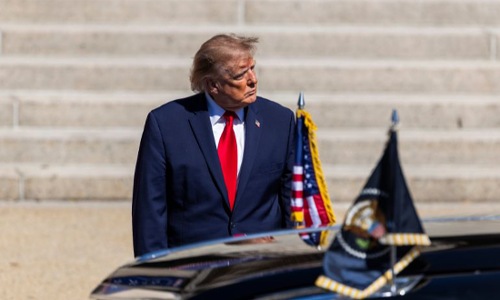
US President Donald Trump has explained his decision to reject Iran’s latest proposal to reopen the Strait of Hormuz, saying Tehran was seeking an agreement because it was losing revenue.
Speaking to reporters at the White House, Trump said Iran wanted to immediately reopen the strategically important waterway but argued that the proposal was not acceptable to his administration.
“They want to make a deal, and I think that’s fine. I like making a deal, too, but that deal would not be acceptable,” Trump said.
SEE ALSO: How the Strait of Hormuz Attack Could Trigger a Fresh Global Oil Shock
According to the US president, Iran’s push to reopen the strait was driven by the economic pressure it was facing.
“What they want to do is immediately open the Hormuz Strait. Do you know why? Because they are dying,” Trump said.
“You know why they’re dying? Because they have no money coming in, because they get their money from the Hormuz Strait.”
Trump also claimed that the US had established an unprecedented naval blockade against Iran, describing it as “a wall of steel.”
“So they outsmarted themselves. We put up the greatest blockade ever in military history. It’s a wall of steel,” he said.
“And guess what? They don’t have any money now because they wanted to close the strait.”
The Strait of Hormuz is a major global energy shipping route, and disruption to traffic through the waterway has significant implications for international oil markets and countries that depend on energy imports.
Trump’s remarks came amid continued tensions between Washington and Tehran over the reopening of the strategic waterway and negotiations involving Iran.






Peter Obi Meets UK Officials, Diaspora Stakeholders on Rebuilding Nigeria

Grains-Laden Truck Falls on BRT Lane in Lagos

Ogun Police Chief Urges POWA to Turn Skills Centre into Industrial Hub

Thor Empowers Host Communities with 10 Cassava, Palm Oil Processing Plants

FG Puts Daily Gas Output at 8bcf

With Crude at $111, IEA Sees Prolonged Crisis

Trump’s Family Unveils New Cryptocurrency Platform

Senate Denies Receiving Petitions Against Tinubu’s Ambassadorial Nominees

Dangote Cement Lights Up Benue Host Communities With CSR Initiatives

Reps Recommend 3-year Jail Term For Aviation minister

Tems Sets New Record On Billboard Hot 100 Chart
