
NEWS
Economic Collapse: NLC criticises NGF’s recommendations to FG

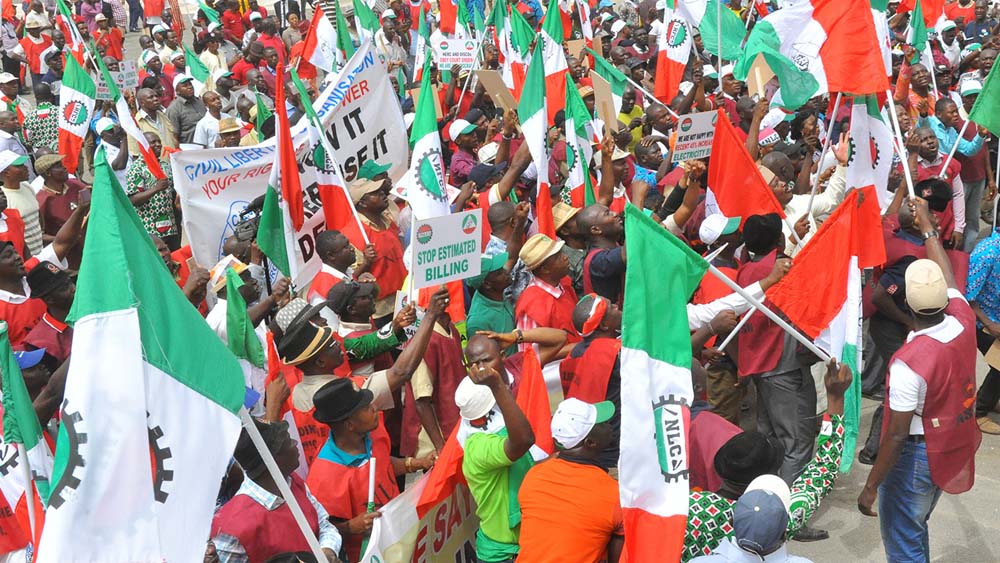
The Nigerian Labour Congress (NLC) has criticised the Nigerian Governors Forum recommendations to the Federal Government on how to save the country from economic collapse.
The NLC President, Mr Ayuba Wabba said this in a letter addressed to President Muhammadu Buhari and made available to newsmen on Friday in Abuja.
The News Agency of Nigeria(NAN) reports that it was alleged that the governors had proposed the elimination of PMS subsidy/under-recovery estimated at N6-7 trillion.
They had also proposed early retirement of civil servants from age 50 and above and the implementation of the reviewed Oronsaye Report which suggests ending financing of government’s budgetary expenditures.
The governors also proposed putting a final stop to fuel subsidy, eliminating NNPC’s federation-funded projects, capping Social Investment Programme (SIP) and National Poverty Reduction with Growth Strategy budgets at N200 billion among others
Wabba had described the governors’ recommendations to the Federal Government as insensitive, selfish and hypocritical.
“Your Excellency, while we do agree that the economy is in need of revitalisation, we are dismayed by some of the prescriptions of the governors as they smack of extreme selfishness and insensate cruelty.
According to him, the governors have canvassed for the premature termination of the appointments of public servants from age 50 and above in clear violation of their contracts of employment which is a subsisting law.
“We find this repugnant, shameful and utterly irresponsible. Aside from running contrary to your mission and principle of creating 100 million jobs.
”Aside from poverty intervention schemes,this policy is clear invitation to anarchy and damnation.
“Pursuant to this, if State Governors strongly believe that age 50 is the problem, we demand that all governors, public office holders and politicians above 50, as a mark of good faith, should immediately step aside.
”Leading by example would spur public servants to take a cue.
“Beyond this however, implementation of this policy in the public sector will give a cue to the private sector to follow suit, with all its attendant devastating consequences,’’he said.
Wabba also said that Nigerian governors were famous for ”lavish spending and wastage” and there was no assurance that money saved from stopped oil subsidy would be channeled to good use.
He also said on the issue of removal of fuel subsidy that the congress found it ” unrealistic, insensitive and hypocritical.”
”We find it distasteful that petrol subsidies in Nigeria create distortions in the economy but they do the opposite in US or Western Europe.
“Truth is that removal of the little benefit the average person in Nigeria enjoys could lead to unintended consequences which we would be better off without.’’.
He, therefore, said that the solution to subsidy and the increasing deficits laid in domestic refining, effective management of Nigerian refineries.
Wabba added,” this also to create an enabling environment for effective and efficient public sector leadership in the building and management of local refineries.”
Wabba further described as ”heartless,” the recommendation that the planned 22 per cent salary increase for workers be put on hold due to the massive devaluation of the Naira.
“At over N600 to a dollar, the minimum of N30, 000 amounts to no more than $42.8 for a family of four for 30 days.
READ ALSO: NLC Set to Speak Language of Protest to FGN – Kaduna NLC boss
“The implication of this is all too clear to see already, with the rapidly rising crime wave, and the intensifying epidemic of insecurity.
“While we commend you for your thoughtfulness for a wage increase, truth of the matter is that given the misfortune that has befallen the Nigerian populace, especially workers with fixed incomes.
“There is an urgent need for a massive intervention much deeper than the 22 per cent.
”We would recommend a 50 per cent salary review across the board given the realities on ground,’’he said.
On the recommendations for the introduction of state sales taxes at 10 per cent, Wabba said that this seeks to make the poor pay more taxes while the rich pay little or nothing.
He added that this was clear violation of the well-known norm of the rich paying taxes to cover up for the poor, adding,” It is a global norm and practice.”
Wabba therefore called for a raise in taxes across the board for the rich, including increased taxes on luxury goods and lifestyles.
“Your Excellency, instead of embracing jobs termination which will compound the existing crises in our country, we should adopt the positives of retaining our best hands as a way of motivating the public service.
“We find ludicrous the recommendation for the expedited privatisation of non-performing assets because our privatisation story has been a sad and painful one that and hath no need of re-telling here.
“ It has been replete with asset-stripping, incapacity (financial, operational and management) and total failure.
“At a time most Nigerians are calling for a reversal, especially in the power sector, it is ill-advised to privatise more entities, ’’he said.
The NLC boss also said that one of the reasons why the economy was performing below expectation was ”due to the fact that TSA and IPPIS have been compromised negatively.
”Accordingly, we call for severe sanctions that will send a clear message to all that the practice of popular democracy is not synonymous with violation of extant laws or promotion of corruption.
“Closely-linked to this, is the cost of governance which comes in the twin form of unacceptable indulgences and celebration of greed to the detriment of the greater majority.
“ This leads to the promotion of negative values with collateral consequences.
”We need not remind you that we have enough resources to go round everyone one of us but for the expensive life style, the insatiable greed and the mischief of a select few.”
”In the light of this, we urge you to go forth and recover all the money cornered by the governors and any other public office holder, to the last kobo irrespective of party affiliation, creed or sex,’’he said.




Oil marketers have warned that Nigerians may soon pay as much as ₦1,500 per litre for Premium Motor Spirit (PMS), commonly known as petrol, as global oil prices surge following the escalating conflict involving Iran in the Middle East.
The National President of the Petroleum Products Retail Outlets Owners Association of Nigeria (PETROAN), Dr. Billy Gillis-Harry, issued the warning on Tuesday while speaking on a television programme on the impact of the global crisis on fuel prices.
According to him, the current volatility in the international oil market has already pushed petrol prices above ₦1,000 per litre at the depot level, with the ex-depot price from the Dangote Petroleum Refinery now standing at about ₦1,175 per litre.
He explained that once logistics, transportation, and other operational costs are added, the final pump price could rise significantly, possibly reaching ₦1,500 per litre in the near future.
Despite concerns about the rising cost of fuel, Gillis-Harry noted that steady availability of petroleum products from the Dangote Refinery remains a major relief for Nigeria, stressing that consistent supply is better than a nationwide fuel scarcity.
He added that the refinery’s production capacity is helping to stabilize supply across the country at a time when global markets remain highly unstable.
The latest price adjustment by the Dangote Refinery marks the fourth review within two weeks. Petrol prices increased from ₦995 per litre to ₦1,175 per litre, while diesel rose from ₦1,430 to about ₦1,620 per litre.
The development comes amid a sharp spike in international crude oil prices triggered by fears of supply disruptions due to the ongoing Middle East conflict.
Brent crude recently climbed above $102 per barrel, while West Texas Intermediate (WTI) rose to around $101 per barrel.
Industry analysts say the rising oil prices are already having a ripple effect on Nigeria’s downstream petroleum sector, forcing depot operators and fuel marketers to adjust their prices in response to the global market trend.
Meanwhile, the management of Dangote Petroleum Refinery has stated that although Nigeria introduced a crude-for-naira arrangement to support local refineries, the facility still purchases crude oil at international market prices, leaving it exposed to global price fluctuations.
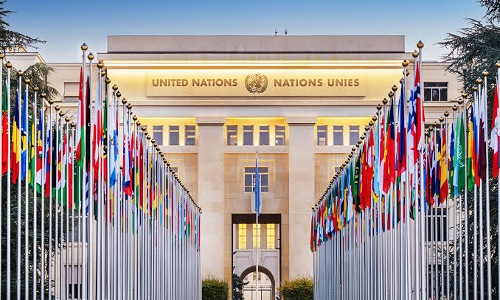
The United Nations has raised the alarm over a dramatic surge in attacks on schools worldwide, reporting a 166% increase between 2021 and 2024.
The rise highlights the escalating dangers faced by children in conflict zones.
United Nations Deputy High Commissioner for Human Rights, Nada Al-Nashif, revealed the figures during the annual meeting of the UN Human Rights Council on the rights of the child on Monday.
The session, themed “Mainstreaming the Rights of Children in Armed Conflict: Prevention and Protection,” focused on protecting children amid global conflicts.
Al-Nashif noted that the attacks were particularly concentrated in Sudan, Ukraine, the Gaza Strip, Myanmar, and Ethiopia, where children remain among the most vulnerable victims.
“In 2024, armed conflict directly affected nearly one in six children globally—about 470 million children,” she said. “Years of lost education, trauma, and lasting mental scars shape societies for generations. Long after the fighting subsides, children continue to face deadly risks.”
She highlighted Gaza as having the world’s highest number of child amputees per capita, warning that the impact of war goes far beyond immediate violence.
In Lebanon, government figures show that more than 450,000 people were displaced in less than a week, with at least 394 fatalities, including 83 children, during the 2024 conflict with Israel.
Al-Nashif also stressed the disproportionate risks for displaced children, who are more likely to die from disease linked to unsafe water and sanitation than from direct violence.
In the Democratic Republic of Congo, a 2025 cholera outbreak killed 340 children, underscoring the long-term consequences of conflict.
She called on states to uphold their international obligations to protect children, insisting that protecting children is “both a legal obligation and a humanitarian moral imperative.”
Also speaking at the council, Vanessa Frazier, Special Representative of the UN Secretary-General for Children and Armed Conflict, warned that violence against children continued at extreme levels in 2025.
She urged mainstreaming child protection across peace, security, humanitarian, human rights, and development efforts, emphasizing that children should actively participate in shaping policies designed to safeguard them.
Frazier highlighted her office’s global campaign, “Prove It Matters,” aimed at amplifying children’s voices in conflict resolution and peacebuilding.
The UN report underscores the urgent need for coordinated international action to protect children and ensure their safety in conflict zones worldwide.
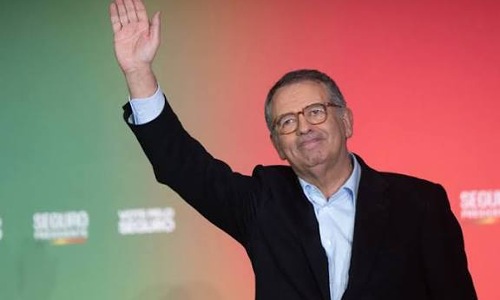
Portugal officially inaugurated its new president, Antonio Jose Seguro, on Monday, pledging to bring stability to a nation shaken by political uncertainty and natural disasters.
Seguro, the centre-left candidate, won last month’s presidential run-off against far-right rival Andre Ventura, following weeks of catastrophic storms that killed at least seven people and caused approximately €4 billion ($4.6 billion) in damage.
Speaking at his swearing-in ceremony in Lisbon’s parliament, Seguro emphasized cooperation with the minority right-wing government and vowed to end the country’s “electoral frenzy.”
SEE MORE: Spain, Portugal Plunge Into Darkness Amid Widespread Power Outage
“I will do everything I can to put an end to this electoral frenzy,” he said, pointing to the inability of previous governments to complete their terms.
Amid global crises, including conflicts in the Middle East and a more isolationist US approach under President Donald Trump, Seguro stressed the importance of multilateralism.
“The force of law has been replaced by the power of the strongest,” he remarked.
Seguro succeeds Marcelo Rebelo de Sousa, a conservative who leaves office at 77 after serving two five-year terms.
While the Portuguese presidency is largely ceremonial, Seguro’s leadership signals a commitment to political stability and international engagement.





Fuel Price Shock: Nigerians May Soon Pay ₦1,500 Per Litre – Marketers Warn

Political Earthquake in Zamfara as Gov Lawal Dumps PDP for APC

Court Pushes Malami, Son’s Terrorism Financing Trial to April 15

African Club Football Gets Major Financial Boost as CAF Hikes Prize Money

Abramovich Clashes with UK Gov’t Over £2.35bn Chelsea Sale Funds

Global Crisis: Attacks on Schools Skyrocket 166% – UN Sounds Alarm on Children’s Safety

Trump’s Family Unveils New Cryptocurrency Platform

Reps Recommend 3-year Jail Term For Aviation minister

Senate Denies Receiving Petitions Against Tinubu’s Ambassadorial Nominees

Dangote Cement Lights Up Benue Host Communities With CSR Initiatives

Things To Know About Threads, Zuckerberg’s Twitter-like App
