
Crime
EFCC Legality At Stake As Judiciary Watchdogs Backs Governors’ Lawsuit

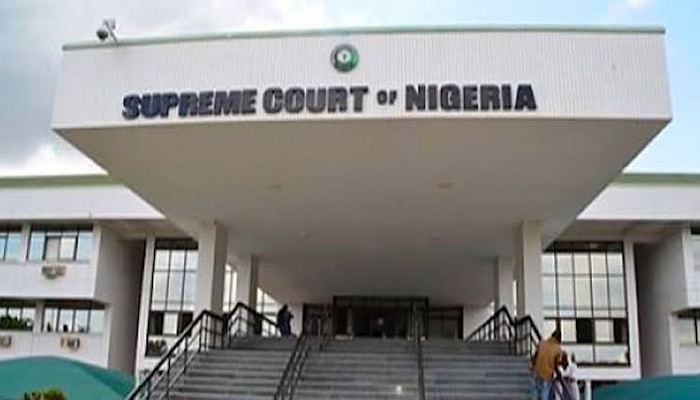
A prominent coalition of lawyers, the Judiciary Watchdogs, has thrown its support behind a high-stakes legal case brought by 19 state governors challenging the constitutionality of the Economic and Financial Crimes Commission (EFCC).
This legal battle could mark a turning point for Nigerian federalism and reshape how anti-corruption efforts are managed nationwide.
READ MORE: Regina Daniels Reveals She Had 20 Boyfriends Before Meeting Hubby
In a statement signed by Co-National Convener Barrister Real S. Dennis, the Judiciary Watchdogs praised the governors for what it described as a “bold and visionary” step in questioning the EFCC’s structure and mandate.
“We, the Judiciary Watchdogs, a group of lawyers from the 36 states of the federation, wholeheartedly applaud the bold and visionary leadership of the 19 state governors who have taken a historic step to challenge the constitutionality of the EFCC and others at the Supreme Court,” Dennis stated.
The coalition argues that the EFCC’s enabling act was established without any input from state assemblies, which they say undermines state authority and contradicts the principles of federalism.
The lawyers contend that anti-corruption agencies should reflect the federal structure, with states having a say in their creation and operation.
“The Constitution empowers states as key stakeholders in lawmaking, particularly regarding governance,” the coalition stated.
“However, the Federal Government’s unilateral creation of agencies like the EFCC undermines federalism and state autonomy.”
The Judiciary Watchdogs argued that the EFCC has frequently faced allegations of selective enforcement and politically motivated cases, which undermine public trust.
“The EFCC, in particular, has faced criticism for operating beyond its mandate, often pursuing politically motivated cases that raise concerns about its impartiality,” they said.
The coalition suggested that disbanding these agencies might clear the path for more accountable and effective anti-corruption bodies, operating strictly within legal bounds and commanding public confidence.
“Disbanding these agencies could pave the way for a more accountable and effective mechanism for combating corruption—one that operates within the bounds of the law and commands public trust,” the coalition noted, emphasizing a need for anti-graft efforts that respect legal frameworks and state roles.
The lawyers also cited the United Nations Convention against Corruption, which Nigeria ratified in 2004, noting that its implementation should align with Section 12 of the Nigerian Constitution, requiring state assembly approval for treaties to have force in Nigeria.
“The United Nations Convention against Corruption, ratified by Nigeria on December 14, 2004, must be implemented in accordance with Section 12 of the 1999 Constitution (as amended),” the coalition stated, calling for both state and federal compliance with this mandate.
The coalition also pointed to the Supreme Court’s decision in Dr. Joseph Nwobike vs. Federal Republic of Nigeria, which questioned the EFCC Act’s constitutionality and underscored the importance of state involvement in anti-corruption lawmaking.
“We commend the 19 state governors for their courage and vision,” the Judiciary Watchdogs stated.
“Their pursuit of constitutional clarity and sovereignty will strengthen Nigeria’s democracy and ensure that the rule of law prevails. We stand with them and urge the Supreme Court to uphold the Constitution.”





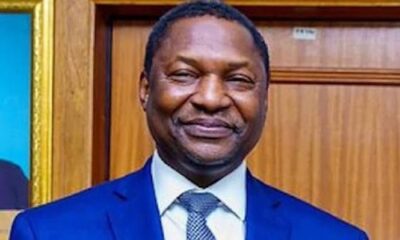

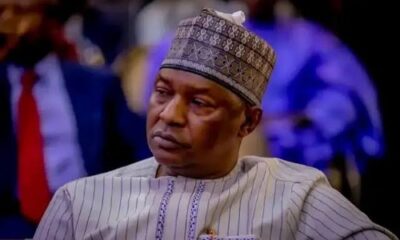


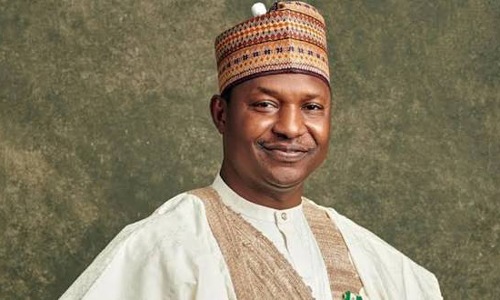
The Federal High Court in Abuja has adjourned the alleged terrorism financing and illegal firearms possession case involving former Attorney-General of the Federation, Abubakar Malami, and his son, Abdulaziz Malami, until April 15 and 16.
Justice Joyce Abdulmalik granted the adjournment on Tuesday after the prosecution requested more time to prepare for the trial.
During the court session, lead prosecuting counsel, Akinlolu Kehinde (SAN), informed the court that he had only recently been assigned to handle the case and needed additional time to consult with witnesses.
SEE ALSO: Malami Speaks Out On Court Ruling, Urges Nigerians To Stay Calm
“I got the instruction to take over the prosecution of the case on Monday and so I need time to interface with the witnesses,” Kehinde told the court while asking for a new hearing date.
Counsel for the defendants, Shuaibu Arua (SAN), did not oppose the request for adjournment.
Following the application, Justice Abdulmalik granted the request and fixed April 15 and 16 for the continuation of the trial.
The Department of State Services (DSS) had earlier arraigned the former justice minister and his son on a five-count charge bordering on alleged terrorism financing and unlawful possession of firearms.
According to the charge marked FHC/ABJ/CR/63/2026, Malami was accused of allegedly aiding terrorism financing by failing to prosecute suspected financiers whose case files were reportedly forwarded to him while he served as Attorney-General of the Federation and Minister of Justice.
The defendants were also accused of illegally storing firearms and ammunition at their residence located in Gesse Phase II Area of Birnin Kebbi Local Government Area of Kebbi State without lawful authority.
Items allegedly recovered include a Sturm Magnum 17-0101 firearm, 16 Redstar AAA 5’20 live cartridges, and 27 expended Redstar AAA 5’20 cartridges.
The alleged offences are said to violate provisions of the Terrorism (Prevention and Prohibition) Act, 2022, as well as the Firearms Act, 2004.
The trial is expected to continue in April when the court begins full hearing of the case.
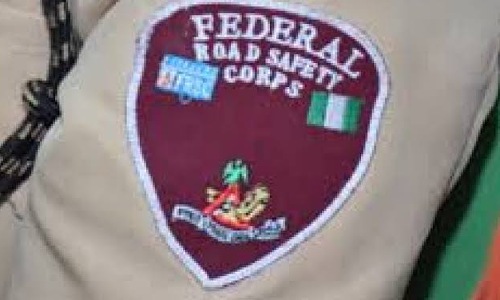
A routine patrol by the Federal Road Safety Corps (FRSC) has led to the recovery of a stolen vehicle in Lagos and the exposure of a wanted driver, highlighting the importance of proper vehicle documentation and cooperation with authorities.
The incident occurred at the RS2.1114 Isolo Unit Command, where officers stopped an ash-coloured Toyota Sienna bearing registration number LSD438GK for a Vehicle Licence Violation (VLV) on Saturday, February 28, 2026, at about 5:11 p.m.
While the driver initially failed to present valid documents, further checks revealed the vehicle had been reported stolen and the driver was already declared wanted.
SEE ALSO: Fatigue, Over Speeding Led To Road Accident Which Claimed 21 Kano Athletes – FRSC
The suspect was subsequently handed over in handcuffs to the Nigeria Police Force, Ajao Division, for further action.
The FRSC credited the recovery to the National Vehicle Identification Scheme (NVIS), a digital framework that strengthens vehicle verification and tracking.
The scheme has reportedly helped identify, trace, and recover numerous stolen vehicles nationwide, while curbing criminal syndicates involved in vehicle theft and identity manipulation.
In a statement, Assistant Corps Marshal Olusegun Ogungbemide stressed that enforcement is not only about traffic compliance but also crime prevention and public safety, urging motorists to always carry valid documentation and cooperate with patrol officers.
Corps Marshal Shehu Mohammed commended the Isolo team for their vigilance, affirming the FRSC’s commitment to leveraging technology, intelligence, and strategic partnerships to protect lives and property on Nigerian roads.
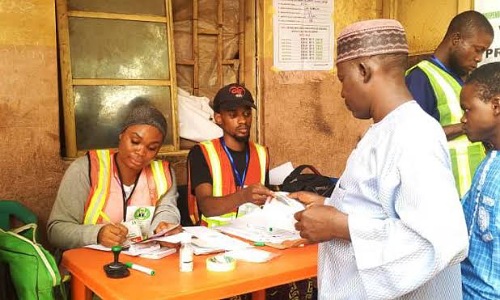
A major election scandal unfolded on Saturday in the Federal Capital Territory (FCT) as security agents apprehended a young woman in the Kabusa area for allegedly possessing 20 voter cards during the ongoing area council elections.
The woman, dressed in a black shirt and red trousers with a white scarf, was intercepted at Polling Unit 001 in Kabusa Primary School.
She was immediately escorted into a police van by security personnel, raising concerns about the integrity of the election process.
SEE ALSO: Chaos At Nyanya Polling Unit As PDP, ADC Accuse APC of ₦1,000 Vote Buying
Meanwhile, the Minister of the FCT, Nyesom Wike, was on the ground monitoring the elections.
He visited several polling units, including the Karu Chief’s Palace, to interact with adhoc staff of the Independent National Electoral Commission (INEC) and assess voter turnout.
Wike reportedly inquired about the progress of the voting and the challenges faced by election officials.
This incident comes amid reports of low voter turnout and other electoral irregularities in parts of Abuja, underscoring ongoing concerns about electoral security and transparency in the FCT area council elections.
Authorities have assured that investigations are ongoing, and the suspect may face legal action pending further verification of her actions.





Fuel Price Shock: Nigerians May Soon Pay ₦1,500 Per Litre – Marketers Warn

Political Earthquake in Zamfara as Gov Lawal Dumps PDP for APC

Court Pushes Malami, Son’s Terrorism Financing Trial to April 15

African Club Football Gets Major Financial Boost as CAF Hikes Prize Money

Abramovich Clashes with UK Gov’t Over £2.35bn Chelsea Sale Funds

Global Crisis: Attacks on Schools Skyrocket 166% – UN Sounds Alarm on Children’s Safety

Trump’s Family Unveils New Cryptocurrency Platform

Reps Recommend 3-year Jail Term For Aviation minister

Senate Denies Receiving Petitions Against Tinubu’s Ambassadorial Nominees

Dangote Cement Lights Up Benue Host Communities With CSR Initiatives

Things To Know About Threads, Zuckerberg’s Twitter-like App
