
NEWS
Entrenching Trust In Medical Laboratories Through Service Quality, ISO 15189 Accreditation

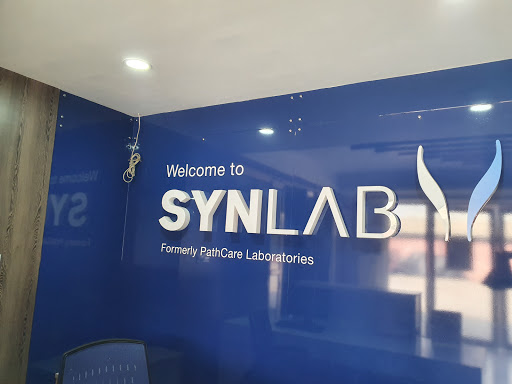
Relevant stakeholders opine that trust and quality are paramount in the realm of healthcare.
Patients rely on medical laboratories for accurate and reliable test results, as the foundation of diagnosis and treatment.
Hence, the ISO 15189 accreditation stands as a beacon, because it guides laboratories towards the establishment of a stringent quality management system.
Biztellers reports that the ISO 15189 is an international standard specific for medical laboratories. It outlines the requirements for quality and competence that laboratories need to meet to ensure accurate and reliable testing, calibration, and sampling processes.
This is why accreditation against this standard indicates that a laboratory has not just established, but is operating a quality management system and adheres to stringent requirements of the standard.
This clarification highlights the multifaceted benefits of ISO 15189 accreditation in enhancing patient trust and service quality within medical laboratories.
What then are the benefits of ISO 15189 accreditation to the provision of medical laboratory services?
A Vivid Scenario
Supposing that a patient, Adeola Adeolu (not real names), seeks diagnostic services at SYNLAB Nigeria.
And assuming that he was initially hesitant about the accuracy of test results, his concerns could be assuaged upon learning from his referral doctor that SYNLAB Nigeria does not compromise on quality because of its ISO 15189 accreditation.
Knowing that SYNLAB has this accreditation instills confidence in Adeolu, because it reinforces the reliability and credibility of the laboratory’s services.
Armed with the trust, Adeolu proceeds with the tests, confident in SYNLAB Nigeria’s commitment to excellence.
Biztellers shares below discerning members of the public look out for the ISO 15189
- ISO 15189 accreditation requires medical laboratories to adhere to a comprehensive framework for implementing quality management systems in order to ensure consistent and reliable test results. Such a guide enables organizations to access best practices and consistently implement them.
- Adhering to ISO 15189 standards requirements enhances patient safety by minimizing errors and ensuring accurate diagnostic outcomes. Adeolu’s confidence in accepting to run tests at SYNLAB Nigeria because of its ISO 15189 accreditation hinges on his belief that he would get accurate results.
- ISO 15189 accreditation elevates the global recognition of medical laboratories, facilitating collaborations and partnerships with healthcare institutions worldwide. Customers of an ISO 15189 certified laboratory can be confident that the result they receive from their laboratory will be acceptable across the globe.
- Accreditation under ISO 15189 indicates that the laboratory is meeting regulatory obligations, promoting ethical practices and is a legally responsible organization.
- Emphasizing staff competence and training, ISO 15189 accreditation affirms that laboratory personnel possess the necessary skills to maintain high-quality standards in laboratory operations. ISO 15189 accredited laboratories pay attention to staff training, recognizing that maintaining high quality requires having highly competent team.
- ISO 15189 standard requirements incorporate risk management principles, enabling laboratories to identify and mitigate potential risks effectively, thus ensuring patient safety. It fosters a culture of continuous improvement within medical laboratories, driving innovation and excellence in service delivery.
- ISO 15189 accreditation distinguishes laboratories as leaders in quality healthcare delivery, providing a competitive advantage and attracting patients and healthcare providers seeking reliable diagnostic services.
Conclusion
The ISO 15189 accreditation serves as a symbol for excellence in medical laboratories, enhancing patient trust and assuring service quality.
SYNLAB Nigeria’s embrace of this international standard and compliance with its requirements solidifies its position as a trusted partner in healthcare delivery. As the healthcare landscape evolves, ISO 15189 accreditation will remain indispensable tool, driving innovation, patient-centered care, and unwavering confidence in medical laboratories worldwide.
About SYNLAB Nigeria
SYNLAB Nigeria is a member of the SYNLAB group, with presence in 35 countries in four continents.
The organization has over 30 active locations across Nigeria and has been ISO 15189 certified since 2006.
SYNLAB Group is the leader in medical diagnostic services and specialty testing in Europe.
The Group offers a full range of innovative and reliable medical diagnostics to patients, practicing doctors, hospitals and clinics, governments and corporates.
Providing the leading level of service within the industry, SYNLAB is the partner of choice for routine and specialty diagnostics in human and veterinary medicine. The Group continuously innovates medical diagnostic services for the benefit of patients and customers.
SYNLAB holds leading positions in most markets, regularly reinforcing the strength of its network through a proven acquisition strategy.





The Transmission Company of Nigeria (TCN) has restored bulk power supply to its Katampe 330kV Transmission Substation in Abuja following an earlier disruption caused by a fault on the Shiroro–Katampe 330kV Line 1.
The development was disclosed in a statement released by TCN management on Friday, October 9, 2026.
SEE ALSO: Kainji–Birnin Kebbi Power Line: TCN Begins Final Phase of Restoration
According to the statement, bulk power supply was restored to the Katampe substation at 4:15 p.m. through the Gwagwalada–Katampe 330kV Line 1.
TCN explained that the Shiroro–Katampe 330kV Line 1 remains out of service due to a fault, necessitating the use of the Gwagwalada–Katampe line to restore supply to the substation.
The company also announced the suspension of planned maintenance work on the Gwagwalada–Katampe 330kV Line 1 to enable the line to continue supplying the Katampe substation.
The suspended maintenance work involved replacing defective line isolators and the associated earthing switch.
TCN apologised to electricity consumers in the affected areas for any inconvenience caused by the disruption and maintenance arrangements.

The Federal Government has warned politicians against making promises that could reverse Nigeria’s economic reforms, insisting that it will not restore fuel subsidy amid renewed debate over the Nigerian National Petroleum Company Limited’s (NNPC) petrol discount.
The Minister of Finance and Coordinating Minister of the Economy, Taiwo Oyedele, disclosed this during an interview on Channels Television on Friday, saying the government would not bring back subsidies on petroleum products.
“This government is not bringing back subsidy on fuel products. We need to be clear,” Oyedele said.
ALSO READ: NNPC Petrol Discount: Oyedele Explains How Lower Margins Could Boost Profits
The minister also criticised politicians who, according to him, make promises to win elections without fully considering the implications of implementing them.
He suggested that some politicians make sweeping promises during election campaigns only to offer excuses when confronted with the realities of governance.
“I think I would pardon people who say all manner of things because they want to get elected. It’s almost like ‘whatever I need to say, when I get there, I’ll give excuses.’ But we have the data,” he said.
Oyedele added that he felt a personal responsibility not to remain silent about the economic realities known to the government or allow populist positions to push Nigeria in the wrong direction.
“I feel the personal responsibility that I cannot see what I see and keep quiet, or populism to move our country in the wrong direction,” he said.
NNPC Petrol Discount Sparks Fresh Subsidy Debate
The minister’s remarks come amid renewed debate over fuel subsidy following the Federal Government’s announcement of a 30-day petrol discount at NNPC retail stations.
The initiative was introduced as a temporary measure to provide relief to Nigerians amid elevated global crude oil prices and concerns about the cost of petroleum products.
NNPC Retail had also announced a N66-per-litre petrol discount to mark Nigeria’s 66th Independence Anniversary, with the offer scheduled to run until October 31, 2026, across its retail stations nationwide.
The company maintained that the discount was a customer-relief initiative and did not represent a return to the petroleum subsidy regime.
The distinction has become central to the debate, with the government insisting that temporary price relief at NNPC stations does not amount to restoring the subsidy policy abolished in May 2023.
The administration has maintained that the current arrangement differs from the former subsidy system, under which the government intervened to cover part of the cost of petrol.
FG Defends Economic Reforms
During the interview, Oyedele also referred to a World Bank update, saying the institution had acknowledged a reduction in poverty levels and increased spending on infrastructure, particularly roads.
He urged Nigerians not to reverse the progress he said had been made, arguing that the country was approaching a point where the benefits of ongoing reforms should begin to emerge.

The Kaduna State Universal Basic Education Board (SUBEB) has commenced a promotion exercise for 24,000 eligible staff as part of efforts to clear outstanding teachers’ promotions dating back to 2021.
The development was disclosed on Friday as the administration of Governor Uba Sani intensifies efforts to address promotion backlogs, recognise teachers’ years of service and improve staff welfare across the state.
The exercise covers outstanding promotions from 2021 to 2026 and is expected to provide eligible teachers and other staff with opportunities for career progression.
SEE ALSO: Kaduna Clears N18bn Pension Arrears, Raises Agric Funding to N100bn
According to the announcement, eligible personnel will undergo an assessment process, after which promotions will be implemented for those who successfully meet the requirements.
The initiative is part of efforts to strengthen the education sector by recognising the contributions of teachers and supporting their professional development.
The state government has emphasised the importance of investing in teachers, noting that a motivated and valued teaching workforce is essential to building a stronger education system.
The exercise is also expected to address long-standing staff concerns relating to career advancement within the state’s basic education sector.






2027: Yilwatda Lists Tinubu’s Projects, Appointments as Reasons for North Central Support

Domestic Flight delays, Cancellations Compound Air Travellers’ Woes

2027 Election Might Witness Voter-Apathy as Registered Voters Shun PVC Collection
TCN Restores Power Supply to Katampe Substation After Shiroro Line Fault

2027 Elections: FG Warns Politicians Against Promises on Fuel Subsidy

PETROAN Expects Fuel Discount to Combat Inflation

Trump’s Family Unveils New Cryptocurrency Platform

Senate Denies Receiving Petitions Against Tinubu’s Ambassadorial Nominees

Dangote Cement Lights Up Benue Host Communities With CSR Initiatives

Reps Recommend 3-year Jail Term For Aviation minister

Tems Sets New Record On Billboard Hot 100 Chart
