
International News
How Democrats Used USAID To Ferment Crisis, Sponsor Terrorists – Congressman, Perry

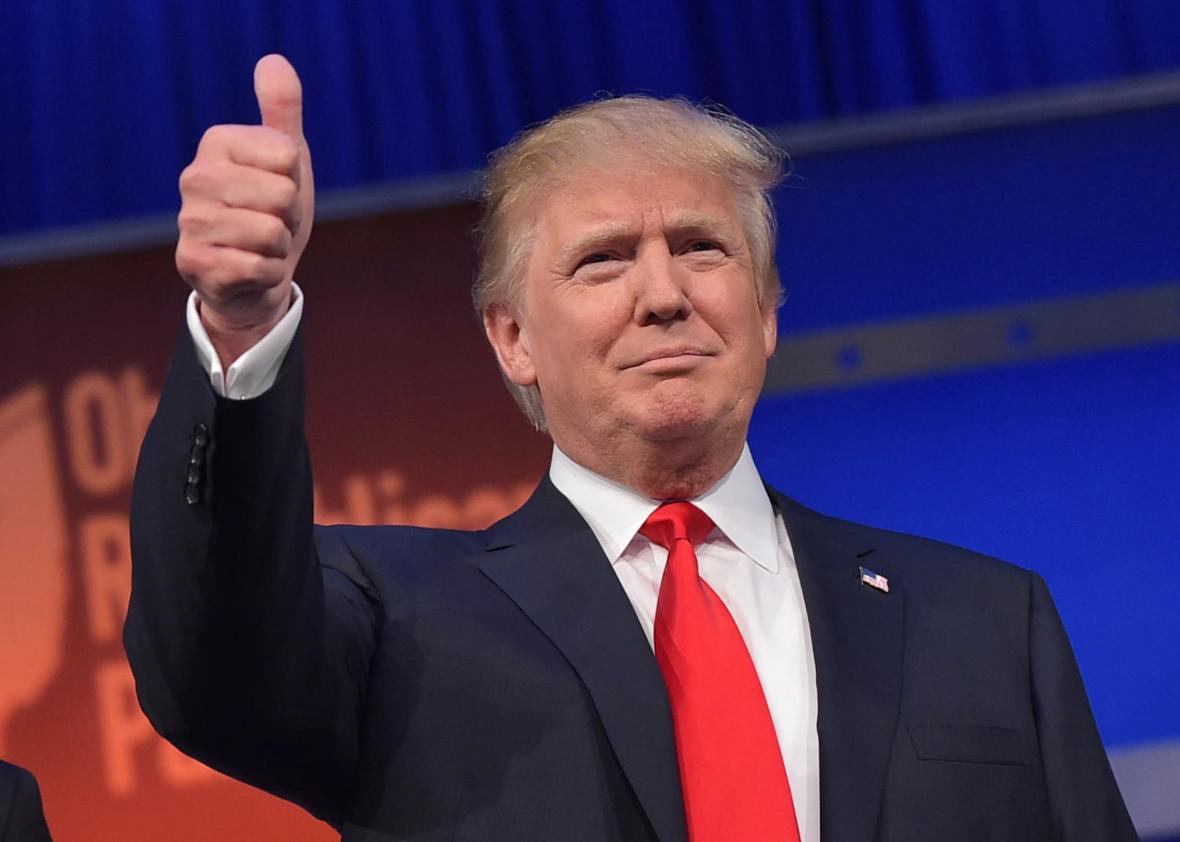
Facts are beginning to emerge on why the President Donald Trump administration is working hard to unravel and fix the US aid agency, United States Agency for International Development (USAID).
A US Congressman, Scott Perry, a Republican representing Pennsylvania, on Thursday revealed that the USAID was funding several terror groups across the world including, but not limited to, “Madrasas, ISIS, Al-Qaeda, Boko Haram, ISIS Khorasan, terrorist training camps”.
The lawmaker made the assertions at the inaugural hearing of the Subcommittee on Delivering on Government Efficiency, in Washington.
Perry spoke at a session, titled “The War on Waste: Stamping Out the Scourge of Improper Payments and Fraud,” with a view to unearthing perceived misappropriations of public funds.
ALSO READ: Adeleke Raises Alarm Over Plot To Destabilise Osun State
He said, “Who gets some of that money? Does that name ring a bell to anybody in the room? Because your money, your money, $697 million annually, plus the shipments of cash funds Madrasas, ISIS, Al-Qaeda, Boko Haram, ISIS Khorasan, terrorist training camps. That’s what it’s funding.”
The subcommittee’s website, asserted that it is mandated to “actively work with President Trump’s Department of Government Efficiency to root out waste, shore up vulnerable payment systems, and fully investigate schemes to defraud taxpayers.”
To drive home his assertions on terror-funding, Perry cited the USAID’s reported funding of $136 million for building 120 schools in Pakistan, for which there was “zero evidence” of the schools’ construction.
Perry pointed out, ” If you think that the programme under Operation Enduring Sentinel entitled Women’s Scholarship Endowment, which receives $60 million annually, or the Young Women Lead, which gets about $5 million annually, is going to women who, by the way, if you read the Inspector General’s report, is telling you that the Taliban does not allow women to speak in public, yet somehow you’re believing, and American people are supposed to believe, that this money is going for the betterment of the women in Afghanistan. It is not.
“You are funding terrorism, and it’s coming through USAID. And it’s not just Afghanistan, because Pakistan’s right next door.
“USAID spent $840 million in the last year, the last 20 years, on Pakistan’s education-related programme. It includes $136 million to build 120 schools, of which there is zero evidence that any of them were built. Why would there be any evidence? The Inspector General can’t get in to see them.
“But you know what? We doubled down and spent $20 million from USAID to create educational television programs for children unable to attend the physical school. Yeah, they can’t attend it, because it doesn’t exist. You paid for it.
“Somebody else got the money. You are paying for terrorism. This has got to end.”
Recall that President Trump had called for the shutting down of the USAID, because of massive corruption within the agency in a post on his Truth Social platform.
These are some of the reasons why President Trump mandated his ally, Elon Muks to lead the Department of Government Efficiency (DOGE).
Perhaps an indication of how serious Musk is taking his new role can be seen in his description of the USAID as “a viper’s nest of radical-left Marxists who hate America”.
The billionaire also alleged that the USAID was engaging in secret service duties and undercover bioweapon activities, like “rogue CIA work” and “funded bioweapon research, including COVID-19, that killed millions of people.”
President Trump’s disposition is that the DOGE would “dismantle government bureaucracy, slash excessive regulations, cut wasteful expenditures, and restructure federal agencies — essential to the ‘Save America’ movement. This will send shockwaves through the system, and anyone involved in government waste, which is a lot of people!”





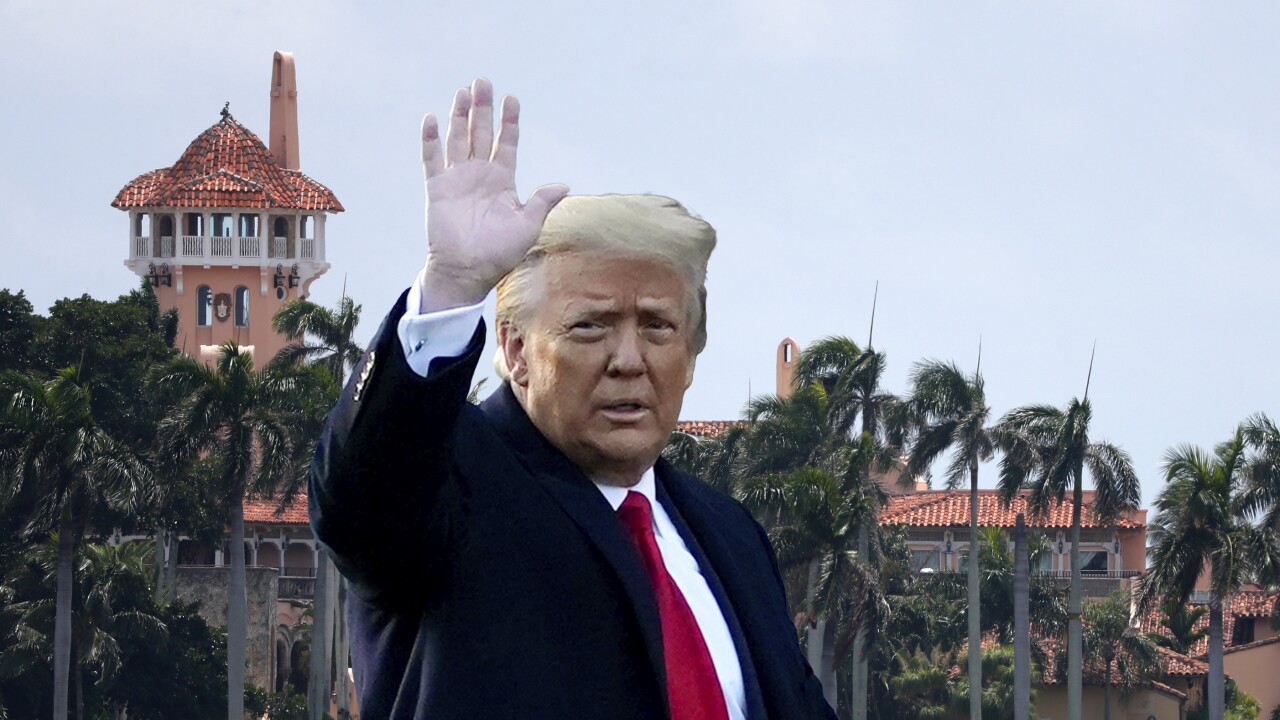



Federal agents raided the Washington, D.C., home of Democratic Congresswoman Ilhan Omar early Monday morning as part of an ongoing federal criminal investigation, the United States Department of Justice (DOJ) has confirmed.
Homeland Security Investigations agents arrived at the Minnesota congresswoman’s residence at about 6:00 a.m. Eastern Time, according to a report by Fox News.
SEE MORE: Trump Sparks Outrage With Shock Proposal to Rename New Mexico
The report said both the Department of Homeland Security (DHS) and the DOJ are involved in the investigation.
A DOJ spokesperson confirmed the operation, stating: “Today in the Washington, D.C. area, Homeland Security Investigations executed a judicially authorized search warrant secured by the Department of Justice.”
The spokesperson added: “This enforcement action is part of an ongoing federal criminal investigation.”
Details later……….
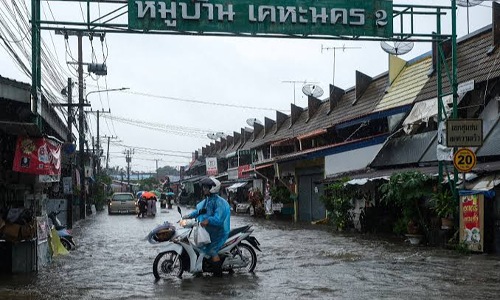
Heavy rains have triggered severe flooding across parts of Bangkok, Thailand, forcing nearly 4,900 residents to evacuate to shelters as floodwaters swept through roads and residential areas.
The flooding has disrupted movement across parts of the Thai capital, with motorists and pedestrians forced to navigate submerged roads and seek alternative routes.
SEE ALSO: NAFDAC Warns Nigerians As Fake Cowbell Milk Floods Market
According to the Bangkok Metropolitan Administration, about 52,000 households have been affected by the flooding, prompting authorities to declare a flood disaster and intensify emergency response efforts.
Emergency teams have been deployed to assist affected communities and move residents from vulnerable areas to safer locations as water levels rise.
Bangkok is accustomed to seasonal heavy rainfall, but intense downpours can overwhelm drainage systems, particularly in low-lying areas, resulting in widespread flooding and disruption.
Authorities are continuing to monitor affected locations while coordinating evacuations and other emergency measures.
For thousands of residents, the immediate priority remains securing safe shelter and protecting homes and livelihoods as authorities work to manage the situation and restore normal activities once the floodwaters recede.
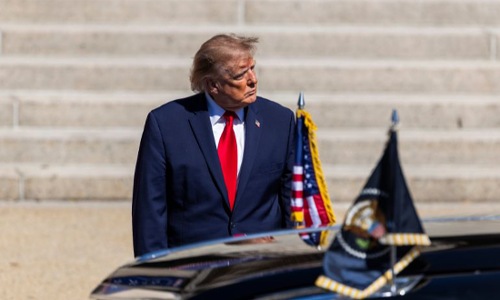
US President Donald Trump has explained his decision to reject Iran’s latest proposal to reopen the Strait of Hormuz, saying Tehran was seeking an agreement because it was losing revenue.
Speaking to reporters at the White House, Trump said Iran wanted to immediately reopen the strategically important waterway but argued that the proposal was not acceptable to his administration.
“They want to make a deal, and I think that’s fine. I like making a deal, too, but that deal would not be acceptable,” Trump said.
SEE ALSO: How the Strait of Hormuz Attack Could Trigger a Fresh Global Oil Shock
According to the US president, Iran’s push to reopen the strait was driven by the economic pressure it was facing.
“What they want to do is immediately open the Hormuz Strait. Do you know why? Because they are dying,” Trump said.
“You know why they’re dying? Because they have no money coming in, because they get their money from the Hormuz Strait.”
Trump also claimed that the US had established an unprecedented naval blockade against Iran, describing it as “a wall of steel.”
“So they outsmarted themselves. We put up the greatest blockade ever in military history. It’s a wall of steel,” he said.
“And guess what? They don’t have any money now because they wanted to close the strait.”
The Strait of Hormuz is a major global energy shipping route, and disruption to traffic through the waterway has significant implications for international oil markets and countries that depend on energy imports.
Trump’s remarks came amid continued tensions between Washington and Tehran over the reopening of the strategic waterway and negotiations involving Iran.





FG Withdraws Charges Against ‘Fake Agency’ DG, Adeniyi Adeyemi

Shell Identifies Keys to Nigeria’s Energy Future

Nigeria Records Biggest Rise in Multidimensional Poverty Among Five Countries – UN

Katsina Students Get ₦689.79m Bursary as Gov Radda Doubles Allowances
DOJ Confirms Federal Criminal Investigation After Agents Raid Ilhan Omar’s Home

Peter Obi Slams Tinubu Over ₦7.7tn Debt Interest Against ₦6.2tn Revenue

Trump’s Family Unveils New Cryptocurrency Platform

Senate Denies Receiving Petitions Against Tinubu’s Ambassadorial Nominees

Dangote Cement Lights Up Benue Host Communities With CSR Initiatives

Reps Recommend 3-year Jail Term For Aviation minister

Tems Sets New Record On Billboard Hot 100 Chart
