
NEWS
How I Manage Osun Palliatives, Resources – Gov Adeleke

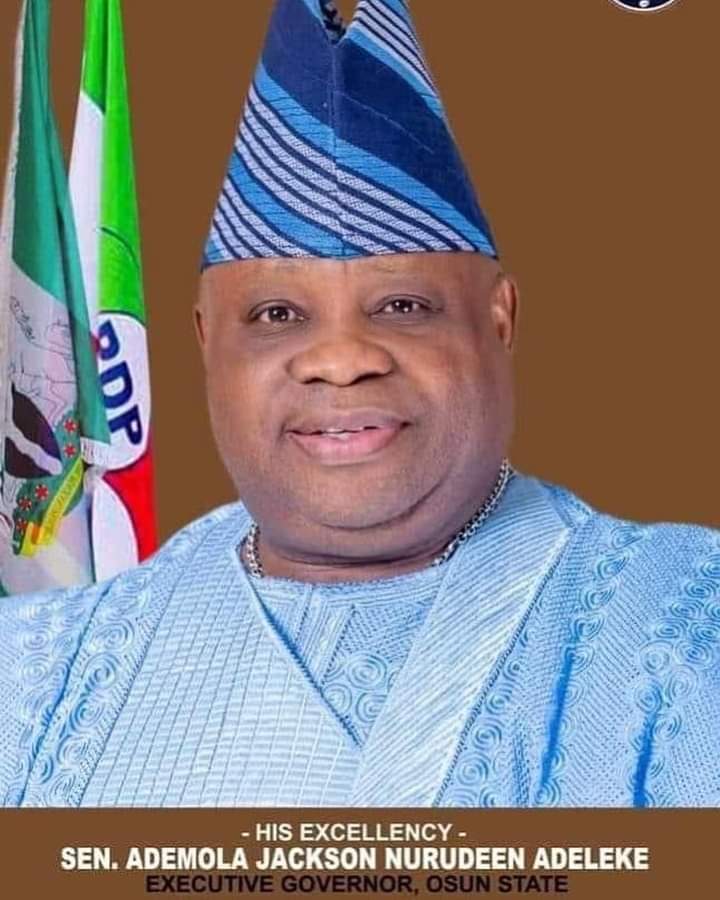
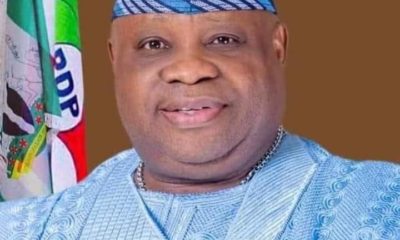
Osun State Governor, Senator Ademola Adeleke has shed light on his management of state resources including palliative measures initiated by his administration and those supported by the Federal Government.
Spokesperson to Gov Adeleke, Olawale Rasheed urged commentators to always avail themselves of publicly available facts about government’s programs so as not to be perceived as serving opposition interest.
He maintained that the administration had deliberately filled the public space with its plans and intentions across the sectors. The Governor has embraced openness and transparency. Our commentators should avail themselves of critical facts and figures instead of twisting and falsifying publicly verifiable details about state governance.
On palliative distribution in Osun State, we urge the civil society to always engage in thorough field review before taking positions especially as most of the questions raised could have been answered either through desk research or direct freedom of information requests to the relevant government agencies.
According to him, rice distribution was handled by a non-governmental committee chaired by Chairman of the Christian Association of Nigeria (CAN) and populated by representatives of various non-governmental groups.
The inauguration of the committee and its activities were widely covered by the media, he noted.
As for the N2 Billion palliative expenditure, ‘we urge the group to officially contact the government if it has legal fulfillment to do so within the framework of the Freedom of Information Act especially as the group has shown mischief and refusal to accept details severally released by the government on the administration of palliative measures in the state.’
He added that ‘Ongoing in Osun are multiple government programmes which have at its core palliative interventions such as the wage awards for pensioners and workers that is going to run for six months, sustenance of payment of half salary and pension debt inherited from previous government, the three billion naira plus cooperative loans for artisans and small businesses, the soft medical programs like free medical surgeries for pensioners, expansion of free grants to the poor of the poor in Osun state, and expected delivery of new buses to widen transport access, and affordability.
‘In the interest of educated discourse, it may interest the group to note that Osun is spending far above the said two billion naira which is a loan to states and which the Federal Government has even asked the state governments to start refunding.’
According to him, it was also false to assert that the Gov Adeleke added N2 billion to the N100 billion infrastructure fund as the state has spent far above the N2 billion in service of the needs and aspirations of her people in this hard time.
As a responsible government, the state project account has not in any way stopped the state government from implementing many laudable palliative programs listed above.
As to what Osun is doing with allocations to the state, we hasten to remind the group that there is an elected government in place with a mandate to govern and deliver on good governance within statutory structures and platforms and with appropriation laws to which all are bound, he stated.
The spokesperson pointed out that how government funds are being disposed of and expended are governed by laws and the group can reach the public account committee of the House of Assembly for the annual public account report or take hold of the 2024 budgetary act to read how state funds are allocated across sectors and projects.
Without ascribing bias, we further educate the group to at least read of the state Governor’s plan on food security which he has presented at the Federal Ministry of Agriculture and for which he has impaneled a committee chaired by the Commissioner for Agriculture.
To whoever may be ignorant of publicly available reports on state plans on food security, the agenda covers farm security, strategies for expansion of food production, unclogging farm transportation logistics, easing food access at affordable prices, and hosting a back-to-farm event with government incentives.
On the issue of court closure, the facts are out as the implementation of the tripartite agreement for the resolution of the dispute depends on the Chief Judge calling a meeting of the State Judicial Service Commission especially as the Governor has ordered the implementation of areas that affected the executive arm in the agreement, he asserted.
He opined that why the group is blaming the Governor for failure to summon a meeting of the Judicial Service Commission beats all imagination.






Oil marketers have warned that Nigerians may soon pay as much as ₦1,500 per litre for Premium Motor Spirit (PMS), commonly known as petrol, as global oil prices surge following the escalating conflict involving Iran in the Middle East.
The National President of the Petroleum Products Retail Outlets Owners Association of Nigeria (PETROAN), Dr. Billy Gillis-Harry, issued the warning on Tuesday while speaking on a television programme on the impact of the global crisis on fuel prices.
According to him, the current volatility in the international oil market has already pushed petrol prices above ₦1,000 per litre at the depot level, with the ex-depot price from the Dangote Petroleum Refinery now standing at about ₦1,175 per litre.
He explained that once logistics, transportation, and other operational costs are added, the final pump price could rise significantly, possibly reaching ₦1,500 per litre in the near future.
Despite concerns about the rising cost of fuel, Gillis-Harry noted that steady availability of petroleum products from the Dangote Refinery remains a major relief for Nigeria, stressing that consistent supply is better than a nationwide fuel scarcity.
He added that the refinery’s production capacity is helping to stabilize supply across the country at a time when global markets remain highly unstable.
The latest price adjustment by the Dangote Refinery marks the fourth review within two weeks. Petrol prices increased from ₦995 per litre to ₦1,175 per litre, while diesel rose from ₦1,430 to about ₦1,620 per litre.
The development comes amid a sharp spike in international crude oil prices triggered by fears of supply disruptions due to the ongoing Middle East conflict.
Brent crude recently climbed above $102 per barrel, while West Texas Intermediate (WTI) rose to around $101 per barrel.
Industry analysts say the rising oil prices are already having a ripple effect on Nigeria’s downstream petroleum sector, forcing depot operators and fuel marketers to adjust their prices in response to the global market trend.
Meanwhile, the management of Dangote Petroleum Refinery has stated that although Nigeria introduced a crude-for-naira arrangement to support local refineries, the facility still purchases crude oil at international market prices, leaving it exposed to global price fluctuations.
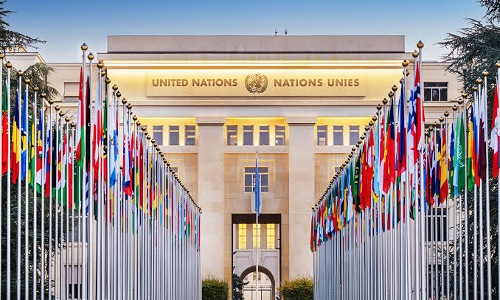
The United Nations has raised the alarm over a dramatic surge in attacks on schools worldwide, reporting a 166% increase between 2021 and 2024.
The rise highlights the escalating dangers faced by children in conflict zones.
United Nations Deputy High Commissioner for Human Rights, Nada Al-Nashif, revealed the figures during the annual meeting of the UN Human Rights Council on the rights of the child on Monday.
The session, themed “Mainstreaming the Rights of Children in Armed Conflict: Prevention and Protection,” focused on protecting children amid global conflicts.
Al-Nashif noted that the attacks were particularly concentrated in Sudan, Ukraine, the Gaza Strip, Myanmar, and Ethiopia, where children remain among the most vulnerable victims.
“In 2024, armed conflict directly affected nearly one in six children globally—about 470 million children,” she said. “Years of lost education, trauma, and lasting mental scars shape societies for generations. Long after the fighting subsides, children continue to face deadly risks.”
She highlighted Gaza as having the world’s highest number of child amputees per capita, warning that the impact of war goes far beyond immediate violence.
In Lebanon, government figures show that more than 450,000 people were displaced in less than a week, with at least 394 fatalities, including 83 children, during the 2024 conflict with Israel.
Al-Nashif also stressed the disproportionate risks for displaced children, who are more likely to die from disease linked to unsafe water and sanitation than from direct violence.
In the Democratic Republic of Congo, a 2025 cholera outbreak killed 340 children, underscoring the long-term consequences of conflict.
She called on states to uphold their international obligations to protect children, insisting that protecting children is “both a legal obligation and a humanitarian moral imperative.”
Also speaking at the council, Vanessa Frazier, Special Representative of the UN Secretary-General for Children and Armed Conflict, warned that violence against children continued at extreme levels in 2025.
She urged mainstreaming child protection across peace, security, humanitarian, human rights, and development efforts, emphasizing that children should actively participate in shaping policies designed to safeguard them.
Frazier highlighted her office’s global campaign, “Prove It Matters,” aimed at amplifying children’s voices in conflict resolution and peacebuilding.
The UN report underscores the urgent need for coordinated international action to protect children and ensure their safety in conflict zones worldwide.
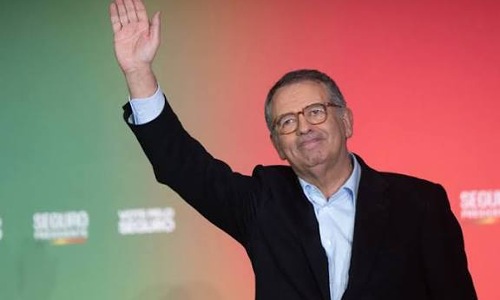
Portugal officially inaugurated its new president, Antonio Jose Seguro, on Monday, pledging to bring stability to a nation shaken by political uncertainty and natural disasters.
Seguro, the centre-left candidate, won last month’s presidential run-off against far-right rival Andre Ventura, following weeks of catastrophic storms that killed at least seven people and caused approximately €4 billion ($4.6 billion) in damage.
Speaking at his swearing-in ceremony in Lisbon’s parliament, Seguro emphasized cooperation with the minority right-wing government and vowed to end the country’s “electoral frenzy.”
SEE MORE: Spain, Portugal Plunge Into Darkness Amid Widespread Power Outage
“I will do everything I can to put an end to this electoral frenzy,” he said, pointing to the inability of previous governments to complete their terms.
Amid global crises, including conflicts in the Middle East and a more isolationist US approach under President Donald Trump, Seguro stressed the importance of multilateralism.
“The force of law has been replaced by the power of the strongest,” he remarked.
Seguro succeeds Marcelo Rebelo de Sousa, a conservative who leaves office at 77 after serving two five-year terms.
While the Portuguese presidency is largely ceremonial, Seguro’s leadership signals a commitment to political stability and international engagement.





Fuel Price Shock: Nigerians May Soon Pay ₦1,500 Per Litre – Marketers Warn

Political Earthquake in Zamfara as Gov Lawal Dumps PDP for APC

Court Pushes Malami, Son’s Terrorism Financing Trial to April 15

African Club Football Gets Major Financial Boost as CAF Hikes Prize Money

Abramovich Clashes with UK Gov’t Over £2.35bn Chelsea Sale Funds

Global Crisis: Attacks on Schools Skyrocket 166% – UN Sounds Alarm on Children’s Safety

Trump’s Family Unveils New Cryptocurrency Platform

Reps Recommend 3-year Jail Term For Aviation minister

Senate Denies Receiving Petitions Against Tinubu’s Ambassadorial Nominees

Dangote Cement Lights Up Benue Host Communities With CSR Initiatives

Things To Know About Threads, Zuckerberg’s Twitter-like App
