NEWS
Insecurity: Ohanaeze Accuses PMB of Heaping Blames on Victims

By Edozie Obasi-Eze
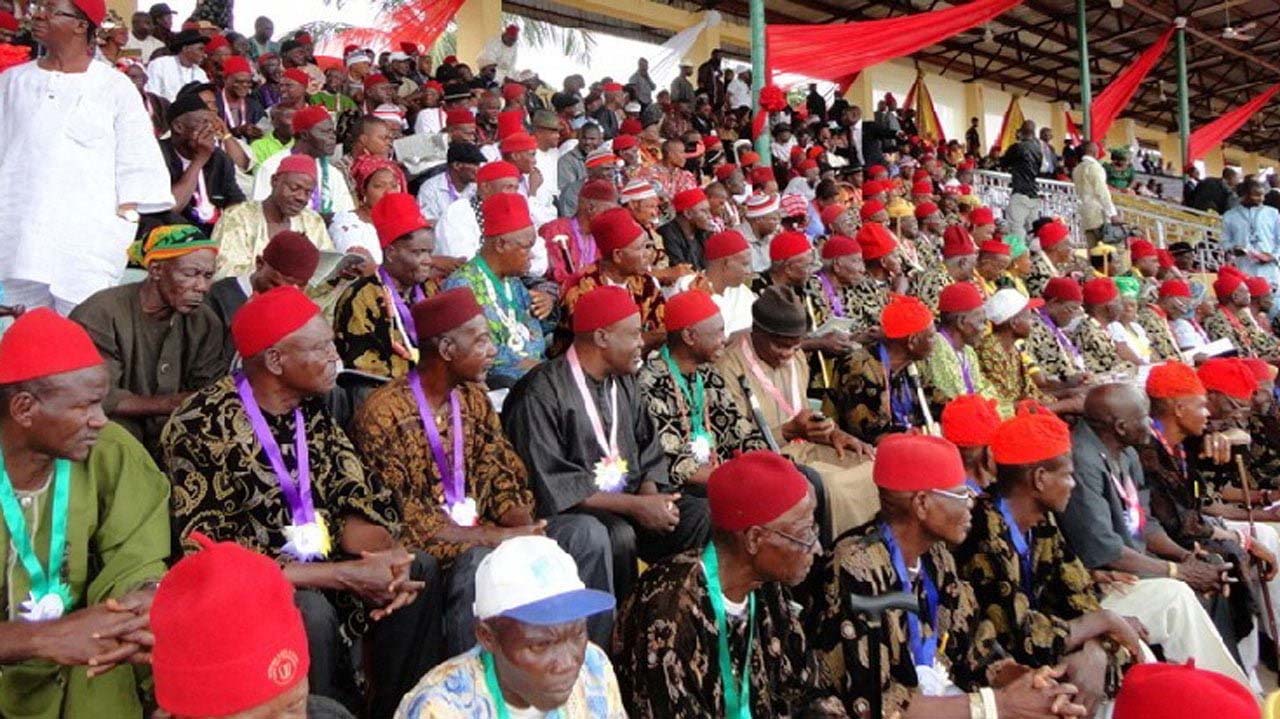
Pan Igbo socio-cultural group, Ohanaeze Ndigbo has expressed concern that President Muhammadu Buhari would be heaping blames on the victims of incessant killings in the southeast, instead of living up to his responsibility as the Commander-in-Chief of the Armed Forces of the Federal Republic.
Admitting that the escalating security situation in the southeast was cause for concern, the umbrella Igbo body, in a statement on Monday, decried a recent position attributed to the President as both uncharitable and mischievous, which could poison undiscerning minds because it insinuated that non-indigenes and security officials were being killed by the terrorists in the South East.
Recall that President Buhari’s Special Assistant on Media and Publicity, Garba Shehu, in a statement on Sunday said, “President Muhammadu Buhari condemned in strong terms the recent attacks against non-indigenes and law enforcement officials by terrorists in the South East.”
He went ahead to urge “community and religious leaders to speak more forcefully against the killings and to stand up and defend the ethos of the nation’s cultural and religious heritage.”
The Ohanaeze Ndigbo has taken exception to the position of President Buhari, in a statement on Monday, titled, ‘Insecurity in the South East: Buhari is blaming the victim,’ President General, Ohanaeze Ndigbo Worldwide, Amb Prof George Obiozor, made it clear that Ohanaeze Ndigbo condemned the killings and violence imposed on the South East by President Buhari’s administration, of which he cannot turn around to blame the victim.
Prof Obiozor barred his mind in the statement released by Publicity Secretary, Ohanaeze National, Dr. Alex Ogbonnia.
He maintained that any attempt to appropriate national problems to the South East of Nigeria would amount to taking ethnic prejudice to the extreme.
In the words of Prof Obiozor, “Ohanaeze Ndigbo Worldwide joins the Presidency and indeed the good people of Nigeria in condemning this dastardly act that occurred at Imo State, South East of Nigeria.
“Ohanaeze has repeatedly explained that amongst the Igbo, human life is very sacred. The sanctity of life is so elevated that killing a human being in whatever circumstance is considered an abomination. In fact, it is not in the character of the Igbo to kill in whatever disguise.
“These recent developments are indeed very much alien to the reflexes, culture, and norms of the South East. And we have often called on the Nigerian security operatives to ensure that the perpetrators of such acts are brought to book as a deterrent to others.”
Ohanaeze, pointed out that any failure on the part of the Nigerian security agents to fish out the criminals cannot be blamed on the Igbo, wondering why the situation in the southeast was being treated as an isolated case.
“Ohaneaeze Ndigbo, however, frowns at the statement by the Presidency, which is nuanced against the South East as a haven for terrorists that attack non-indigenes and law enforcement officials, implying that the insecurity persists because the leaders have not forcefully spoken.
“This is very unfair to the Igbo, especially when the presidency knows the root cause and the nature of the insecurity in the South East.
“It needs to be added that the solution to the insecurity in the South East lies in the enormous powers of the presidency.
“The above remarks by the presidency appear to have ignored the prolonged open war with the Boko Haram in the North East; the Banditry in the North West, especially in Katsina State; the Fulani Herdsmen invasion of several communities in the Middle Belt region; the Church massacre at Owo; the daily kidnappings on our highways; the Kaduna-Abuja train abduction, etc,.”
READ ALSO: Kachikwu berates ‘Ebubeagu operatives’ for alleged murder of 7 youths
In the statement, Prof Obiozor reminded the Presidency that they spoke differently when the district head of President Buhari’s hometown was taken captive and freed after two months.
“Paradoxically, when the district head of Daura, the hometown of Mr President, was kidnapped and was freed after two months, Mallam Garba Shehu was quoted as saying that the ‘incident was evidence that Duara was not receiving preferential treatment and that insecurity was a national problem.’
“In other words, when insecurity manifests in the North West, it is a national problem; but when, on the other hand, it occurs in the South East, it is blamed on the inability of the ‘community and religious leaders to speak more forcefully against the killings and to stand up and defend the ethos of the nation’s cultural and religious heritage’,” he added.
According to Prof Obiozor the Igbo remain the most nationally spread of all the ethnic nationalities in Nigeria, despite the persisting insecurity.
The statement further averred that “The Igbo possess the greatest wanderlust as well as the most hospitable dispositions amongst the various ethnicities in the world. The non-indigenes in the South East enjoy untrammeled friendliness, inter-ethnic assimilation and a conducive business environment; what happened to the non-indigenes in the South East is most regrettable as part of the current national calamity.
“One would think that the inevitable consequences of the orchestrated mendacious propaganda, dubiety, subterfuge, sabotage, and serial alienation against the South East of Nigeria are already staring us in the face.”
In what appears like an attempt at identifying some of the root causes of insecurity in Nigeria, Ohanaeze wondered, “How do we fight insecurity by appointment of service chiefs based on ethnocentric and religious considerations as against the best global practices of military competence?
“Put differently, how can the South East be excluded among the over 16 service chiefs in the Nigerian armed and paramilitary forces and expect insecurity not to fester? And how; and how; and how…..? And when the chickens have come home to roost, we resort to blaming the victim.
“The famous psychologist, William Ryan, espoused that blaming the victim is an atrocious ideology that tries to justify social injustice against a group. The oppressor deliberately creates an unjust chaotic environment for the oppressed; and blames the victims for the inevitable crises that flow therefrom.
“In conclusion, it is very uncharitable, if not mischievous, to poison undiscerning minds by insinuating that non-indigenes and security officials are killed by the terrorists in the South East.
“On the other hand, to appropriate national problem to the South East of Nigeria is an ethnic prejudice taken too far. Invariably, banditry in the North Central persists because their leaders have not forcefully spoken. Rather, they are publicly celebrated and turbaned or still offered the Sheik Gumi option.
“Both history and current events in the country must have shown that unjust policy against the just shall ultimately vindicate the just,” Ohanaeze stated.









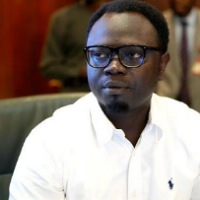
The Federal Government has reaffirmed its support for the rights of Nigerian citizens, especially young people, to stage protests and express their dissatisfaction with pressing national issues.
However, it cautioned that such actions must remain peaceful and must not result in the destruction of public infrastructure.
Minister of Youth Development, Comrade Ayodele Olawande, made this known in Abuja on Monday in response to recent youth-led protests across parts of the country.
READ MORE: EFCC Issues Arrest Warrant For Socialite Aisha Achimugu
“Everyone has the right to protest. In fact, if I had the time, I would join the protest myself. There is freedom of expression for all. The young people who are protesting have valid reasons, they see certain issues and feel the need to speak up,” Olawande said.
While backing the right to demonstrate, the minister emphasized the importance of maintaining peace and order during such actions.
He warned that any attempt to damage national infrastructure under the guise of protest would not be tolerated.
“However, while exercising this right, let it not escalate into something else. We will not allow anyone to destroy the infrastructural developments that support our economy and the progress we’ve made in this country,” he stated.
He further urged protesters to express their concerns in ways that do not obstruct public movement or endanger lives, suggesting that peaceful advocacy is more effective and likely to attract genuine attention from authorities.
“Yes, you have the right to speak, to come out and make your voice heard even to stand by the roadside but do not block the roads. Find a peaceful way to express your concerns; people will listen. If I have the opportunity, I’ll be there to speak with them as well.”
Olawande assured that the government is not opposed to demonstrations, but stressed that such activities must be carried out with a sense of responsibility and respect for public property.
“Protesting is a normal part of any society, and we are here to listen. No government is saying you shouldn’t protest but there must be limits and a sense of responsibility,” he added.

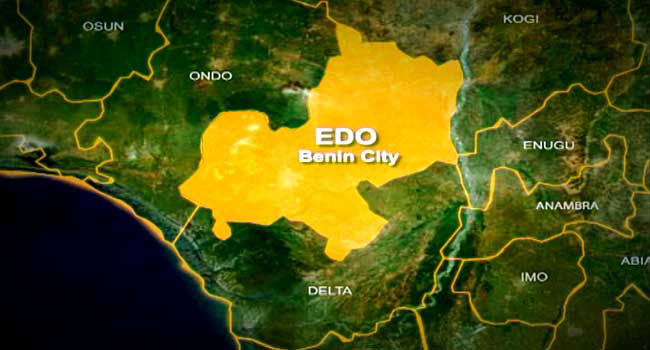
Edo State Governor, Senator Monday Okpebholo, is of the view that a wave of massive defections will soon hit opposition political parties in the South-South zone ahead of Nigeria’s 2027 elections.
He bared his mind over the weekend at a special reception in his honour at Ewatto, Esan South East local government area of Edo State after his victory at the election petition tribunal ruling.
He expressed gratitude to Edo people for their support, prayers, and counting him worthy to lead the State and assured the people that Edo would progress and develop under his watch.
In his words, “The people of Edo State will not regret voting me as their Governor. I am happy today that l am in a winning party. A party that was rejected by all and now has become the party that everybody wants to join. APC has come to stay as the government at the center is APC.
ALSO READ: TURJI BELLO: HURIWA Urges Security Chief To Resign Honourably
“Very soon, there will be a lot of defections into the APC. People will move and cross carpet from PDP, LP and other opposition parties into the APC and that will be the beginning of South South keying into the reform agenda of President Bola Ahmed Tinubu.
“Today, I am happy and proud to say that I am a son to the President of the Federal Republic of Nigeria. I am also proud to say I carry uncommon grace and uncommon transformation which I am already using to transform and develop Edo State.
“Words that come out of my mouth are prophetic and i am using these words to develop Edo State. My administration is working to ensure motorable roads and reducing traveling time for our people.
“Our development is also covering other neighboring States because South South must speak with one voice as we approach 2027.”
He had kind words for the royal fathers.
“I want to use this opportunity to appreciate our royal fathers for their support and prayers. I also appreciate Edo people for finding me worthy to cast their votes for me on September 21st governorship election in Edo State.
“It is not easy to run two elections in a year and win the two offices. I give God the glory. I am not the talking type and never interested in politics, but really want to develop Edo State.
“In 2021, we looked for an Esan man that would contest for Senate and we did not find any one who wanted to contest under the All Progressives Congress (APC) as everyone wanted to contest under the Peoples Democratic Party (PDP).
“The drive to contest came in 2022 when some people came to appeal to me to contest for the Senate and our discussion became an eye opener which led me into contesting for the Senate seat.
“I lost a beloved sister due to bad water which she consumed and I vowed to ensure good water is available across the State.
“I am really going to ensure good water runs in Edo State. Our development will not just be roads, schools, healthcare, providing the people with good drinking water across the State.”
The Governor and his entourage visited the place of the Onojie of Ewatto, HRH Osagie Sylvanus Ikhumen I, who was joined by other traditional rulers from Edo Central who received the Governor and prayed for the success of his administration.
He also inspected Chief Lee Ikpea’s Medical Center, Idumuiyase, Ewatto, where he was taken round the facility of the hospital, which is yet to be completed by the donor, Dr. Lemon Ikpea.
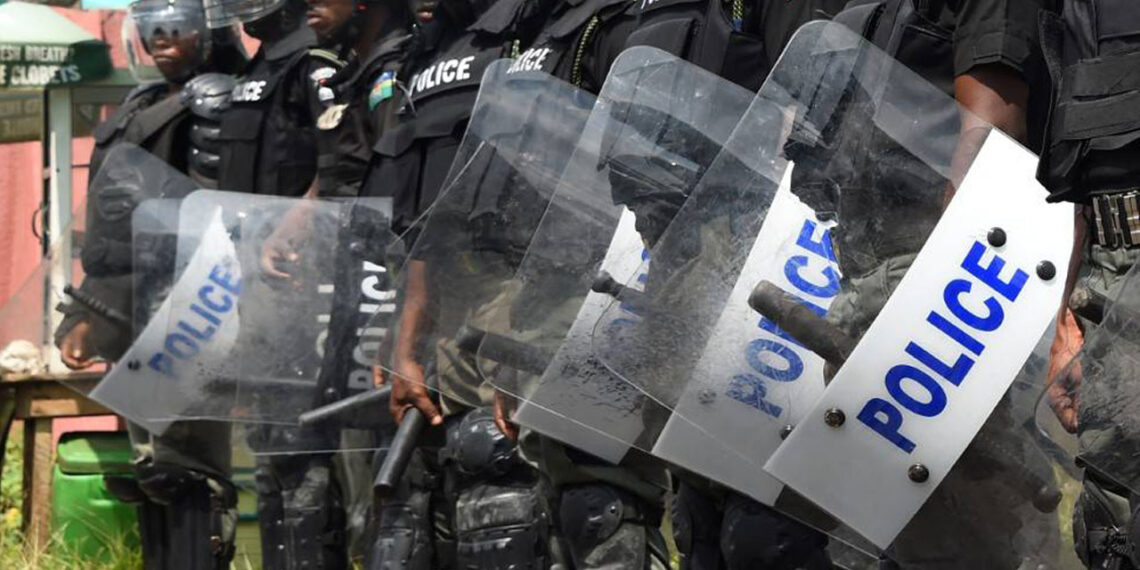
The Ondo State Police Command has cautioned residents against participating in the planned protest by the ‘Take It Back Movement’ scheduled for Monday, warning that the demonstration could be hijacked by criminal elements.
In a statement issued in Akure, the state capital, the Police Public Relations Officer, SP Ayanlade Olushola, said the command had received credible intelligence indicating possible threats to public safety if the protest goes ahead.
“The effort of the command is to stabilise the security situation across the state, and we are concerned that such a gathering could be hijacked by unscrupulous elements,” he said.
READ MORE: TURJI BELLO: HURIWA Urges Security Chief To Resign Honourably
“This could lead to a breakdown of law and order, thus rolling back the security gains we have collectively achieved in Ondo State.”
While reaffirming the citizens’ right to peaceful assembly and freedom of expression, Olushola urged the organisers of the protest to seek alternative means of voicing their concerns.
“We, therefore, urge the leadership of the ‘Take It Back Movement’, their supporters, and other interest groups to embrace constructive dialogue as a means of addressing grievances. If they take to the streets in such a manner, it may heighten tensions and heat up the polity,” he added.
The statement further disclosed that the Commissioner of Police, CP Wilfred Afolabi, has ordered all Area Commanders, Divisional Police Officers, and Tactical Team Commanders to deploy personnel and operational assets across the state to prevent any breakdown of law and order.
“The general public is hereby encouraged to go about their lawful business without fear, as adequate security measures have been put in place to guarantee the safety and protection of all citizens,” the PPRO said.
He also called on parents and guardians to discourage their children and wards from engaging in actions that could threaten the peace and stability of the state, while urging residents to report any suspicious activity to the nearest police station or security agency.






Woodhall Capital Foundation Trains Nigeria’s Captains Of Industry

RMD’s Radio Voice Debuts In Lagos, Showcasing Nollywood’s Brilliance

JUST IN: Abure Dismisses Claims Of Leadership Vacuum In Labour Party

Southampton Sack Ivan Juric After Relegation From Premier League

Protest, But Don’t Destroy – FG Tells Youths