
NEWS
Loss of 5 Rigs Threaten Govt’s Revenue

A sharp decline in oil drilling activities which has led to the loss of five active rigs within a month might be threatening Nigeria’s revenue outlook.
According to a report by the African Energy Council (AEC), the slump in Nigeria’s rig count has raised concerns over future crude production, government earnings and fiscal stability.
The report revealed that Nigeria’s active rig count dropped from 17 in March to 12 in April 2026, representing a decline of nearly 30 per cent in just one month and signalling weakening upstream investment and exploration activities.
Rig count, a key indicator of oil and gas exploration and production activities, measures the number of drilling rigs actively operating within a country or region.
Industry experts often regard it as a leading indicator of future production levels. The development comes at a time when Nigeria is struggling to meet its crude oil production targets and relies heavily on petroleum earnings to finance government expenditure.
ALSO READ: Dangote Named Africa’s Most Admired Brand for 8th Consecutive Year
According to the report, the decline in rig activity poses a direct threat to the Federal Government’s 2026 budget benchmark of 1.84 million barrels per day (bpd), especially as actual production stood at about 1.48 million bpd in April 2026.
The AEC noted that while the Nigerian Upstream Petroleum Regulatory Commission (NUPRC) reported 31 active rigs during the period, the Organisation of Petroleum Exporting Countries (OPEC) placed the figure at 12.
It explained that the discrepancy likely reflects differences in counting methodologies, including whether rigs on standby are classified as active.
Despite the differing figures, the Council stressed that both data sets point to a downward trend in drilling activity.
The think tank warned that with only 12 active rigs operating in April, Nigeria’s future production capacity is under severe threat unless urgent measures are taken to reverse the decline.
It further observed that the country’s rig count had already fallen from 15 in 2024 to 13 in 2025, indicating that several potential barrels that should have contributed to current production were never drilled.
“AEC views Nigeria’s upstream retreat with serious concern. A 41.7 per cent single-month rig count collapse, compounding revenue losses exceeding $3.1 billion, and a widening gap between NNPC’s 2030 ambitions and ground-level drilling activity signal a sector in structural distress rather than a cyclical downturn,” the report stated.
While Africa drills forward, Nigeria drills back. Without urgent policy action, Nigeria risks permanently ceding both its relevance within OPEC and its opportunity to monetise reserves before the global energy transition narrows that window.
The warning comes against the backdrop of mounting fiscal pressures. Oil revenues account for roughly 60 per cent of government earnings, meaning lower production could translate into wider budget deficits and increased borrowing.








The Osun State Executive Council (SEC) has approved a 2027 draft budget as submitted by the various Ministries, Departments and Agencies of government
This follows a presentation by by the Commissioner for Economic Planning, Budget and Development, Prof. Moruf Ademola Adeleke, according to a government house statement on Osogbo on Friday.
It added that it was part of the resolutions reached after the SEC meeting presided over by Osun State Governor, Senator Ademola Adeleke at the Executive Council Chambers, Governor’s Office, Bola Ige House, Osogbo.
The Commissioner said after due consideration of the memo presented by the Commissioner for Economic Planning, Budget and Development, Prof. Moruf Ademola Adeleke for the draft 2027 Recurrent and Capital Budget estimates of the State Government, the Executive Council approved the budget draft estimates with immediate effect.
The Council, has consequently directed the transmission of the approved draft budget to the Osun State House of Assembly (OSHA) for subsequent legislative action.

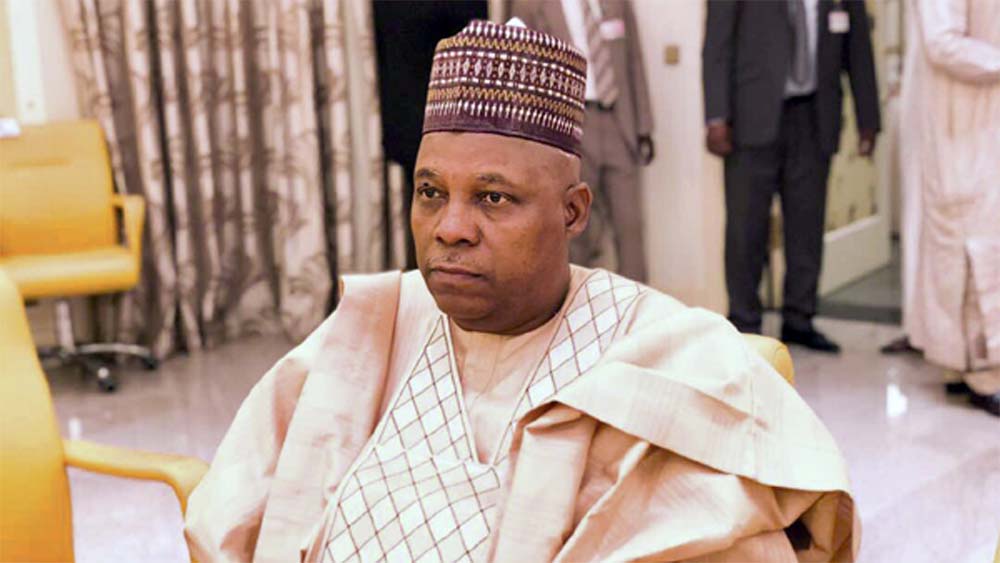
Vice President Kashim Shettima on Friday attended the grand opening of Ashley Furniture Nigeria’s showroom in Lagos.
The development was disclosed by the Vice President’s Senior Special Assistant on Media and Communications, Stanley Nkwocha, in a statement released on Friday.
The opening marks a significant development in Nigeria’s furniture and retail industry, following a strategic partnership between Ashley Furniture Industries, a major American home furnishings manufacturer, and Vento Furniture, a Nigerian furniture company.
SEE ALSO: Shettima, Wife Depart Abuja for Jos as Tinubu–Shettima Campaign Takes Rally to Plateau
The partnership, announced in 2025, is aimed at expanding Nigerians’ access to quality home furnishings while creating opportunities for investment, commercial partnerships and the development of the country’s furniture industry.
At the time of announcing the partnership, Ashley Furniture Industries’ President and Chief Executive Officer, Todd Wanek, described the company’s entry into Nigeria as a major step in its international expansion.
“We are incredibly excited to partner with Vento Furniture. Opening in Nigeria, the largest economy in Africa, is a monumental step for our international growth,” Wanek said.
He added that the company looked forward to opening more stores in Nigeria and supporting Vento Furniture as its anchor partner.
Vento Furniture’s Chief Executive Officer, Cemal Yigit, also expressed optimism about the partnership, describing it as an important development for Nigeria’s home furnishings market.
“We are very excited about this alliance,” Yigit said, expressing confidence in Ashley Furniture’s growth in the Nigerian market.
The partnership aligns with President Bola Ahmed Tinubu’s economic reform agenda, which places private-sector investment, enterprise development and job creation at the centre of efforts to stimulate economic growth.
Nigeria’s daily petrol receipts increased by 21 per cent to 46.9 million litres in October 2026, while diesel receipts nearly doubled, rising by 93 per cent to 16.8 million litres per day, according to the Nigerian Midstream and Downstream Petroleum Regulatory Authority (NMDPRA).
The figures were contained in the authority’s October 2026 State of the Midstream and Downstream Sector Fact Sheet, released on Friday as part of its first anniversary edition.
The report, which covers petroleum operations between October 1 and 31, showed an improvement in fuel receipts compared with September, when Nigeria recorded 38.7 million litres of petrol and 8.7 million litres of diesel daily.
SEE ALSO: NMDPRA Gets Senate Nod for Six Executive Directors
Despite the increase in petrol supply, the country’s petrol stock cover stood at 21.8 days, remaining below the regulator’s 30-day threshold.
The October figure represents a decline from the 23.9 days recorded in September, indicating that the improvement in daily receipts has not yet translated into sufficient petrol stock levels.
The fact sheet also highlighted activity at the Dangote Petroleum Refinery, which recorded an average utilisation rate of 103.73 per cent of its installed capacity of 650,000 barrels per day.
The refinery’s utilisation rate was slightly lower than the 105.98 per cent recorded in September.
On diesel supply, the authority reported a significant improvement, with daily receipts rising to 16.8 million litres from 8.7 million litres in the preceding month.
The NMDPRA described the increase as having “Nearly doubled (+93%),” reflecting a substantial recovery in diesel receipts during the review period.
The October fact sheet forms part of the authority’s first anniversary edition, providing an overview of developments across Nigeria’s midstream and downstream petroleum sectors.
The October figures follow earlier reports on Nigeria’s fuel supply situation and domestic refining activities.
On October 23, Biztellers reported that the NMDPRA had disclosed that domestic refineries received 156.52 million barrels of crude oil between January and September 2026, with 80.4 per cent sourced locally and 19.6 per cent imported.
The report also highlighted September’s petrol receipts of 38.7 million litres daily and petrol stock sufficiency of 23.9 days, below the regulator’s 30-day benchmark.
Earlier reports on the September petroleum market situation also showed that Nigeria’s petrol receipts fell by 23 per cent, while diesel receipts dropped by 40 per cent to 8.7 million litres daily, their lowest level in 13 months.
Other reports highlighted a decline in petrol supply despite increased production at the Dangote refinery, with domestic deliveries and imports recording significant reductions.
Figures from September further showed that Dangote Refinery supplied an average of 28.5 million litres of petrol daily to the domestic market while exporting 15.47 million litres per day.
The refinery’s combined exports of petrol, diesel and aviation fuel also reached 54.63 million litres daily in September, exceeding its combined domestic receipts.
The October figures now point to an improvement in Nigeria’s daily petrol and diesel receipts, although petrol stock sufficiency remains below the regulatory benchmark.





Osun SEC Approves Draft 2027 Budget

Dangote Cement Honours Outstanding Drivers for Safety Excellence, Records 60% Reduction in Road Traffic Accidents

APPO Lauds Nigeria on Energy Bank Initiative
Shettima Attends Grand Opening of Ashley Furniture Showroom in Lagos

NEIS Offers 9,583 Agents to Monitor 2027 Election Results

Nigeria’s Petrol Supply Rises 21% as Diesel Receipts Nearly Double – NMDPRA

Trump’s Family Unveils New Cryptocurrency Platform

Senate Denies Receiving Petitions Against Tinubu’s Ambassadorial Nominees

Dangote Cement Lights Up Benue Host Communities With CSR Initiatives

Reps Recommend 3-year Jail Term For Aviation minister

Tems Sets New Record On Billboard Hot 100 Chart