
NEWS
NDLEA Moots Students’ Drug Testing Policy For Public Health Mgt


The objective of the mooted drug test policy for admission seekers and students at tertiary institutions in Nigeria is to support, not expel those struggling with substance abuse.
The Director of Media and Advocacy of the National Drug Law Enforcement Agency (NDLEA) Femi Babafemi, made the clarifications on Tuesday when he appeared on Channels Television’s Morning Brief.
ALSO READ: NDLEA’s Public Education Takes On Substance Abuse In Pregnancy
Babafemi maintained that the NDLEA’s primary objective was to identify and provide help to individuals entangled in drug use.
In his words, “We’re treating this as a public health issue, not a crime, let me quickly put that in perspective.
“Whoever tests positive for drug use in that situation – that’s why we work with these institutions – we collaborate with them so that the people who test positive are not punished or expelled from the school.
“They are taken for treatment to wean (them) off these substances and also to get them reintegrated back to their classes, back to the academic pursuit.”
Babafemi explained that the agency’s approach would focus on early intervention, deterrence, counselling and treatment.
On the mechanics, he pointed out that, “When people know that they are likely to be tested when going to school as fresh students or returning students, there’s a level of deterrence. They’ll want to be careful, as they don’t want to be caught in the web.
“We are not pushing for them to be expelled from the school; it’s to enable authorities to detect them early and provide support to them. When they test positive, it is to detect them early and provide support for them.
“If they are detected early, it’s easier to treat at that point than to allow the situation to deteriorate to the point of addiction or dependence, which becomes complicated.”
He further noted that the agency had provided treatment and counselling services for those who tested positive.
“Perhaps some of these institutions have counseling and treatment centers. For those that don’t, we have 30 of our treatment counselling centres across the country, and we have three more coming up in the next couple of weeks. All of these are provided for people to get support and treatment.
“Apart from that, we also have a 24-hour call centre where we have our mental health centres, counsellors, clinical psychologists, psychotherapists, and psychiatrist doctors that provide these. Also, on the telephone, we have our toll-free helplines that people can always call and get the needed support.”
According to Babafemi the NDLEA already had authentic test kits that people can use in the comfort of their homes to see whether their kids or wards were abusing illicit substances.
“All of these we provide to ensure that students are not just tested and left or abandoned, they also get support, and even right on our test kit, we have our toll-free helplines for people to call in the comfort of their homes and get the needed support, guidance, and support for their loved ones that test positive.
“The cost of the test will be borne by the beneficiary of the service. We provide the service free of charge, but the kit is not free; it ranges between N5,000 and N10,000, depending on the type of kit being used,” he said.
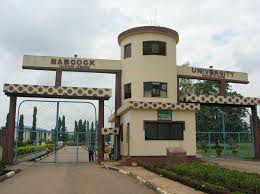
Recall that the Commander NDLEA, Kwara State Command, Fatima Abiola-Popoola, had on Monday urged the National Universities Commission (NUC) to make drug tests mandatory for admission into tertiary institutions.
She decried that substance abuse had been on the rise, particularly the females and in her opinion, this check would help address the situation.





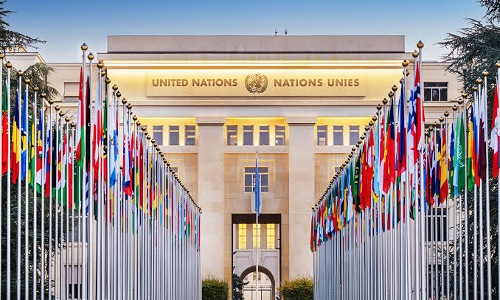
The United Nations has raised the alarm over a dramatic surge in attacks on schools worldwide, reporting a 166% increase between 2021 and 2024.
The rise highlights the escalating dangers faced by children in conflict zones.
United Nations Deputy High Commissioner for Human Rights, Nada Al-Nashif, revealed the figures during the annual meeting of the UN Human Rights Council on the rights of the child on Monday.
The session, themed “Mainstreaming the Rights of Children in Armed Conflict: Prevention and Protection,” focused on protecting children amid global conflicts.
Al-Nashif noted that the attacks were particularly concentrated in Sudan, Ukraine, the Gaza Strip, Myanmar, and Ethiopia, where children remain among the most vulnerable victims.
“In 2024, armed conflict directly affected nearly one in six children globally—about 470 million children,” she said. “Years of lost education, trauma, and lasting mental scars shape societies for generations. Long after the fighting subsides, children continue to face deadly risks.”
She highlighted Gaza as having the world’s highest number of child amputees per capita, warning that the impact of war goes far beyond immediate violence.
In Lebanon, government figures show that more than 450,000 people were displaced in less than a week, with at least 394 fatalities, including 83 children, during the 2024 conflict with Israel.
Al-Nashif also stressed the disproportionate risks for displaced children, who are more likely to die from disease linked to unsafe water and sanitation than from direct violence.
In the Democratic Republic of Congo, a 2025 cholera outbreak killed 340 children, underscoring the long-term consequences of conflict.
She called on states to uphold their international obligations to protect children, insisting that protecting children is “both a legal obligation and a humanitarian moral imperative.”
Also speaking at the council, Vanessa Frazier, Special Representative of the UN Secretary-General for Children and Armed Conflict, warned that violence against children continued at extreme levels in 2025.
She urged mainstreaming child protection across peace, security, humanitarian, human rights, and development efforts, emphasizing that children should actively participate in shaping policies designed to safeguard them.
Frazier highlighted her office’s global campaign, “Prove It Matters,” aimed at amplifying children’s voices in conflict resolution and peacebuilding.
The UN report underscores the urgent need for coordinated international action to protect children and ensure their safety in conflict zones worldwide.
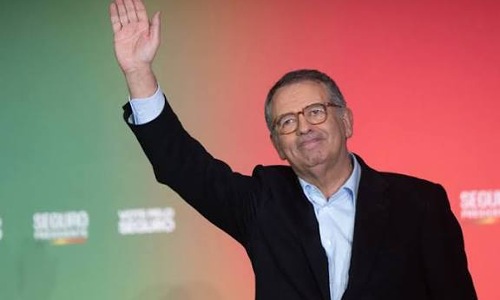
Portugal officially inaugurated its new president, Antonio Jose Seguro, on Monday, pledging to bring stability to a nation shaken by political uncertainty and natural disasters.
Seguro, the centre-left candidate, won last month’s presidential run-off against far-right rival Andre Ventura, following weeks of catastrophic storms that killed at least seven people and caused approximately €4 billion ($4.6 billion) in damage.
Speaking at his swearing-in ceremony in Lisbon’s parliament, Seguro emphasized cooperation with the minority right-wing government and vowed to end the country’s “electoral frenzy.”
SEE MORE: Spain, Portugal Plunge Into Darkness Amid Widespread Power Outage
“I will do everything I can to put an end to this electoral frenzy,” he said, pointing to the inability of previous governments to complete their terms.
Amid global crises, including conflicts in the Middle East and a more isolationist US approach under President Donald Trump, Seguro stressed the importance of multilateralism.
“The force of law has been replaced by the power of the strongest,” he remarked.
Seguro succeeds Marcelo Rebelo de Sousa, a conservative who leaves office at 77 after serving two five-year terms.
While the Portuguese presidency is largely ceremonial, Seguro’s leadership signals a commitment to political stability and international engagement.
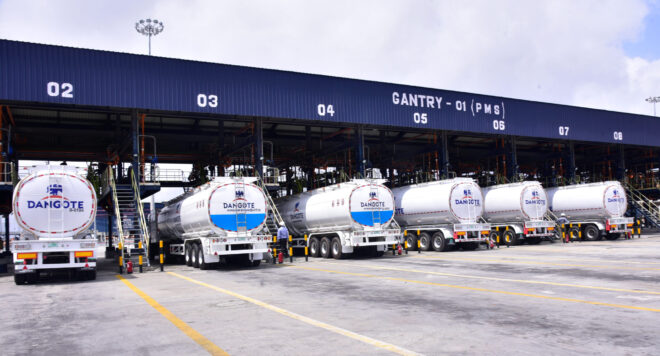
Nigerians are facing yet another economic blow as petrol prices surge again. The Dangote Petroleum Refinery has raised the gantry price of Premium Motor Spirit (PMS) to N1,175 per litre, marking the third increase in just one week.
The latest adjustment, announced to marketers on Monday, follows a temporary suspension of petrol sales at the refinery on Sunday. Diesel, also known as Automotive Gas Oil, has also been revised upwards to N1,620 per litre.
ALSO READ: NNPC, Dangote Team Up to Power Nigeria’s Energy Future
A senior refinery official, speaking on condition of anonymity, confirmed the hike, noting that it reflects “prevailing market fundamentals and the cost environment we are currently operating in.”
Industry checks show that depot pricing systems have already updated the new rates, signaling an inevitable rise at retail stations.
In some cities, petrol is now being sold at over N1,200 per litre, adding pressure on Nigerian motorists and businesses alike.
This repeated surge comes after earlier increases that pushed gantry prices from N774 to N995 per litre earlier this week.
Experts warn that the hikes are likely to drive up transportation, logistics, and production costs, potentially impacting the prices of goods and services nationwide.
While the Federal Government, through the Nigerian National Petroleum Company Limited (NNPC), is working to secure crude supplies for the refinery via international traders, officials cautioned that this may not immediately reduce prices for consumers.






Political Earthquake in Zamfara as Gov Lawal Dumps PDP for APC

Court Pushes Malami, Son’s Terrorism Financing Trial to April 15

African Club Football Gets Major Financial Boost as CAF Hikes Prize Money

Abramovich Clashes with UK Gov’t Over £2.35bn Chelsea Sale Funds

Global Crisis: Attacks on Schools Skyrocket 166% – UN Sounds Alarm on Children’s Safety

Appeal Court Deals Major Blow to Aiyedatiwa’s Re-election Hopes in Ondo

Trump’s Family Unveils New Cryptocurrency Platform

Reps Recommend 3-year Jail Term For Aviation minister

Senate Denies Receiving Petitions Against Tinubu’s Ambassadorial Nominees

Dangote Cement Lights Up Benue Host Communities With CSR Initiatives

Things To Know About Threads, Zuckerberg’s Twitter-like App
