
Energy
Neo Oiltools Appoints ElSherif as Regional Manager – Middle East


Neo Oiltools, a creator of drilling performance tools for the oil and gas and geothermal industries, has announced the appointment of Omar ElSherif to the role of Regional Manager – Middle East.
This was detailed in a company statement which has it that ElSherif brings over 13 years of progressive senior leadership experience at SLB including serving as Drilling Product Engineer, Technical Sales Engineer and Senior Drilling Product Engineer.
ALSO READ: NNPCL Replaces Soneye with Odeh
His blend of engineering knowledge, product management experience, and local insight positions him ideally to support Neo Oiltools’ expansion and help boost drilling performance for operators across the Middle East.
ElSherif commented, “I am pleased to join Neo Oiltools. I look forward to collaborating with operators across the region to improve drilling performance in these demanding environments.”
Biztellers reports that Middle East operators and directional drilling companies face complex geologies — deep carbonates, extended-reach wells, and high-pressure formations — that generate axial, lateral, torsional, and high-frequency vibrations, which slow penetration, damage equipment and drive-up costs.
Neo Oiltools addresses these challenges with NeoTork, a patented cable-and-spring tool that mitigates all four vibration types while maintaining optimal bit engagement — improving efficiency and minimizing downtime. Integrated with NeoSmart, which captures high-frequency, 3D vibration data, it delivers actionable diagnostics that drive smarter drilling decisions, the statement added.








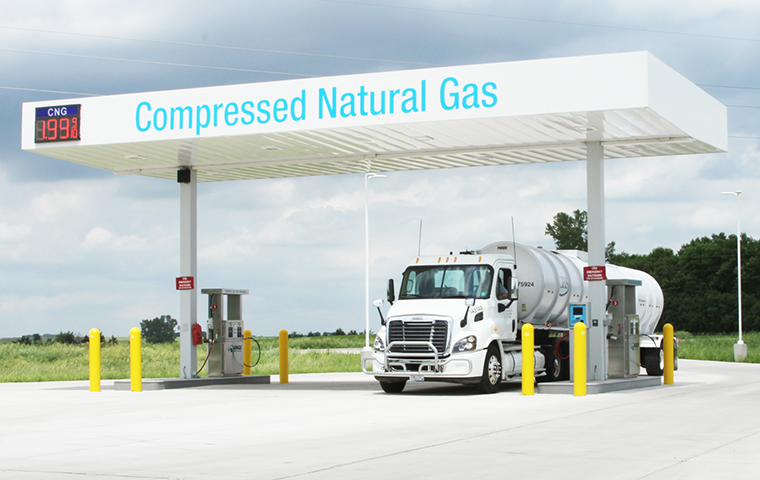
Motorists have been besieging the newly commissioned Compressed Natural Gas (CNG), in the University of Lagos (UNILAG), resulting in a long queue.
The rush has seen the station serving in excess of 500 vehicles daily.
Recall that the station was officially commissioned on Friday November 20, by the Midstream and Downstream Gas Infrastructure Fund (MDGIF).
The MDGIF is a statutory equity investment fund in Nigeria established under the Petroleum Industry Act (PIA) 2021 to finance midstream and downstream gas infrastructure.
Speaking for Shumadec Energy, which runs the facility, the station manager, Onisile Muyiwa, revealed that the company is collaborating with Nigeria’s Presidential Initiative on CNG & EV to establish the facilities across the country.
Muyiwa, said the reason for its location is based on its conception to address rising cost of transportation in universities.
“We are going all around the country, and presently we are in 20 states in Nigeria, where we operate gas stations, most of them in universities.
“We commissioned Lagos State, Ekiti, Ibadan and Akure on the same day. That is for the south.
We currently have 20 stations but with the commissioning coming up next week, we have a total of 24 states covered. So the location is mainly for the students and the people around the universities.
He said the government also brought in CNG buses to reduce the cost of transportation, which was inaugurated by President Bola Tinubu.
READ ALSO: Nigeria Loses N4.65tn Revenue in H1 as Oil Output Trails 1.84mbpd Budget Benchmark
He said, “The intention is to help the students with transport and we are opening up the facilities all over the universities in the 36 states.
Commenting on the development, the National Association of Nigerian Students (NANS), Comrade Akinteye Babatunde Afeez, said the initiative is laudable, noting that transportation is a critical component of students’ welfare.
Afeez stressed that, beyond paying tuition fees and purchasing academic materials, transportation remains one of the major daily expenses confronting students across our tertiary institutions.
According to him, many students spend a significant portion of their upkeep on transportation, sometimes at the expense of other basic necessities, adding that it is part of the reasons why NANS considers the initiative particularly important.
He praised the initiative pointing out that the introduction of CNG-powered transportation solutions within universities has the potential to reduce transportation costs, ease the financial burden on students and promote a cleaner and more sustainable campus environment.
“We are particularly excited that this initiative is not limited to the University of Lagos (UNILAG), where today’s event is taking place. Three other institutions — the Federal University of Technology, Akure (FUTA), Federal University Oye-Ekiti (FUOYE), and the University of Ibadan (UI) — are also benefiting through today’s remote commissioning.” Afeez said.
He said the project is a commendable demonstration of inclusive development and a clear indication that interventions aimed at improving students’ welfare can reach institutions across different parts of the country.
However, he noted that as an organisation whose primary responsibility is to protect and advance the interests of Nigerian students, the success of this programme must ultimately be measured by its direct impact on students.
“We expect the benefits of this intervention to translate into genuinely affordable transportation fares, reliable transportation services and improved mobility within our campuses.
“We also encourage the relevant authorities and university management to ensure that these facilities are properly maintained and that the conversion centres are operated sustainably.” he remarked.
He reiterated NANS’ readiness to partner with the Federal Government and relevant agencies on initiatives that directly improve the quality of life of Nigerian students.
“Our position has always been that student advocacy must go beyond criticism. While we will continue to demand accountability and defend students’ interests, we are equally prepared to identify opportunities, build partnerships and support policies that deliver measurable benefits to our constituency.” he said.
In pursuit of the Decade of Gas Capability Building Programme, 34 young professionals from Nigeria’s oil and gas industry have visited the Nigeria LNG Limited (NLNG) facility on Bonny Island, Rivers State, to gain first-hand exposure to gas processing, liquefaction, storage and export operations.
The visit, which covered NLNG’s operational Trains 1 to 6 and the ongoing Train 7 expansion project, was designed to bridge the gap between theoretical training and practical industry experience.
Led by the Coordinating Director of the Decade of Gas Secretariat, Ed Ubong, the delegation was received by NLNG’s Managing Director and Chief Executive Officer, Adeleye Falade, and members of the company’s management team.
During the visit, Ubong said the initiative was designed to equip young professionals with the practical knowledge and competence required to drive Nigeria’s ambition of building a gas-powered economy by 2030.
He said classroom training alone was insufficient to prepare the next generation of industry leaders, stressing the importance of exposing participants to world-class gas operations.
“What we are building is not just knowledge, but confidence and competence. You cannot drive a gas-powered economy from theory alone. Our young professionals must see, touch and understand how gas is processed, liquefied, stored and exported to the world,” he said.
Ubong described NLNG as a leading example of Nigeria’s gas development potential, adding that the visit would enable participants to appreciate operational excellence and take valuable lessons back to their respective organisations.
READ ALSO: DPRP Eyes December Listing Date
He said the programme was targeting more than 150 professionals by 2030, including engineers, geoscientists, commercial analysts and policymakers, who would drive the development of gas-based industries, power generation, LPG penetration, CNG adoption and gas-to-chemicals projects.
According to him, capacity building is one of the seven strategic pillars of the Decade of Gas Programme, which seeks to develop the human capital required to translate Nigeria’s vast gas resources into economic growth and industrial development.
In his welcome address, Falade said NLNG was pleased to host the young professionals, noting that developing the human capital required to sustain the gas industry was critical to achieving Nigeria’s energy ambitions.
“At NLNG, we believe that gas is not just a commodity; it is a platform for national transformation. And transformation is driven by people. That is why we are delighted to host this group of bright, young professionals,” he said.
He said NLNG’s operations, from the successful running of Trains 1 to 6 to the ongoing Train 7 expansion, demonstrated the capacity of Nigerians to deliver complex industrial projects through innovation, partnership and commitment to excellence.
Falade urged the participants to see themselves as the next generation of professionals who would consolidate Nigeria’s position in the global gas industry.
“What you have seen today on Bonny Island is what Nigerians can build and sustain when we are committed to excellence and safety. As you go back, I want you to carry this spirit — that Nigeria can lead in gas, not just in Africa, but globally,” he said.
He also charged them to uphold the highest standards of safety, sustainability and local content in their professional careers.
According to him, the decisions they make over the next decade would be critical to determining how effectively Nigeria harnesses its more than 200 trillion cubic feet of gas reserves for power generation, industrial development, job creation and national prosperity.
The programme featured technical sessions on LNG production processes, plant integrity, health, safety and environment, shipping and export logistics, as well as interactive engagements with NLNG engineers and managers.
Some participants described the experience as eye-opening, noting that it was their first opportunity to visit an LNG liquefaction plant and observe the operations involved in producing and exporting liquefied natural gas.
Speaking on behalf of the participants, one of them said the tour had significantly broadened her understanding of the gas value chain.
“Touring Trains 1 to 6, gaining insights into the Train 7 expansion project and appreciating the complexity behind every cargo that leaves Bonny have broadened my perspective. This is more than just a programme; it is a career-defining experience,” she said.
The Decade of Gas Programme seeks to position natural gas as a major driver of Nigeria’s energy transition, economic diversification and industrial growth, in line with President Bola Tinubu’s commitment to leveraging the country’s gas resources for national prosperity.
The Secretariat said the Bonny Island visit was one of several practical learning engagements planned for the cohort, with subsequent exposure to regulators, upstream producers and gas infrastructure companies.
The potential high returns on investment in the gas infrastructure across Africa has been described as very strong, even for short term investors.
The World Energy Council (WEC) in expressing the view, pointed to projects connecting existing reserves to industries, power plants and domestic markets, as areas that should be of particular interest to investors.
The Regional Chair for Africa at WEC, Dr Omar Farouk Ibrahim, maintained that investments in gas gathering, processing, transportation and gas-to-power projects would deliver greater economic benefits than prioritising new exploration.
Speaking to Energy News Network, Ibrahim said Africa should move away from its traditional dependence on exporting energy resources and focus on converting its abundant gas reserves into reliable and affordable energy for industries, businesses and households.
READ ALSO: PLAN Calls for More Investments for Pipeline Infrastructure
He identified Nigeria as a major beneficiary of the strategy, citing progress on two critical pipeline projects: the Obiafu-Obrikom-Oben gas pipeline, which has reached physical completion and is being prepared for first gas, and the Ajaokuta-Kaduna-Kano pipeline, which is about 95 percent complete, according to government figures.
Ibrahim said Africa’s energy investment priorities for 2027 and 2028 should focus on connecting existing reserves and producing fields to processing facilities, power stations and industrial consumers.
He argued that exploring for new gas deposits exposes investors to geological risks, whereas infrastructure investments can unlock substantial reserves already discovered across the continent but yet to be commercially developed.
“Gas processing plants, pipelines and industrial supply projects can generate relatively predictable revenues,” he said.
With Africa’s population of about 1.6 billion expected to reach 2.5 billion in less than 25 years, Ibrahim said expanding domestic energy supply would become increasingly important for economic growth.
He noted that prioritising gas infrastructure over new production was not necessarily about securing the highest percentage returns within two years, but about combining unmet demand, productive use of existing resources, industrial development and long-term revenue generation.
On Nigeria, Ibrahim urged the government to reconsider its approach to gas development, arguing that the resource should serve as a foundation for industrialisation rather than primarily generate foreign exchange for imports.
According to Ibrahim, Nigeria’s challenge is no longer simply discovering more gas but developing an integrated infrastructure network that connects existing resources to domestic markets.
“What it needs more urgently is an integrated system that connects gas resources to gas markets, which must be conscientiously and strategically developed,” he said.
He identified connecting existing producing fields and stranded gas resources to power plants and industries as an immediate priority, alongside developing industrial clusters where gas could generate greater economic value.
To finance the expansion, Ibrahim proposed collaboration among domestic lenders, development partners and the newly established Africa Energy Bank.
He said blended financing could support strategic pipeline and processing projects, while credit guarantees could encourage industrial gas consumers to enter into supply agreements.
Nigerian pension funds could also participate through equity investments, subject to appropriate safeguards.
He identified the Midstream and Downstream Gas Infrastructure Fund (NMDGIF) as an existing financing platform that could be expanded to support the strategy.
Figures released by the fund in September showed that ₦671 billion had been deployed, attracting approximately ₦1.6 trillion in private investment across 31 projects.
Ibrahim recommended building on the financing model, with greater emphasis on projects capable of demonstrating measurable increases in domestic gas deliveries and industrial output.
However, Ibrahim cautioned that the production figures remained targets rather than guaranteed outcomes.
His proposed programme for 2027 and 2028 includes restoring reliable gas supplies to existing power plants, with performance measured by actual electricity generation rather than gas delivery commitments alone.
He also called for improvements in payment security across the power sector to reduce outstanding obligations to gas suppliers.
Other priorities include financing modular gas processing facilities based on confirmed customer demand and expanding the capture of associated gas to reduce routine flaring.
On the two major Nigerian pipeline projects, Ibrahim said the immediate challenge was ensuring that construction progress translated into sustained commercial gas deliveries.
“The critical next step is to translate construction progress into actual, sustained gas deliveries,” he said.
He proposed a coordinated agreement involving the Federal Government, the Nigerian National Petroleum Company Limited (NNPC Ltd), gas producers, power generators, industrial consumers and financiers to address the infrastructure, commercial and financing challenges.
The central objective, he said, should be “to make domestic gas commercialisation commercially profitable, technically feasible and economically transformative.”

Vehicles Crowd CNG Station at UNILAG
COCSON Against 20% NCDMB Research Fund Deduction

Nigeria Loses N4.65tn Revenue in H1 as Oil Output Trails 1.84mbpd Budget Benchmark

Don Jazzy’s Father Announces New Single
Atiku Blasts Tinubu Over ₦842bn Energy Bill, Says Nigerians Can No Longer Afford Homes

Shettima Mourns Pete Edochie, Says Africa Has Lost a Custodian of Cultural Memory

Trump’s Family Unveils New Cryptocurrency Platform
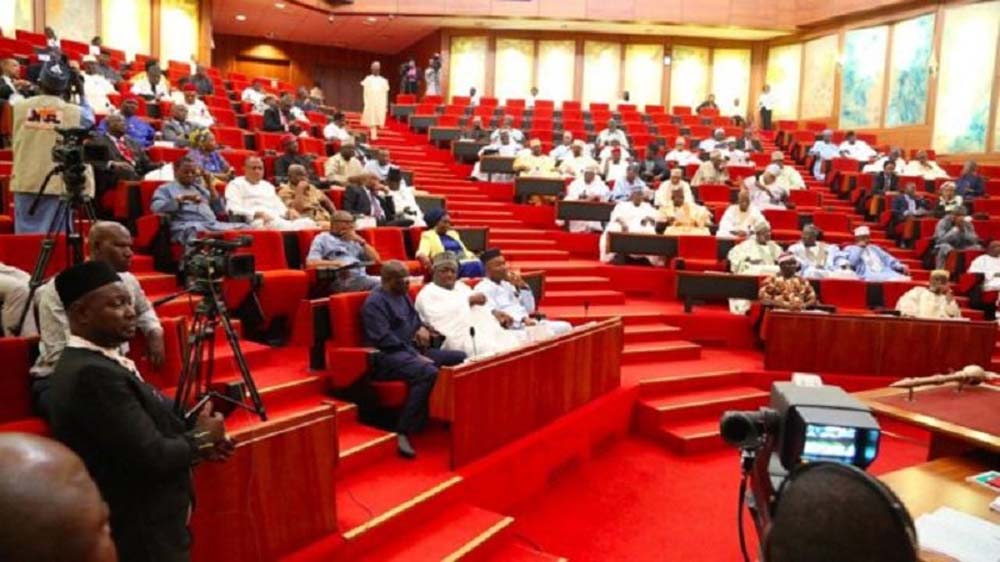
Senate Denies Receiving Petitions Against Tinubu’s Ambassadorial Nominees

Dangote Cement Lights Up Benue Host Communities With CSR Initiatives

Reps Recommend 3-year Jail Term For Aviation minister

Tems Sets New Record On Billboard Hot 100 Chart
Simply want to say your article is as astonishing. The clearness in your post is just nice and i could assume you are an expert on this subject. Fine with your permission let me to grab your feed to keep updated with forthcoming post. Thanks a million and please continue the enjoyable work.
mblw0s
tr1ie5
Definitely, what a great site and instructive posts, I will bookmark your blog.Best Regards!
I really like gathering utile information , this post has got me even more info! .
6syxul
naturally like your web-site but you need to test the spelling on several of your posts. Several of them are rife with spelling problems and I in finding it very bothersome to inform the truth on the other hand I will surely come again again.
7cxpix
wonderful points altogether, you simply gained a new reader. What may you suggest about your publish that you simply made some days in the past? Any sure?
You could certainly see your skills within the work you write. The sector hopes for even more passionate writers like you who are not afraid to say how they believe. At all times go after your heart. “If the grass is greener in the other fellow’s yard – let him worry about cutting it.” by Fred Allen.
Hello. Great job. I did not imagine this. This is a impressive story. Thanks!
so much wonderful info on here, : D.
Wonderful beat ! I would like to apprentice while you amend your site, how could i subscribe for a blog website? The account helped me a acceptable deal. I had been a little bit acquainted of this your broadcast provided bright clear idea
very good put up, i actually love this web site, keep on it
I’m truly enjoying the design and layout of your website. It’s a very easy on the eyes which makes it much more pleasant for me to come here and visit more often. Did you hire out a developer to create your theme? Outstanding work!
Nice post. I learn something more challenging on different blogs everyday. It will always be stimulating to read content from other writers and practice a little something from their store. I’d prefer to use some with the content on my blog whether you don’t mind. Natually I’ll give you a link on your web blog. Thanks for sharing.
Hey would you mind letting me know which webhost you’re working with? I’ve loaded your blog in 3 different browsers and I must say this blog loads a lot faster then most. Can you recommend a good web hosting provider at a honest price? Many thanks, I appreciate it!
I’m often to blogging and i really respect your content. The article has really peaks my interest. I’m going to bookmark your web site and preserve checking for new information.
Pretty! This was a really wonderful post. Thank you for your provided information.
Good blog! I truly love how it is easy on my eyes and the data are well written. I am wondering how I could be notified whenever a new post has been made. I’ve subscribed to your feed which must do the trick! Have a great day!