
Energy
Nigeria, Algeria, Niger Back Trans-Saharan Gas Pipeline Project


Nigeria, Algeria, and Niger have expressed joint commitment to the Trans-Saharan Gas Pipeline (TSGP) project, which is set to significantly strengthen Africa’s regional energy security.
Nigeria’s Minister of State for Petroleum Resources (Gas), Ekperikpe Ekpo, made the disclosure on Thursday at the 5th Ministerial Meeting of the TSGP Steering Committee in Algiers.
The high-level session included ministerial delegations from the three participating nations and a strategic consultation with Algerian President Abdelmadjid Tebboune.
The minister reaffirmed Nigeria’s commitment to the successful delivery of the multi-billion-dollar infrastructure project, describing it as a landmark initiative that will redefine energy security across the continent.
ALSO READ: Dangote Refinery Hits 700,000bpd Output, Eyes Global Leadership
According to Ekpo, technical and commercial discussions are ongoing among stakeholders to reinforce the regulatory and financial frameworks required for the project’s implementation.
He noted that officials from the three countries have reviewed the latest feasibility reports and officially resolved that the project proceeds immediately into its next development phases.
“This project means a lot to the three countries in terms of industrialisation and job creation,” Ekpo asserted.
“We’ve talked about the Trans-Saharan Gas Pipeline, and the President of Algeria has expressed his interest in the completion of the project,” Ekpo said. “I assure him that on the part of Nigeria, we will do everything possible to ensure the project sees the light of day.”
The minister pledged to work closely with his counterparts in Algeria and Niger, as well as the respective national oil companies — including the Nigerian National Petroleum Company Limited (NNPC Ltd) and Algeria’s Sonatrach — to accelerate project implementation.
On his part, President Tebboune reaffirmed Algeria’s full diplomatic and financial commitment to the pipeline.
He expressed confidence that with the robust political will demonstrated by the three governments, the pipeline will seamlessly move from planning to execution.
Tebboune noted that when completed, the transnational pipeline would deliver energy security, lucrative investment opportunities, and sustainable economic development for millions of people across Africa and European export markets.





Oil prices on Monday went south, after crude exports from the Middle East rose above pre-war levels, while the Group of Seven nations pledged to release 100 million barrels of crude and diesel from emergency reserves.
Brent crude futures fell by $1.20, or 1.17 percent, to $101.05 a barrel, while West Texas Intermediate crude declined by $1.16, or 1.27 percent, to $89.95 per barrel, according to Reuters.
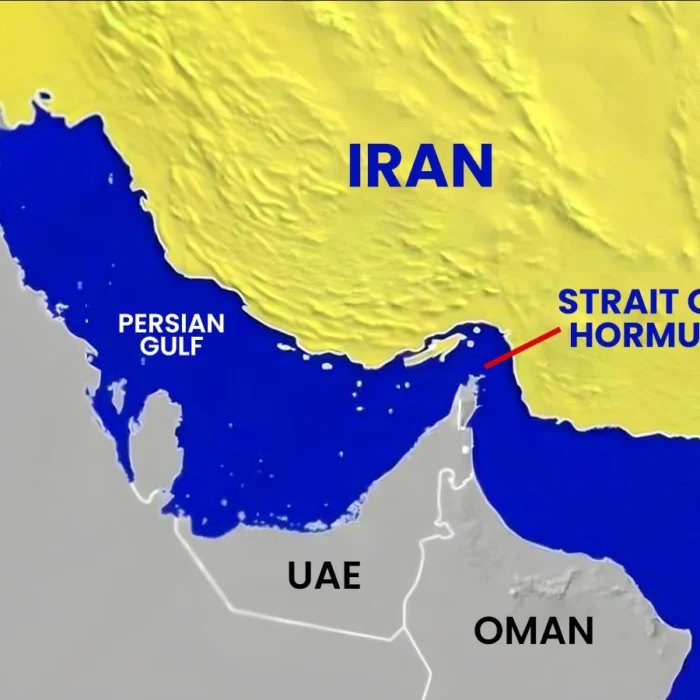
Middle Eastern crude exports exceeded pre-war levels on four of the seven days in the final week of September, shipping data showed, despite attacks on vessels passing through the strategic Strait of Hormuz.
The increase in exports, combined with the G7’s planned release of emergency stocks, helped put downward pressure on crude prices.
The G7 countries agreed on Friday to release 100 million barrels of diesel and crude from emergency reserves and pledged to refrain from energy export restrictions following pressure from United States President Donald Trump.
READ ALSO: Ndindi Nyoro Gives Ruto 14 Days to Disclose Dangote Refinery Deal
However, the scale of the additional supply remained uncertain.
IEA Executive Director, Fatih Birol, said last week that member countries had already released about two-thirds of the 400-million-barrel volume.
Meanwhile, supply concerns remained elevated as fighting continued across parts of the Middle East.
Saudi Aramco Chief Executive Officer, Amin Nasser, also warned that crude oil and refined fuel supplies were expected to remain stretched.
He said rebuilding global stockpiles after emergency withdrawals could take two years.
The United States Strategic Petroleum Reserve fell to 283 million barrels last week, its lowest level since October 1982, according to data from the US Department of Energy.
The supply outlook was further complicated by the continuing conflict involving Saudi Arabia and Iran-backed Houthi forces in Yemen.
Yemeni government forces attacked Houthi positions in the Dhubab district overlooking the Bab el-Mandeb Strait on Monday, according to two military sources.
The development came a day after the internationally recognised government launched a campaign to retake Houthi-held territory.
Meanwhile, OPEC+ postponed a review that would determine its 2027 oil output quotas after the war involving Iran disrupted projects aimed at expanding production capacity across the Middle East.
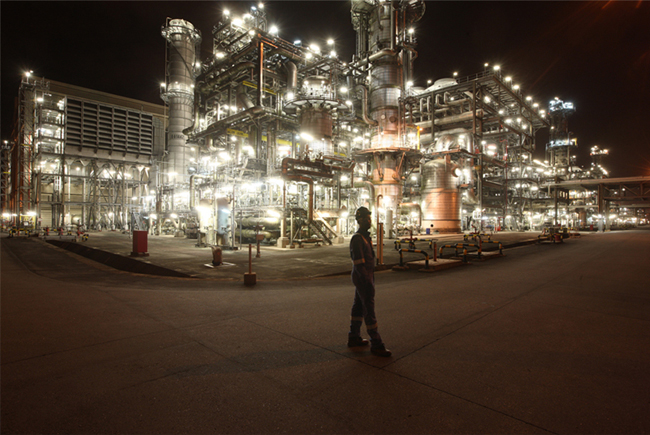
The Group of Seven (G7) has resolved to release up to 100 million barrels of crude oil and petroleum products from strategic stocks.
An analyst at Argus Media, Sarah Raffoul, has expressed the view that this might mount pressure on European diesel prices in the short term.
Canada, France, Germany, Italy, Japan, the United Kingdom and the United States, constitute the G7, though the European Union (EU) also participates in the group’s meetings.
READ ALSO: Petrol Tanker Fire Ravages Houses, Vehicles in Calabar
The G7 concerns itself with major global economic, energy, security and international issues.
According to Raffoul, the coordinated release, which includes a front-loaded diesel release, is likely to ease immediate supply concerns and weaken risk premiums as additional barrels become available during the early part of the winter season.
“The measure is likely to reduce prompt market tightness and weaken risk premiums as additional barrels become available during the early part of the winter season, although the final breakdown between crude and products has yet to be disclosed,” she said.
Raffoul added that the impact is expected to be felt mostly in October and November, when most of the released volumes are likely to reach the market.
She said the announcement also reduces concerns over export restrictions and includes commitments to maximise refinery utilisation, further improving confidence in near-term diesel availability.
However, Raffoul said the release does not fundamentally change the broader supply outlook because the additional barrels are being drawn from existing inventories rather than new production.
“The additional barrels are being drawn from existing inventories rather than new production, meaning the measure provides temporary relief rather than a lasting increase in supply,” she said.
She noted that several factors continue to support diesel fundamentals, including unplanned refinery outages in Asia, uncertainty surrounding Chinese export volumes and continued restrictions on Russian diesel exports.
“Europe also remains reliant on imports to balance its diesel market, leaving it exposed to disruptions in global trade flows,” Raffoul said.
She said the stock release is likely to cap further price increases and ease immediate supply concerns, but is unlikely to eliminate them entirely.
“OECD European diesel inventories remain relatively low by historical standards, while strengthening jet fuel markets have pushed the European jet-diesel regrade back into positive territory,” she said.
Raffoul added that the development suggests diesel values may need to strengthen relative to current levels to restore the normal relationship between the two products.
She said stronger refinery runs, Chinese export policy and sustained stock releases could leave the market more comfortably supplied than currently expected.
“On the other hand, further refinery disruptions, weaker exports, stronger winter demand or delays to inventory rebuilding could allow tightness to deepen once the effect of the stock release begins to fade,” she said.
Raffoul said the announcement points to softer European diesel prices in the near term, but noted that underlying fundamentals suggest any weakness is more likely to reflect a reduction in supply risk than a meaningful loosening of market balances.


Investment banker, development economist and former Imo State deputy governorship candidate, Dr. Nnaemeka Onyeka Obiaraeri, has described the 2026 Nigeria-US Solid Mineral Framework Agreement as structurally superior to Nigeria’s post-independence oil and gas joint-venture arrangements with international oil companies (IOCs).
Obiaraeri made the assertion in a post on X on Friday while comparing the newly signed minerals framework with Nigeria’s longstanding arrangements in the oil and gas sector.
According to him, the minerals agreement is different because of its emphasis on local value addition and processing.
SEE ALSO: Dangote Blames Marketers, IOCs for Lamu Refinery Protests
“The 2026 US-Nigeria Solid Mineral Framework Agreement is structurally superior to Nigeria’s post-independence Oil and Gas arrangements with International Oil Companies (IOCs),” Obiaraeri stated.
He argued that while oil joint ventures have primarily involved the extraction and export of crude oil, with limited domestic refining capacity historically, the new mining framework seeks to ensure that Nigeria does not remain merely a source of raw materials.
“The JV contract with the IOCs primarily involves the extraction and export of raw crude oil with minimal local refining capacity, whereas the new mining pact explicitly attempts to prevent Nigeria from remaining a mere source of raw materials,” he said.
Obiaraeri also said the framework comes with protection for the lives and participation rights of host communities.
He linked the issue to insecurity and illegal mining, alleging that indigenous communities have suffered deaths and hardship as a result of activities involving bandits and illegal mining networks.
“The Solid Mineral MOU also comes with protection of lives and participation rights of the host communities,” he said.
Recall that Nigeria and the United States signed a mineral investment framework in New York on September 24, 2026, aimed at attracting American investment into Nigeria’s estimated $700 billion mineral resources.
The agreement was signed by Minister of Solid Minerals Development, Dele Alake, and US Deputy Secretary of State Christopher Landau at Nigeria’s Mission House in New York.
The framework provides for cooperation in areas including geological data and exploration, mineral development and processing, infrastructure and technical capacity.
The Federal Government said the agreement is intended to promote a value-addition-driven mineral value chain and create greater opportunities for Nigerian businesses.
Nigeria’s oil and gas sector, meanwhile, has historically operated under several contractual arrangements involving the government and foreign oil companies, including joint ventures and production-sharing contracts.
Under the joint-venture model, NNPC Limited and IOC partners participate jointly in the development of petroleum assets according to their respective interests and the terms of the applicable agreements.
NNPC Limited, for instance, operates a joint venture with Chevron Nigeria Limited, with Chevron holding a 40 per cent interest and NNPC Limited holding the remaining 60 per cent in the relevant assets.
The partnership covers exploration and development activities in the Niger Delta.
Nigeria also uses production-sharing contracts for some petroleum developments, particularly in deepwater projects.
In August 2026, President Bola Tinubu approved a new deep-offshore investment framework intended to unlock up to $50 billion in investment, with NNPC Limited acting as the government’s nominated counterparty under the applicable production-sharing contracts.
Against this background, Obiaraeri said the new minerals framework provides an opportunity for Nigeria to adopt a different approach to its natural resources.
He argued that, rather than simply extracting and exporting resources, Nigeria should ensure that more processing, industrial activity and economic value remain within the country.
“I remain Nnaemeka Onyeka Obiaraeri,” he said, adding that he speaks “truth to power” and seeks to proffer solutions to national and subnational challenges.





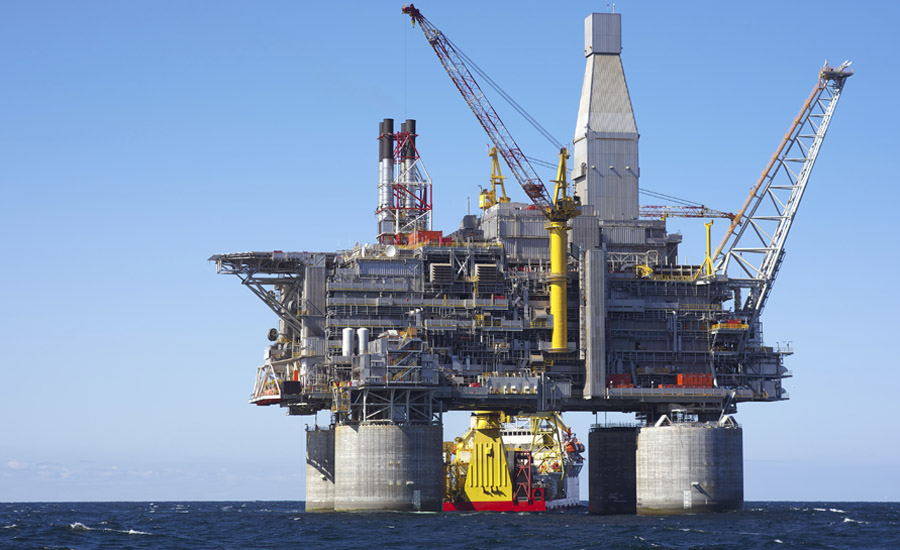
Heritage Energy on Ways of Unlocking Oil Industry Investment
NCDMB, Renaissance Empower 60 with Oil & Gas Technical Skills

Fuel Discount: Presidency Explains Why Atiku’s Production Subsidy Proposal May Fail

‘Don’t Rush the Refinery’ – Kenyan Presidential Candidate Warns Dangote

2027 Election: ‘Look Beyond the Noise’ – Showunmi Urges Nigerians to Give Tinubu More Time

NLC Ultimatum: Wage Demands Can Be Resolved in Two Weeks – HR Expert

Trump’s Family Unveils New Cryptocurrency Platform

Senate Denies Receiving Petitions Against Tinubu’s Ambassadorial Nominees

Dangote Cement Lights Up Benue Host Communities With CSR Initiatives

Reps Recommend 3-year Jail Term For Aviation minister

Tems Sets New Record On Billboard Hot 100 Chart
