
International News
Over 40 People Killed By Deadly Mediterranean Wildfires

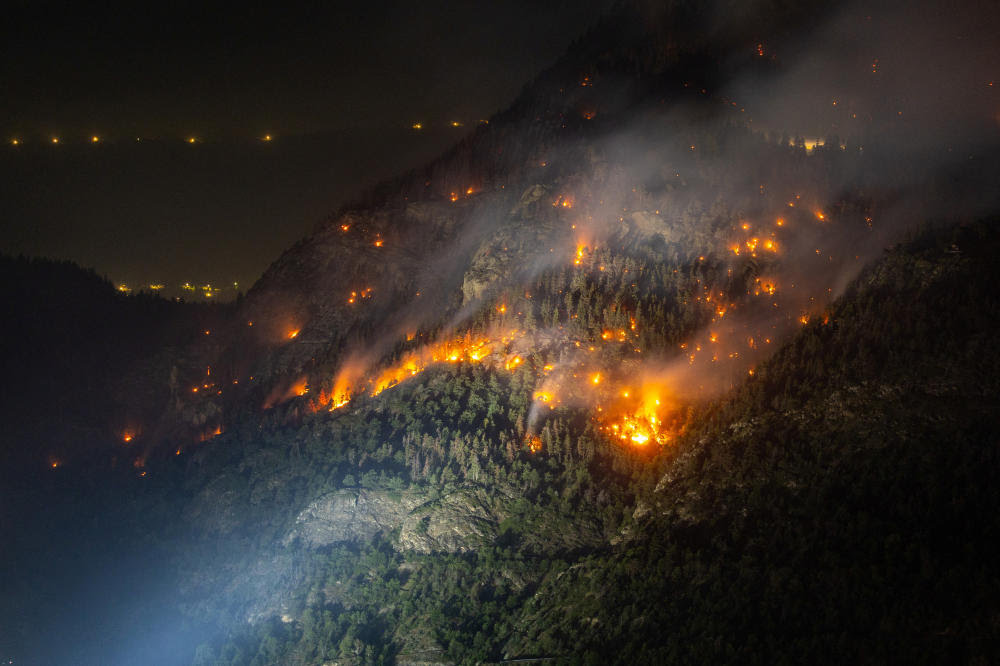
In the Mediterranean wildfires threatening villages and vacation destinations, more than 40 people have died, the most of them in Algeria, and hundreds have been evacuated.
Since fires are also raging on the islands of Corfu and Evia, Greece is planning for additional evacuation planes from Rhodes.
Temperatures are predicted to reach over 44C (111F) in several parts of Greece as the current prolonged heatwave shows no signs of abating.
Firefighters are having difficulty putting out the flames and building firebreaks in several areas due to high winds and foliage that is tinder dry.
The heaviest death toll so far is in Algeria, where the 34 victims included 10 soldiers surrounded by flames during an evacuation in the coastal province of Bejaia, east of Algiers. Bejaia is the worst-hit area, accounting for 23 of the deaths, local media report.
The Algerian authorities said 80% of the blazes had been put out since Sunday, but a massive firefighting effort continues, involving about 8,000 personnel, hundreds of fire trucks and some aircraft.
Fires have also raged in neighbouring Tunisia, where 300 people had to be evacuated from the coastal village of Melloula.
In Greece, the Civil Protection Ministry warned of an “extreme danger” of fire in six of the country’s 13 regions on Wednesday.
A team of climate scientists – the World Weather Attribution group – said this month’s intense heatwave in Southern Europe, North America and China would have been virtually impossible without human-induced climate change.
On the island of Rhodes more than 20,000 people have been evacuated from homes and resorts in the south in recent days. An airport official told AFP news agency that more than 5,000 had flown home on more than 40 emergency flights between Sunday and Tuesday.
Tourism accounts for one in five jobs in Greece, and the industry is vital for Rhodes and many other islands. The UK Foreign Office has not advised against travel to the affected parts of Greece, but has urged tourists to check with tour operators for updates.
On the island of Evia, just north of Athens, two pilots died when their Canadair firefighting plane crashed into a ravine. Elsewhere on the island a man’s charred body was found in a remote rural shack.
Thousands of people have also been evacuated on Evia and Corfu, while Crete – another major holiday destination – is on high alert.
Italy has been hit by contrasting extreme weather events – with storms in the north and wildfires in Sicily and several more southern regions.
In the vicinity of Palermo, a couple in their 70s were discovered dead in a fire-gutted house. A woman in her 88s also perished nearby, and a fourth fire victim, a 98-year-old male, was discovered in Calabria, to the east of Sicily.
2,000 people were evacuated from three hotels due to a wildfire in the Foggia region of Italy’s Adriatic coast, according to the Rai news network. The fire originated from a nearby national park and moved into Vieste.
Civil Protection Minister Nello Musumeci said: “We are experiencing in Italy one of the most complicated days in recent decades – rainstorms, tornadoes and giant hail in the north, and scorching heat and devastating fires in the centre and south.”








Federal agents raided the Washington, D.C., home of Democratic Congresswoman Ilhan Omar early Monday morning as part of an ongoing federal criminal investigation, the United States Department of Justice (DOJ) has confirmed.
Homeland Security Investigations agents arrived at the Minnesota congresswoman’s residence at about 6:00 a.m. Eastern Time, according to a report by Fox News.
SEE MORE: Trump Sparks Outrage With Shock Proposal to Rename New Mexico
The report said both the Department of Homeland Security (DHS) and the DOJ are involved in the investigation.
A DOJ spokesperson confirmed the operation, stating: “Today in the Washington, D.C. area, Homeland Security Investigations executed a judicially authorized search warrant secured by the Department of Justice.”
The spokesperson added: “This enforcement action is part of an ongoing federal criminal investigation.”
Details later……….
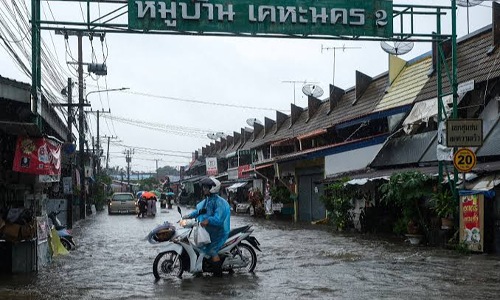
Heavy rains have triggered severe flooding across parts of Bangkok, Thailand, forcing nearly 4,900 residents to evacuate to shelters as floodwaters swept through roads and residential areas.
The flooding has disrupted movement across parts of the Thai capital, with motorists and pedestrians forced to navigate submerged roads and seek alternative routes.
SEE ALSO: NAFDAC Warns Nigerians As Fake Cowbell Milk Floods Market
According to the Bangkok Metropolitan Administration, about 52,000 households have been affected by the flooding, prompting authorities to declare a flood disaster and intensify emergency response efforts.
Emergency teams have been deployed to assist affected communities and move residents from vulnerable areas to safer locations as water levels rise.
Bangkok is accustomed to seasonal heavy rainfall, but intense downpours can overwhelm drainage systems, particularly in low-lying areas, resulting in widespread flooding and disruption.
Authorities are continuing to monitor affected locations while coordinating evacuations and other emergency measures.
For thousands of residents, the immediate priority remains securing safe shelter and protecting homes and livelihoods as authorities work to manage the situation and restore normal activities once the floodwaters recede.

US President Donald Trump has explained his decision to reject Iran’s latest proposal to reopen the Strait of Hormuz, saying Tehran was seeking an agreement because it was losing revenue.
Speaking to reporters at the White House, Trump said Iran wanted to immediately reopen the strategically important waterway but argued that the proposal was not acceptable to his administration.
“They want to make a deal, and I think that’s fine. I like making a deal, too, but that deal would not be acceptable,” Trump said.
SEE ALSO: How the Strait of Hormuz Attack Could Trigger a Fresh Global Oil Shock
According to the US president, Iran’s push to reopen the strait was driven by the economic pressure it was facing.
“What they want to do is immediately open the Hormuz Strait. Do you know why? Because they are dying,” Trump said.
“You know why they’re dying? Because they have no money coming in, because they get their money from the Hormuz Strait.”
Trump also claimed that the US had established an unprecedented naval blockade against Iran, describing it as “a wall of steel.”
“So they outsmarted themselves. We put up the greatest blockade ever in military history. It’s a wall of steel,” he said.
“And guess what? They don’t have any money now because they wanted to close the strait.”
The Strait of Hormuz is a major global energy shipping route, and disruption to traffic through the waterway has significant implications for international oil markets and countries that depend on energy imports.
Trump’s remarks came amid continued tensions between Washington and Tehran over the reopening of the strategic waterway and negotiations involving Iran.






Sanwo-Olu Pledges Full Support as Lagos Prepares to Host 2026 CAF Awards

JUST IN: Presidency Rejects Makinde’s Claim of ₦250bn NLNG Dividends for Each State

Sowore Challenges Okonjo-Iweala to Name Those Behind Alleged $2.4bn Subsidy Fraud

Tinubu vs Obi: Omokri Fires Back at Peter Okoye Over Call to Retire Older Politicians

Kwankwaso Rejects ADC Claims, Says NDC Won’t Withdraw From 2027 Race
‘World Bank’s 124% Debt Interest Figure Misleading’ – Finance Ministry Insists

Trump’s Family Unveils New Cryptocurrency Platform

Senate Denies Receiving Petitions Against Tinubu’s Ambassadorial Nominees

Dangote Cement Lights Up Benue Host Communities With CSR Initiatives

Reps Recommend 3-year Jail Term For Aviation minister

Tems Sets New Record On Billboard Hot 100 Chart
