
International News
Rhodes Fires: Brits Flee Homes For Safety As Greek Fires Intensify

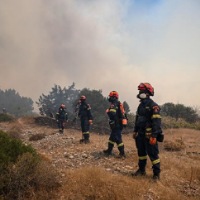
As fires rage on the Greek island of Rhodes, British holidaymakers continue to shorten their vacations.
Tuesday saw an increase in the number of planes leaving Greece for the UK.
The Foreign Office modified its advice, advising travelers to make sure they had “appropriate insurance” before entering potentially affected areas.
To assist with travel insurance claims, the Liberal Democrats have encouraged ministers to warn against visiting Rhodes unless absolutely necessary.
On Tuesday, Jet2 had nine planes planned to leave Rhodes, some of which had extra seats to accommodate additional travelers attempting to leave the island.
EasyJet said extra seats were available on Wednesday’s flights.
Earlier, one of the airline’s pilots flying British tourists to Rhodes urged passengers at Gatwick to get off the plane before take-off.
“I don’t know in what capacity you are travelling, but if you are travelling for leisure, my sincere recommendation is that it’s a bad idea,” the pilot told passengers on board.
Women embrace as holidaymakers fleeing Greek wildfires arrive at Gatwick Airport
On Monday morning, Foreign Office Minister Andrew Mitchell said up to 10,000 Brits were on Rhodes in total – this number includes tourists in unaffected parts of the island.
Jet2 – which ran repatriation flights to Manchester, Leeds-Bradford, Glasgow and Stansted overnight – said “approximately 1,000 customers” had either been flown back to the UK or moved to hotels in unaffected areas.
EasyJet has cancelled outbound package holidays to Rhodes until Saturday, while Tui has cancelled its packages going to the south of the island until 11 August.
The view from Rhodes airport
Instead of formally advising holidaymakers not to travel to the affected Greek islands, the Foreign Office said people should check with their hotel and travel operator before travelling, and explained how to sign up for emergency alerts.
Updated advice said the fires were taking place “in populated areas on the mainland and a number of islands” and were “highly dangerous and unpredictable”.
The Foreign Office advised those visiting the affected areas to make sure they had “appropriate insurance”, and directed travellers towards a number of resources they could use if they were near the wildfires.
It could be recall that Biztellers earlier reported that two Greek air force pilots died after a water-bombing plane crashed on the island of Evia while fighting wildfires on Tuesday afternoon.
They were named as 34-year-old Cdr Christos Moulas and his co-pilot, 27-year-old Pericles Stefanidis.
In the last week, more than 35,000 hectares (86,500 acres) of forest and other land has been scorched by fire in Greece, the World Wildlife Fund for Nature said.
Greek Prime Minister Kyriakos Mitsotakis told his cabinet the next three days “will be difficult” but he hoped conditions will ease from Friday.
“Let me state the obvious,” he said. “That in the face of what the entire planet is facing, especially the Mediterranean, which is a hotspot for climate change, there is no magic defence.
“If there was, obviously we would have implemented it.”








Federal agents raided the Washington, D.C., home of Democratic Congresswoman Ilhan Omar early Monday morning as part of an ongoing federal criminal investigation, the United States Department of Justice (DOJ) has confirmed.
Homeland Security Investigations agents arrived at the Minnesota congresswoman’s residence at about 6:00 a.m. Eastern Time, according to a report by Fox News.
SEE MORE: Trump Sparks Outrage With Shock Proposal to Rename New Mexico
The report said both the Department of Homeland Security (DHS) and the DOJ are involved in the investigation.
A DOJ spokesperson confirmed the operation, stating: “Today in the Washington, D.C. area, Homeland Security Investigations executed a judicially authorized search warrant secured by the Department of Justice.”
The spokesperson added: “This enforcement action is part of an ongoing federal criminal investigation.”
Details later……….
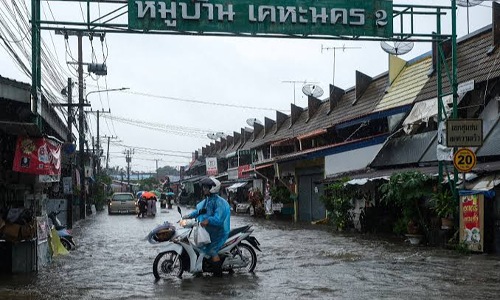
Heavy rains have triggered severe flooding across parts of Bangkok, Thailand, forcing nearly 4,900 residents to evacuate to shelters as floodwaters swept through roads and residential areas.
The flooding has disrupted movement across parts of the Thai capital, with motorists and pedestrians forced to navigate submerged roads and seek alternative routes.
SEE ALSO: NAFDAC Warns Nigerians As Fake Cowbell Milk Floods Market
According to the Bangkok Metropolitan Administration, about 52,000 households have been affected by the flooding, prompting authorities to declare a flood disaster and intensify emergency response efforts.
Emergency teams have been deployed to assist affected communities and move residents from vulnerable areas to safer locations as water levels rise.
Bangkok is accustomed to seasonal heavy rainfall, but intense downpours can overwhelm drainage systems, particularly in low-lying areas, resulting in widespread flooding and disruption.
Authorities are continuing to monitor affected locations while coordinating evacuations and other emergency measures.
For thousands of residents, the immediate priority remains securing safe shelter and protecting homes and livelihoods as authorities work to manage the situation and restore normal activities once the floodwaters recede.
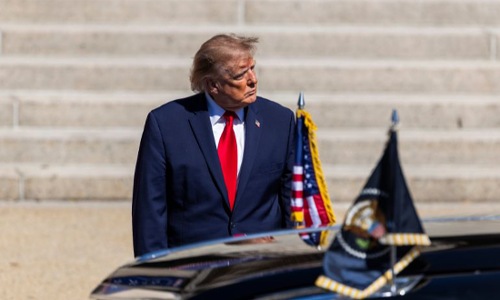
US President Donald Trump has explained his decision to reject Iran’s latest proposal to reopen the Strait of Hormuz, saying Tehran was seeking an agreement because it was losing revenue.
Speaking to reporters at the White House, Trump said Iran wanted to immediately reopen the strategically important waterway but argued that the proposal was not acceptable to his administration.
“They want to make a deal, and I think that’s fine. I like making a deal, too, but that deal would not be acceptable,” Trump said.
SEE ALSO: How the Strait of Hormuz Attack Could Trigger a Fresh Global Oil Shock
According to the US president, Iran’s push to reopen the strait was driven by the economic pressure it was facing.
“What they want to do is immediately open the Hormuz Strait. Do you know why? Because they are dying,” Trump said.
“You know why they’re dying? Because they have no money coming in, because they get their money from the Hormuz Strait.”
Trump also claimed that the US had established an unprecedented naval blockade against Iran, describing it as “a wall of steel.”
“So they outsmarted themselves. We put up the greatest blockade ever in military history. It’s a wall of steel,” he said.
“And guess what? They don’t have any money now because they wanted to close the strait.”
The Strait of Hormuz is a major global energy shipping route, and disruption to traffic through the waterway has significant implications for international oil markets and countries that depend on energy imports.
Trump’s remarks came amid continued tensions between Washington and Tehran over the reopening of the strategic waterway and negotiations involving Iran.






Tinubu vs Obi: Omokri Fires Back at Peter Okoye Over Call to Retire Older Politicians

Kwankwaso Rejects ADC Claims, Says NDC Won’t Withdraw From 2027 Race
‘World Bank’s 124% Debt Interest Figure Misleading’ – Finance Ministry Insists

‘Election Rulings Have Diminished Nigeria’s Judiciary’ – Utomi

NDLEA Arrests 85-Year-Old Woman With 179kg of Cannabis in Edo

Ambakederimo Questions NNPC Over Crude Oil Sales, Upfront Payments

Trump’s Family Unveils New Cryptocurrency Platform

Senate Denies Receiving Petitions Against Tinubu’s Ambassadorial Nominees

Dangote Cement Lights Up Benue Host Communities With CSR Initiatives

Reps Recommend 3-year Jail Term For Aviation minister

Tems Sets New Record On Billboard Hot 100 Chart
