Business
Poor economy: Emefiele has failed, sack him now – Youth Council tells Buhari

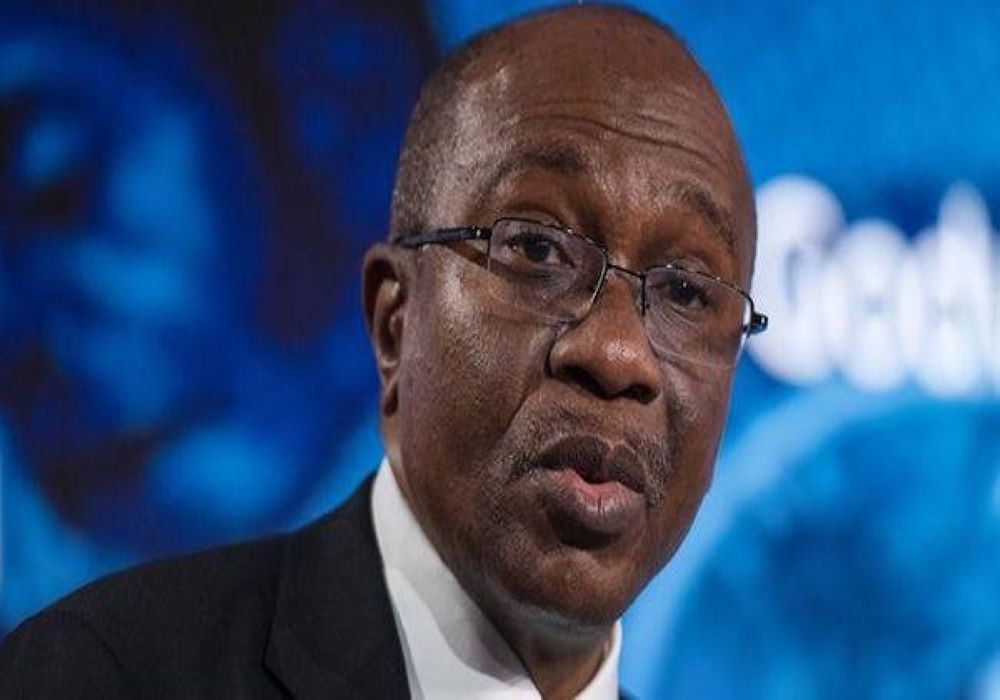
The National Youth Council of Nigeria (NYCN) has blamed the Governor of the Central Bank of Nigeria (CBN), Mr. Godwin Emefiele’s poor economic management policies for the recent free-fall of the Naira.
The Naira within the week depreciated to an all-time low of N730 to a U.S dollar at the parallel market.
President of the NYCN, Comrade Solomon Adodo, stressed that statements credited to the CBN Governor alleging that the current free-fall of the Naira against other major currencies was as a result of the non-remittances of dollars to the foreign reserve by the NNPC Ltd, without highlighting the reality of the causative oil and non-oil related factors including a drop in Nigeria’s crude oil production, growing petrol subsidy, an unsustainable dual exchange rate system, reduction in foreign direct investments and growing dependence on importation across many sectors of the economy as disingenuous and unpatriotic.
The group flayed Emefiele for completely failing to concentrate on his core mandate of price stability as the apex bank’s governor, pointing out that with inflation at about 19 percent and the exchange rate nearing N800 to a dollar, the CBN Governor should be held responsible for deepening poverty in the country as he continues to work at cross-purposes at President Muhammadu Buhari’s objective of reducing poverty and growing the economy.
The statement reads: “We are all witness to the fact that from August 2020 to July 2022, the official exchange rate has moved from N381 to N415/$, representing only a nine percent increase. However, the parallel market has moved from N470 to N710 within the same period representing a 51 percent increase and a record 71 percent arbitrage with the official exchange rate creating a huge incentive for round-tripping, price gouging, sharp market practices, and inflation.
“The NYCN is therefore shocked by the comment of the Governor associating the free-fall of the parallel market rates to NNPC, even though it is purely a monetary policy issue and outside the purview of the NNPC.
“As a youth group, we have noted that the inability of the CBN to promptly release Joint Venture (JV) cash call funding from the Treasury Single Account (TSA) even when the Nigeria National Petroleum Company (NNPC) Ltd had adequate cash cover, leading to the loss of JV Partners’ confidence to restore production and reap the benefits of today’s improved oil prices.
“We are in the know that for over three months now, dollar-denominated cash call payments amounting to over $400 million, properly processed, are yet to be paid by the CBN under Mr. Emefiele.
“The combined impact of CBN’s inability to promptly release JV cash call to restore production, the increasing losses due to crude oil theft, and production deferments has culminated in significant crude oil output losses of over 600, 000 barrels per day.
“We find it curious that the apex governor seems to be unaware of the insecurity and huge oil theft in the Niger Delta which have continued to challenge the country’s oil production and the oil industry and gas industry in general. At present, there are massive losses and declaration of force majeure across the country’s major onshore production export facilities of Bonny, Brass, and Forcados.
“At the current year-to-date average crude oil price of $107 per barrel, Nigeria is counting opportunity losses translating to over $64 million per day, and a monumental impact of about $2 billion per month.
“We are taken aback that Mr. Governor is feigning ignorance that the country’s rising petrol subsidy cost, as well as the rising cost of external debt servicing, are all obligations affecting the economy. These affect the NNPC’s remittances to the Federation Account.
“From January to June 2022, the cost of PMS subsidy has reached N2.2 trillion and it is estimated that the full-year subsidy bill may hit N5 trillion and N6 trillion in 2023.
“Apart from government decision to defer the implementation of PMS deregulation, the subsidy profile is significantly influenced by CBN foreign exchange management.
“From January to June 2022, the cost of PMS subsidy has reached N2.2 trillion and it is estimated that the full-year subsidy bill may hit N5 trillion and N6 trillion in 2023.
“Apart from government decision to defer the implementation of PMS deregulation, the subsidy profile is significantly influenced by CBN foreign exchange management.
“It is however worth noting that the NNPC has recorded significant gains on production ramp-up including attaining ‘first oil’ production from the Anyala – Madu Fields and most recently Ikike fields which cumulatively boost national oil production by almost 80, 000 barrels per day.
“Furthermore, NNPC’s efforts towards attaining additional combined production of over 100, 000 barrels from fields like Obodo, Utapate etc has never abated despite the global setback recorded as a result of the effects of COVID-19 pandemic.
“History shows that Mr. Emefiele is at sea on addressing monetary policy issues. We recall that in 2021, the CBN governor blamed Aboki FX for the depreciation of the Naira. He would later blame members of the Association Bureau De Change, which led to the stoppage of dollar sales to the group. At another time, he blamed the Naira’s depreciation on activities of money laundering, terrorism financing as well as politicians.
“Furthermore, Nigerians are bearing the brunt of the inaction of the CBN Governor as the Emirates Airlines, the flag carrier of the United Arab Emirates (UAE), has reduced its flight operations to Nigeria over the inability of the CBN to repatriate about $85 million in revenue.
“Was the failure to repatriate Emirates funds also caused by the NNPC?
“The International Air Transport Association (IATA) had said Nigeria was withholding revenue worth about $450 million earned by foreign airlines operating in the country. Emirates said the planned reductions in its operations in Nigeria would take effect from August 15, 2022.
READ ALSO: Senate invites Emefiele over naira depreciation
“And in a manner that fits his erratic policy, he has at present shifted all blames to the NNPC. This is clearly a case of a bad workman who blames every other person for his inability to deliver. To us at the NYCN, Emefiele is tired and should be sacked by President Buhari.
“From all indications since his failed presidential bid as well as his rejection by the All Progressives Congress, a partisan Emefiele has been doing all to rubbish the achievements of President Muhammadu Buhari and this should no longer be permitted.
“As Nigerians concerned about the future of this country and before Mr. President heeds our clarion call to send Mr. Eemefiele packing from the CBN, we advise that the CBN considers among other options the World Bank’s recommendation of adopting a single market-responsive sustainable exchange rate, improving access to forex through well-defined periodic forex auctions, and signaling a renewed commitment to price stability as a primary goal of the apex bank.
“The NYCN further expresses the optimism that the NNPC’s transitioning into a limited liability entity in line with the provisions of the Petroleum Industry Act (PIA), and its regulation now in line with the provisions of the Companies and Allied Matters Act (CAMA) would help resolve cash call payments delays as the company is now exempted from TSA, among others.
“We also hope that the NNPC Ltd would compete favourably with its peers globally and this in turn would translate to more foreign exchange for the country as well as improved national energy security,” the group noted.






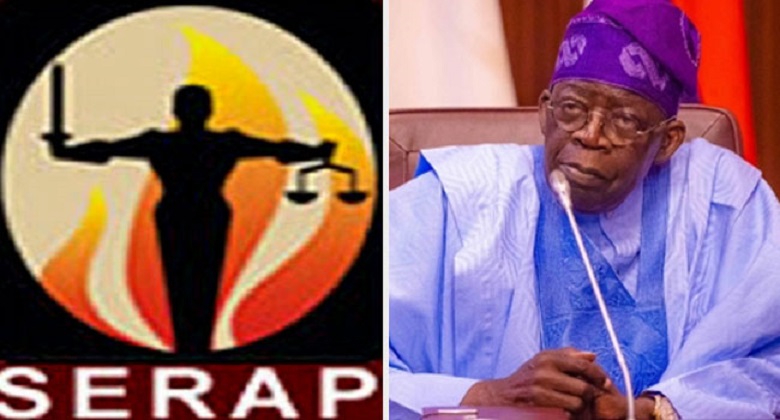
The Socio-Economic Rights and Accountability Project (SERAP) has taken legal action against the Federal Government of Nigeria (FGN) on what it termed “the arbitrary, unconstitutional, unlawful, unfair, and unreasonable 50 percent telecom tariff hike by the Nigerian Communications Commission (NCC).”
Biztellers reports that the NCC was joined in the suit as Defendant.
Recall that the NCC recently approved a 50 percent hike in telecom tariffs, which by implication would see the average price of calls will rise to N16.5 per minute from N11; the cost of 1GB of data to N431.25 from N287.5/GB; and SMS rates to N6 from N4.
ALSO READ: Super Eagles Await Group Stage Fate As AFCON Draw Holds In Morocco
In the suit number FHC/ABJ/CS/111/2025 filed last Friday at the Federal High Court, Abuja, the SERAP is asking the court to determine “whether the unilateral decision by the NCC to authorise telcos to hike telecom tariffs by 50 percent is not arbitrary, unconstitutional, unlawful, unfair, unreasonable and inconsistent with citizens’ freedom of expression and access to information.”
In addition, the SERAP is asking the court for “a declaration that the unilateral decision by the NCC to authorise telcos to hike telecom tariff by 50 percent is arbitrary, unfair, unreasonable and inconsistent and incompatible with citizens’ freedom of expression and access to information, and therefore unconstitutional and unlawful.”
The SERAP is also seeking “an order of interim injunction restraining the NCC, its officers, agents, privies, assigns, or any other person or persons acting on its instructions from further implementing, enforcing and doing any act to give effect to the decision of the NCC authorizing telecom tariff hike by 50 percent.”
In the suit, the SERAP is arguing that: “The legal and constitutional provisions as well as international standards on freedom of expression and access to information constitute the repository of legality. The requirements of legality constrain the exercise of statutory powers by the NCC to authorise any increase in telecom tariffs.”
The suit filed on behalf of the SERAP by its lawyer Ebun-Olu Adegboruwa, SAN, read in part: “The demands of legality impose clear duties of fairness and reasonableness on the NCC in the exercise of its powers to authorize the telecom tariff hike by 50 percent, which is the subject-matter of this suit.
“The NCC is required under the legal provisions on consumers’ rights and constitutional and international standards on freedom of expression and access to information to base its decision on reasonable interpretations of its enabling statutes and guidelines and other relevant legal frameworks, and to follow due process.
“The exercise of the statutory powers of the NCC in approving the telecom tariff hike is a grave violation of the provisions of the Federal Competition and Consumer Protection Act 2018, the Nigerian Constitution 1999 [as amended] and the African Charter on Human and Peoples’ Rights to which Nigeria is a state party.
“These legal and constitutional provisions and international human rights standards recognize that every individual has the right to an equal opportunity to receive, seek and impart information through any communication medium without discrimination.
“The constitutional and democratic anomalies complained of by SERAP is more apparent when the said unilateral decision of the NCC approving a 50 percent increase in telecommunication tariffs is juxtaposed with the apparent procedural breaches of the condition-precedent for any approval of increase.
“The NCC is the statutory agency charged with the responsibility of promoting and implementing the national communications or telecommunications policy in Nigeria.
“The latest patently unconstitutional and unlawful increase in telecommunication tariffs is coming on the heels of a recent report by the National Bureau of Statistics (NBS), which shows that some 133 million Nigerians are poor.
“The NBS report also shows that over half of the population of Nigeria are multi-dimensionally poor and cook with dung, wood or charcoal, rather than cleaner energy.
“The increase in telecommunication tariffs is a fundamental breach of due process of law, as the purported approval by the NCC failed to meet the high threshold of consultation with key stakeholders, especially the Federal Competition and Consumer Protection Commission, which is the primary consumer protection agency in Nigeria.
“The increase in telecommunication tariffs is coming at a time when Nigerians are deeply burdened by the cost of living crisis. The cost of living crisis has resulted in low quality of life, unemployment and deaths, as many socially and economically vulnerable people scramble for free food in public and religious gatherings.
“The present-day economic realities in Nigeria include chronic poverty amongst a high percentage of citizens and the growing inability of several state governments to pay salary and pensions of workers, especially as the country still suffers from the removal of fuel subsidy, electricity tariff hike and inflated cost of food in the market.”
The SERAP is therefore asking the court for the following reliefs:
A DECLARATION that the unilateral decision of the NCC approving the increase of telecommunications tariff by 50 percent is arbitrary, unfair, unreasonable, and a deliberate attempt to stifle the constitutional and international human rights of citizens to freely express themselves and share information, and breach of sections 104 and 127 of the Federal Competition and Consumer Protection Act 2018, section 39 of the Constitution of the Federal Republic of Nigeria 1999 [as amended] and Article 9 of the African Charter on Human and Peoples’ Rights (Ratification and Enforcement) Act and Article 19 of the International Covenant on Civil and Political Rights to which Nigeria is a state party.
AN ORDER setting aside the unilateral decision of the NCC approving the increase of telecommunications tariff by 50 percent contained in a press statement published by the NCC on 20th January 2025 for being arbitrary, unfair, extortive, unreasonable, unconstitutional and a breach of the provisions of Sections 104 and 127 of the Federal Competition and Consumer Protection Act 2018, section 39 of the Constitution of the Federal Republic of Nigeria 1999 [as amended], Article 9 of the African Charter on Human and Peoples’ Rights (Ratification and Enforcement) Act and Article 19 of the International Covenant on Civil and Political Rights to which Nigeria is a state party.
AN ORDER restraining the NCC, its agents, assigns, privies and or representatives or such other persons acting on its behalf, and all telecommunication companies in Nigeria from implementing and/or enforcing the unilateral decision of the NCC approving the increase of telecommunications tariff by 50 percent as contained in a press statement published by the NCC on 20th January 2025.
AND FOR SUCH FURTHER ORDER(S) that the Honorable Court may deem fit to make in the circumstance of this suit.
No date has been fixed for the hearing of the interim application and the substantive suit.
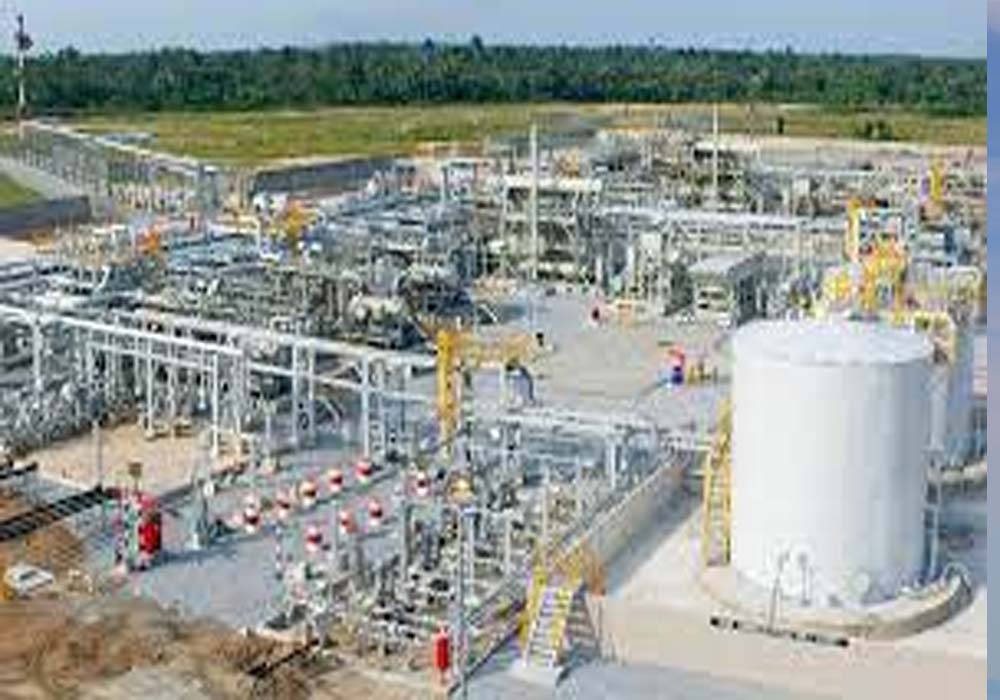
Savannah Energy has shared a trading update on its Nigerian operations and other markets in Africa, including up-to-date cash collections in its Nigerian business.
According to the update, made available on Thursday in Lagos, its gross production in Nigeria averaged 23.1 Kboepd for FY 2024, broadly in line with the prior year’s 23.6 Kboepd, of which 88% was gas (FY 2023: 91%).
On the update, CEO of Savannah Energy, Andrew Knott, said, “I am pleased to provide a FY trading update which demonstrates the continued progress we have made in 2024, a year which saw the highest level of cash collections ever recorded by our Nigerian business. 2025 is expected to be an exciting year for our Company: we have a large planned operational programme in Nigeria which is anticipated to enhance both our oil and gas production levels and capacity; we intend to progress our R3 East oil development project in Niger; we continue to pursue key acquisitions in the upstream oil and gas space; and we continue to seek to build our power business.
“Fundamentally, Savannah remains unequivocally an “AND” company, seeking to deliver strong performance both for the short AND long term across multiple fronts, and pursuing growth opportunities in both the hydrocarbon AND power sectors.”
The update It also shows that it generated a Total Income of US$393.6 million in 2024, compared to FY 2023’s US$289.8 million. This consists of Total Revenues of US$258.7 million and Other operating income of US$134.9 million.
The report also shows that Savannah’s FY 2024 Total Revenues were ahead of the previously issued financial guidance of greater than US$245 million, while FY 2024 financial guidance is reiterated for Operating expenses plus administrative expenses at ‘up to US$75 million’. The company expects its FY 2024 capital expenditure to come in lower than planned (previously guided at ‘up to US$50 million’) due to the phasing of spend.
ALSO READ: CSR: Dangote Awards Scholarships To 473 Students
According to the update, Savannah’s cash collections in 2024 amounted to US$248.5 million, a slight increase from the US$206 million it received in 2023. The report further shows that its cash balances as at 31 December 2024 stood at US$32.6 million, compared to the 31 December 2023 figure of US$107.0 million.
The report shows that the company’s midstream subsidiary, Accugas Limited, had as at 31 December 2024 drawn down on its NGN332 billion of the NGN Transitional Facility, with the resulting funds being converted to US$, which, along with cash held, was used to partially prepay the existing Accugas US$ Facility, leaving a balance as at 31 December 2024 of approximately US$212.3 million.
The report also provided new updates on Accugas’ US$45 million Uquo Central Processing Facility (“Uquo CPF”) compression project in Nigeria, noting that its commissioning which will enable the expansion of gas production in the medium term is well underway.
The report highlighted the progress being made in the procurement process of long lead equipment in Nigeria for a potential two-well drilling campaign on the Uquo Field in H2 2025, with an additional gas development well expected to add up to 80 MMscfpd of supplemental production capacity and a potential exploration well targeting an Unrisked Gross gas initially in place (“GIIP”) of 154 Bscf (25.7 MMboe) of incremental gas resources.
The update shows that progress is also being made in the planned Savannah acquisition of Sinopec International Petroleum Exploration and Production Company Nigeria Limited, whose principal asset is a 49% non-operated interest in the Stubb Creek oil and gas field (“Stubb Creek”), with regulatory approval and completion being targeted in Q1 2025. Following the completion of the acquisition, Savannah intends to commence an expansion programme which is anticipated to increase Stubb Creek gross production from an average of 2.7 Kbopd in 2024 to approximately 4.7 Kbopd.
In Niger, Savannah continues to seek to progress its 35 MMstb (Gross 2C Resources) R3 East oil development in South-East Niger, while it continues to push for a potential alternative transaction structure to acquire a material stake in producing oil and gas assets in South Sudan as previously announced on 20 December 2024.
On the renewable energy front, the update shows that Savannah has up to 696 MW of renewable energy projects currently in motion, including the up to 250 MW Parc Eolien de la Tarka wind farm project in Niger and the up to 95 MW Bini a Warak hybrid hydroelectric and solar project in Cameroon. A firm believer in Africa’s transition to renewable energy, Savannah continues to target a portfolio of up to 2 GW+ of power projects in motion by the end of 2026.

The Nigerian Economic Summit Group (NESG) has projected that the country has the potential to achieve a 5.5% growth in Gross Domestic Product (GDP) if critical policy reforms are sustained.
This was disclosed on Thursday during the launch of the NESG’s 2025 Macroeconomic Outlook report.
Speaking at the event, the Chief Economist and Director of Research & Development at NESG, Dr. Olusegun Omisakin, highlighted the need for more efficient policy implementation to unlock Nigeria’s economic potential.
READ MORE: Davido Is Richer Than His Billionaire Father – Ibrahim Chatta Claims
“We believe at the optimal level, if we embark on more efficient policy reforms, the Nigerian economy has the potential, the GDP to end up at 5.5 per cent, and we believe that this is achievable,” Omisakin stated.
More to follow……….






Dele Farotimi Appointed National Organising Secretary of Afenifere

No Place For Sharia Court In Ogun State, Says Gov Abiodun

JUST IN: Tinubu Returns To Abuja After Energy Summit In Tanzania

APC Fingers Atiku For Nigeria’s Dysfunctional Opposition Parties

‘I Can Only Be Removed At A National Convention – PDP’s Samuel Anyanwu Declares

Fire Breaks Out On Air Busan Plane In South Korea, One Injured

OSSG Raises Alarm Over Murder Plot By APC Chieftain
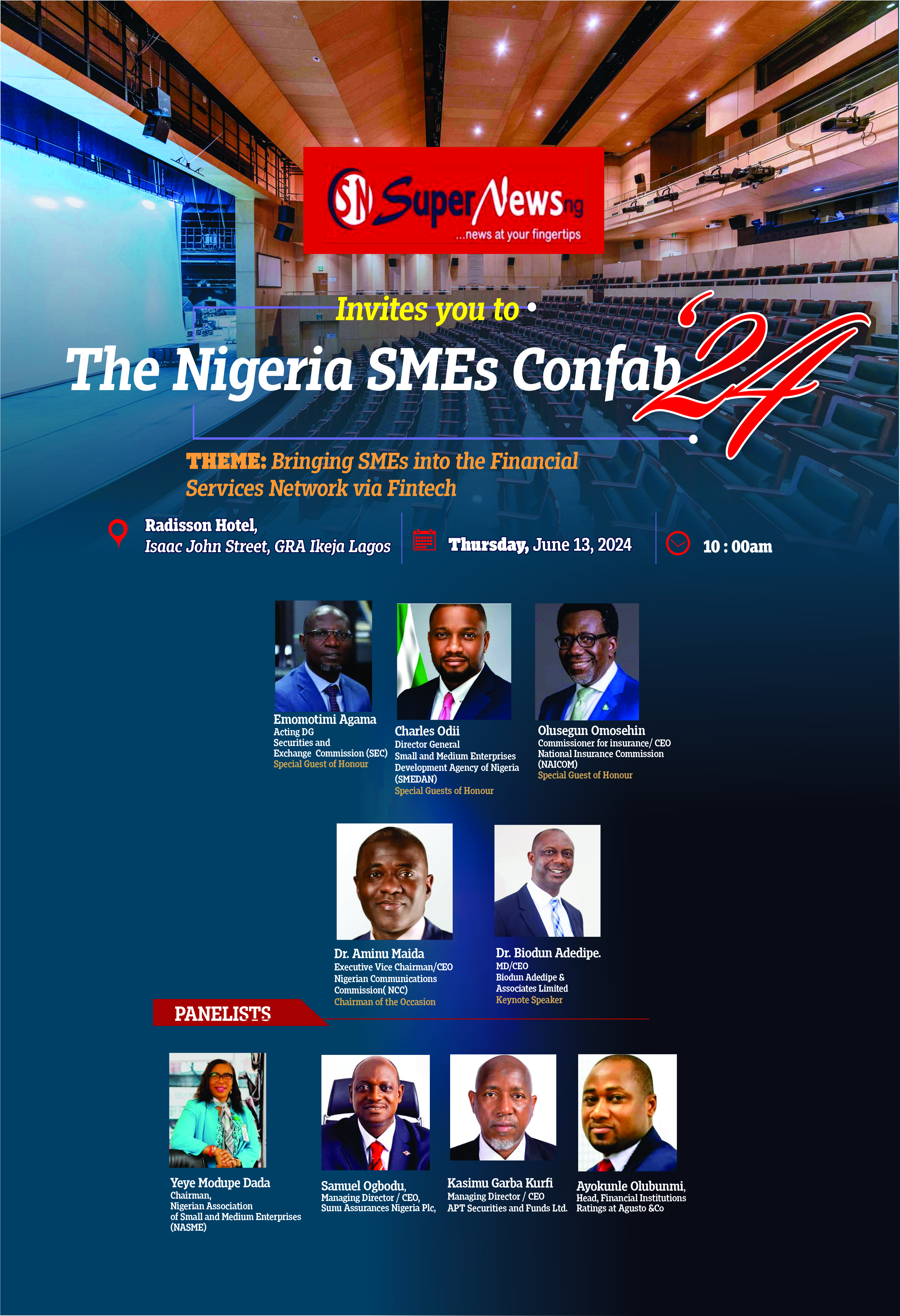
NCC, SMEDAN, NAICOM, SEC, Others Set for SUPERNEWS SMEs Conf June 13
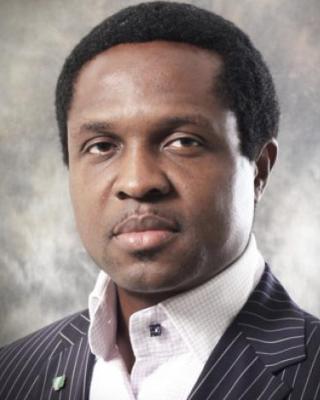
Sahara’s Tonye Cole resigns from GPHCDA
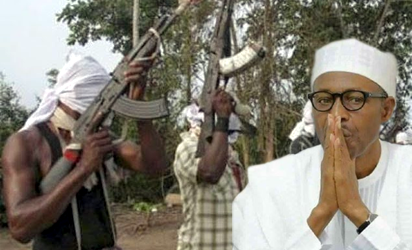
Niger Delta Avengers: President Buhari Reads riot Act …considers the carrot and stick option

Oando opens ultra-modern petrol station in Lagos