
Energy
NLC, TUC, CSOs Reject Electricity Tariff Hike

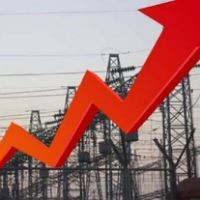
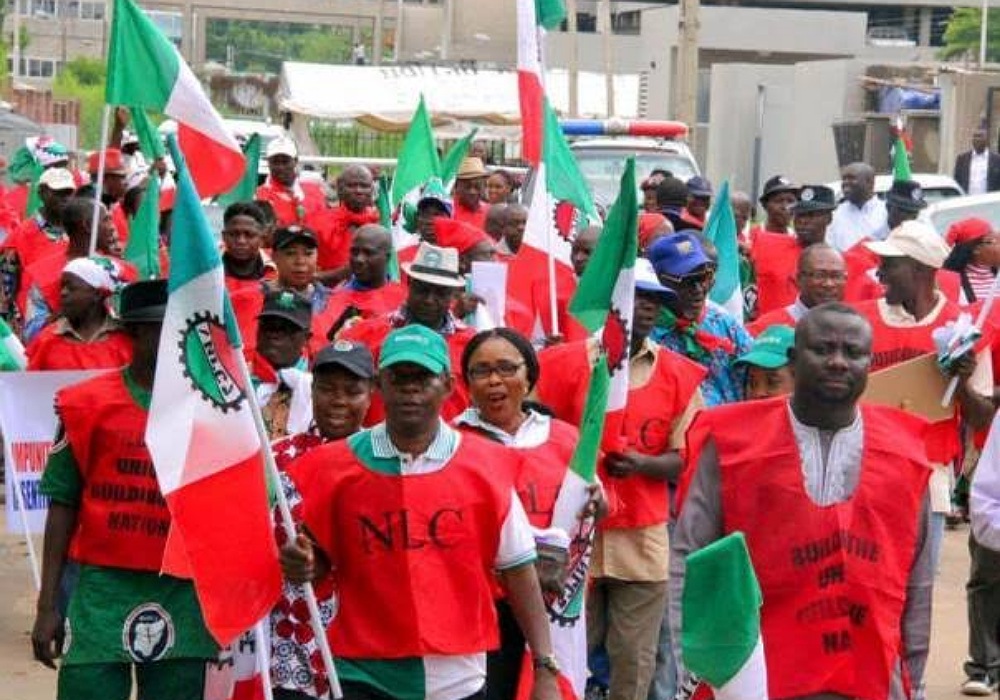
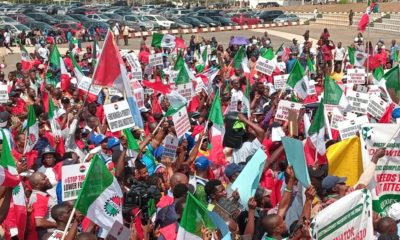
The Nigeria Labour Congress (NLC), Trade Union Congress (TUC), and various civil society organizations (CSOs) have jointly expressed their opposition to the proposed 40 percent increase in electricity tariff which is cheduled to come into effect on July 1.
The Nigeria Labour Congress (NLC) strongly criticized the proposed tariff increase, describing it as insensitive and callous.
Similarly, the Trade Union Congress (TUC) expressed their discontent, stating that the increase displays a complete lack of empathy towards the hardships faced by the general population.
The civil society organizations (CSOs) also voiced their opposition to the tariff hike, labeling it as unfair and lacking justification, urging the government to immediately abandon the proposal.
It is worth noting that the Nigerian Electricity Regulatory Commission (NERC) had previously justified the tariff increase by stating that the current Service Based Tariff (SBT) was based on an exchange rate of N441/$ and an inflation rate of 16.97 percent.
According to the Nigerian Electricity Regulatory Commission (NERC), the increase in electricity tariff is deemed necessary due to the current exchange rate of the naira to the dollar, which now stands above N700, and an inflation rate of 22.45 percent.
The commission argues that the tariff hike is crucial to alleviate the operational costs faced by electricity providers.
Leading the opposition against the tariff hike, the Nigeria Labour Congress (NLC) expressed concerns about the potential cumulative impact of various cost increases, such as the anticipated rise in school fees in tertiary institutions and already high fees in privately-owned educational institutions.
The NLC emphasized that with additional costs and tariffs on the horizon, life in Nigeria could become exceedingly challenging.
In a statement issued by NLC President Comrade Joe Ajaero, the union urged the government to prioritize the collective well-being of the masses and abandon the proposed tariff hike.
The statement partly reads “The plan to increase electricity tariff by 40% by July 1 is both insensitive and callous and reflects an organised indifference to the well-being of consumers, especially, the poor masses.
“The massive increase is explained away as a response to the over 100 per cent increase in the pump price of premium motor spirit, otherwise known as petrol.
“Details reveal a movement in inflation from 16.9% to 22.41 (threatening to needle 30), and a shift in exchange rate from N441 to N750. We believe not even these figures are a justification for this reckless proposed tariff increase.
“The issue of capacity to pay and quality of service delivery are not only germane but superior to any rationalisation by market logic.”
The NLC contended that there had been increases without notice in violation of statutes, saying “the service providers, in spite of sundry support, have not been able to meet the threshold of 5,000 megawatts.
“Coupled with this, there have been surreptitious increases without notice in violation of the statutes.” It added.





The Niger Delta Youths are primed to assume national responsibilities in critical areas of the economy by protecting vital oil and gas assets in the region.
The United Niger Delta Congress (UNDC) gave the assurance at a media briefing in Abuja, over the weekend, adding that the youths of Niger Delta were ready to work with the federal government in this regard.
The group maintained that youths in the region have shown that such responsibilities, including the security of pipelines, can be entrusted to them.
Speaking at the news conference, Niger Delta Youth activist, Mallam Julius Obi, said the Niger Delta is safer while the nation’s crude is flowing based on the fact that youths in the region are doing the job.
He said that being a youth should not be a disqualification from strategic national assignments but when matched with preparation and character, a national asset.
“We are calling on the federal government to note that Nigeria is full of young men and women who are prepared, disciplined and ready to carry out national responsibilities.
“We urge the federal government to keep opening the doors of strategic national service to young Nigerians who have earned trust the only way it can be earned, by delivery,” Obi said.
READ ALSO: JUST IN: Ex-Delta Governor Emmanuel Uduaghan Is Dead
The group commended President Bola Tinubu for sustaining the security reforms in the oil and gas industry and the the National Security Adviser (NSA), Mallam Nuhu Ribadu, for coordinating the protection of the nation’s pipelines, and the management of NNPCL for providing the enabling environment.

Joseph Ambakederimo, convener of the South-South Reawakening Group, has questioned the accountability of Nigeria’s crude oil forward sales, demanding clarification on the volume of crude lifted, outstanding balances and the use of upfront payments.
Speaking during an interview on Arise TV on Sunday, Ambakederimo expressed concern over the monitoring of crude oil transactions, questioning who was responsible for tracking deliveries and providing feedback on the arrangements.
“We don’t even know who is monitoring and giving us the feedback of the barrels of crude that have been lifted on forward sales basis,” he said.
SEE MORE: South-South Group Opposes Coastal Road Alignment With East-West Road
He challenged the Nigerian National Petroleum Company Limited (NNPC) to provide details of the transactions, including the quantity of crude already lifted, the outstanding balance and whether the agreed deliveries had been completed.
“Today, can we get this from NNPC? How much have they lifted? What is the balance remaining? Have they been completed?” he asked.
Ambakederimo also questioned how the money collected upfront under the arrangements had been spent, demanding an explanation of its use.
“That money that was collected upfront, what was the use of the money? Can you justify it?” he asked.
He argued that Nigeria should make better use of its natural resources to accelerate infrastructure development and improve living conditions.
Citing land reclamation projects in the United Arab Emirates, Ambakederimo said Nigeria could explore similar opportunities to create additional land for residential and other developments.
He recalled seeing a signpost while travelling from Dubai to Abu Dhabi describing a project to reclaim land from the sea, using the example to highlight the development possibilities he believes Nigeria could explore.
The South-South Reawakening Group convener also argued that Nigeria could reclaim land in suitable areas, provided environmental concerns were properly managed.
He called for the country to translate its natural resource wealth into infrastructure and improved living conditions, stressing the need for greater accountability in crude oil transactions.
Oil output from the United Arab Emirates (UAE) rose to record levels in September, underscoring its resilience even amidst the Middle East crises and liberation from OPEC+ limits.
The International Energy Agency (IEA) issued the data in its monthly report, adding that Abu Dhabi raised total oil production, including condensates, by 400,000 bpd to 5.3 MMbpd.
According to the IEA, the UAE bolstered crude output to more than 4.4 MMbpd, nearing its maximum capacity, which surpasses the previous highs for total oil in August, and crude oil in June.
READ ALSO: Africa’s Energy Security Conversations Pull Industry Executives Together
The UAE has been one of the most successful among regional producers in restoring flows through the Strait of Hormuz, by drawing on a fleet of tankers to discreetly shuttle cargoes through the chokepoint and then transfer them onto other vessels. In addition, the country’s decision to leave the Organization of the Petroleum Exporting Countries (OPEC) as of May has freed it from the group’s output caps, a source of frustration for years.
Its gains contributed to a wider recovery in flows from Gulf producers, which reached more than 75% of pre-war levels in September, led by Saudi Arabia, according to the Paris-based IEA.
Still, it’s unclear how far the regional rebound has withstood a new wave of Iranian attacks on tankers transiting Hormuz, and escalating hostilities carried out by the Houthi rebel faction in Yemen.
The UAE depleted its observable above-ground inventories at a record pace of more than 270,000 bpd in September, drawing them to an all-time low, according to the IEA.





Petrol Price Hike Looms as Oil Hits $110/barrel

NIPCO Gas Licences, NNPC Ltd Management Face Reps Probe
UNDC Assures on Readiness to Protect Oil, Gas Pipelines

JUST IN: Ex-Delta Governor Emmanuel Uduaghan Is Dead

Delta Begins ₦5bn Empowerment Scheme for 100,000 Beneficiaries
Alausa Hails Dangote Foundation’s Plan to Give Four Million Students IPO Shares

Trump’s Family Unveils New Cryptocurrency Platform

Senate Denies Receiving Petitions Against Tinubu’s Ambassadorial Nominees

Dangote Cement Lights Up Benue Host Communities With CSR Initiatives

Reps Recommend 3-year Jail Term For Aviation minister

Tems Sets New Record On Billboard Hot 100 Chart

325699 656309This web site can be a walk-through its the data you wanted concerning this and didnt know who to ask. Glimpse here, and you will undoubtedly discover it. 717089
353068 926976Jane wanted to know though your girl could certain, the cost I basically informed her she had to hang about until the young woman seemed to be to old enough. But the truth is, in which does not get your girlfriend to counteract making use of picking out her quite own incorrect body art terribly your lady are typically like me. Citty style 676748
650097 956229This weblog actually is good. How was it created ? 496776
249098 130580I saw a great deal of internet site but I believe this one contains something particular in it in it 971623