
International News
Russia Attack Ukraine’s Grain After Breaking Sea Deal

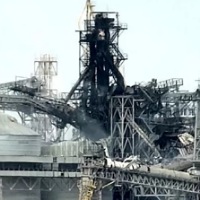
According to officials, Russian missile attacks on Ukraine’s Black Sea shore have destroyed 60,000 tonnes of grain and harmed storage facilities.
According to Mykola Solskyi, minister of agriculture, a “considerable amount” of export infrastructure was inoperative.
An international grain agreement that had been in place since last summer and ensured the safe passage of exports across the Black Sea has been terminated by Russia.
The Kremlin said that its export-related requests had not been met.
Within hours of its withdrawal from the grain deal on Monday, Russia had struck the southern port cities of Odesa and Mykolaiv in the early hours of Tuesday.
It followed that up with more strikes overnight into Wednesday, targeting grain terminals and port infrastructure in Odesa and further down the Black Sea coast in Chornomorsk, two of the three ports that were included in the export deal.
Odesa military spokesman Serhiy Bratchuk called it a “truly massive attack”. The agriculture minister said the 60,000 tonnes destroyed in the strike were “supposed to be loaded on a large-tonnage ship and sent through the grain corridor 60 days ago”.
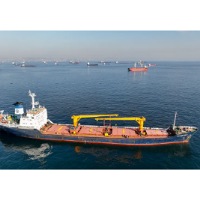
Russia’s defence ministry later declared that from midnight on Wednesday night (21:00 GMT), any ships heading to Ukrainian ports would be viewed as potential carriers of military cargo and party to the conflict. Some north-western and south-eastern areas of the Black Sea would be temporarily dangerous for shipping, it added.
At least 12 civilians, including a nine-year-old boy, were wounded during the attacks, which also caused damage to blocks of flats, military officials said.
Ukrainian President Volodymyr Zelensky said each missile strike was a blow not just to Ukraine, but to “everyone in the world striving for a normal and safe life”.
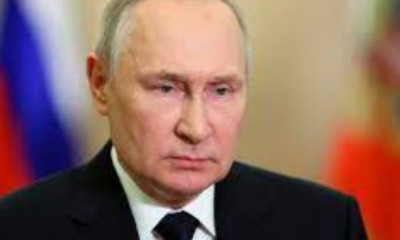
France and Germany also condemned the attack. Germany Foreign Minister Annalena Baerbock said that by covering Odesa with a hail of bombs, Russian President Vladimir Putin was robbing the world of any hope of Ukrainian grain and “hitting the world’s poorest”.
Private traders suffered the most from the missile strikes, Ukrainian officials said
The infrastructure ministry published a series of photos showing damage to silos and other grain facilities. Officials said there had been damage to wharves and reservoirs, but it was international and Ukrainian traders that had suffered the most.
Russian war commentators said the damage proved that Kyiv was unable to shoot down the majority of Russian missiles and drones.
Officials said the co-ordinated attack involved Kalibr cruise missiles, Onyx supersonic and Kh-22 anti-ship missiles as well as kamikaze drones, fired from the Black Sea, Crimea and southern Russia. Although 37 Russian missiles and drones were shot down, a number did penetrate Ukrainian defences, they said.
“I saw a red flash in the window and reacted immediately,” one resident told the Reuters news agency.
“I went downstairs, it was noisy and filled with smoke outside, people were in panic, some were crying, glass shards were scattered all over. It was impossible to remain in the area.”
Russia had called its initial attack on Odesa a “mass revenge strike” for an attack on the Russian-built bridge over the Kerch strait linking occupied Crimea to Russia. Seaborne drones were blamed for Monday’s bridge strike that knocked out a section of bridge and killed a Russian couple.
Explosions were reported for several hours from the ammunition depot in Crimea
Crimea saw further disruption on Wednesday. Some 2,200 residents were evacuated from four villages near a military training range after a fire triggered hours of explosions at a nearby ammunition depot.
Russian-installed officials also shut a 12-km (7.5-mile) section of the Tavrida motorway that links the cities of Simferopol and Sevastopol in southern Crimea to the bridge over the Kerch strait. Construction of the road by Russia’s occupation authorities began in 2017.
The region on Wednesday heard several explosions starting about 4:30 (01:30 GMT).
The reason of the fire at Staryi Krim was not given by officials. On social media, however, there were unsubstantiated reports of three Ukrainian strikes.
According to the Kremlin, Mr. Putin was informed of the situation.
Sergei Aksyonov, the Crimean leader appointed by Russia, said no one was harmed but that the reason of the incident at the military range was under investigation.







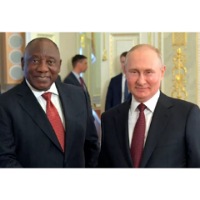


Federal agents raided the Washington, D.C., home of Democratic Congresswoman Ilhan Omar early Monday morning as part of an ongoing federal criminal investigation, the United States Department of Justice (DOJ) has confirmed.
Homeland Security Investigations agents arrived at the Minnesota congresswoman’s residence at about 6:00 a.m. Eastern Time, according to a report by Fox News.
SEE MORE: Trump Sparks Outrage With Shock Proposal to Rename New Mexico
The report said both the Department of Homeland Security (DHS) and the DOJ are involved in the investigation.
A DOJ spokesperson confirmed the operation, stating: “Today in the Washington, D.C. area, Homeland Security Investigations executed a judicially authorized search warrant secured by the Department of Justice.”
The spokesperson added: “This enforcement action is part of an ongoing federal criminal investigation.”
Details later……….
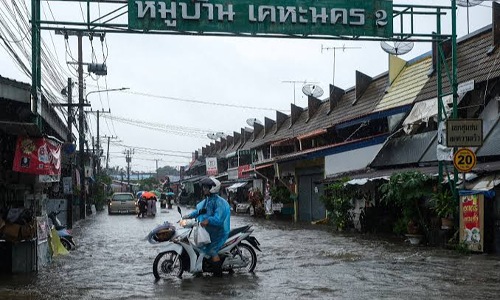
Heavy rains have triggered severe flooding across parts of Bangkok, Thailand, forcing nearly 4,900 residents to evacuate to shelters as floodwaters swept through roads and residential areas.
The flooding has disrupted movement across parts of the Thai capital, with motorists and pedestrians forced to navigate submerged roads and seek alternative routes.
SEE ALSO: NAFDAC Warns Nigerians As Fake Cowbell Milk Floods Market
According to the Bangkok Metropolitan Administration, about 52,000 households have been affected by the flooding, prompting authorities to declare a flood disaster and intensify emergency response efforts.
Emergency teams have been deployed to assist affected communities and move residents from vulnerable areas to safer locations as water levels rise.
Bangkok is accustomed to seasonal heavy rainfall, but intense downpours can overwhelm drainage systems, particularly in low-lying areas, resulting in widespread flooding and disruption.
Authorities are continuing to monitor affected locations while coordinating evacuations and other emergency measures.
For thousands of residents, the immediate priority remains securing safe shelter and protecting homes and livelihoods as authorities work to manage the situation and restore normal activities once the floodwaters recede.
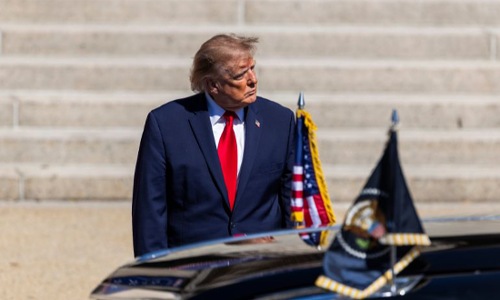
US President Donald Trump has explained his decision to reject Iran’s latest proposal to reopen the Strait of Hormuz, saying Tehran was seeking an agreement because it was losing revenue.
Speaking to reporters at the White House, Trump said Iran wanted to immediately reopen the strategically important waterway but argued that the proposal was not acceptable to his administration.
“They want to make a deal, and I think that’s fine. I like making a deal, too, but that deal would not be acceptable,” Trump said.
SEE ALSO: How the Strait of Hormuz Attack Could Trigger a Fresh Global Oil Shock
According to the US president, Iran’s push to reopen the strait was driven by the economic pressure it was facing.
“What they want to do is immediately open the Hormuz Strait. Do you know why? Because they are dying,” Trump said.
“You know why they’re dying? Because they have no money coming in, because they get their money from the Hormuz Strait.”
Trump also claimed that the US had established an unprecedented naval blockade against Iran, describing it as “a wall of steel.”
“So they outsmarted themselves. We put up the greatest blockade ever in military history. It’s a wall of steel,” he said.
“And guess what? They don’t have any money now because they wanted to close the strait.”
The Strait of Hormuz is a major global energy shipping route, and disruption to traffic through the waterway has significant implications for international oil markets and countries that depend on energy imports.
Trump’s remarks came amid continued tensions between Washington and Tehran over the reopening of the strategic waterway and negotiations involving Iran.






Ebola: IGP Warns Nigerians Against Contact With Suspected Patients’ Body Fluids
‘Nigeria Cannot Do What China Did’ – Oxford Economist Warns

Peter Obi Demands Release of Rilwan Olawale, Accuses Tinubu of Undermining Democracy
Fears of Fresh US Strikes on Iran Fuels Crude Price Surge

Navy Uncovers 132,000 Litres of Stolen Crude Oil in Bonny

Delta Police Arrest School Bus Driver Over Alleged Kidnap, Rape of 14-Year-Old Student

Trump’s Family Unveils New Cryptocurrency Platform

Senate Denies Receiving Petitions Against Tinubu’s Ambassadorial Nominees

Dangote Cement Lights Up Benue Host Communities With CSR Initiatives

Reps Recommend 3-year Jail Term For Aviation minister

Tems Sets New Record On Billboard Hot 100 Chart
