
International News
South African Presidency Says Putin Will Not Attend The Brics Conference

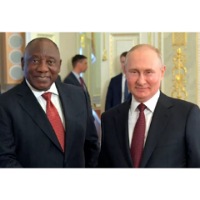
South African presidency has confirmed that the president of Russia won’t be present at a summit in South Africa next month.
The declaration of war on Russia follows the leader of South Africa’s statement that any attempt to detain Vladimir Putin would constitute a declaration of war.
A warrant for Mr. Putin’s arrest had been issued by the International Criminal Court (ICC) if he had left Russian territory.
South Africa, a signatory to the ICC, is anticipated to assist in the capture of Mr. Putin.
Russia’s Foreign Minister Sergei Lavrov will represent the country at the two-day summit instead.
However, Mr Putin will take part in the Brics conference – an acronym for Brazil, Russia, India, China and South Africa – by video link, Kremlin spokesperson Dmitry Peskov said, according to Russian media.
The Brics grouping is seen by some as an alternative to the G7 group of advanced economies.
In a statement, South Africa’s presidency described the agreement for Mr Putin not to attend as “mutual” and said it had come about following a “number of consultations” on the summit.
Supporters of Russia have criticised the decision, saying South Africa should have insisted and used its sovereignty to protect and defend its friend.
South Africa’s invitation to Mr Putin, issued before the ICC accused him of war crimes in Ukraine, has caused controversy both nationally and internationally.
It came to be seen as a move by the government to stray from the middle ground it has sought to tread, alongside other African nations, in the conflict between Russia and Ukraine.
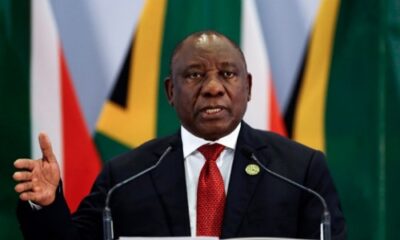
But President Cyril Ramaphosa’s government became frantic as pressure to arrest President Putin mounted.
The biggest opposition party, the Democratic Alliance, went to court to try to force the authorities to arrest Mr Putin, should he set foot in the country. Global human rights group Amnesty International was also part of the challenge.
Court documents reveal that Mr Ramaphosa was firmly against any such move, stating that national security was at stake.
“Russia has made it clear that arresting its sitting president would be a declaration of war. It would be inconsistent with our constitution to risk engaging in war with Russia,” he said in an affidavit.
Mr Peskov denied Moscow had told South Africa that arresting its president would mean an act of war, but said it was “clear to everyone what [that kind of] infringement against the head of the Russian state would mean”.
Russia has consistently described the ICC arrest warrant as outrageous and legally void, because the country is not a member of the organisation.
With some nations refusing to support UN resolutions denouncing Russia for its activities in Ukraine, the African continent is still divided on the conflict between Russia and Ukraine.
The causes of this differ from nation to nation, but according to analysts, one explanation is the economic connections several have with Moscow, notably South Africa.
Viktor Vekselberg, a sanctioned Russian oligarch, is rumored to be one of the largest funders to South Africa’s ruling African National Congress (ANC).






Federal agents raided the Washington, D.C., home of Democratic Congresswoman Ilhan Omar early Monday morning as part of an ongoing federal criminal investigation, the United States Department of Justice (DOJ) has confirmed.
Homeland Security Investigations agents arrived at the Minnesota congresswoman’s residence at about 6:00 a.m. Eastern Time, according to a report by Fox News.
SEE MORE: Trump Sparks Outrage With Shock Proposal to Rename New Mexico
The report said both the Department of Homeland Security (DHS) and the DOJ are involved in the investigation.
A DOJ spokesperson confirmed the operation, stating: “Today in the Washington, D.C. area, Homeland Security Investigations executed a judicially authorized search warrant secured by the Department of Justice.”
The spokesperson added: “This enforcement action is part of an ongoing federal criminal investigation.”
Details later……….
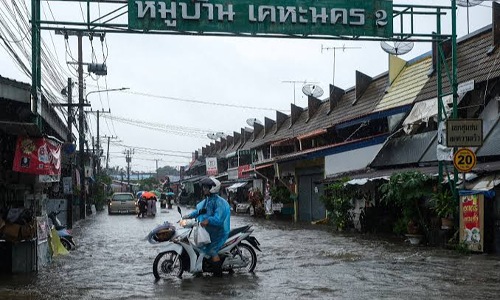
Heavy rains have triggered severe flooding across parts of Bangkok, Thailand, forcing nearly 4,900 residents to evacuate to shelters as floodwaters swept through roads and residential areas.
The flooding has disrupted movement across parts of the Thai capital, with motorists and pedestrians forced to navigate submerged roads and seek alternative routes.
SEE ALSO: NAFDAC Warns Nigerians As Fake Cowbell Milk Floods Market
According to the Bangkok Metropolitan Administration, about 52,000 households have been affected by the flooding, prompting authorities to declare a flood disaster and intensify emergency response efforts.
Emergency teams have been deployed to assist affected communities and move residents from vulnerable areas to safer locations as water levels rise.
Bangkok is accustomed to seasonal heavy rainfall, but intense downpours can overwhelm drainage systems, particularly in low-lying areas, resulting in widespread flooding and disruption.
Authorities are continuing to monitor affected locations while coordinating evacuations and other emergency measures.
For thousands of residents, the immediate priority remains securing safe shelter and protecting homes and livelihoods as authorities work to manage the situation and restore normal activities once the floodwaters recede.
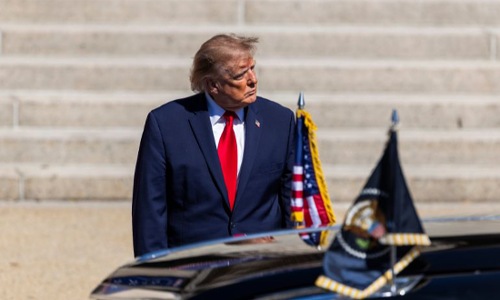
US President Donald Trump has explained his decision to reject Iran’s latest proposal to reopen the Strait of Hormuz, saying Tehran was seeking an agreement because it was losing revenue.
Speaking to reporters at the White House, Trump said Iran wanted to immediately reopen the strategically important waterway but argued that the proposal was not acceptable to his administration.
“They want to make a deal, and I think that’s fine. I like making a deal, too, but that deal would not be acceptable,” Trump said.
SEE ALSO: How the Strait of Hormuz Attack Could Trigger a Fresh Global Oil Shock
According to the US president, Iran’s push to reopen the strait was driven by the economic pressure it was facing.
“What they want to do is immediately open the Hormuz Strait. Do you know why? Because they are dying,” Trump said.
“You know why they’re dying? Because they have no money coming in, because they get their money from the Hormuz Strait.”
Trump also claimed that the US had established an unprecedented naval blockade against Iran, describing it as “a wall of steel.”
“So they outsmarted themselves. We put up the greatest blockade ever in military history. It’s a wall of steel,” he said.
“And guess what? They don’t have any money now because they wanted to close the strait.”
The Strait of Hormuz is a major global energy shipping route, and disruption to traffic through the waterway has significant implications for international oil markets and countries that depend on energy imports.
Trump’s remarks came amid continued tensions between Washington and Tehran over the reopening of the strategic waterway and negotiations involving Iran.






Sahara Champions Global Shipping Collaboration for $20m Mercy Ships Healthcare Impact

30 Nigerians Bag Postgraduate Scholarship from NNPC Ltd, Eni

2027: ‘Algorithms Will Not Decide Election Results’, INEC Chairman Declares

Navy Recovers 98,000 Litres of Suspected Stolen Crude in Rivers

DPRP’s Appeal Against Fuel Import Licence Ruling Earns Stakeholder Backing

State Govs, Wike Endorse One-Party State, Join APC Campaign Council

Trump’s Family Unveils New Cryptocurrency Platform

Senate Denies Receiving Petitions Against Tinubu’s Ambassadorial Nominees

Dangote Cement Lights Up Benue Host Communities With CSR Initiatives

Reps Recommend 3-year Jail Term For Aviation minister

Tems Sets New Record On Billboard Hot 100 Chart
