
Opinion/Feature
Sowore, Egbetokun: Differentiating Between the Law, Emotions, and Cheap Populism

By Olalekan Johnson
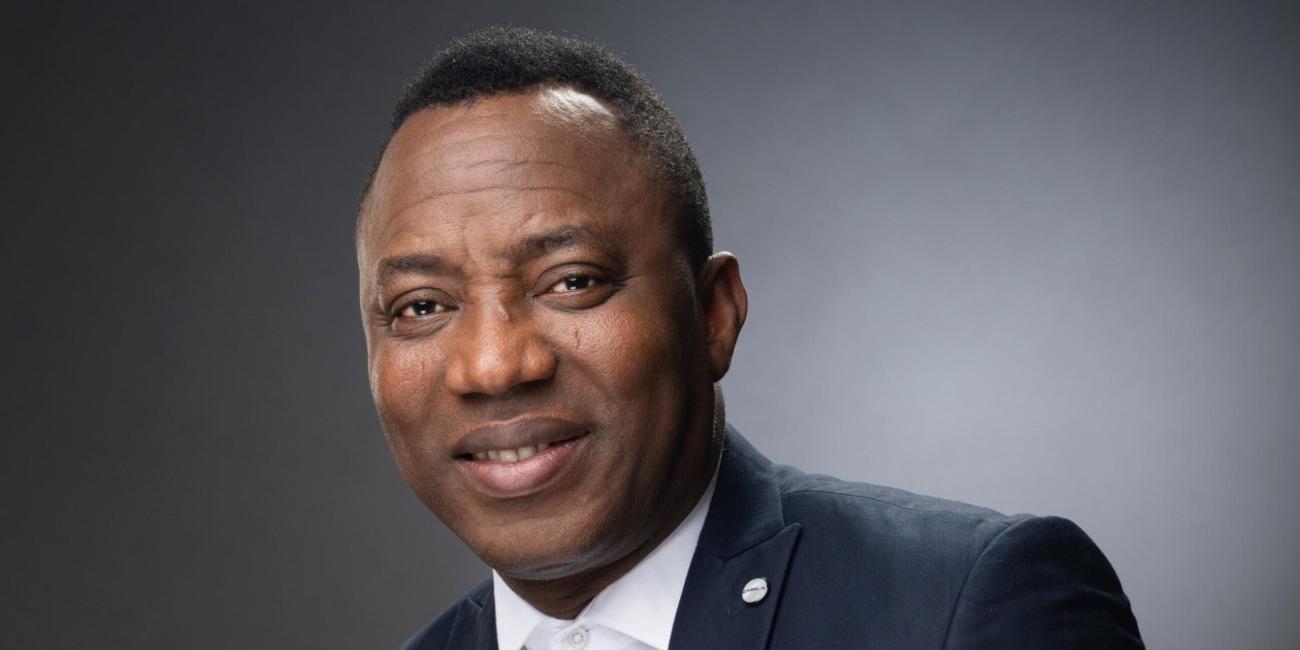
In recent times, Omoyele Sowore, the publisher of Sahara Reporters and a former presidential candidate of the African Action Congress (AAC), has been embroiled in a series of unprovoked attacks against the Inspector General of Police (IGP), Kayode Egbetokun.
These attacks have culminated in Sowore’s recent arraignment in court, rightfully raising concerns about his conduct and the potential consequences for both the individual and the larger society.
Sowore has long built his career on harassing, defaming, and undermining the Nigeria Police Force, particularly its leadership. This is not a mere coincidence or an isolated incident, but a pattern of behavior that dates back years.
One of the more recent episodes that illustrate this pattern was when Sowore posted a self-indicting video of himself resisting and obstructing police officers who were merely doing their job in Lagos. This act, alongside others like it, reflects Sowore’s repeated disobedience to lawful orders, cyberstalking, incitement against the police, and, specifically, attacks against the office of the Inspector General of Police.
ALSO READ: BREAKING: NPF Tackles Sowore On Egbetokun’s Tenure
What many fail to realize is that Sowore’s attacks are not just random provocations. They are part of a calculated effort to destabilize the country. His relentless criticism of IGP Egbetokun, who has consistently demonstrated professionalism and adherence to the law, speaks to a larger agenda aimed at creating chaos and eroding the authority of the police force. This is no longer just a case of ideological disagreement, it is a deliberate effort to sow discord and division.
Sowore has long thrived on controversy and has found a niche for himself in the realm of baseless activism, cheap populism, and political blackmail. His actions have always been driven by opportunism, with little regard for the long-term stability of the country. Under the guise of advocating for democracy, Sowore has become synonymous with inciting violence, misleading the public, and promoting himself as a hero of the masses, despite his true motives being rooted in self-interest and a thirst for attention.
While Sowore may have managed to amass a following of blind supporters, it is critical for patriotic citizens to recognize the dangers in his rhetoric. His consistent pattern of false accusations, cyberbullying, and incitement is not just a threat to the Nigeria Police Force, but to the very fabric of society itself. His actions are a direct affront to the rule of law, and should be condemned by anyone who values peace, democracy, and justice.
It is commendable, then, that IGP Egbetokun, despite facing incessant attacks, has opted to pursue legal action against Sowore rather than resorting to violence or intimidation. This response is a testament to the maturity, professionalism, and respect for the rule of law that Egbetokun has consistently displayed in his tenure as the head of the Nigeria Police Force. Under his leadership, the police have shown a firm commitment to upholding justice and ensuring that no one, regardless of their status or influence, is above the law.
Sowore’s behavior illustrates a deep misunderstanding of the purpose of activism. Activism, at its core, should be based on facts, sincerity, and a genuine desire to improve the conditions of the common man. Unfortunately, Sowore has distorted the concept of activism into a tool for personal vendettas, cheap sensationalism, and blackmail journalism. By portraying himself as a champion of the people, he has deceived his followers into believing that he is fighting for justice, when in reality, his actions are self-serving and harmful to the stability of the nation.
Source: Verified handle of the NPF on X









NEWS
Edo Govt To Raise N160bn For Climate Project While Kidnapping Ravages The State… Is That What The People Need?


As kidnapping and violent crime continue to escalate across Edo State, the government has announced plans to raise N160 billion to tackle ecological challenges, raising serious questions about priorities in the state.
The Executive Chairman of the Edo State Ecological Fund and Management Commission, Blessing Agbomhere, revealed during a press briefing on Wednesday that the funds would be raised through the Ecological/Climate Trust.
According to him, the Okpebholo Green Revolution for Edo is scheduled to launch next week.
SEE ALSO: Edo Cracks Down on Drug Cartels, Arrests Breastfeeding Mother, Six Others
Agbomhere stated that Edo’s three-year budget would not be enough to remediate gully erosion sites across the state.
The over 60 gully erosion sites identified would be addressed in phases, with some remediation projects costing between N5 billion and N20 billion each.
The government also plans to plant one million trees in four years.
He further raised concerns over illegal sand mining, particularly in Edo South Senatorial District, revealing that many operators have no plans to restore the land after their operations, which continues to exacerbate erosion problems.
“A lot of companies are operating in Edo State. After their operation, they will leave the state without remediating the environment. We are calling on them to tell us their plans for remediation when they leave,” Agbomhere said.
While ecological initiatives are undeniably important, the timing and focus of the government are being questioned.
Kidnapping and insecurity are surging across the state, yet attention and resources are being directed toward environmental projects instead of immediate security measures.
At a time when fear dominates daily life for Edo citizens, raising millions for ecological projects while kidnappers roam freely sends a troubling message: are citizens’ lives being sidelined in pursuit of long-term environmental goals?
Biz Tellers raises the concern: shouldn’t security take precedence over climate projects when residents’ lives are under threat? The government insists that addressing ecological challenges is crucial for long-term development, but for many, this does not answer the urgent question of public safety.
As Edo faces both ecological and security challenges, the debate over government priorities intensifies.
The pressing question remains: is this really what the people need right now?

By Fred Itua
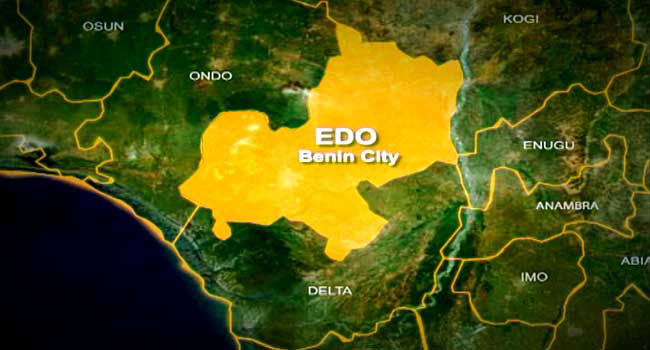
Godwin Obaseki’s latest outburst is not a surprise. It is simply the continuation of a pattern that Edo people came to recognize too late. His years in office were marked by intolerance, vindictiveness and a violent streak that constantly simmered beneath the surface. Those who worked closely with him still carry the scars of his temperament. His former deputy, Philip Shaibu, is the most glaring example.
Whatever their disagreement may have been, no rational leader plots the humiliation and removal of a deputy he once described as a brother. Yet Obaseki manipulated every institutional lever available to him to settle a personal score, using the House of Assembly as a pawn to crush a man whose only crime was falling out of favour with the lord of Osadebe Avenue.
In October 2022, Obaseki’s hateful tendencies were expended on those he promised to serve. He supervised the demolition of roughly one hundred homes across Oke-Oroma, Irhirhi-Obazagbon and Ogheghe communities. Residents insisted they held valid documents, including Certificates of Occupancy, yet he pushed ahead in defiance of a subsisting court order that had restrained any action pending the determination of their suit. The result was devastating. Thousands were displaced and property worth billions of naira were reduced to rubble. Such a vindictive man!
Edo people saw the full extent of this violence during the 2024 governorship election when Obaseki stood before cameras and threatened that Edo would burn if his preferred candidate lost. Those words were not the empty rant of a frustrated politician. They came from a man with a history of weaponizing state power, a man whose administration armed loyalists and created networks of political enforcers who blended easily into the criminal elements that then turned their guns on innocent citizens.
ALSO READ: Edo Cracks Down on Drug Cartels, Arrests Breastfeeding Mother, Six Others
It is no coincidence that the early days of the current administration were choked with spikes in kidnapping and armed robbery. These were not random crimes. They were the desperate convulsions of an ecosystem built, funded and empowered by Obaseki himself.
Governor Monday Okpebholo has had to stabilize a state that was deliberately left volatile. Through calm leadership and quiet strength, he has managed to rein in the chaos and restore public confidence. But Obaseki, instead of retreating into reflection, has doubled down.
His recent video in Birmingham reveals a man who cannot bear the reality that Edo people have moved on. He accused Okpebholo of being “stupid”, boasted that he is mobilizing the international community against him and President Bola Ahmed Tinubu, and threatened that the governor “will see”.
These are not harmless statements from an angry former office holder. They are calculated threats from someone who has never hidden his desire to destabilize Edo State whenever power slips from his grip.
He claims that a governor from Irrua cannot dictate to people in Benin. That remark alone exposes the dangerous tribal undertone of his politics. For eight years, he exploited ethnic sentiment to divide communities and isolate opponents. Now, he is attempting to ignite the same divisive flame against a governor who has only focused on governance, inclusiveness and development.
Obaseki’s language in that video is not only reckless, it is incendiary. It hints at an attempt to stir resentment, inflame divisions and rally hostility toward a government that is working hard to rebuild the damage he left behind.
His recent globe-trotting under the guise of “meet and greet” is now clearer for what it is: an effort to secure foreign sympathy, funding and legitimacy for a domestic political battle he has already lost. When a former governor openly brags about mobilizing the diaspora and the global community against the current leadership of his own state, it raises valid questions about intent.
What exactly does he need international pressure for? Why is he desperately trying to create a narrative of crisis where none exists? And who are the people he hopes to recruit from abroad? Edo people have not forgotten that this same man once threatened to burn down Nigeria during an election.
They have not forgotten that his private “security structure” terrorized communities under the cloak of political loyalty. They understand the implications of a former governor seeking global support while trading in fear and hostility.
The uncomfortable truth is that Obaseki’s comments suggest a willingness to collaborate with external actors to undermine the peace of Edo State. A man who once equipped foot soldiers and political enforcers is now boasting about global mobilization.
The link is not far-fetched. His post-tenure travel pattern, sudden desperation and inflammatory rhetoric open the possibility that he is seeking funds or tacit support to revive the political machinery that once served him; a machinery that slipped into criminality after he left office. Edo cannot afford to overlook this. A man who once used threats to bend institutions is now using threats to intimidate a sitting governor.
And yet, despite Obaseki’s attempt to twist reality, Monday Okpebholo has not threatened him. He has not weaponized ethnicity. He has not responded with abuse. All he has done is to remind the public that the records of Obaseki’s misrule are there for anyone to examine.
The refusal to swear in duly-elected lawmakers. The manipulation of the Assembly to serve private interests. The unprecedented decision to withhold the swearing-in of judges recommended by the National Judicial Council. The demolition of the central hospital without providing a viable alternative for ordinary people. These actions were not just bad governance; they were the height of arrogance and indifference to the people he claimed to represent.
It is ironic that Obaseki now accuses others of threatening him when his own record is littered with acts that undermined the wellbeing of Edo people. His fear is not Governor Okpebholo. His fear is accountability. His fear is that the fog of propaganda can no longer cover the damage he inflicted on institutions, communities and public trust. And so he runs abroad to find new allies, hoping that distance will distort the truth.
His attacks on Governor Okpebholo’s loyalty to President Bola Tinubu are even more revealing. By insisting that Okpebholo should not deliver votes to the President, Obaseki exposes the bitterness that comes from losing political relevance. But governance is not about ego. Performance is what earns support. And Okpebholo’s quiet but consistent reforms across infrastructure, security, social welfare and public administration already place him miles ahead of the eight years of stagnation that Obaseki left behind. Edo people are not blind. They know who is working. They know who listens. They know who respects them. No amount of foreign posturing will change that.
Obaseki’s latest rant is a dangerous escalation from a man struggling to remain politically relevant. It is an open threat to peace and a signal that he is willing to drag Edo into conflict just to nurse his bruised pride. Edo people and the federal government must treat this with the seriousness it deserves. A former governor openly encouraging dissent abroad while tribalizing politics at home is a security concern. His record, his words and his behavior suggest that he is not acting alone.
The time has come for security agencies to take Obaseki’s latest comments and conduct seriously. His public threats, global mobilization and divisive rhetoric raise red flags that cannot be ignored. A thorough probe is needed to determine the intent behind his statements and the networks he is attempting to activate.
His known supporters, online loyalists and political enforcers must be properly profiled and monitored to ensure they do not undermine the peace Edo State is currently enjoying. Edo cannot afford to slip back into instability, and every institution responsible for protecting public safety must act decisively before words escalate into something more dangerous.
Fred Itua, the Chief Press Secretary to Governor Monday Okpebholo wrote from Benin City, Edo State

I have received calls, messages and other inquiries regarding the revocation of the CofO of Presco Plc by Governor Monday Okpebholo. The Secretary to State Government, Barr. Umar Musa Ikhilor, has robustly explained the issues.
Unfortunately, some folks, for obvious reasons, are still yearning for more answers. I’ll explain the facts and I hope this helps.
It has been established that the published Revocation Notice didn’t pass through the appropriate channels. Again, the actual number of hectares intended for excision from Presco Plc’s total landholding was grossly misrepresented in the published text.
For clarity, the Edo State Government has not revoked Presco Plc’s Statutory Right of Occupancy. What was under technical consideration was the excision of approximately 20 hectares—a clearly defined area—strictly limited to the portions of land containing strategic crude oil wells.
This excision became necessary because no individual or company can lawfully exercise proprietary rights over land where mineral resources are located, as such resources are vested exclusively in the Federal Government.
Section 44(3) of the Constitution of the Federal Republic of Nigeria (1999, as amended) provides that:
“Notwithstanding the foregoing provisions of this section, the entire property in and control of all minerals, mineral oils and natural gas in, under or upon any land in Nigeria shall vest in the Government of the Federation…”
ALSO READ: Dangote Group Contracts SAIPEM, EIL, others for Fertiliser Expansion in Nigeria, Ethiopia
Section 1 of the Petroleum Industry Act, 2021 similarly states that:
“…the entire ownership and control of all petroleum in, under or upon any lands in Nigeria shall be vested in the State (Federal Government)…”
Section 28 of the Land Use Act (1978) empowers government to revoke rights of occupancy strictly for overriding public interest, which includes matters relating to mineral exploitation.
The Edo State Government advises the general public, stakeholders, and Presco Plc to disregard the notice in its entirety.
Meanwhile, Governor Monday Okpebholo has initiated a formal administrative review to strengthen internal controls to prevent future breaches.
The administration of Governor Monday Okpebholo reiterates its commitment to transparent land administration, orderly engagement with investors, and the protection of public interest, particularly in matters involving national strategic assets such as oil and gas assets.
So, my people, no cause for alarm.
Fred Itua is the Chief Press Secretary to Governor Monday Okpebholo of Edo State.





Fuel Price Shock: Nigerians May Soon Pay ₦1,500 Per Litre – Marketers Warn

Political Earthquake in Zamfara as Gov Lawal Dumps PDP for APC

Court Pushes Malami, Son’s Terrorism Financing Trial to April 15

African Club Football Gets Major Financial Boost as CAF Hikes Prize Money

Abramovich Clashes with UK Gov’t Over £2.35bn Chelsea Sale Funds

Global Crisis: Attacks on Schools Skyrocket 166% – UN Sounds Alarm on Children’s Safety

Trump’s Family Unveils New Cryptocurrency Platform

Reps Recommend 3-year Jail Term For Aviation minister

Senate Denies Receiving Petitions Against Tinubu’s Ambassadorial Nominees

Dangote Cement Lights Up Benue Host Communities With CSR Initiatives

Things To Know About Threads, Zuckerberg’s Twitter-like App
