
NEWS
Terrorism reporting: SERAP sues Buhari, over unlawful fines on Daily Trust, others

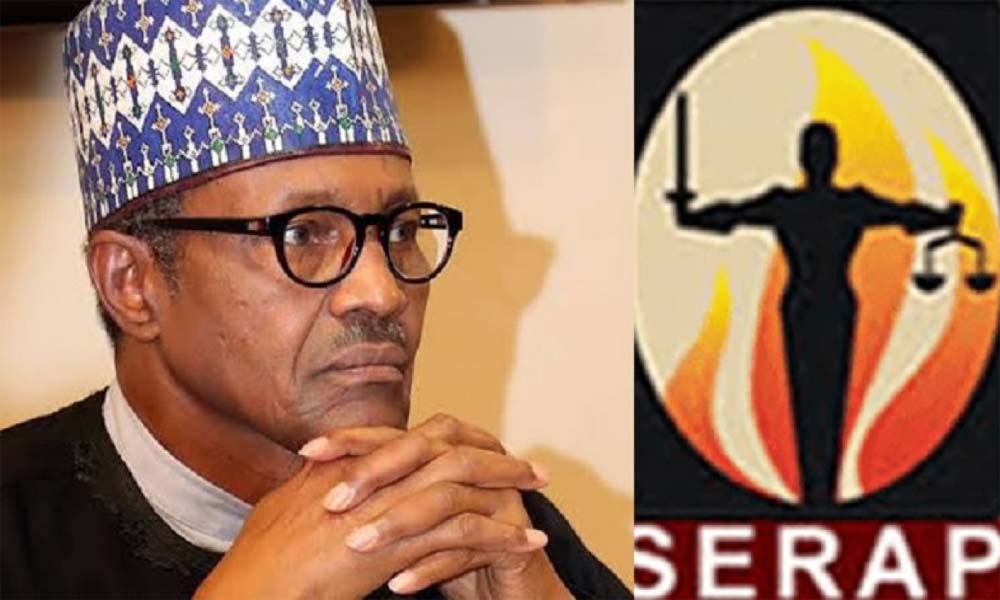
Socio-Economic Rights and Accountability Project (SERAP) and Centre for Journalism Innovation and Development (CJID) have filed a lawsuit against President Muhammadu Buhari, asking the court to “declare arbitrary and illegal the N5 million imposed on Trust TV, Multichoice Nigeria Limited, NTA-Startimes Limited and TelcCom Satellite Limited, over their documentaries on terrorism in the country.”
Joined in the suit as Defendants are Mr Lai Mohammed, Minister of Information and Culture, and the National Broadcasting Commission (NBC).
The NBC had last week imposed the fines on the media houses, claiming that their documentaries “glorified the activities of bandits and undermines national security in Nigeria”, and contravene the provisions of the Nigeria Broadcasting Code.
But in the suit number FHC/L/CS/1486/2022 filed last Friday at the Federal High Court, Lagos, SERAP and CJID are seeking: “an order setting aside the arbitrary and illegal fines of N5 million and any other penal sanction unilaterally imposed by the NBC on these media houses simply for carrying out their constitutional duties.”
According to the plaintiffs: “The NBC and Mr Lai Mohammed have not shown that the documentaries by the media houses would impose a specific risk of harm to a legitimate State interest that outweighs the public interest in the information provided by the documentaries.”
The plaintiffs said: “The documentaries by these independent media houses pose no risk to any definite interest in national security or public order.”
The plaintiffs also said, “It is inconsistent and incompatible with the Nigerian Constitution 1999 [as amended] to invoke the grounds of ‘glorifying terrorism and banditry’ as justifications for suppressing access to information of legitimate public interest that does not harm national security.”
The plaintiffs also said, “The documentaries by the independent media houses are in the public interest, and punishing the media houses simply for raising public awareness about these issues would have a disproportionate and chilling effect on their work, and on the work of other journalists and Nigerians.”
According to the plaintiffs, “The action by the NBC and Mr Lai Mohammed is arbitrary, illegal, and unconstitutional, as it is contrary to section 39 of the Nigerian Constitution, and international human rights treaties including the African Charter on Human and Peoples’ Rights, which Nigeria has ratified.”
The suit filed on behalf of the plaintiffs by their lawyers Kolawole Oluwadare and Ms Adelanke Aremo, read in part: “A fine is a criminal sanction and only the court is empowered by the Constitution to impose it. Fine imposed by regulatory agencies like the NBC without recourse to the courts is unfair, illegal, and unconstitutional.”
“The grounds of ‘glorifying terrorism and banditry’ used as the bases for sanctioning the media houses are entirely contrary to constitutional and international standards on freedom of expression and access to information.”
“Imposing any fine whatsoever without due process of law is arbitrary, as it contravenes the principles of nemo judex in causa sua which literally means one cannot be a judge in his own cause and audi alteram partem which means no one should be condemned unheard.”
“Article 19 (1) of the International Covenant on Civil and Political Rights establishes the right to freedom of opinion without interference. Article 19(2) establishes Nigeria’s obligations to respect ‘the right to freedom of expression,’ which includes the freedom to seek, receive and impart information, regardless of frontiers.”
“Under article 19(3), restrictions on the right to freedom of expression must be ‘provided by law’, and necessary ‘for respect of the rights or reputations of others’ or ‘for the protection of national security or of public order (ordre public), or of public health and morals’”
“Although article 19(3) recognizes ‘national security’ as a legitimate aim, the Human Rights Council, the body charged with monitoring implementation of the Covenant, has stressed ‘the need to ensure that the invocation of national security is not used unjustifiably or arbitrarily to restrict the right to freedom of opinion and expression.’”
“The grounds for imposing fines on these independent media houses fail to meet the requirements of legality, necessity, and proportionality.”
“The requirement of necessity also implies an assessment of the proportionality of the grounds, with the aim of ensuring that the excuse of ‘glorifying terrorism and banditry’ and ‘national security’ are not used as a pretext to unduly intrude upon the rights to freedom of expression and access to information.”
The plaintiffs are also seeking the following reliefs:
- A DECLARATION that the act of the Defendants imposing a fine of Five Million Naira each on the independent media houses is unlawful, inconsistent with, and amounts to a breach of the principles of legality, necessity, proportionality and therefore a violation of the rights to freedom of expression, access to information, and media freedom;
- A DECLARATION that the use of the Broadcasting Code by the NBC to impose sanctions on the independent media houses for an alleged infractions without recourse to the court constitutes an infringement on the provisions of sections 6[1] & [6][b] and 36[1] of the Nigerian Constitution 1999 and Articles 1 and 7 of the African Charter on Human and Peoples’ Rights and Article 9 of the International Covenant on Civil and Political Rights to which Nigeria is a state party;
- A DECLARATION that the provisions of the National Broadcasting Commission Act and the Nigeria Broadcasting Code which are arbitrarily being used by the Defendants to sanction, harass, intimidate and restrict the independent media houses are inconsistent and incompatible with sections 36[1], 39 and 22 of the Nigerian Constitution, Article 9 of the African Charter on Human and Peoples’ Rights and Article 19 of the International Covenant on Civil and Political Rights and are null and void to the extent of their inconsistency and incompatibility;
- A DECLARATION that the Defendants lack the legal power and authority to impose penalty unlawfully and unilaterally, including fines, suspension, withdrawal of license or any form of punishment whatsoever on the independent media houses for promoting access to diverse opinions and information on issues of public importance;
- AN ORDER OF COURT setting aside of the fine of Five Million Naira imposed by the Defendants, through the 3rd Defendant, each on Trust TV, Multichoice Nigeria Limited, TelCom Satellite Limited (TSTV) and NTA-Startimes Limited for televising the documentary by the British Broadcasting Corporation “BBC Africa Eye” titled “Bandits Warlords of Zamfara”;
- AN ORDER OF PERPETUAL INJUNCTION restraining the Defendants or any other authority, persons or group of persons from unlawfully shutting down, imposing fine, suspension, withdrawal of license or doing anything whatsoever to harass and intimidate or impose criminal punishment on the independent media houses or any of Nigeria’s journalists and media houses for promoting access to diverse information on issues of public importance;
- AND any other order or other order(s) that the Court deems fit to make in the circumstances
No date has been fixed for the hearing of the suit.







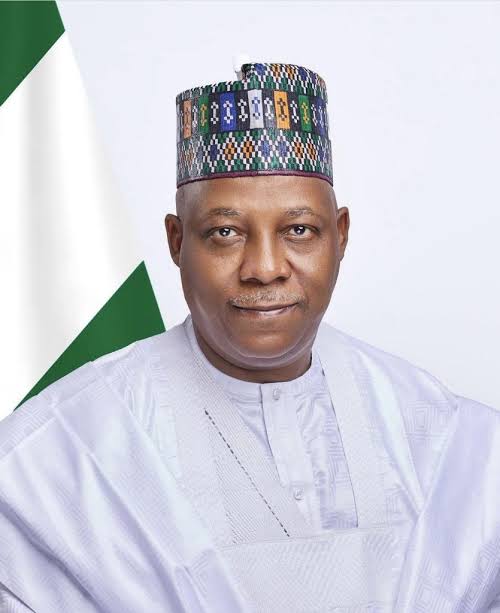
Vice President Kashim Shettima has arrived in Maiduguri, the Borno State capital, to commission the Kashim Ibrahim University Teaching Hospital, a student hostel, and 104 staff housing units at the institution.
Shettima’s arrival was disclosed by Stanley Nkwocha, in a post on X on Friday.
The Vice President was received at the Muhammadu Buhari International Airport in Maiduguri by Borno State Governor, Professor Babagana Umara Zulum; Deputy Governor, Alhaji Umar Usman Kadafur; and the All Progressives Congress (APC) governorship candidate in the state, Engr. Mustapha Gubio.
SEE ALSO: Subsidy Removal, FX Reforms Driving Fresh Oil Sector Investment – Shettima
Members of the National Assembly, the Borno State Executive Council, prominent political figures and other top government officials were also present to welcome him.
During the visit, Shettima is expected to commission the Kashim Ibrahim University Teaching Hospital, alongside a student hostel and 104 staff housing units at the institution.
He will also commission Yerwa Central Primary and Junior Secondary School in Maiduguri, as well as the Kashim Shettima Academy, established by his foundation to support children from less privileged backgrounds.
The Vice President has repeatedly emphasised that poverty should not prevent Nigerian children from accessing higher education.
He has also highlighted government initiatives, including the Nigerian Education Loan Fund (NELFUND), as avenues for students from disadvantaged backgrounds to pursue their educational aspirations.
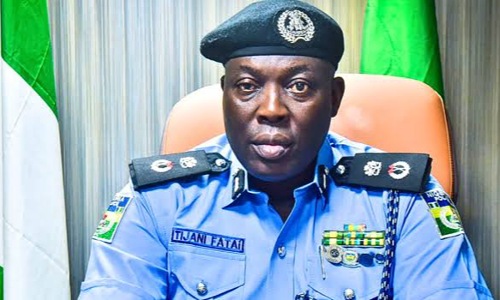
The Lagos State Commissioner of Police, Tijani Fatai, has warned officers against extortion, brutality, unlawful arrests and detention, stressing that any misconduct will attract disciplinary action.
Fatai gave the warning on Thursday, October 22, during a general lecture for officers and men of the Lagos State Police Command at the POWA Hall, GRA, Ikeja.
According to a press release signed by the Lagos State Police Command’s Public Relations Officer, SP Abimbola Adebisi, and released on Friday, October 23, the lecture was held in compliance with the directives of the Inspector-General of Police, Olatunji Rilwan Disu.
SEE MORE: Lagos Police Nab Educational Consultancy Staff Over Fake Visa Fraud
The lecture brought together area commanders, divisional police officers, tactical commanders, heads of departments and other personnel across the command to reinforce professionalism, discipline, accountability and respect for human rights.
Fatai reiterated the Inspector-General’s directives on addressing complaints against police personnel, particularly allegations of brutality, extortion, unlawful arrests and detention.
He warned that officers who engage in misconduct would face disciplinary action, adding that supervisory officers would also be held accountable for the actions of personnel under their command.
The commissioner specifically cautioned tactical teams against extortion, brutality, intimidation, incivility towards members of the public and other dishonest practices.
He directed tactical commanders to ensure that their personnel operate professionally, exercise restraint and respect citizens’ rights.
According to the commissioner, operational responsibilities must not be used as an excuse to exploit or harass members of the public.
Fatai also directed all personnel to comply strictly with the Nigeria Police Force’s Social Media Policy.
He warned that inappropriate online conduct capable of undermining the image of the police would attract sanctions for erring officers and their responsible supervisors.
Lagos CP Prohibits Arrest by Proxy
Addressing the fight against cultism, Fatai urged officers to intensify efforts to tackle the menace while ensuring that all arrests are conducted lawfully and in accordance with due process.
He prohibited arrest by proxy and the arrest of individuals without lawful justification.
The commissioner also emphasised the need to protect the lives and welfare of suspects in police custody, directing officers to maintain close supervision of detainees and ensure they receive humane treatment throughout their detention.
Police Told to Remain Neutral Ahead of 2027 Elections
Ahead of the 2027 general elections, Fatai charged officers to remain neutral and professional in the discharge of their duties.
He directed personnel to closely monitor electioneering campaigns and provide adequate security to maintain peace and public order.
The commissioner further urged officers to stay informed about local and international developments, strengthen their professional capacity and remain vigilant against emerging security threats that could affect Lagos State.
Fatai charged all officers and men of the command to uphold the highest standards of integrity, stressing that public trust must be earned through responsible conduct, impartial enforcement of the law and respect for the rights of every citizen.
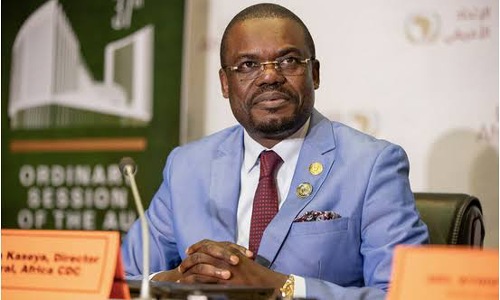
The Director-General of the Africa Centres for Disease Control and Prevention (Africa CDC), Dr Jean Kaseya, has explained why Ebola outbreaks continue to occur in Africa, citing the need for stronger health systems and surveillance mechanisms to prevent and control the spread of infectious diseases.
Kaseya spoke during an interview on Channels Television on Thursday, October 22, while discussing recurring Ebola outbreaks on the continent and the challenges facing public health authorities.
SEE ALSO: JUST IN: Over 3,000 Dead as Ebola Outbreak Ravages DR Congo
He explained that some outbreaks originate from animals and spread to humans through contact with the environment, stressing that effective surveillance and stronger healthcare systems were necessary to address the threat.
“We are in Africa in a specific environment. And as you are saying, this outbreak is coming also from animals to humans. It means we are in contact with our environment,” he said.
“But we can avoid that if we have a strong health system in place, if we have strong surveillance mechanisms in place. And this is what we are working to address.”
The Africa CDC chief also announced plans to convene African health ministers on October 28 to discuss the Ebola Bundibugyo outbreak, which he described as the most geographically widespread outbreak of its kind.
According to Kaseya, three African regions—West, Central and East Africa—have been affected, making coordinated action among countries increasingly important.
“This is why I’m calling even a meeting on the 28th of October of all African ministers, because we see now this outbreak — this Ebola Bundibugyo outbreak — is the most geographically extended outbreak, with three regions in Africa already affected: West, Central and Eastern African regions,” he said.
He also expressed confidence in Africa’s preparedness to respond to public health emergencies, while emphasising the importance of strengthening existing systems to contain outbreaks.
Africa CDC Seeks Cooperation Over Nigeria’s Reported Ebola Case
Kaseya further called for cooperation among Nigeria, Uganda and the Democratic Republic of the Congo (DRC) to clarify the travel history of a woman linked to Nigeria’s reported Ebola case.
He said he had been communicating with health authorities in the three countries to establish the woman’s movements before she returned to Abuja on October 3.
According to him, the woman was born in Uganda and had spent some time there before returning to Nigeria. However, further information was needed to establish whether she had travelled through the DRC or had contact with anyone arriving from the country.
“We are talking to all authorities—with Nigerian authorities, with Ugandan authorities, even to DRC authorities,” Kaseya said.
He urged the woman to provide the relevant information to health officials, noting that it would help authorities determine the circumstances surrounding the case and support the countries involved.
“What we want is collaboration from this person, the lady. She has to tell us, to disclose to the authorities. I need this information, as Nigeria needs this information, because we need also to support Uganda,” he said.
Kaseya added that establishing the woman’s travel history and possible contacts would help prevent misunderstandings between the African countries.
“I think these are the pieces of information we are looking for, and it will help all of us, and it will avoid crisis between African countries,” he added.






₦2.3tn Kaduna Rally Claim: APC Accuses Atiku, ADC of Fake News Plot

Dangote Identifies Power, Financing as Possible Keys to Africa’s Industrial Revolution

Dangote Calls for Stronger Protection of Local Industries, Unveils Pan-African Energy Distribution Network

NMDPRA Issues Updates on Q3 Crude Supplies to Domestic Refineries

FCT Motorists, Commuters Divided over NNPC Petrol Discount

Two Suspected Political Thugs Killed After Attacking NDC Candidate’s Convoy in Ebonyi

Trump’s Family Unveils New Cryptocurrency Platform

Senate Denies Receiving Petitions Against Tinubu’s Ambassadorial Nominees

Dangote Cement Lights Up Benue Host Communities With CSR Initiatives

Reps Recommend 3-year Jail Term For Aviation minister

Tems Sets New Record On Billboard Hot 100 Chart
