
NEWS
Terrorism reporting: You have 48 hours to withdraw threat to sanction BBC, Daily Trust – SERAP to Buhari

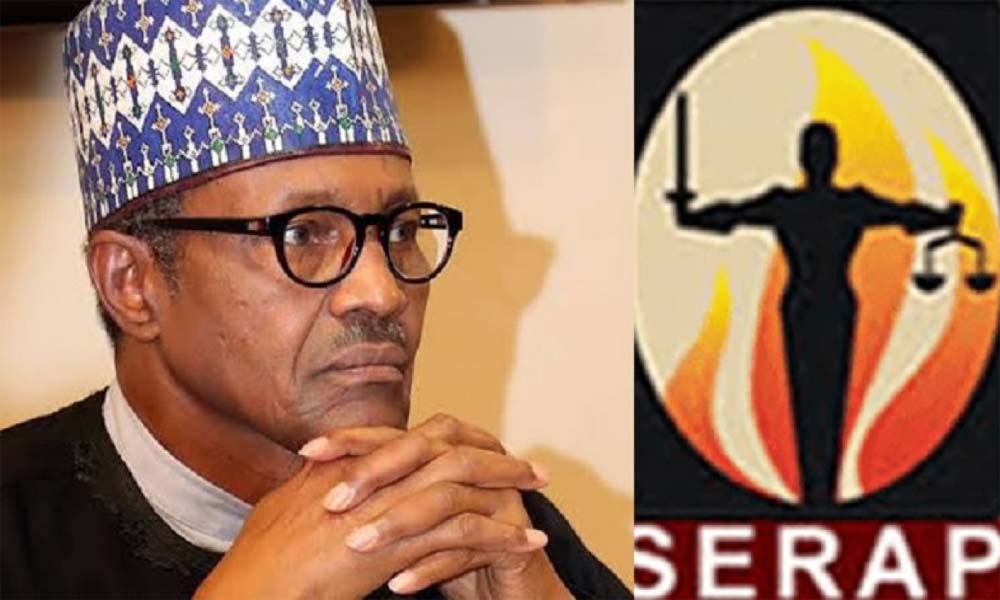
Socio-Economic Rights and Accountability Project (SERAP) has urged President Muhammadu Buhari to “urgently instruct Mr Lai Mohammed, Minister of Information and Culture to withdraw the threat to sanction the BBC and Daily Trust over their documentaries on terrorism in the country, whether through the Nigeria Broadcasting Commission (NBC) or any other agency of government.”
According to reports, Mr Mohammed had last Thursday stated that the Federal Government would sanction the BBC and Trust Tv for airing documentaries that allegedly “glorify”, “promote”, and “fuel” terrorism and banditry in Nigeria.
In a letter dated 30 July, 2022 and signed by SERAP deputy director Kolawole Oluwadare, the organization said, “The media has the duty to impart information and ideas on issues of public importance. If carried out, the threat to sanction the BBC and Daily Trust would inhibit the media from reporting on issues of public interest.”
According to SERAP, “Media houses and journalists ought to be given the room to determine how best to present information of public interest, especially information about the growing violence and killings across the country.”
The organization said, “Rather than punishing the media for promoting access to diverse opinions and information on issues of public importance, your government should focus on delivering your promises to ensure the security of Nigerians.”
The organization also said, “Carrying out the threat to sanction the BBC and Daily Trust would lessen the flow of diverse viewpoints and information to the public.”
The letter, read in part: “We would be grateful if the requested action is taken within 48 hours of the receipt and/or publication of this letter. If we have not heard from you by then, SERAP shall take all appropriate legal actions in the public interest.”
“A free, uncensored, and unhindered press or other media is essential in any society to ensure freedom of opinion and expression and the enjoyment of other rights. It constitutes one of the cornerstones of a democratic society.”
“Sanctioning the BBC and Daily Trust would be entirely inconsistent and incompatible with Nigeria’s obligations under article 9 of the African Charter on Human and Peoples’ Rights and article 19 of the International Covenant on Civil and Political Rights.”
“The threat if carried out would impermissibly restrict the constitutional and international rights to freedom of expression, access to information, and victims’ right to justice and effective remedies that are central to public debate and accountability in a democratic society.”
“Access to information is essential for the enjoyment of other human rights and freedoms and constitutes a fundamental pillar for building a democratic society and strengthening democracy.”
“Allowing the media to freely carry out their duties is essential to building secure society and leaving no one behind. Conversely, imposing impermissible restrictions on media houses, journalists and other Nigerians undermines the security that builds a healthy and vibrant society.”
“The grounds for sanctioning the BBC and Daily Trust as stated by Mr Mohammed fail to meet the requirements of legality, necessity, and proportionality.”
“The requirement of necessity also implies an assessment of the proportionality of the grounds, with the aim of ensuring that the excuse of ‘glorifying, promoting, and fuelling terrorism and banditry’ are not used as a pretext to unduly intrude upon the rights to freedom of expression and access to information.”
“Any interference with the constitutional and legal duties of the BBC and Daily Trust would not be justified in the context of the right to information.”
“The Federal Government has not shown that the documentaries by the media houses would impose a specific risk of harm to a legitimate State interest that outweighs the public’s interest in the information provided by the documentaries.”
“The documentaries by the BBC and Daily pose no risk to any definite interest in national security or public order.”
“It is inconsistent and compatible with the Nigerian Constitution 1999 [as amended] to invoke the grounds of ‘glorifying, promoting, and fuelling terrorism and banditry’ as justifications for suppressing freedom of expression or withholding from the public information of legitimate public interest that does not harm national security.”
“It is contrary to both the Nigerian Constitution and international standards to threaten or punish journalists and media houses such as the BBC and Daily Trust for disseminating such information.”
“The vague and overbroad definitions of ‘glorifying’, ‘promoting’, and ‘fuelling’ raise concerns that the threat by the Federal Government if carried out would unduly interfere with the rights to access to information, and disproportionate to any purported legitimate governmental aim. Ill-defined and/or overly broad grounds are open to arbitrary application and abuse.”
“The broad definitions of what may constitute ‘glorifying’, ‘promoting’, and ‘fuelling’ also heighten concerns of overreach, confer far-reaching discretion on the government, and suggest that the grounds cited by the Federal Government are more intrusive than necessary.”
READ ALSO: SERAP frowns at AGF advice on NNPC’s missing $20bn
“These words do not indicate precisely what kind of individual conduct would fall within their ambit.”
“The use of these words by the Federal Government, given their opaque and ambiguous meaning, leaves open the possibility for application beyond unequivocal incitement to hatred, hostility, or violence. Such words may function to interpret legitimate reporting by media houses, journalists, and other Nigerians as unlawful.”
“The grounds cited by the Federal Government for sanctioning the BBC and Daily Trust also fail to establish a direct and immediate connection between the reporting by the media houses and any risks to national security and peace.”
“The threat if carried out would also create an environment that unduly deters and penalizes media houses and journalists, and the reporting of government wrongdoing more generally.”
“The cumulative effect of any attempt to sanction the BBC and Daily Trust would be the gagging of the media from reporting on cases of violence and killings by terrorists and kidnappers, the reporting and information that is clearly in the public interest.”
“SERAP recalls that in your 2022 new year message, you raised concerns about persistent insecurity in certain parts of the country and promised to remain ‘resolute in giving utmost attention to the problem.’”
“While your government has the obligation to maintain national security, this obligation is not set apart from the obligation to protect and ensure human rights. National security is a necessary and integral part of the right to security guaranteed to each person individually.”



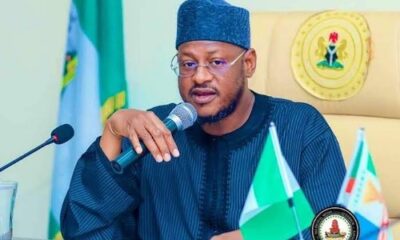


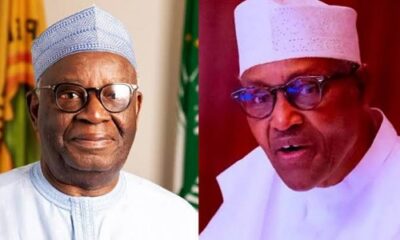


Former Delta State Governor, Dr Emmanuel Uduaghan, has reportedly died, according to sources said to be close to his family.
The sources confirmed the development on Monday, October 19, 2026, although details surrounding the circumstances of his death remained unclear as of the time of filing this report.
“Uduaghan is no more; he is dead,” one of the sources reportedly said.
SEE ALSO: Document reveals Akpoti-Uduaghan demanded N10b damages from husband before marriage, firm reacts
The reported death comes months after claims that the former governor had died circulated on social media before being dismissed by his media aide, Henry Unini.
In June, reports of Uduaghan’s alleged death spread across Facebook and WhatsApp, prompting Unini to publicly debunk the claims and assure the public that the former governor was alive.
“I can tell you for a fact that Dr. Emmanuel Uduaghan is alive,” Unini said at the time.
“Frankly, I don’t know where the writer got his information from. The death of someone is not something you take and write about casually,” he added.
Unini acknowledged at the time that Uduaghan had been experiencing health challenges but maintained that he was receiving medical attention.
“It is now common knowledge that Dr. Emmanuel Uduaghan has been sick, but he is receiving proper medical care,” the media aide said.
He also stated that the former governor was recuperating, assuring the public that there was no immediate cause for concern.
“There is no cause for alarm whatsoever,” Unini said.
The media aide thanked friends, well-wishers and residents of Delta State who contacted the family to verify the former governor’s condition. He also urged the public to avoid spreading unverified information.
“The rumour was uncalled for,” he said while addressing the earlier reports.
As of the time of filing this report, further details about the circumstances surrounding Uduaghan’s reported death had yet to emerge.
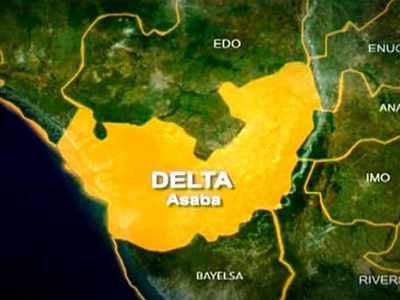
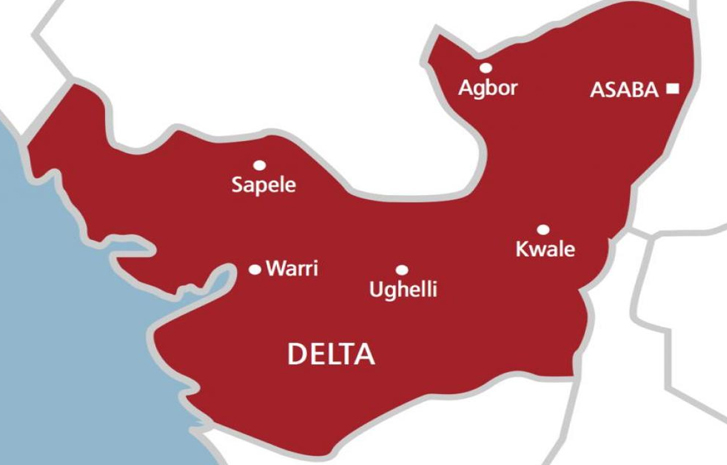
The Delta State Government has commenced a ₦5 billion grassroots empowerment programme targeting 100,000 small-scale business owners and other beneficiaries across the state’s 500 wards.
The initiative, announced on Monday, will see each beneficiary receive ₦50,000 to support small businesses, strengthen household finances and stimulate economic activities across the state.
SEE ALSO: Two Arrested as Delta Police Uncover Cache of Illegal Weapons
The Executive Assistant to the Governor on Public Enlightenment (Projects and Policies), Mr Olisa Ifeajika, disclosed this while speaking with journalists in Asaba.
Ifeajika explained that the programme was designed to complement the state government’s investments in critical infrastructure with direct financial assistance to residents.
According to him, Governor Sheriff Oborevwori directed local government councillors to facilitate the distribution of the funds, with each of the 500 wards expected to reach at least 200 beneficiaries.
He added that the initiative reflects the administration’s commitment to improving livelihoods and expanding economic opportunities for Deltans, in line with the people-centred objectives of the MORE Agenda.
The Minister of Education, Dr Maruf Tunji Alausa, has commended Alhaji Aliko Dangote and the Aliko Dangote Foundation for plans to acquire Initial Public Offering (IPO) shares of Dangote Refinery on behalf of eligible Nigerian tertiary institution students.
Alausa described the initiative as an innovative approach to promoting financial literacy, youth empowerment and wealth creation among young Nigerians.
According to a press release issued by the Federal Ministry of Education on Monday, October 19, 2026, the initiative is expected to benefit up to four million students aged 18 and above, with each eligible student expected to receive 10 IPO shares without requiring prior investment or share purchase.
The minister said the programme would expose students to capital markets, responsible investing and long-term financial planning, preparing them for greater economic participation and financial independence.
He noted that the initiative aligns with the Nigeria Education Sector Renewal Initiative (NESRI) and President Bola Ahmed Tinubu’s Renewed Hope Agenda by connecting education with enterprise, human capital development and inclusive economic growth.
According to Alausa, the initiative reflects the importance of partnerships between the education sector and private organisations in equipping young Nigerians with the knowledge and skills needed to participate in the economy.
He said the Federal Ministry of Education remained committed to strengthening private-sector partnerships to improve educational quality, relevance, equity and efficiency while preparing learners for a changing economy.
While appreciating the foundation’s contribution to youth development, the minister clarified that the ministry’s commendation was based on the initiative’s educational and developmental value.
He stressed that the ministry’s position “does not constitute an endorsement of any particular investment decision.”
Alausa also encouraged other corporate organisations to support similar initiatives that promote financial awareness, economic productivity and entrepreneurship among young Nigerians.
He urged businesses to support NESRI and the Renewed Hope Agenda in building a financially informed and economically productive generation.






Petrol Price Hike Looms as Oil Hits $110/barrel

NIPCO Gas Licences, NNPC Ltd Management Face Reps Probe
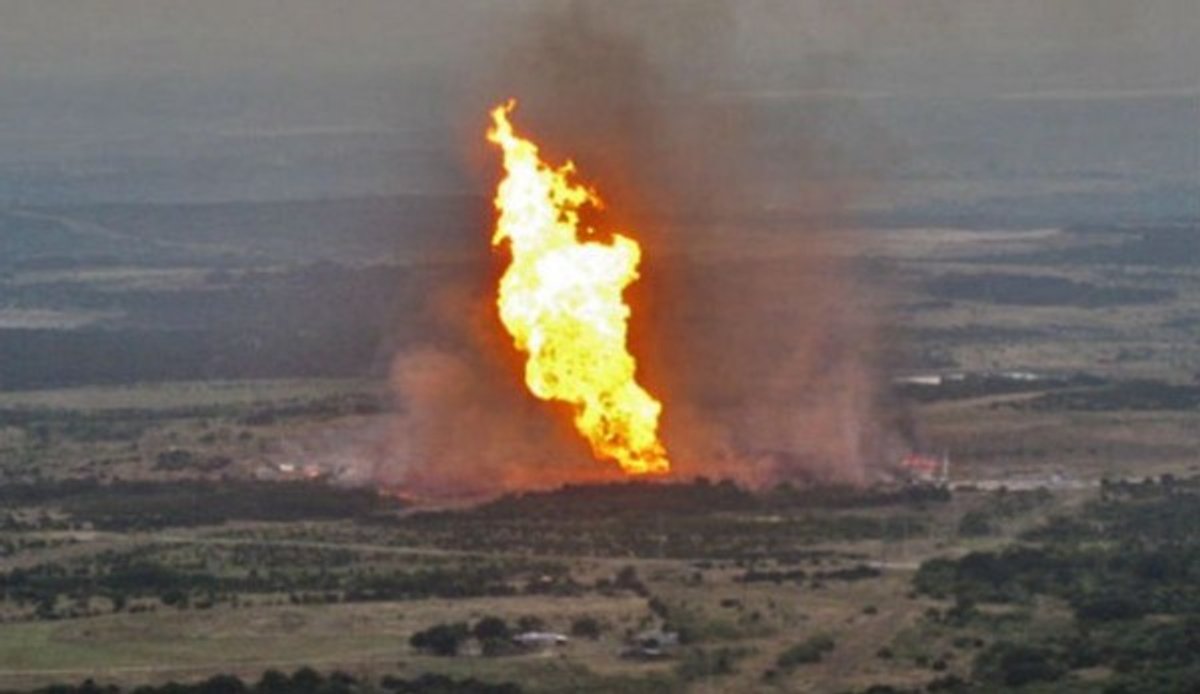
UNDC Assures on Readiness to Protect Oil, Gas Pipelines

JUST IN: Ex-Delta Governor Emmanuel Uduaghan Is Dead

Delta Begins ₦5bn Empowerment Scheme for 100,000 Beneficiaries
Alausa Hails Dangote Foundation’s Plan to Give Four Million Students IPO Shares

Trump’s Family Unveils New Cryptocurrency Platform

Senate Denies Receiving Petitions Against Tinubu’s Ambassadorial Nominees

Dangote Cement Lights Up Benue Host Communities With CSR Initiatives

Reps Recommend 3-year Jail Term For Aviation minister

Tems Sets New Record On Billboard Hot 100 Chart
