
NEWS
The Ekweremadus Health, Human Trafficking, Organ Harvesting Travails

By Kenneth Eze
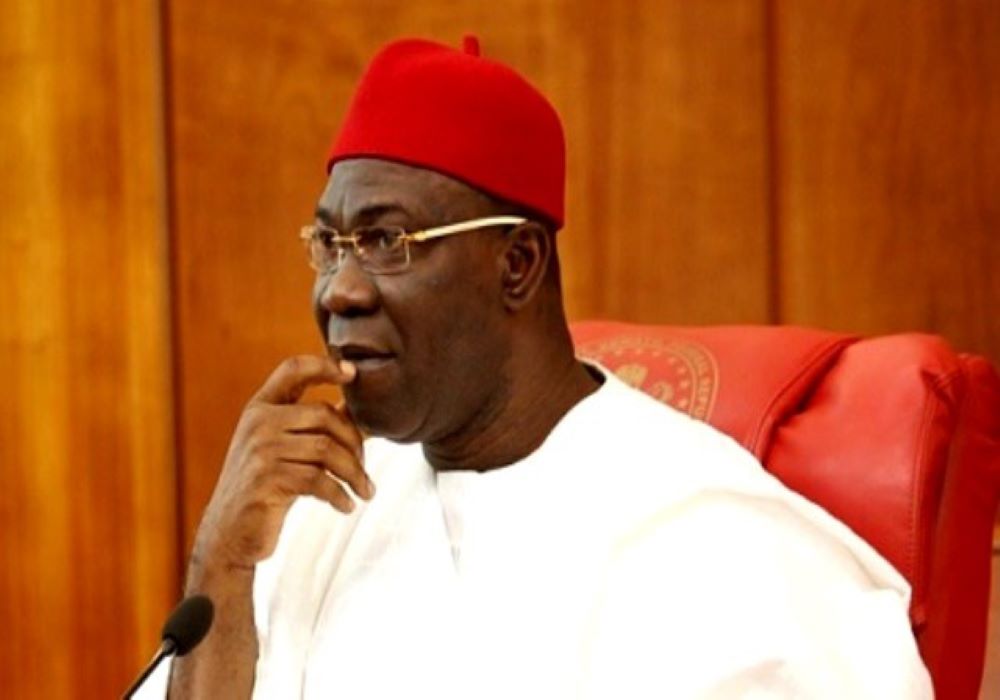
The world was jolted last Thursday when news broke out that Nigeria’s former Deputy Senate President, Ike Ekweremadu and his wife Beatrice Nwanneka Ekweremadu’s alleged involvement in human trafficking and organ harvesting in the United Kingdom (UK).
Coming on the heels of overwhelming hardship being experienced by the masses in Nigeria, it is relatable that the Nigerian public chose to celebrate the matter, instead of empathising with a spouse looking to save the life of a child a daughter battling with a terminal illness.
Sadly, the issue of ill-governance and consequently hardship it has brought upon the populace seem to have eroded humanity to the point where people seem to be praying for the rich to also cry.
I wonder if this should be. And why?
Read Also >> Quality Petroleum Education: Panacea To Nigeria’s Energy Transition Challenges- Wabote
While we are entitled to the legitimate right to wrestle our collective destiny at the national level from unscrupulous politicians, we owe ourselves the duty to do so rationally.
It can be said that the public’s spontaneous reaction can be seen as a lesson for politicians and public servants, but the more salient issues are: Without controversy, every responsible parent would do everything legal within his/her to save his/her child who is similarly threatened like Sonia Ekweremadu. The next is that no one has a moral right to seek to profit from the misfortune of another, particularly illness. The third is that the parties to this (the Ekweremadus and the proposed donor, Ukpo Nwamini David) are adults and can enter into a binding contract.
My candid take is that the public ought to weigh the issues properly before jumping into the conversation. Suffice it to state that at moment there’s scanty information, as there’s little or no access to the parties to the matter. This has made real informed commentary tough naught at this time.
However, a sensitive aspect of the discourse is the proposed donor’s age. While the Metropolitan Police said the boy is 15, his traveling documents indicate that he is 21. What nobody can take away is that his picture and social media footprints tell a story of someone well above the 15 being brandied.
Another aspect that no one can mask is that his traveling was processed formally on medical grounds, for which he had privileged information. The coming days will reveal why this dangerous twist came into the story.
Another aspect that lends itself to plausibility is the fact that any young unemployed person would almost stop at nothing to secure an exit from the open prison, called Nigeria. Probably, this is the card this young man is playing. It would be sickening if this should be the case, that an individual would go to the extent of throwing another of high public standing under the bus, just to secure papers to stay in a foreign country.
This ought to be of concern to members of the public.
While each person is at liberty to seek to live or work wherever he or she wishes, that should not be at the detriment of others, particularly, someone with a terminal illness.
It’s painful enough to have a child with a terminal disease. And for another to seek to profit from it, endangering the sick child and her parents in the process. That’s hard to imagine!
Where’s humanity and compassion? And for others to condemn a genuine effort of parents to save the life of their daughter. I think we all need to think again.
Unfortunately for the Ekweremadus, the extant laws in the UK favor the minor. It is not clear if there’s a legal provision that can unravel this young man’s real age. Because until that is done, though, evidence of Ukpo submitting himself to the procurement of travelling documents, and indeed, undertaking the journey without alerting the law, in addition to willingly being ‘spoilt’ by the Ekweremadus, indicate that he consented, they amount to nothing.
Extant laws in the UK are in place to protect the weak or disadvantaged, which weighs against the Ekweremadus, albeit momentarily.
While these are ongoing, it is time to become sober and ponder on; ‘To what extend should parents go to try to save the life of a child diagnosed with a terminal illness?’
I am actually worried at the sudden turn of events because this is Nigeria, a country where people of all tribes and religions donate to save the lives of others just at the prompting of trusted media channels or other individuals.
What could have gone wrong? This is beyond religious or political sentiments.
Ukpo might be making all manner of claims before the UK authorities, but it must be borne in mind that the request upon which his UK visa was granted was founded on medical. Now, that he is claiming ignorance of what took him to the UK, can he adduce evidence of his medical condition and why the onus fell on the Ekweremadus to take him to the UK for treatment?
Unless Ukpo comes clean on this, his claims might appeal to the UK authorities and their legal system, but however this ends, he would have to live with the burden of undoing a benefactor all the days of his life.






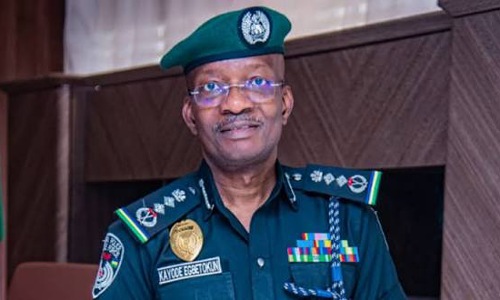
Former Inspector-General of Police, Kayode Egbetokun, has explained why he believes his retirement from the leadership of the Nigeria Police Force came at the perfect time, describing it as the fulfilment of God’s divine plan.
Egbetokun made the remarks during a retirement thanksgiving service held in his honour at the Force Headquarters Chapel in Abuja.
The event also featured the inauguration of the Police Chaplaincy building and was attended by senior police officers, clergy and other worshippers.
SEE MORE: Adeleke Urges IGP to “Call Osun CP to Order“
Reflecting on his appointment as Inspector-General in 2023, the former police chief revealed that he never expected the role when it came.
According to him, the first thing he did after entering his office was to pray.
“I was not expecting the appointment when it came. The first thing I did when I entered the office alone was to pray,” he said.
Egbetokun disclosed that after assuming office, he made three personal prayers to God.
He said he prayed for wisdom to effectively lead the police institution, the grace to complete his tenure successfully, and the ability not to remain in office beyond the time divinely allotted to him.
“My first prayer was for wisdom to run the office, the second was for grace to end well, and the third was not to stay a day longer than God permits. I believe God has answered those prayers,” he added.
The retired police boss also reflected on his career journey, noting that faith played a significant role in his rise from his early days after graduating from the police academy to eventually becoming Nigeria’s top police officer.
He further recounted a dream he had before joining the force, in which he saw himself as a Deputy Inspector-General of Police travelling in a police vehicle bearing the registration number “NPF02.”
According to him, the experience later taught him that life can unfold in unexpected ways.
Egbetokun added that throughout his career he remained conscious of how his actions could influence public perception of the police, a reality he said guided his conduct while in office.
“I knew whatever I did would affect the image of the force, so I made it my duty to remain professional and uphold integrity, transparency and fairness,” he stated.
In his remarks, the Force Chaplain, Joshua Omoyele, commended Egbetokun for completing the Police Chaplaincy building project during his tenure, describing it as a lasting legacy.
Omoyele also praised the former police boss for his strong commitment to Christian service even before his appointment as Inspector-General, noting that he maintained that devotion throughout his time in office.
He further highlighted Egbetokun’s past roles in the police force, including his tenure as Commissioner of Police in Kwara State and Assistant Inspector-General in Zone 7.

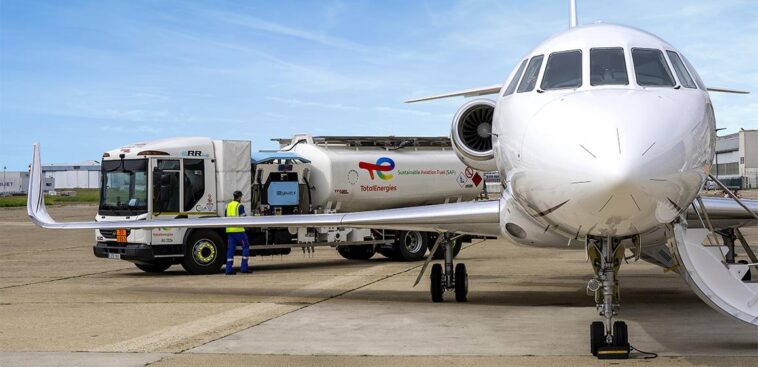
The Airline Operators of Nigeria (AON) has declared that airlines operating in Nigeria have come under financial pressure following a sharp increase in the price of Jet-A1, also known as aviation fuel.
According to the group, the price of aviation fuel, has surged to about N1,800 per litre in many parts of the country, from about N1,000 per litre two weeks ago. This amounts to almost an 80 per cent increase within a short period.
Aviation fuel remains the largest cost component in airline operations, accounting for about 30 to 35 per cent of total operating expenses.
Industry stakeholders have linked the latest spike to the ongoing conflict in the Middle East, which has pushed up global energy prices.
ALSO READ: Shell Completes Turnaround Maintenance on FPSO, Resumes Production at Bonga
Speaking on Channels Television on Friday, the spokesperson for the Airline Operators of Nigeria, Prof Obiora Okonkwo, said the surge had placed airlines under severe financial strain.
According to him, most carriers have so far refrained from immediately transferring the additional cost burden to passengers, despite the pressure on their operations.
“Two weeks ago, we were getting Jet-A1 at about N1,000 per litre, which today is about N1,800, and even more in some stations. We have experienced an increase of about 80 per cent. That’s quite a spike,” Okonkwo said.
He explained that airlines were currently absorbing the losses in order to avoid worsening the economic burden on the travellers.
“We are not in a business where you can easily adjust your ticket price. Right now what we are doing is that we are bleeding. We are taking the blow. We are selling tickets at very non-profitable prices. We are losing a lot of money,” he said.
Okonkwo warned that the situation might not be sustainable if fuel prices continue to rise without government intervention.
“Obviously, adjustments will be expected anytime soon. But again, we are very sensitive to the economic situation of Nigerians and our travellers,” he added.
He noted that developments in the global oil market, particularly the recent release of reserve crude oil, could influence fuel prices in the coming weeks.
Okonkwo also urged the Federal Government to explore engagement with the Dangote Refinery as part of efforts to stabilise aviation fuel supply locally.
“We were more hopeless in a situation where there was no refinery in Nigeria in the last two years. Now that we have a refinery, we are hopeful that we can find a solution around it,” he said.
According to him, if the spike persists, some airlines may struggle to continue absorbing the losses associated with the rising cost of aviation fuel.
Meanwhile, the AON spokesperson also reacted to the decision by the Federal Competition and Consumer Protection Commission to sanction about five airlines over alleged price fixing.
Okonkwo said while the commission has regulatory powers, the aviation sector remains deregulated, making coordinated price fixing unlikely.
“There is no meeting of airlines where they agree to fix prices. Fixing prices would mean operating as a cartel, and that is not the case,” he said.
He explained that airline ticket pricing varies widely because different aircraft types attract different operating costs.
“Each airline determines its fares based on its own operational costs,” he said.
Okonkwo added that airlines must also demonstrate financial viability to regulators as part of the conditions for maintaining their operating licences.
“At every point in time, you must prove to the regulators that you are financially viable and capable of sustaining operations,” he said.
He urged regulators to take into account the fragile nature of the aviation industry when making policy decisions affecting airlines.
Modupe Asudo
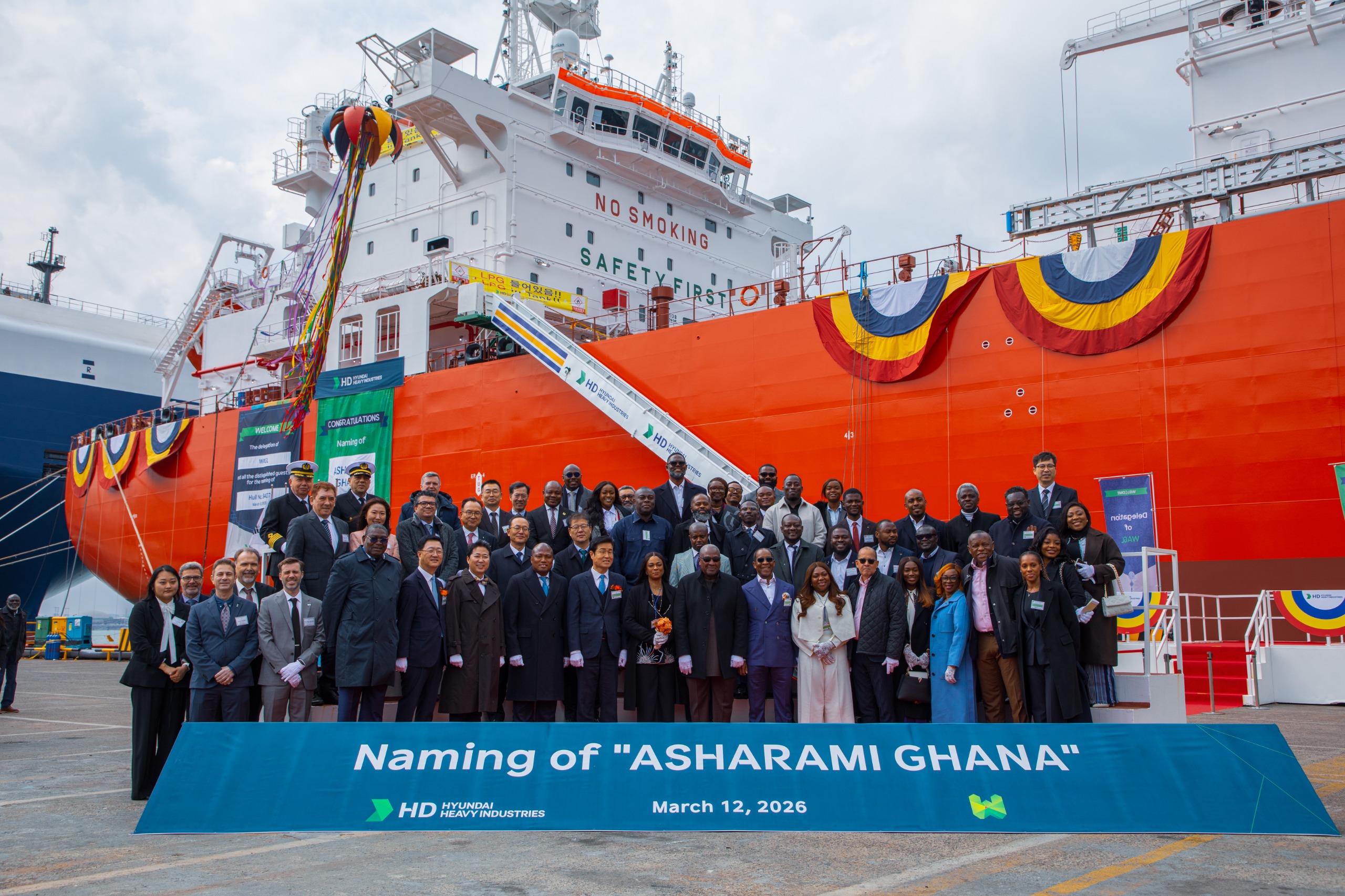
Sahara Group, a leading global energy and infrastructure conglomerate, has commissioned MT Asharami Ghana, a 40,000‑cubic‑metre Liquefied Petroleum Gas (LPG) carrier, expanding its fleet capacity, while strengthening Ghana’s clean energy supply chain and LPG distribution network.
The dual‑fuel vessel improves operational efficiency, enhances supply reliability, and supports lower‑emission LPG logistics as consumption grows across Ghana and the wider sub‑region.
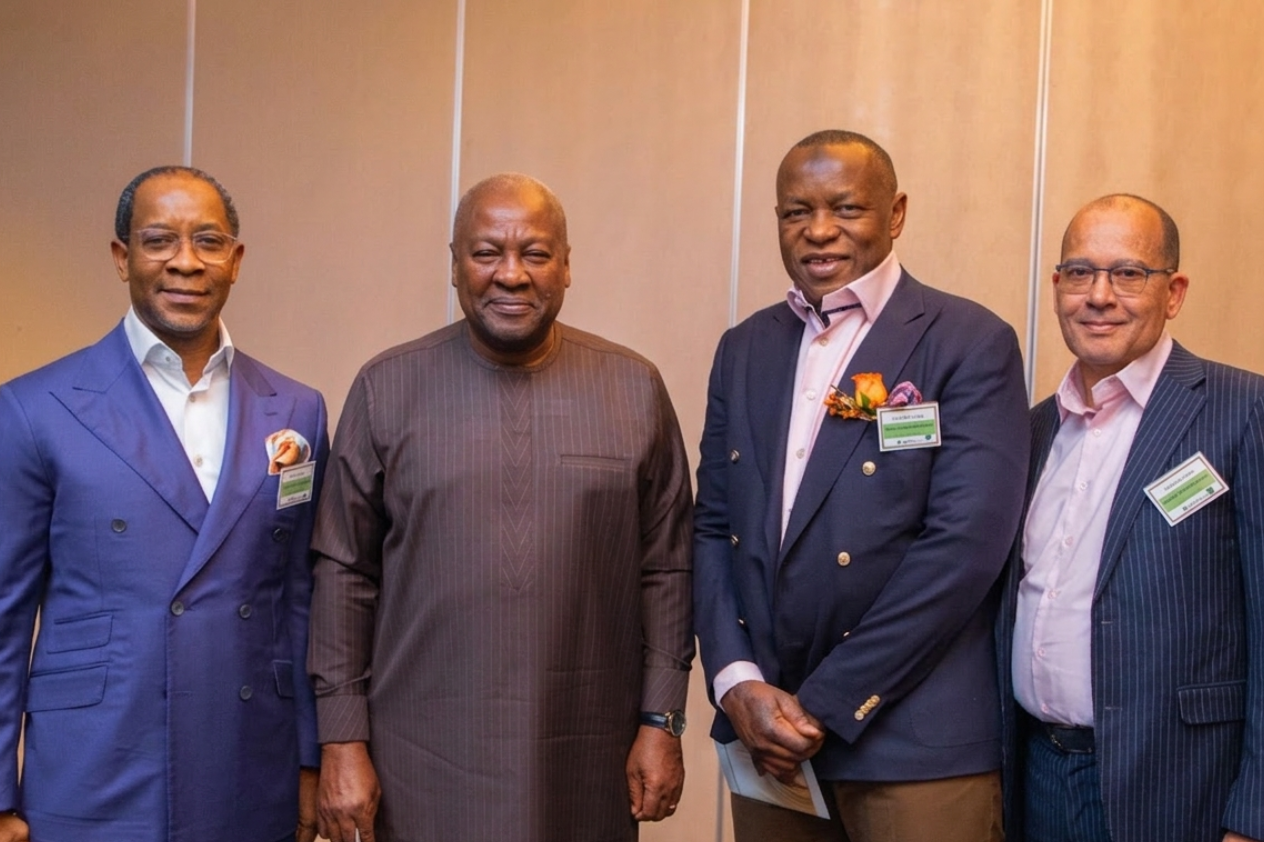
Ghanaian President Mahama and Sahara Executive Directors
Speaking at the commissioning in Ulsan, South Korea, President John Dramani Mahama described the vessel as “a significant milestone in strengthening the infrastructure that underpins the global LPG supply chain,” noting that expanded shipping capacity is critical to improving supply security, reliability and efficiency for countries that rely partly on LPG imports.
He commended Sahara Group, WAGL Energy and all partners involved for their “leadership, technical expertise and strategic foresight,” adding that the project reflects “the power of partnership” in advancing safe, efficient, and responsible energy distribution.
President Mahama wished the MT Asharami Ghana safe sails, expressing confidence that the vessel would inspire further investment and collaboration across Africa’s energy value chain.
According to Wale Ajibade, Executive Director, Sahara Group, the vessel supports Ghana’s clean energy ambitions through integrated infrastructure.
“MT Asharami Ghana is more than a vessel; it is part of a deliberate strategy to strengthen LPG supply security and support Ghana’s clean energy ambitions. It secures an additional 25,000-Metric-tonne stock security for the Ghana economy, alongside the soon to be commissioned 6000-metric-tonee of 12.000-metric-tonne land storage in Tema,” he said.
With the addition of Asharami Ghana, Sahara Group’s LPG carrier fleet now comprises six delivered vessels with a combined capacity of 202,000 cubic metres. Supported by partnerships with WAGL Energy, NNPC Limited and other stakeholders, an additional 270,000 cubic metres of capacity is under construction and due for delivery by September 2028.
Temitope Shonubi, Executive Director, Sahara Group, said Asharami Ghana is part of Sahara’s integrated LPG infrastructure strategy spanning shipping, storage, and downstream distribution globally, including the development of a 12,000‑metric‑tonne land‑based LPG storage terminal in Tema, with a 6,000‑metric‑tonne first phase scheduled for completion in May 2026.
He thanked Yaa Serwaa Alifo, MD of Asharami Ghana, for her resilience and insistence to dedicate a ship of “this magnitude solely to the Ghana Market and its landlocked neighbours.”
Ghana is targeting LPG adoption of 50 per cent of households by 2030, up from about 30 per cent today. Sahara’s investments will support clean energy access for more than 35 million people, while strengthening Ghana’s role in regional LPG trade to neighbouring and landlocked West African markets.
The commissioning comes in Sahara Group’s 30th anniversary year, guided by the Sahara Beyond XXX milestone, underscoring Sahara’s focus on building an enduring enterprise that delivers responsible growth, shared prosperity and long‑term impact across its markets.






Leadership Shakeup: ADC Kicks Off Nationwide Elections

‘Why My Retirement Came at the Perfect Time’ — Ex-IGP Kayode Egbetokun

Airfares Likely to Rise as Aviation Fuel Price Spikes by 80%

Shell Completes Turnaround Maintenance on FPSO, Resumes Production at Bonga

Sahara Group expands fleet with new 40,000 cbm LPG Carrier

NATO Shoots Down Third Iranian Missile in Turkey

Trump’s Family Unveils New Cryptocurrency Platform

Reps Recommend 3-year Jail Term For Aviation minister

Dangote Cement Lights Up Benue Host Communities With CSR Initiatives

Senate Denies Receiving Petitions Against Tinubu’s Ambassadorial Nominees

Tems Sets New Record On Billboard Hot 100 Chart
