
NEWS
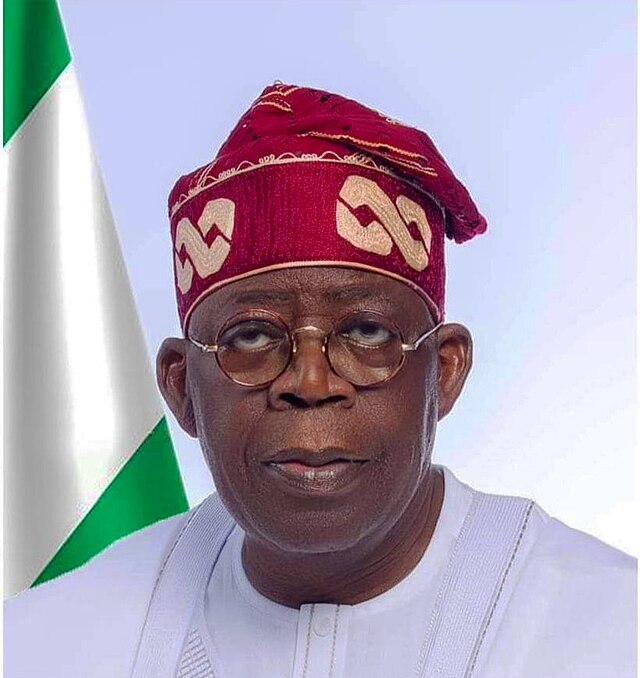
Tinubu Urges World Leaders To Deepen Ties Among Member States

. . . Insists on permanent seat for Nigeria, other African nations at UN Security Council
. . . Calls for collective action against hunger, terrorism, climate change, others
. . . Seeks renewed financial architecture, debt forgiveness for developing countries
. . . Says pursuit of individual national priorities undermining resolutions of global challenges
President Bola Ahmed Tinubu has called on world leaders to recommit themselves to multilateralism by deepening relations among member states of the United Nations (UN) in line with the principles of inclusivity, equality and cooperation.
This, he said, is the surest guarantee of global action against existential challenges faced by the international community.
ALSO READ: Shettima Leads Nigeria’s Delegation To 79th UNGA
President Tinubu who is the Chairman of the Authority of Heads of States and Government of the Economic Community of West African States (ECOWAS) made the call while addressing world leaders during the General Debate of the ongoing 79th Session of the United Nations General Assembly (UNGA) at the UN headquarters in New York, United States.
Represented by his deputy, Vice President Kashim Shettima, at the high-level annual global event, the President decried the steep descent to singularity and nationalism which, according to him, are undermining the quest for peaceful and collective resolution of global challenges such as terrorism, climate change, poverty, food crises, hyper-inflation, nuclear proliferation and grinding debt burden, among others.
The Nigerian leader reminded the world leaders that the United Nations stands for multilateralism which represents inclusiveness, anchored on the tripod of peace, sustainable development and human rights.
He expressed worry about the main objectives of the UN and how it could sustain the global body’s relevance and resilience, noting that the pillars of the organisation are at risk of being broken against the principles of inclusivity, equality and cooperation which it stands for.
President Tinubu stated: “Today, these pillars of our organisation are threatened. They risk being broken by the relentless pursuit of individual national priorities rather than the collective needs of the nations that are assembled here today.
“While commitment to multilateralism offers us the surest guarantee of global action to address the existential challenges we face, singularity and nationalism are undermining the aspirations towards the peaceful and collective resolution of such challenges.
“From last year’s summit, and indeed from previous years, we have carried over the numerous challenges of terrorism, armed conflict, inequality, poverty, racial discrimination, human rights abuses, food crises, hunger, irregular migration, piracy, global pandemics, hyper-inflation, nuclear proliferation, grinding debt burden, climate change, and a host of other vexations.
“The continued manifestation of these challenges testifies to our failings rather than to any lofty achievements on our part. Billions of dollars are being committed to the prosecution of wars and the fanning of the embers of conflict.”
Not satisfied, the President reaffirmed what he termed “Nigeria’s steadfast commitment to the deepening of multilateralism,” just as it did 65 years ago when it “joined the United Nations as the 99th Member-State.
“We remain committed to that “desire to remain friendly with all nations and participate actively in the works of the United Nations”, as expressed by our founding Prime Minister, Sir Abubakar Tafawa Balewa.”
President Tinubu also lamented what he described as the return of unconstitutional changes of government and forceful military coups in some African countries, saying these coups attest to how fragile democracy could become when it is not supported by economic development and sustained peace and security.
This, he said, should be of utmost concern in deliberations at the high-level segments of the 79th Session of the UN General Assembly, as the forceful changes of government have led to “the impatience in cities and villages at the sometimes slow and grinding turn of the wheel of democracy.
“Our people need employment. They need decent livelihoods. They desire good and affordable education and healthcare for their children and families. They need to live in healthy, safe and secure environments. They need hope and they need opportunity,” he added.
President Tinubu also called for reforms in the international financial architecture and a transparent multilateral trading system, expressing hope that “the adoption of the “Pact for the Future” will change the narrative, reposition economies and translate into concrete measures that provide solutions to the challenges faced by developing and least developed countries.
“It is for this and other reasons that we reiterate the call by countries, especially of the global South, for reform of the international financial architecture and promotion of a rules-based, non-discriminatory, open, fair, inclusive, equitable and transparent multilateral trading system,” he noted.
Emphasizing the dangers of digressing from multilateralism, the Nigerian leader also drew the UN’s attention to the global debt burden undermining the ability of countries and governments to meet the needs of their citizens, trade barriers and protectionist policies destroying the hopes for nations, and the uncontrollable competition discouraging motivation and hampering global investments.
Specifically, he asked the UN to prioritise debt forgiveness for Nigeria and other developing countries from creditors and multilateral financial institutions.
“Similarly, we must ensure that any reform of the international financial system includes comprehensive debt relief measures, to enable sustainable financing for development. Countries of the global South cannot make meaningful economic progress without special concessions and a review of their current debt burden,” he stated.
The Nigerian leader called for the recovery of the proceeds of corruption and illicit financial flows, maintaining that the return of such funds to countries of origin “is a fundamental principle of the United Nations Convention against Corruption.
“Therefore, the international community must promote practical measures to strengthen international cooperation to recover and return stolen assets and to eradicate safe havens that facilitate illicit flows of funds from developing countries to the developed economies,” he added.
On insecurity, President Tinubu noted that the menace is plunging citizens into untold hardship and misery that, in turn, affect the people’s confidence in democracy, emphasizing that bringing back confidence in democratic rule and constitutional order is the duty of the international community.
“We cannot build durable societies with the threat of terrorism, banditry and insurgency growing in our countries and regions. Indeed, violent extremism remains an existential threat to both national and international peace, security and development. We are making concerted efforts to contain and roll back this threat,” he said.
President Tinubu however assured that the “High-Level African Counter-Terrorism Meeting hosted by Nigeria in April 2024 and its outcome – “The Abuja Declaration” – promises to provide solutions to the challenges presented by terrorists and insurgents.”
He also warned against the dangers of climate change, describing it as a driver of insecurity that poses a veritable challenge to sustainable development, even as he recalled the devastating flood in Nigeria which submerged large areas of the country, “including one of our largest cities, Maiduguri, in the North-East.”
The Nigerian leader implored the international community to stick to the implementation of the commitments made at the various COP meetings, pointing out that failure to do so would amount to postponing the inevitable, as no country is immune from the effects of climate change.
The President who observed that conflict prevention is the main reason why the UN was established regretted that the task of preventing these conflicts has become arduous following their normalisation “when even the condemnation of violence and civilian casualties, and calls for a ceasefire, are somehow regarded as controversial”.
He listed some of the root causes of conflicts to include poverty, hunger, ignorance, inequality and exclusion, as well as other forms of injustice, just as he cited the conflict in Sudan and the war in Gaza and other Palestinian territories.
“What this tells us is that the international community has failed to live up to the spirit and aspirations of the United Nations to rid the world of inequality, violence and domination of one people by another. Justice is antithetical to revenge,” he stated.
President Tinubu further insisted on bold reforms in the UN Security Council with a view to giving Nigeria and other African countries permanent seats at the council, stressing that it has since become imperative for the UN to strengthen its relevance and credibility in a rapidly changing world.
He said, “Some permanent members of the United Nations Security Council have offered encouraging, if tentative indications of support on the issue of reform of the Council. We welcome the change in tone and urge an acceleration in momentum to the process.
“The Security Council should be expanded, in the permanent and non-permanent member categories, to reflect the diversity and plurality of the world. We fully support the efforts of Secretary-General Guterres in this regard.
“Africa must be accorded the respect that it deserves in the Security Council. Our Continent deserves a place in the permanent members category of the Security Council, with the same rights and responsibilities as other Permanent Members.”





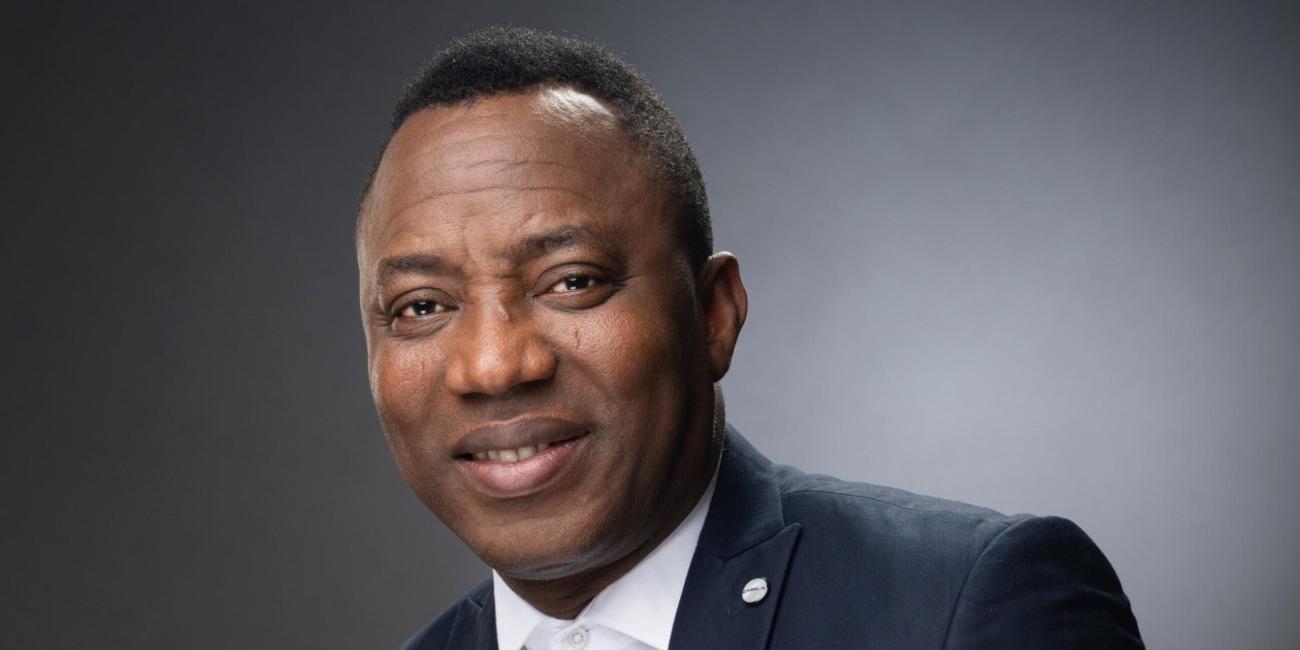
Omoyele Sowore, presidential candidate of the African Action Congress (AAC) for the 2027 presidential election, has declared that his proposed administration would not introduce new taxes if he becomes Nigeria’s president.
Sowore made the clarification following reactions to his interview on African Independent Television (AIT) on Saturday, October 10, 2026, during which he discussed expanding Nigeria’s tax base and bringing more economic activities into the tax system.
In a statement shared on his X account on Monday, the activist said the headline of the interview had created a misleading impression about his position on taxation.
READ ALSO: Nigeria@66: ‘You Wrecked Livelihoods’ — Sowore Fires Back at Tinubu
“Contrary to the misleading impression created by the headline of my recent @AIT_Online interview, let me state categorically that a #Sowore2027 administration has NO plans to introduce new taxes!” he said.
He added, “Nigerians are already overburdened by economic hardship. Our agenda is to create prosperity, not impose additional tax burdens on struggling citizens.”
Sowore also urged Nigerians to watch the video clip of his interview to understand his position directly.
During the interview, the AAC presidential candidate explained that his proposed approach would involve expanding the tax base rather than introducing new taxes.
“We are not going to introduce new taxes, but we would expand the tax base relative to GDP ratio,” he said.
He argued that Nigeria’s tax collection remained relatively low compared with some other African countries.
“Nigeria is probably a poor tax country,” Sowore said, citing Ghana and South Africa as examples in his discussion of tax-to-GDP ratios.
Clarifying his position on taxation, he said, “No. But you see, no, no, no. I’m not taxing Nigerians. We’re expanding the tax base. Are you getting it?”
He explained that the proposed expansion would cover economic activities that were not adequately captured by the existing tax system, including informal businesses and traders operating in markets and on the streets.
“Yeah, as long as they’re making money, all right? And you are supposed to pay tax and ensure that government can do what it say it would deliver to you,” he said.
The AAC presidential candidate also argued that Nigeria could generate additional revenue by recovering money allegedly owed to the government rather than placing additional tax burdens on citizens.
He questioned the recurring concern over how the government would raise funds to provide public services.
“How do you get money? Because that’s always been the, that’s always been, you know, the question thrown at Nigerians. ‘Ah, where are we going to get the money?’” he said.
Sowore claimed that more than $62 billion in royalties was owed to the Nigerian state by oil operators.
“There are, as I speak to you today, over $62 billion in unpaid royalties to the Nigerian state from people that we gave free oil blocks and are making billions from it. They don’t pay royalties,” he said.
He further argued that royalties should be considered part of the broader system of government revenue collection.
“All these revenues we are talking about, they fall under the category of tax. Are you getting my point? Royalties are taxes too,” he said.
He maintained that the government should ensure that those owing the money are assessed and held accountable.
Sowore maintained that recovering the alleged outstanding royalties could provide resources for public infrastructure and social services.
He proposed using the revenue to fund development projects, including roads and schools, while reducing government expenditure.
“We use it to do what we know, the roads we need to construct, the schools we need to build. And we cut down the cost of governance,” he said.

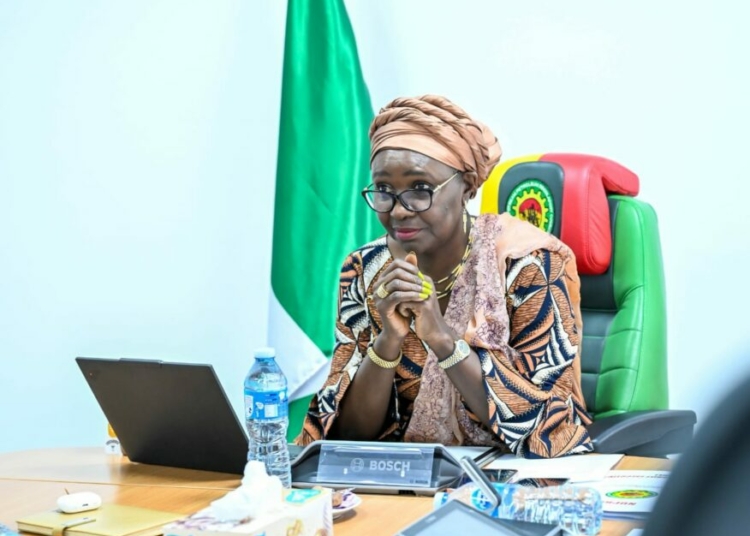
Licensed Oil and gas operators now have until October 31 to demonstrate compliance with their licence obligations or risk losing their acreages.
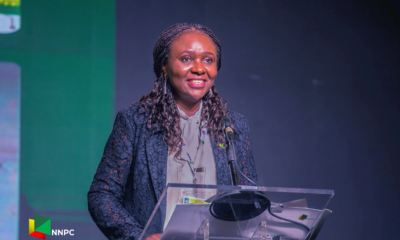
The Chief Executive of the Nigerian Upstream Petroleum Regulatory Commission (NUPRC), Oritsemeyiwa Eyesan, made the disclosure at an energy conference organised by the Harvard Business School Association of Nigeria in Lagos on Friday.
She cautioned that the regulator would enforce the drill-or-drop provisions of the Petroleum Industry Act (PIA) against operators that failed to develop their assets.
“Now the PIA has instituted the drill-or-drop mechanism. So, before you take the block, you know whether it’s a gas asset, you know whether it’s an oil and gas asset, and you must come up with concrete plans to unlock your resources,” Eyesan said.
READ ALSO: FG Lacks Capacity to Meet Dangote Refinery Crude Demand
She said the commission had issued a circular directing affected operators to respond before the deadline, warning that those who failed to do so would face regulatory action.
“And as a matter of fact, we’ve issued a circular, and we say by 31st of this month, for those who are not responsive, you can be rest assured that I am coming after you,” she threatened.
Eyesan also explained that operators holding onshore assets were expected to undertake the required work within the stipulated three-year period, warning that the commission would call up assets where companies failed to develop their acreages.
“For those onshore, you have three years. Within three years in the first instance, if you do nothing about those assets, we will call it up,” she said.
The commission’s warning comes as it moves to enforce work commitments attached to licences awarded through recent licensing exercises, with affected operators required to explain delays in executing their approved work programmes and show how they intend to address the challenges.

Strategy for unlocking Nigeria’s oil industry investment must focus on access to capital, technology, markets and regulatory certainty, in addition to physical assets.
These views were shared by the Heritage Energy Operational Services Limited (HEOSL) in a goodwill message at the Association of Energy Correspondents (NAEC) Energy Energy Conference 2026, in Lagos, themed: “Access to Assets: Empowering Players and Driving Growth.”
Delivering the message on behalf of the CEO, Ado Oseragbaje, General Manager, Government, Joint Venture & External Relations, Heritage Energy, Ohioze Unuigbe, commended the NAEC for convening what he described as a strategic platform for dialogue on issues shaping Nigeria’s energy sector.
READ ALSO: NCDMB, Renaissance Empower 60 with Oil & Gas Technical Skills
According to him, the conference theme is both timely and strategic at a period when the industry is seeking to increase production and attract investment.
“Access to assets must go beyond physical access to oil and gas resources. It must also include access to capital, infrastructure, technology, markets, skilled talent, regulatory certainty and strong partnerships. These are essential to unlocking investment, increasing production and strengthening Nigeria’s energy security,” he said.
Unuigbe noted that while access to an asset is critical, real value is created by how effectively, safely and responsibly the asset is operated.
He disclosed that Heritage Energy’s Operational Management System (OMS) provides the discipline for responsible operations, by bringing together People, Plans, Processes and Performance to embed operational excellence, strengthen accountability and manage risk.
This, he said, is particularly important in a complex environment such as OML 30, where sustainable performance depends on effective collaboration among staff, partners, regulators, host communities and other stakeholders.
He stressed that sustainable value creation goes beyond production to include safety, environmental stewardship, responsible asset management, local capacity development and meaningful host community engagement, alongside investment in infrastructure, technology and Nigeria’s gas resources.
“No operator can achieve this alone. Government, regulators, investors, operators, partners, host communities and the media all have important roles to play. Trust, transparency and constructive engagement must remain at the heart of these relationships,” he added.
The Heritage Energy GM also lauded the role of the energy media in promoting informed discourse, transparency and accountability, calling for continued collaboration to support accurate and balanced reporting.
“Nigeria’s energy opportunity is significant. Our collective task is to ensure that access to assets translates into access to opportunity, value creation and sustainable growth,” Unuigbe stated.
He reaffirmed Heritage Energy’s commitment to responsible operations, operational excellence and stakeholder collaboration in building a stronger and more sustainable Nigerian energy industry.





2027 Elections: INEC Debunks Fake Notice on Governorship Candidates in Six States

2027: No New Taxes Under My Gov’t If Elected – Sowore Clarifies
ADF Targets 5 Million Students, 2 Million Vulnerable Women

NUPRC Sets Revocation Date for Undeveloped Oil Licences

FG Lacks Capacity to Meet Dangote Refinery Crude Demand
Heritage Energy on Ways of Unlocking Oil Industry Investment

Trump’s Family Unveils New Cryptocurrency Platform

Senate Denies Receiving Petitions Against Tinubu’s Ambassadorial Nominees

Dangote Cement Lights Up Benue Host Communities With CSR Initiatives

Reps Recommend 3-year Jail Term For Aviation minister

Tems Sets New Record On Billboard Hot 100 Chart

968026 671890Hi there! I just wish to give an enormous thumbs up for the good info youve proper here on this post. I shall be coming once again to your weblog for extra soon. 58308
464782 115529Hey there, Can I copy this post image and implement it on my individual web log? 263331
450859 885464Usually I do not read post on blogs, however I wish to say that this write-up very forced me to have a look at and do so! Your writing taste has been amazed me. Thanks, really great post. 78262
65784 737465Some truly nice stuff on this internet site, I love it. 947310