International News
UK Restricts Family Entry For Overseas Health Workers


The United Kingdom has implemented a ban preventing healthcare workers from bringing dependants into the country.
The Home Office, in a statement on Monday, cited the aim of reducing migration levels and addressing potential abuse of the immigration system.
This measure is anticipated to result in the largest-ever reduction in the country’s net migration, as the government seeks to manage what it deems as “unprecedented” and “unsustainable” levels of legal migration.
The Home Office asserted that the revised policy aims to prompt businesses to prioritize British talent and invest in their workforce.
This shift intends to discourage excessive reliance on migration by aligning salaries with the average full-time salary for relevant positions.
Interior Secretary, James Cleverly anticipates a reduction of 300,000 individuals coming to the UK in the coming years through these measures.
As part of the plan, visa eligibility requires a minimum earnings threshold of £38,700, up from £26,200, and care workers will no longer be allowed to bring dependants starting from next April.
He said, “The first of our five points will be to end the abuse of the care visa. We will stop overseas care workers from bringing family, dependants and we will require firms in England to be regulated by the Health Care Quality Commission in order for them to sponsor visas.
“Approximately, £120,000 dependants accompanied £100,000 care workers in the year ending September 2023, but only 25% of the dependants are estimated to be in work, meaning that a significant number are joining public services rather than helping to grow the economy.
“We recognise that healthcare workers do great work in our NHIS and health sector, but it’s also important that immigrants make a big enough financial contribution. Therefore, it will increase the annual immigration healthcare charge by 66% from £624 to £1035 to raise, on average, £1.3 billion for the health services of the country every year.
“Second, we will stop immigration undercutting the salary of British workers. We will increase skilled workers’ earning threshold by a third to £38,000 from next spring in line with the medium, full-term wage for those kinds of jobs.
“Those coming on social and health visas will be exempt, so we will continue to bring healthcare workers.”











In a controversial move, Republican Representative Andy Ogles has introduced a resolution aimed at amending the U.S. Constitution to permit former and current President Donald Trump to run for a third term in office.
The proposal, announced on Thursday, seeks to revise the 22nd Amendment, which limits presidents to two terms.
Ogles argued that Trump is uniquely equipped to address the nation’s challenges and lead a turnaround for the United States.
READ MORE: EDO: SUBEB Chair, 6 Commissioners, Board Chairs Take Oath Of office
“No person shall be elected to the office of the President more than three times,” Ogles said in his statement. “He has proven himself to be the only figure in modern history capable of reversing our nation’s decay and restoring America to greatness. He must be given the time necessary to accomplish that goal.”
The congressman also underscored the importance of giving Trump the tools needed to address what he described as damage caused by the Biden administration.
“We must provide Trump with every resource necessary to correct the disastrous course set by the Biden administration,” he added.
“He is dedicated to restoring the republic and saving our country, and we, as legislators and as states, must do everything in our power to support him.”
The resolution calls for a constitutional amendment to modify the 22nd Amendment, which was ratified in 1951 following Franklin D. Roosevelt’s unprecedented four-term presidency from 1933 to 1945.
Roosevelt’s extended time in office spurred fears of presidential overreach, leading to the adoption of term limits.
Trump, who won the 2024 presidential election and returned to office, has previously downplayed the idea of seeking a third term.
However, during a conversation with Republican lawmakers, he humorously alluded to the possibility.
“I suspect I won’t be running again unless you do something,” Trump said. “Unless you say, ‘he’s so good, we have to just figure it out.’”
Ogles lauded Trump’s actions during his second term, citing executive orders aimed at securing the southern border, restricting gender identities to male and female, boosting energy production, and withdrawing the U.S. from the World Health Organization.
These measures, according to Ogles, demonstrate Trump’s ability to restore America’s standing and address critical issues.
The 22nd Amendment, proposed in 1947 and ratified four years later, was designed to uphold the principle of limited presidential terms first established by George Washington, the nation’s first president.
Washington voluntarily stepped down after two terms, warning against any president serving so long as to resemble a monarch or dictator.
Republicans currently hold a slim three-seat majority in the House of Representatives, but amending the Constitution is a daunting task.
The proposed amendment would require approval from two-thirds of both the House and Senate, as well as ratification by three-fourths of the states—a high bar in today’s deeply divided political climate.
While Ogles’ proposal is unlikely to succeed, it reflects the enduring loyalty Trump commands among his supporters and within the Republican Party.
The resolution has already drawn criticism from opponents who argue it undermines democratic principles, while supporters insist it is necessary to allow Trump to complete what they view as his mission to “restore America’s greatness.”

Bangkok authorities closed more than 350 schools on Friday due to hazardous air pollution, marking the largest mass closure since 2020.
This comes as the Thai capital was ranked the world’s seventh-most polluted major city, according to air quality monitor IQAir.
The Bangkok Metropolitan Administration (BMA) announced that 352 schools across 31 districts were shut down to protect students from the worsening air quality.
By Friday morning, PM2.5 pollutant levels — fine particles small enough to enter the bloodstream — reached 108 micrograms per cubic meter, far exceeding the World Health Organization’s recommended limit of 15 micrograms for daily exposure.
READ MORE: Nigeria Can Achieve 5.5% GDP Growth – NESG
Air pollution in Southeast Asia typically spikes during the colder months, as stagnant air combines with smoke from crop burning and vehicle emissions.
Authorities reported that this week’s pollution levels were among the highest in years, prompting measures not seen since the pandemic.
On Thursday, more than 250 schools in Bangkok were already closed, and city officials urged residents to work from home while restricting heavy vehicles from entering the capital.
The Interior Ministry has also banned the agricultural practice of stubble burning, threatening legal action against offenders.
Prime Minister Paetongtarn Shinawatra, speaking from the World Economic Forum in Switzerland, called for urgent measures to combat the crisis, including limiting construction projects and cooperating with neighboring countries.
Both Vietnam’s Ho Chi Minh City and Cambodia’s Phnom Penh also ranked among the world’s top 10 most polluted cities on Friday, with their governments facing mounting pressure to address air quality concerns.
Despite international attention, Cambodian authorities downplayed the issue, stating that their air quality remained within acceptable levels.
“Other countries have their own standards. Cambodia has our own standard to determine the air quality,” said Environment Ministry spokesperson Khvay Atitya.

In a historic move, Turkey’s national flag carrier, Turkish Airlines, has resumed flights to the Syrian capital Damascus after a 13-year suspension.
The first flight, carrying 349 passengers, departed from Istanbul International Airport on Thursday morning, according to Turkey’s state news agency Anadolu.
The resumption of flights marks the end of a pause dating back to April 2012, when the airline suspended operations due to the onset of the Syrian civil war.
READ ALSO: Nuri Sahin Fired As Borussia Dortmund Head Coach
The decision comes as relations between the two nations improve and reflects a growing trend of Syrians returning to their homeland after years of displacement.
Turkey, which hosts approximately 3 million Syrian refugees—the highest number worldwide—has witnessed many Syrians preparing to return home.
Anadolu reported that several passengers on Thursday’s flight were traveling to Syria for the first time in over a decade.
“I feel like I’m in a dream,” said Ahmet Kiraz, a passenger who had lived in Turkey since 2012. Kiraz expressed his disbelief at finally being able to return home, a moment he had thought might never come.
Images from the scene showed travelers boarding the plane with the Syrian flag draped across their shoulders, a symbol of both pride and a longing for their homeland.
Turkish Airlines announced plans to operate three flights per week to Damascus, with further details expected to be disclosed later in the day.






Kano Police Warn Residents Of Imminent Terror Attack Threats
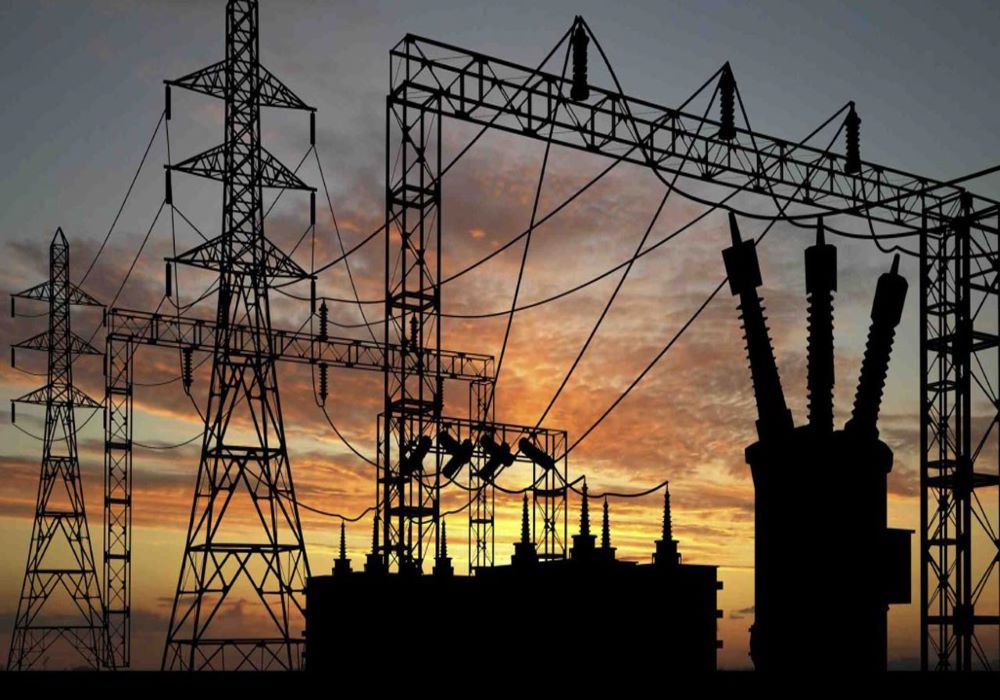
TCN Completes Relocation Of 8 Towers, Ends Power Rationing In Abuja

Ifon-Ilobu-Erin Osun Land Disputes: Osun Constitutes A 100-Member Boundary Resolution Committee

Savannah Energy Provides Unaudited FY 2024 Trading Updates

Okpebholo Moves To End Indiscriminate Parking, Gridlock In Edo State

Leadership Newspaper Backs Adeleke For Second Tenure, Names Him ‘Gov Of The Year’
OSSG Raises Alarm Over Murder Plot By APC Chieftain

NCC, SMEDAN, NAICOM, SEC, Others Set for SUPERNEWS SMEs Conf June 13

Sahara’s Tonye Cole resigns from GPHCDA

Niger Delta Avengers: President Buhari Reads riot Act …considers the carrot and stick option

Oando opens ultra-modern petrol station in Lagos