
International News
US, Israel Wipe Out Iran’s Top Military Brass as War Enters Third Day

The escalating conflict between the United States and Israel against Iran intensified on Sunday, with Washington and Tel Aviv claiming they have eliminated Iran’s top military leadership in coordinated airstrikes.
The war, now in its third day, has left dozens dead across the region, including senior Iranian officials, Israeli civilians, and American military personnel, while raising fresh fears over global oil supply disruptions.
Top Iranian Commanders Killed
Among those reported killed are senior Iranian military figures, including the Supreme Leader Ali Khamenei, who was targeted in the joint US-Israel offensive on key military and nuclear facilities.
SEE ALSO: Middle East Tensions Soar as US-Israel Strike on Iranian School Leaves 51 Dead
Others reportedly killed include: Ali Shamkhani, senior adviser to the Supreme Leader, Mohammed Pakpour, Commander of the Islamic Revolutionary Guard Corps (IRGC)
Amir Nasirzadeh, Defence Minister
Saleh Asadi, senior intelligence chief
Former President Mahmoud Ahmadinejad was also reported killed in a targeted strike while under house arrest, according to Israeli and international media reports.
In response to Khamenei’s death, senior cleric Ayatollah Alireza Arafi has been appointed to Iran’s three-member interim Leadership Council pending the selection of a new Supreme Leader.
Iran Retaliates, Kills Israelis and US Officers
Iran retaliated with ballistic missiles and drone attacks targeting Israeli cities and US assets across the Gulf.
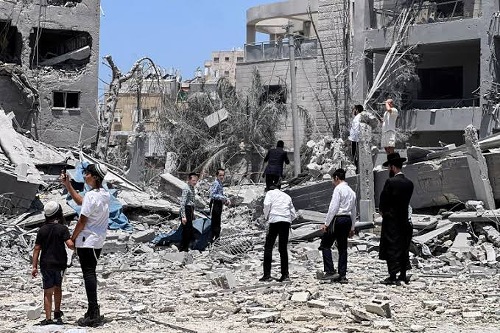
At least nine Israelis were killed in a missile strike on Beit Shemesh, west of Jerusalem, while emergency services reported dozens injured. A synagogue sheltering civilians was hit, with search teams still combing through rubble for missing persons.
The Pentagon confirmed that three American military officers were killed and 11 others seriously wounded during operations under what it described as “Operation Epic Fury.”
Iran’s Revolutionary Guards claimed to have struck the USS Abraham Lincoln aircraft carrier in the Gulf.
However, the US Central Command denied the claim, insisting the carrier was not hit and remains operational.
Strait of Hormuz Blocked
In a dramatic escalation, Iran’s Revolutionary Guards announced the closure of the Strait of Hormuz, warning that no vessel would be allowed to pass.
The Strait is a critical global oil chokepoint, with nearly one-fifth of the world’s crude supply passing through it daily.
Following the announcement, at least 100 oil tankers were reported stationed near the UAE and Oman coasts.
Global oil prices surged to $73 per barrel amid fears of prolonged supply disruption.
Nigeria’s Bonny Light crude rose close to $73 per barrel, while Brent crude climbed above $72.
Trump Open to Talks
US President Donald Trump warned Iran of “unprecedented force” if retaliatory attacks continue but said he remains open to negotiations with Tehran’s new leadership.
“They want to talk, and I have agreed to talk,” Trump said in an interview, adding that discussions could begin soon.
Global Reactions
Russia, China and North Korea condemned the killing of Iran’s Supreme Leader, describing it as a violation of international law.
Russian President Vladimir Putin called it a “cynical violation of international norms,” while China’s Foreign Minister Wang Yi said the attacks were “unacceptable.”
Meanwhile, EU foreign policy chief Kaja Kallas described the assassination as a defining moment in Iran’s history, urging de-escalation.
Flights Disrupted, Region on Edge
The conflict has severely disrupted air travel, with over 19,000 flights delayed or cancelled globally. Major airports across Dubai, Doha, Abu Dhabi, Kuwait, and Bahrain reported widespread suspensions.
As explosions continue to rock parts of the Gulf region, fears are mounting that the conflict could expand further, drawing in more regional and global powers.
Iran has declared 40 days of national mourning as it prepares to appoint a new Supreme Leader in what analysts describe as one of the most consequential moments in the country’s modern history.









Federal agents raided the Washington, D.C., home of Democratic Congresswoman Ilhan Omar early Monday morning as part of an ongoing federal criminal investigation, the United States Department of Justice (DOJ) has confirmed.
Homeland Security Investigations agents arrived at the Minnesota congresswoman’s residence at about 6:00 a.m. Eastern Time, according to a report by Fox News.
SEE MORE: Trump Sparks Outrage With Shock Proposal to Rename New Mexico
The report said both the Department of Homeland Security (DHS) and the DOJ are involved in the investigation.
A DOJ spokesperson confirmed the operation, stating: “Today in the Washington, D.C. area, Homeland Security Investigations executed a judicially authorized search warrant secured by the Department of Justice.”
The spokesperson added: “This enforcement action is part of an ongoing federal criminal investigation.”
Details later……….
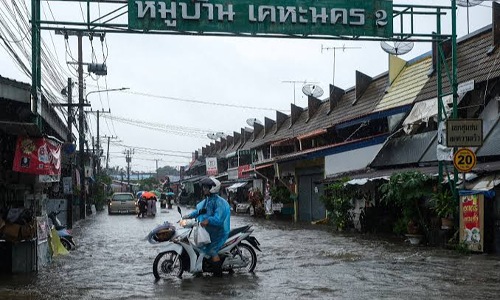
Heavy rains have triggered severe flooding across parts of Bangkok, Thailand, forcing nearly 4,900 residents to evacuate to shelters as floodwaters swept through roads and residential areas.
The flooding has disrupted movement across parts of the Thai capital, with motorists and pedestrians forced to navigate submerged roads and seek alternative routes.
SEE ALSO: NAFDAC Warns Nigerians As Fake Cowbell Milk Floods Market
According to the Bangkok Metropolitan Administration, about 52,000 households have been affected by the flooding, prompting authorities to declare a flood disaster and intensify emergency response efforts.
Emergency teams have been deployed to assist affected communities and move residents from vulnerable areas to safer locations as water levels rise.
Bangkok is accustomed to seasonal heavy rainfall, but intense downpours can overwhelm drainage systems, particularly in low-lying areas, resulting in widespread flooding and disruption.
Authorities are continuing to monitor affected locations while coordinating evacuations and other emergency measures.
For thousands of residents, the immediate priority remains securing safe shelter and protecting homes and livelihoods as authorities work to manage the situation and restore normal activities once the floodwaters recede.
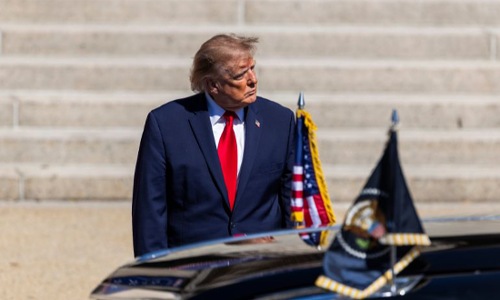
US President Donald Trump has explained his decision to reject Iran’s latest proposal to reopen the Strait of Hormuz, saying Tehran was seeking an agreement because it was losing revenue.
Speaking to reporters at the White House, Trump said Iran wanted to immediately reopen the strategically important waterway but argued that the proposal was not acceptable to his administration.
“They want to make a deal, and I think that’s fine. I like making a deal, too, but that deal would not be acceptable,” Trump said.
SEE ALSO: How the Strait of Hormuz Attack Could Trigger a Fresh Global Oil Shock
According to the US president, Iran’s push to reopen the strait was driven by the economic pressure it was facing.
“What they want to do is immediately open the Hormuz Strait. Do you know why? Because they are dying,” Trump said.
“You know why they’re dying? Because they have no money coming in, because they get their money from the Hormuz Strait.”
Trump also claimed that the US had established an unprecedented naval blockade against Iran, describing it as “a wall of steel.”
“So they outsmarted themselves. We put up the greatest blockade ever in military history. It’s a wall of steel,” he said.
“And guess what? They don’t have any money now because they wanted to close the strait.”
The Strait of Hormuz is a major global energy shipping route, and disruption to traffic through the waterway has significant implications for international oil markets and countries that depend on energy imports.
Trump’s remarks came amid continued tensions between Washington and Tehran over the reopening of the strategic waterway and negotiations involving Iran.






Tesla Aims for 2028 Commercial Production of Flying Car

Corruption Trials: EFCC, NJI Push Specialised Judges, Digital Evidence Reforms

‘It Is Morally Wrong’ — PDP Chieftain Questions North’s Bid for Another Eight Years

2027 Election: ‘Your Future Is More Valuable’ — IGP Warn Youths Against Political Violence

Tinubu Charges PCC Members to Deliver Wards

Marketers Eye Portion of FG’s Petrol Discount

Trump’s Family Unveils New Cryptocurrency Platform

Senate Denies Receiving Petitions Against Tinubu’s Ambassadorial Nominees

Dangote Cement Lights Up Benue Host Communities With CSR Initiatives

Reps Recommend 3-year Jail Term For Aviation minister

Tems Sets New Record On Billboard Hot 100 Chart
