
Finance
Why we’ve not arrested Goodluck Jonathan-EFCC

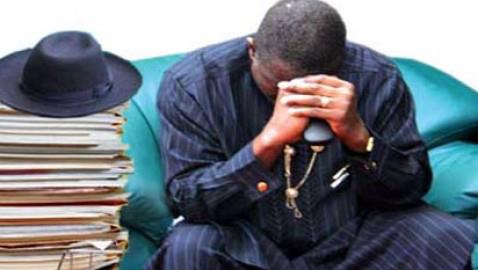
ABUJA—The Economic and Financial Crimes Commission, EFCC explained, yesterday, why it has not arrested former President Goodluck Jonathan following startling revelations on how the former National Security Adviser, NSA, Col Sambo Dasuki (retd) allegedly disbursed over $2.1 billion meant for arms purchase to various individuals.

Ibrahim Magu
Alarmed by the revelations, the National leadership of the Peoples Democratic Party, PDP, has, however, asked Dr Jonathan to speak out.
This came as the anti-graft commission disclosed that one of the beneficiaries, the former Military Administrator of Kaduna State, Mr. Jafaru Isah had returned N100m out of the N170m he collected and was given administrative bail to source for the balance of N70m.
Another beneficiary, the former Secretary to the Government of the Federation and leader of the Social Democratic Party, SDP, Chief Olu Falae however insisted that he would not refund the N100 million he collected from Chief Tony Anenih, which was said to have come from Dasuki.
Facts have also emerged how former Chairman of Board of Trustees, BoT of the PDP, Chief Tony Anenih and
Chief Olu Falae entered into a working relationship prior to the 2015 presidential election.
Explaining why the former president has not been arrested while speaking with online news publishers yesterday, in Lagos, the EFCC boss, Mr Ibrahim Magu said that no document has been traced to Jonathan giving any approval for the disbursement of the money for any purpose other than arms purchase.
He said that all those questioned so far in connection with the money were people who disbursed or collected it for reasons other than the purchase of arms and ammunition.
“All approvals by former president Jonathan did not mention that it was for political purposes.

All the memos approved by him were for the purchase of arms,” he said.
Speaking about Olisa Metuh, the EFCC boss revealed that the national publicity secretary of the Peoples Democratic Party said he would rather go on hunger strike than refund the N400 million he
Chief Olu Falae entered into a working relationship prior to the 2015 presidential election.
Explaining why the former president has not been arrested while speaking with online news publishers yesterday, in Lagos, the EFCC boss, Mr Ibrahim Magu said that no document has been traced to Jonathan giving any approval for the disbursement of the money for any purpose other than arms purchase.
He said that all those questioned so far in connection with the money were people who disbursed or collected it for reasons other than the purchase of arms and ammunition.
“All approvals by former president Jonathan did not mention that it was for political purposes.
All the memos approved by him were for the purchase of arms,” he said.
Speaking about Olisa Metuh, the EFCC boss revealed that the national publicity secretary of the Peoples Democratic Party said he would rather go on hunger strike than refund the N400 million he
allegedly collected from Dasuki.
Maga also said that Patrick Akpobolokemi, a former boss of Nigerian Maritime Administration and Safety Agency, was recently re-arrested after new evidences of alleged embezzlement of N34.5 billion and another N600 million were linked to him.
The EFCC chairman stressed that the war against graft was not selective and assured Nigerians that his agency was not teleguided in the ongoing anti-corruption fight.
According to PDP, since former President Jonathan was still alive, he should come out and explain to Nigerians whether he authorized his former National Security Adviser to distribute money meant to fight Boko Haram into his campaign.
Addressing Journalists yesterday in Abuja, PDP Deputy National Publicity Secretary Abdullahi Jalo said, Goodluck Ebele Jonathan is alive, he should clarify whether he asked the National Security Adviser to distribute money meant to fight Boko Haram into his campaign.
According to Jalo, “Jonathan is alive, he should clarify whether he asked the National Security Adviser to distribute money meant to fight Boko Haram into his campaign. What is important for one to know is that former President Goodluck Jonathan is alive. Has he ever said go and take the money for arms meant for Boko Haram to campaign for me? Is there anytime that Jonathan asked for anything from either Dasuki to go and distribute this money meant for fighting Boko Haram for his campaign?
“As you all know, no single kobo will be spent by the federal government or former President Goodluck Jonathan without the Act of the National Assembly. Some people however decided to divert this money to something else.
“Darkness has now come to light, we have now discovered that it is not only PDP members who collected the money but those in APGA collected, Falae collected, Tanko Yakasai collected. They all collected the money under the guise that they are campaigning for Goodluck Jonathan.
“It is known to us that money meant for campaign are given to the national chairmen of various political parties. We had a dinner in the banquet hall where some billions were collected meant for campaign for Jonathan. That money was meant for campaign. Dangote, Otedola and others donated. So why would somebody tell us that you are taking money meant to fight Boko Haram, which is from an Act of the National Assembly. Any money appropriated is coming from consolidated account of the federal government and its usage must be meant for that”.
The PDP which also disowned the embattled National Publicity Secretary, Chief Olisa Metuh who has remained detained by the officials of the Economic and Financial Crimes Commission, EFCC, said that as a party, it will not fight for his bail and others who have been alleged to be involved in the arms deal scam because they did that on personal levels and not on the platform of the party.
According to Jalo, “the issue of bail does not have anything to do with PDP. Let them tell us how much they have brought to PDP, to the national chairman and the money used for campaign, we want to know from them.
“PDP has nothing to do with individuals that used their companies to get money. PDP has no company, it is a political platform. There is PDP account and they did not even inform the PDP that they had received this money, they just went and slept with their families eating eggs and rice.”
Jalo who noted that public should not misconstrue the unfolding issues with that of the PDP, said that individuals that were presently involved, accessed public funds through their various private companies and not the PDP even though they were members of the party. He added that the Arms fund were an appropriation of the National Assembly to which the former President and Dasuki Sambo were aware of and were aware of the limit of using the funds other than what it was meant for.
The PDP deputy National Publicity Secretary said, “There are a lot of outcries against our members that have been taken to court because they received money from what we called Dasukigate or arms deal.
“The former acting National Chairman, Dr. Bello Haliru, who was taken to court is now on bail, he has a company Pam Proper and Property limited, he was given N600 million under a registered company of Corporate Affairs Commission, you can find out what the contract was meant for. Has he done what he was asked to do with the N600 million?
“Olisa Metuh’s company is Destral investment limited, he was given a job of N400 million. What has that got to do with PDP, you can bear me witness, when Olisa was accusing Lai Mohammed that he collected a contract from one of the states in the West, even Lai Mohammed took him to court, so now the hunter is now the hunted. Lai’s case has not been proved, Olisa is under investigation.
“Let us put the record straight. We want anyone of these people that have been accused whether in PDP, APGA or APC to come out and tell us that the money they collected, was given to PDP or their party. When he was given this money was he given the money to go and campaign for Jonathan, if yes let him show us the paper, let him present an evidence, but whoever was given this money should know that this money was not meant for that, it was meant for arms purchase.
“Thank God the party has kept quiet deliberately, maybe, because some have benefited. If we cannot clean the party now, the future is going to be bleak.
“If the Legal Adviser of PDP, rushes to go and bail out Olisa Metuh now he is doing the wrong thing, because he has to separate the party and Olisa as an individual.
Go, bring balance of N170m cash traced to you, EFCC tells Jafaru Isah
Meanwhile, the Economic and Financial Crimes Commission confirmed on Monday that it had retrieved N100 million out of the N170 million traced to the account of the former Military Administrator of Kaduna State, Mr. Jafaru Isah.
The Chairman of the EFCC, Mr. Ibrahim Magu, confirmed the retrieval of the cash from Isah, adding that it was the partial refund that informed his administrative bail to enable him to go and source for the balance.
Magu, who made the disclosure in response to criticism that he quickly released the APC chieftain and close associate of President Buhari while holding onto Olisa Metuh of the opposition PDP, said that the refund was not a guaranty that the suspect would not be prosecuted for receiving public funds illegally.

Jafaru Isah
There has been a furore over the ‘sudden’ release of Isah from EFCC custody while other suspects duly granted bail by the courts, are still being held by the anti-graft agency.
The opposition PDP believes its key figures, who received huge cash from the office of the National Security Adviser and are being detained by the EFCC, are being persecuted notwithstanding their admission that they indeed, received the said cash for election purposes.
But in the case of Jafaru Isah, the amount of N170 million traced to him is said to have been paid by the embattled ex-NSA, Sambo Dasuki, to enable him to acquire a property in Kano State for him.
The deal, it was gathered did not go through, as a member of the Jonathan cabinet paid a higher amount of money for the same building which Isah was billed to buy for Dasuki.
Isah, who was arrested by the EFCC last week, is said to be a close friend of Dasuki and a political associate of President Buhari, although Buhari did not know about the N170 million deal with Dasuki.
The Presidency immediately distanced itself from Isah upon his arrest, making it clear that it would not interfere in his prosecution by the EFCC.
An aide of the President told Vanguard in confidence that although Jafaru Isah was a close political ally of President Buhari, the first citizen would nonetheless remain neutral in the matter in line with his avowed position to deal decisively with corruption.
While describing Isah as a political ally, who had been with Buhari from the days of the defunct All Nigeria Peoples Party to the Congress for Progressive Change, the aide made it clear that the long relationship did not in any way suggest that Buhari was associated with the collection of N170 million from the Office of the National Adviser by the embattled politician.
The aide said: “It is true that Isah has been with Buhari from the days of the ANPP and CPC and was equally a member of the Transition Committee and actually headed the Defence Committee but that does not mean that Buhari knows anything about the N100 million said to have been collected by the man from the ONSA.”
Jafaru, who was a military administrator of Kaduna State from December 1993 to August 1996 during the military regime of General Sani Abacha and one-time governorship candidate of the defunct CPC in Kano State, is also described as a close friend of the embattled ex-NSA, Dasuki, who is facing multiple charges over money laundering and breach of public trust in three courts.
Arms deal :I won’t return N100 million, says Chief Falae
National Chairman of the Social Democratic Party, Chief Olu Falae, yesterday, said he would not refund the N100 million he collected from Chief Tony Anenih, which has been alleged to have come from the former National Security Adviser, Col. Sambo Dasuki.
Chief Falae, explained that the amount was given to him for onward delivery to his party, to assist sell ex-President Goodluck Jonathan’s second term bid, saying it was not paid through the office of the former NSA.
To this end, he has asked the government to hold Anenih, former Board of Trustees of the PDP, the source of the money rather than either himself or his party.
Speaking at a press conference, in Abuja, through the party’s National Publicity Secretary, Dr. Abdul Ahmed Isaiq, Falae insisted that his party would not return any money to the government coffers, since the money it got was neither from Col. Dasuki nor Office of the National Security Adviser.
He explained that the money was as a result of electoral alliance his party entered with the then ruling Peoples Democratic Party, to deliver the then President Goodluck Jonathan in his re-election quest.
He said those who were returning money to the government were those who got money directly from the Office of the former NSA, saying he cannot be part, since he did not get the money from Dasuki or the office he was occupying.

*Chief Olu Falae
“In terms of refund of money, I want to say here that those people who are refunding money are those who got their money directly from the arms deal fund.
“Our fund did not come from the arms deal, our fund came from an electoral alliance with the PDP and we knew that the PDP had a fund raising committee that gathered billions of naira and PDP had been in government for 16 years.
“ So, with that, we knew that the PDP had the capacity to fund the alliance that was formed with them by the SDP, he explained.
“You don’t postulate what you don’t have on the ground, you can’t build on a non foundation.
“We, as a political party knew that the PDP was a capable hand in the electoral alliance which we entered with them. And we equally knew that the PDP had a fund raising, where it generated over N20 billion down.
“So, whether the money came from Col. Sambo Dasuki or his office, is what we don’t know and it is left for them to ask Chief Tony Anenih to explain, “he added.
He emphasized:” “We knew that the PDP had been ruling Nigeria for 16 years. So, this was the basis of our electoral alliance with them.
“We can’t refund any money to anybody because the money we got as a party came because of the alliance we had with the PDP and we have the agreement note from this alliance.
“If it is possible that the money Chief Anenih gave us was from the arms deal, it is left for them to ask Chief Anenih to clarify. As far as we knew, we did not have any dealing with Dasuki.
“ Our office did not ever have anything to do with the office or person of the National Security Adviser, Col. Sambo Dasuki. “
Dr Abdul explained that prior to the 2015 presidential election, the SDP was approached by the Peoples Democratic Party, PDP through its BOT chairman, Chief Tony Anenih, for electoral alliance for the re-election bid of the former President, Dr Goodluck Jonathan.
He said Chief Olu Falae, being the national chairman of SDP, summoned the National Executive Committee, NEC of SDP to a well-attended meeting to consider the PDP’s proposal of electoral alliance for the re-election bid of the former President, Goodluck Jonathan, since SDP did not field a presidential candidate of its own, saying the money that the SDP was given, which he noted, was being alleged to have come from the arms deal fund, was as a result of the alliance.
He, however, said, his party was in full support of the ongoing fight against corruption, saying anyone found wanting should be prosecuted according to the laws of the land.
“If you look at the cardinal principles of the Social Democratic Party, one of the basic ones is that of zero tolerance to corruption. So, anywhere there is fight against corruption, SDP is in support, once it is done according to the ambit of the law.
“ In terms of the misappropriation of arms deal fund, as a party, I want to say that anybody who violates the law should face the consequences, “he added.
2015 presidential poll: How Anenih, Falae sealed PDP/SDP working cooperation
Fresh facts are beginning to emerge on how former Chairman of Board of Trustees, BoT of the Peoples Democratic Party, PDP, Chief Tony Anenih and former Secretary to the Government of the Federation and leader of the Social Democratic Party, SDP, Chief Olu Falae entered into a working relationship prior to the 2015 presidential election.
A letter which was accessed by Vanguard yesterday buttressed the political marriage entered into by PDP with Chief Anenih on one hand and the National Chairman of the SDP, Chief Olu Falae on the other hand against the backdrop that the SDP had no presidential candidate for the 2015 Presidential election as there was the need for PDP’s candidate, former President Goodluck Jonathan to be supported.
The letter by Chief Tony Anenih, the then Chairman of PDP BoT was dated January 26, 2015 and it confirmed the claim by Chief Olu Falae that there was inter-party cooperation between the PDP and the SDP to support Jonathan’s presidential ambition.
The PDP through Chief Anenih had agreed to the six issues raised by the SDP before it could support the re-election bid of President Goodluck Jonathan in last year’s presidential election.
Falae, who admitted that he received on behalf of the SDP the sum of N100 million from the PDP through Anenih, following the agreement to work together, told an online newspaper-Premium Times-that the money was distributed to all the state branches of the SDP.
Chief Falae had also stated elsewhere that his party, which did not have a candidate for the presidential election, decided to work for the actualization of Jonathan’s re-election after the PDP agreed to the six issues it placed on the negotiation table.
Anenih’s letter had clearly responded to the six issues, thus paving the way for the PDP-SDP working cooperation.
The letter, entitled: “Inter-Party Co-operation” and signed by Anenih in his capacity as Chairman of the Board of Trustees of the PDP reads: “I write to sincerely thank you for your letter dated January 23,2015, on the above subject matter.
“After due consultations with relevant stakeholders of our party, I am pleased to convey to you our decisions on the issues and to further inform you that the President and the leadership of our party have expressed delight and strong optimism to fully cooperate and work with the SDP in the circumstance.
“On the implementation of the report of the 2014 National Conference” that “Please be assured that the report of the National Conference will be implemented to the letter. We believe that having regards to the fact that the National Conference was a baby of the President, he is in a better position to implement it. And this is what he is doing.”
On “zero tolerance to corruption”, Anenih had responded thus : “There is no doubt that our party, the PDP and your party, the SDP, are on the same page on this issue. Apart from the fact that this administration has done more arrests, investigations, prosecutions and convictions of corrupt cases, the President has continuously laid emphasis on the need to develop an appropriate technology to comprehensively combat corruption and its vices.
“The approach, for example, has produced immense results in eliminating corruption that was associated with the distribution of fertilizers in Nigeria in the past.”
On “intensification of efforts to defeat insurgency”, he said: “it is the primary duty of Government to protect the lives and property of its citizens and secure the territorial integrity of the nation. This Government has consistently made efforts to deal with the challenges of Boko Haram who have established their operational base somewhere between some States in the North-East of the country and the boundary with some of our neighbouring African countries.
“Terrorism has become a global phenomenon and fighting it requires the co-operation of not just the entire citizens but the support of the international community. The President is working on this. In his recent visit to Borno and in a rally in Maiduguri few days ago, he assured the people that every inch of Nigerian soil currently under the control of insurgents will be recovered in no distant time.”
Vanguard-


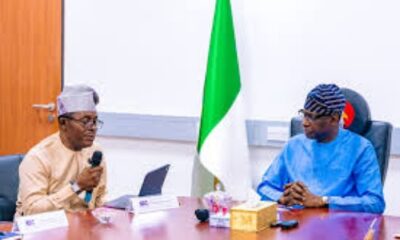




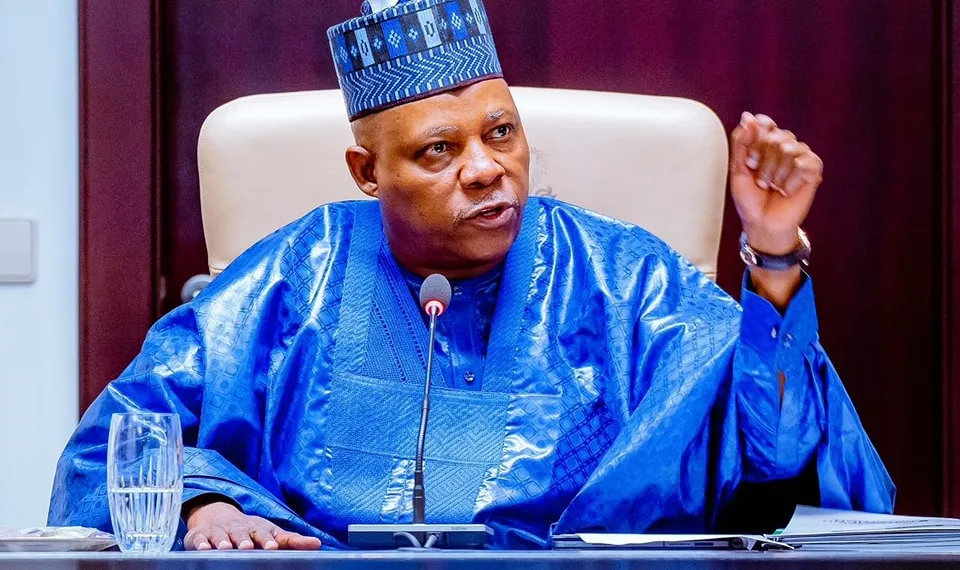
Nigerisa’s Vice President Kashim Shettima
By Modupe Asudo
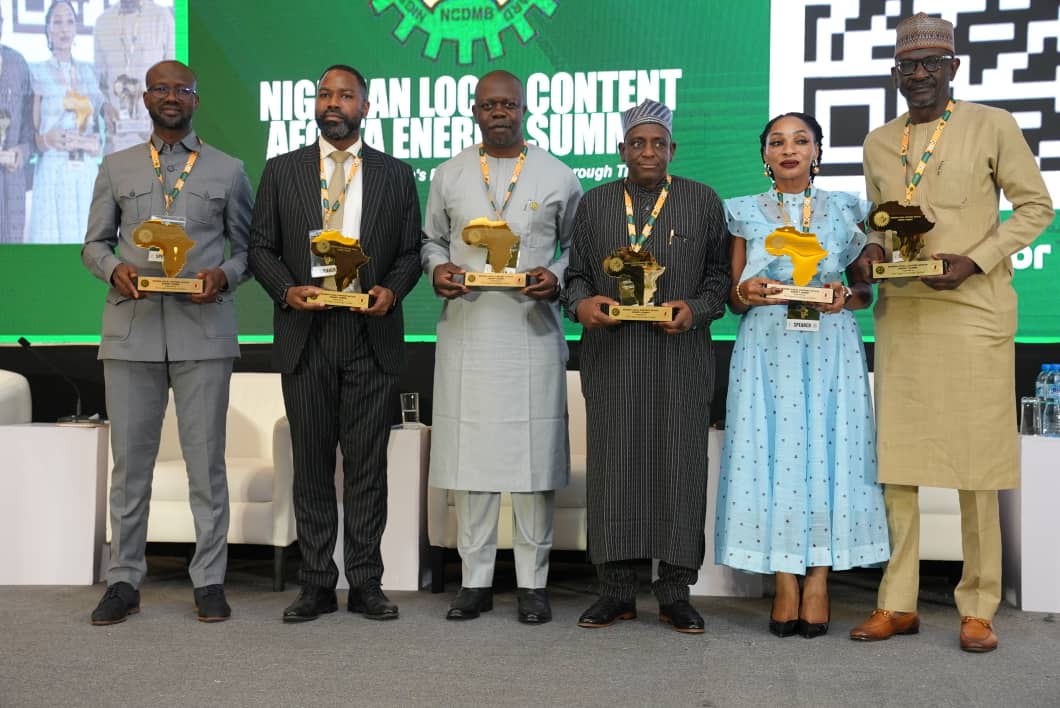
The 2026 edition of the African Continental Free Trade Agreement (AfCFTA) Summit got underway in Lagos on Monday with regulatory agencies, project promoters, and financial institutions focused on deepening intra-Africa trade, a unified code of standards for professional qualifications and manufactured goods, and expansion of the frontiers of technological development and innovation.
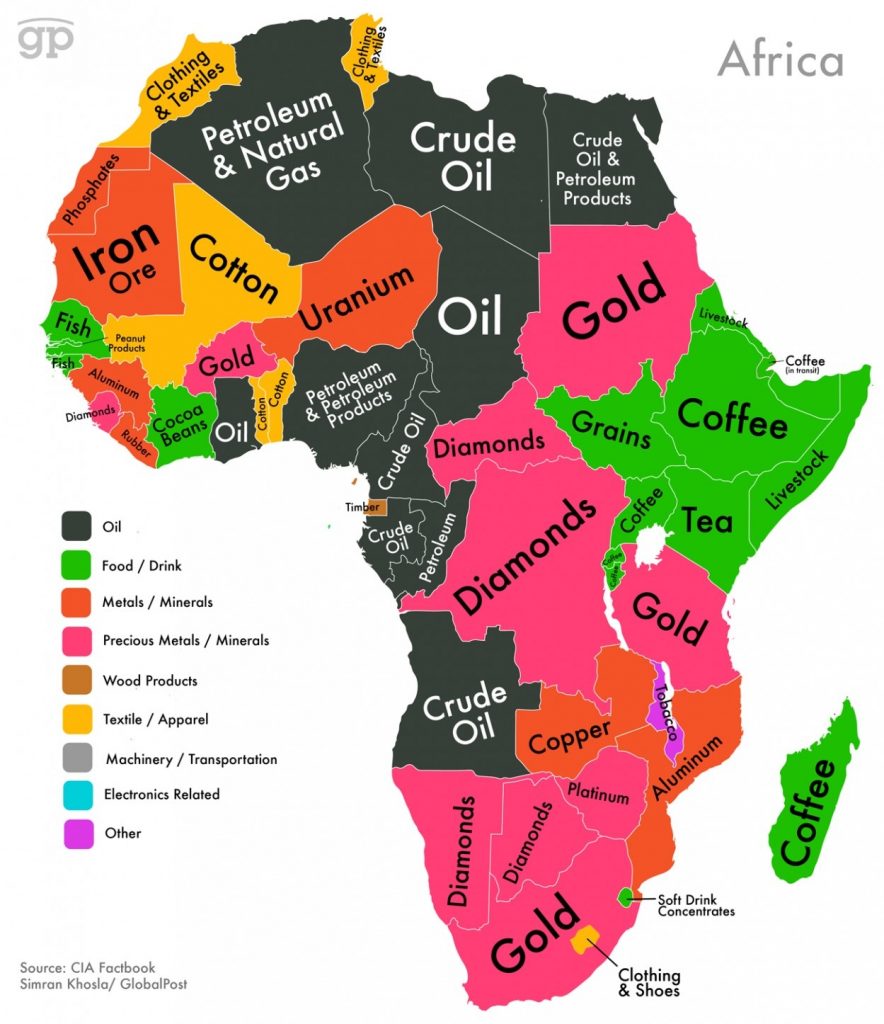
Critical questions addressed include how AfCFTA’s 1.4 billion population and $3.4 trillion economy could achieve “a strategic shift from fragmented economies towards a globally competitive supply chain system”; how Africa could leverage its vast mineral resources, including copper, iron ore, petrochemical, for domestic production of hardware such as Christmas tree (an assembly of valves, fittings on top of a wellhead to control oil production), and how, hypothetically, Tema Shipyard in Ghana could be designated the vessel construction, assembly and repairs hub for Africa.
Related questions were how cables manufactured in Nigeria, hypothetically, could benefit from favourable trade terms in Angola; what compliance requirements a sacrificial anode producer in Nigeria would have to meet in regard to the rule of origin requirement to export anodes to Algeria for protection and longevity of pipelines, storage tanks, offshore platforms, etc., and what other support levers would be required to achieve energy security for Africa besides expanded refining capabilities in Dangote Refinery, laying of continental gas transmission pipelines, and establishment of industrial parks and other support infrastructure.
In a keynote address at the event, the Executive Secretary of the NCDMB, Engr. Felix Omatsola Ogbe, represented by the Director, Corporate Services, Dr. Abdulmalik Halilu, disclosed that Nigeria’s oil and gas industry embraced AfCFTA and developed a framework for domesticating the policy in 2022.
According to him, implementing AfCFTA in the industry was anchored on three broad pillars, namely, Opportunities Identification, Capacity Development, and Capacity Exportation. In regard to opportunities, he said Nigeria’s strength lies in formidable supply chain in oil field services, refining capacity, oil field logistics base, gas supply pipelines, and a pool of qualified oil field technical workforce.
On capacity development, he pointed out that Nigeria’s oil and gas industry, through the local content law, has developed capabilities in the oil and gas value chain spanning marine vessel asset ownership, fabrication, assembly and installation of production systems, including Christmas trees, pressure vessels, and pumps.
What remains unresolved, described by the Executive Secretary as “the next frontier and the reason for convening the Summit,” is capacity exportation. He posited for consideration a unified work permit and visa that would enable, say, “a welder in Senegal to be engaged in Arlec Engineering Works, Johannesburg, South Africa, for fabrication of heat exchangers, storage tanks, pressure tanks, pressure vessels, etc.”
In examining the importance of achieving continental economic integration, Engr. Ogbe explained that strong regional supply chains would shift Africa from exporting raw materials to producing high-value goods. For pathways to integration, he listed regional value chains, infrastructure connectivity, regulatory harmonization, industrial clusters, and small and medium scale enterprises (SME) inclusion.
He assured industry stakeholders and participants maximum support by the NCDMB.
By Modupe Asudo
The Nigerian Content Development and Monitoring Board has outlined a practical framework for positioning Nigeria’s energy sector to access the African Continental Free Trade Area, following a strategic webinar focused on meeting rules-of-origin requirements for continental trade.
The Board held a pre-conference webinar on Wednesday ahead of the Nigeria Local Content AfCFTA Energy Summit scheduled for Monday, February 9, 2026.
The engagement was attended by stakeholders from the oil and gas, power and renewable energy sectors, and they addressed how Nigerian products and services can qualify for preferential market access across 54 African countries with a combined gross domestic product of $3.4tn and a population of about 1.4 billion people.
 Entitled ‘Meeting AfCFTA Origin Requirements in Energy Trade’, the webinar focussed on one of the major barriers facing Nigerian exporters under AfCFTA — structuring production and operations to meet origin requirements that determine eligibility for duty-free and preferential trade.
The initiative was supported by the Executive Secretary of NCDMB, Engr. Felix Omatsola Ogbe, and the Acting Director of Planning, Research and Statistics, Mr. Ene Ette, as part of preparations for the forthcoming Nigeria Local Content AfCFTA Energy Summit, with the theme ‘Unlocking Africa’s Energy Future through AfCFTA: Trade, Innovation and Regional Integration’.
Speaking during the session, a communications analyst, Joseph Nwokedi, representing the Acting National Coordinator of Nigeria’s AfCFTA Coordination Office, Mrs Patience Okala, stressed the central role of energy in Africa’s economic integration under AfCFTA.
He urged Nigerian companies to shift their focus from Nigeria’s domestic market of about 200m people to the wider continental market of 1.4bn consumers.
“Without energy, there’s no industrialisation. Without energy, regional value chains remain aspirational,” Nwokedi said. “With AfCFTA, energy transforms from a domestic infrastructure issue into a tradable, investable and exportable sector within an integrated African market.”
He noted that even one per cent penetration of the African market translates to about 14m consumers, underscoring the scale of opportunity available to Nigerian energy firms.
The webinar identified four key pathways through which Nigeria’s energy sector can participate in AfCFTA-enabled trade. First, Nigeria’s Electricity Act of 2023 allows independent power producers to supply electricity directly to industrial clusters and export processing zones, positioning power generation as a foundation for trade-ready manufacturing.
Second, the country has submitted commitments under AfCFTA that enable professionals such as engineers, electricians, geophysicists and energy auditors to export services across Africa, subject to mutual recognition of qualifications.
Third, refined petroleum products, gas derivatives, electricity and renewable energy components can be traded across borders under preferential tariffs, provided they meet AfCFTA rules of origin.
Fourth, AfCFTA’s investment protocol, combined with recent domestic reforms, including the Presidential Directives on Investment Incentives for 2024–2025, strengthens Nigeria’s credibility for attracting cross-border investments in power generation, transmission, renewable energy and storage infrastructure.
Delivering a technical presentation, Assistant Comptroller of Customs, Burhan Sulaiman, explained that AfCFTA would eliminate tariffs on 90 per cent of goods traded within the bloc over five to 10 years, with an additional seven per cent liberalised over 13 years. However, he stressed that these benefits were conditional on meeting origin requirements.
“Companies lose benefits because origin was treated as an afterthought,” Sulaiman said. “You must build in origin compliance from the beginning, not while already running your project. Origin determines whether you export duty-free or pay full tariffs.”
He clarified that origin is determined by where economic production takes place, not by company ownership or registration. Foreign-owned companies producing in Nigeria can export as Nigerian origin, while Nigerian companies importing finished goods cannot claim AfCFTA preferences.
Sulaiman explained that products qualify for preferential access through two routes. “Wholly obtained” goods are entirely produced within AfCFTA member states, such as crude oil and natural gas extracted in Nigeria, as well as locally generated electricity regardless of fuel source.
The second route, “substantial transformation”, applies where foreign inputs are used and requires compliance with one of three tests: a change in tariff classification; a value-addition threshold limiting foreign content to between 30 and 60 per cent of ex-works price; or completion of specific prescribed processes such as distillation, cracking or reforming for petroleum products.
He provided sector-specific guidance, noting that in oil and gas, locally extracted crude and gas qualify, just as refined petroleum products that meet processing requirements. However, simple blending, basic distillation operations and modular refineries using imported crude without substantial transformation do not qualify.
In the power sector, he explained, locally generated electricity and regionally manufactured equipment with deep component transformation qualify, while installation-only activities, imported turbines, transformers and switchgear mounting do not.
“For renewables, regional solar cell and battery cell manufacturing with deep component processing qualify,” he said, adding that panel installation alone, simple module assembly and packaging imported batteries do not meet the thresholds.
Sulaiman warned that without regional manufacturing accumulation, power equipment exports fail origin tests.
According to him, the Nigeria Customs Service applies a five-step verification process for origin claims, including confirming accurate HS codes, reviewing production records, testing for minimal operations, verifying African input origins and ensuring consistency across certificates, production records and cost documentation.
“Weak documentation kills origin claims. Even genuinely originating products can be denied if documentation is incomplete or inaccurate,” he noted.
Both speakers emphasised that origin compliance should be treated as a core business strategy rather than a regulatory formality.
“Origin is not paperwork; it is strategy,” Sulaiman said. “It shapes where you locate facilities, how you source inputs, and where you sign regional contracts. Treat it as strategic from day one.”
Nwokedi urged Nigerian firms to act early. “AfCFTA is happening now. Early movers will shape supply chains, standards and partnerships. Are you going to lead, or simply follow?”
Officials also provided updates on AfCFTA implementation, noting that 92 per cent of rules of origin had been agreed, with negotiations ongoing in the textiles and automotive sectors.
An online dispute resolution mechanism has been established to coordinate Customs authorities, standards bodies and complainants.
Nigeria has deployed a fully operational electronic certification system for paperless trade, while Nigerian Customs is introducing risk-management frameworks that could allow exporter self-certification on commercial invoices.
Following a five-year implementation review led by the Minister of Industry and Investment, Dr Jumoke Oduwole, government sensitisation efforts have intensified through partnerships with the Nigerian Association of Chambers of Commerce, Industry, Mines, and Agriculture; Women’s Chambers of Commerce; zonal outreach programmes and ‘P3 engagements’ involving the press, private sector and public institutions.
“The government will not trade under AfCFTA — our exporters will,” officials said. “If they win, we win.”
Nigerian Customs also reiterated its open-door policy for pre-export origin verification to help businesses avoid delays and additional costs at the border.
The webinar highlighted Nigeria’s potential as a regional energy and transition-fuel hub, building on frameworks such as the West African Power Pool to support cross-border electricity trade.
Key recommendations included structuring projects for origin compliance from inception, forming regional joint ventures, aligning with continental standards and leveraging AfCFTA service commitments to export Nigerian energy expertise.
The session ended with confirmation that the webinar was a technical precursor to the Nigeria Local Content AfCFTA Energy Summit, which will convene policymakers, industry leaders and trade experts to develop strategies for maximising Africa’s energy potential under the AfCFTA framework.






WHO Releases Alarming Casualty Figures From US‑Israel‑Iran Conflict

PDP’s Festering Crisis Chases Tambuwal to ADC

$200/barrel Price Likely as Iran Threatens Oil Ships

2026 Poll: Osun Ndigbo Backs Adeleke’s Second-Term Bid

NGX Group, IFC, CSCS and WIMBIZ Convene Leaders to Advance Gender Equality at 2026 Ring the Bell Ceremony

Adeleke on Why he Deserves Second Term

Trump’s Family Unveils New Cryptocurrency Platform

Reps Recommend 3-year Jail Term For Aviation minister

Dangote Cement Lights Up Benue Host Communities With CSR Initiatives

Senate Denies Receiving Petitions Against Tinubu’s Ambassadorial Nominees

Things To Know About Threads, Zuckerberg’s Twitter-like App
