
Politics
Alison-Madueke’s Loot: SERAP Writes Trump, Seeks Return Of Stolen Assets, Ban On Corrupt Officials

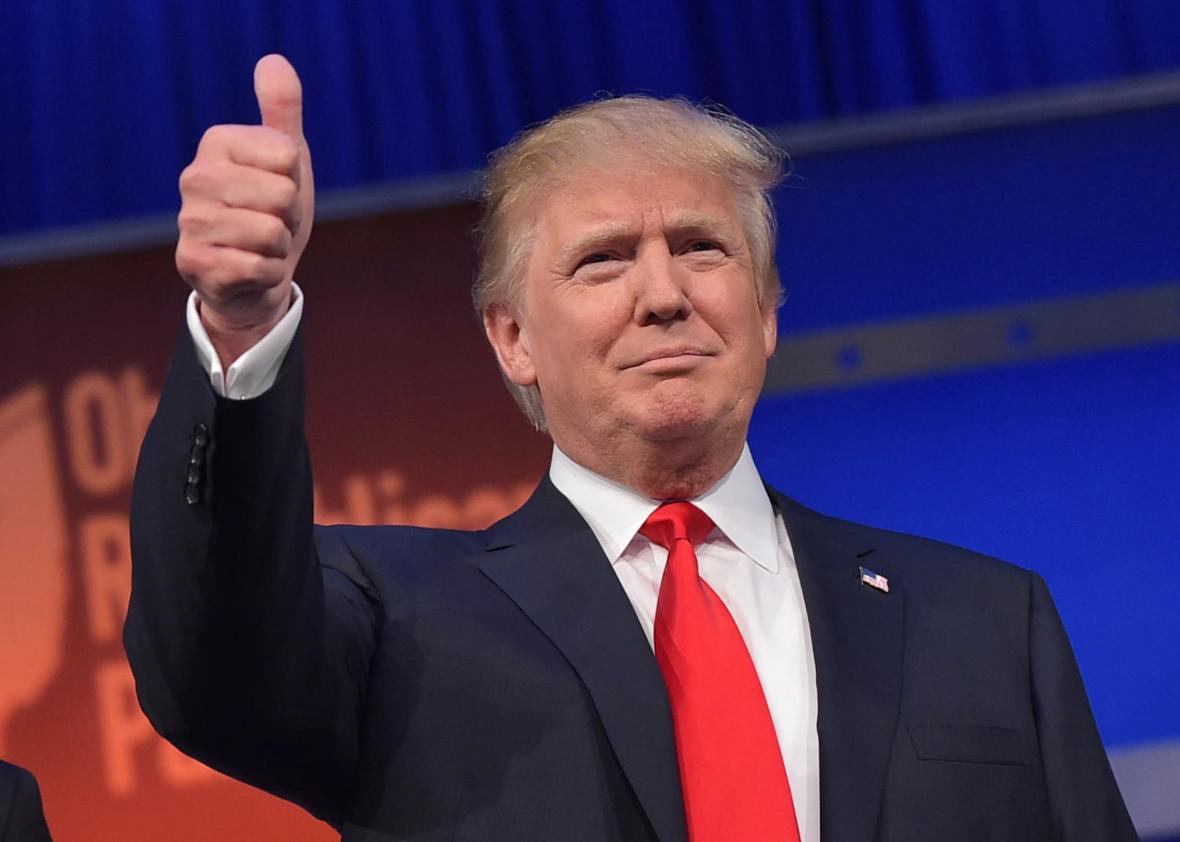
The Socio-Economic Rights and Accountability Project (SERAP) has urged US President-elect Donald Trump and his incoming administration “to promptly identify US-based proceeds of corruption traced to former and current Nigerian public officials and their associates and to ensure the full recovery and return of any such stolen assets to Nigeria.”
The SERAP said, “any return of proceeds of corruption from Nigeria must meet strict transparency and accountability standards to ensure the funds are used solely for the benefit of the Nigerian people.”
The SERAP urged him to “direct the US Department of Justice to promptly initiate civil asset forfeiture proceedings against proceeds of corruption traced to former and current Nigerian public officials and their associates so as to fulfill several non-controversial commitments by the US to assist Nigeria in asset recovery matters.”
ALSO READ: Obasanjo Lauds Adeleke Over Opposition’s Attempts to Thwart Airport Project
The SERAP also urged him “to identify and publish the names of former and current Nigerian public officials suspected to be responsible for corruption and the depositing of its proceeds in US banks, and to apply existing US presidential proclamations to temporarily ban such officials from entering the US.”
In the letter dated 18 January 2025 and signed by SERAP deputy director Kolawole Oluwadare, the organisation said: “Diezani Alison-Madueke’s looted assets and other recently returned assets represent a tiny fraction of the over $500 billions that have been reportedly stolen from Nigeria and located in the US or otherwise subject to US jurisdiction.”
The SERAP said, “Our requests are brought in the public interest, and in keeping with the requirements of the UN Convention against Corruption to which both the US and Nigeria are states parties.”
According to the SERAP, “Proceeds of corruption from Nigeria continue to be deposited in US banks or in other locations subject to US jurisdictions.”
The request followed the recently returned $52.88 million in forfeited corruption proceeds linked to former Petroleum Resources Minister Diezani Alison-Madueke.
The letter, read in part: “We hope you and your incoming government address the legal impediments that have continued to allow corrupt Nigerian government officials to deposit and conceal their ill-gotten assets in the US and other locations subject to US jurisdiction.”
“Returning proceeds of corruption to Nigeria is a development imperative. By returning proceeds of corruption to Nigeria, the US would be contributing to the efforts to address the growing poverty in the country and achieve the Sustainable Development Goals.”
“The US has the obligations under the relevant provisions of the UN Convention against Corruption to trace, freeze and seize proceeds of corruption from Nigeria and located in the US or otherwise subject to US jurisdiction and to return the assets to the Nigerian people.”
“A whole chapter of the Convention is devoted to international cooperation in the recovery and return of stolen assets including from Nigeria (chapter V, comprising 9 articles).”
“SERAP is concerned that corruption remains a major obstacle to sustainable development, the rule of law and the effective enjoyment of socio-economic rights in Nigeria. Implementing the recommended measures would contribute to addressing these governance challenges.
“Corrupt practices have long been accepted as a fact of life and an inalienable part of the country’s ministries, departments and agencies [MDAs] and the governmental power structures across several states.”
“Nigeria’s auditor-general office annually documents widespread and systemic corruption in ministries, departments and agencies (MDAs) including in the petroleum, education, health and water sectors, plunging millions of Nigerians further into poverty. The auditor-general office has declared trillions of naira as missing or diverted.”
“SERAP urges you to promptly share information with relevant Nigerian civil society organizations on stolen assets of Nigerian origin located in the US or otherwise subject to US jurisdiction, as required by Articles 46(4) and 56 of the UN Convention Against Corruption.”
“Imposing a temporary travel ban on former and current Nigerian public officials suspected to be responsible for keeping proceeds of corruption in the US or in locations subject to US jurisdiction would not violate due process and presumption of innocence principles, as long as the reasons for the sanctions are communicated to those that may be affected.”
“According to reports, the U.S. Government and the Federal Government of Nigeria recently announced an agreement to promptly repatriate approximately $52.88 million in forfeited corruption proceeds.”
“These funds were forfeited to the United States as part of the Kleptocracy Asset Recovery Initiative of the U.S. Department of Justice. The forfeited assets had been illegally acquired using funds linked to money laundering and a conspiracy to bribe former Petroleum Resources Minister Diezani Alison-Madueke.”
“In 2007, former Chairman of the Economic and Financial crimes Commission (EFCC) Mallam Nuhu Ribadu alleged that Nigerian politicians stole over $400 billion. Former military dictator General Sani Abacha reportedly collected truck-loads of cash running into billions of naira from the Central Bank of Nigeria.”
“According to the Stolen Asset Recovery Initiative (StAR) estimates, illicit funds associated with bribes received by public officials from developing and transition countries alone are estimated at USD 20 billion to USD 40 billion per year – a figure equivalent to 20 to 40 percent of flows of official development assistance.”
“SERAP notes that Article 51 of the UN Convention against Corruption provides for the return of ‘corrupt’ assets to countries of origin as a fundamental principle. Article 43 provides likewise.”
“Similarly, under Articles 47(3)(a) and (b) states parties have an obligation to return forfeited or confiscated assets in cases of public corruption, as here, or when the requesting party reasonably establishes either prior ownership or damages to the states.”
“A resolution adopted by the Conference of States Parties to the UN Convention Against Corruption in Panama in November 2013 reaffirms this obligation, by requiring state to make ‘every effort’ to return such proceeds. to the victim state.”




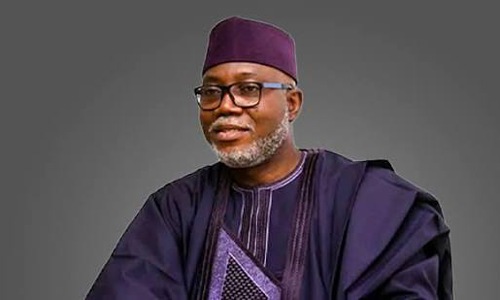
The Court of Appeal in Abuja has handed a significant setback to Ondo State Governor Lucky Aiyedatiwa, dismissing his appeal challenging a Federal High Court ruling that questioned his eligibility to contest the upcoming governorship election.
A three-member panel delivered a unanimous judgment on Monday, affirming that the trial court acted correctly when it allowed Dr Akindele Egbuwalo, the plaintiff, to amend his originating summons.
ALSO READ: No Shake-Up in Ondo: Aiyedatiwa Denies Plot To Remove Deputy Gov
Justice Uchechukwu Onyemenam, who read the lead judgment, said the governor failed to show that the High Court’s decision caused any miscarriage of justice or denied him a fair hearing.
The appeal was therefore dismissed for lacking merit, and the court awarded ₦2 million in costs against Aiyedatiwa.
The ruling reinforces the November 24, 2025, Federal High Court decision in Akure, which granted Egbuwalo permission to challenge Aiyedatiwa’s eligibility for re-election.
Earlier, the Court of Appeal also rejected an application by Aiyedatiwa to set aside a January 27, 2026, order staying proceedings in the case before the Federal High Court.
The appellate court clarified that the stay was a lawful exercise of its jurisdiction aimed at protecting the integrity of the proceedings.
The panel further emphasized that attempting to overturn its own order would be akin to sitting on appeal over its own decision.
The governor’s remaining option, the court noted, is to challenge the ruling at the Supreme Court. Another ₦2 million in costs was awarded against Aiyedatiwa.
The crisis rocking the Peoples Democratic Party has deepened following a ruling by the Court of Appeal in Abuja which upheld a ban on the party’s proposed national convention in Ibadan, Oyo State.
A three-man panel of the appellate court on Monday dismissed an appeal filed by a faction of the party led by former Minister of Special Duties, Kabiru Turaki, challenging the jurisdiction of the Federal High Court to hear a suit concerning the controversial convention.
The Turaki-led faction had approached the Court of Appeal after a Federal High Court barred the party from holding its planned national convention scheduled for November 14 and 15, 2025.
SEE MORE: Fubara Moves to Rebuild Cabinet as R/Assembly Screens Nine Commissioner Nominees
The lower court also restrained the Independent National Electoral Commission from recognising or validating the proposed convention.
However, delivering judgment, the appellate court ruled that the Federal High Court had the authority to entertain the case, rejecting the argument that the matter was purely an internal affair of the party.
According to the court, the appellants could not present what it described as a clear violation of the party’s constitution and the Constitution of the Federal Republic of Nigeria as merely an internal party issue.
The panel subsequently dismissed the appeal and awarded a cost of N2 million against the appellants.
The ruling is part of judgments delivered in nine harmonised appeals filed by the Turaki-led faction over the dispute surrounding the convention.
The latest court decision is expected to further intensify the internal wrangling within the opposition party as it continues to grapple with leadership disputes and preparations ahead of the 2027 general elections.

The Rivers State House of Assembly on Monday began the screening of nine commissioner nominees submitted by the Governor of Rivers State, Siminalayi Fubara, as part of efforts to reconstitute the state’s Executive Council.
The nominees arrived at the Assembly complex around 10 a.m. and were ushered into the chamber to undergo the screening exercise conducted by lawmakers.
Those screened include Datonye Alasia, Tonye Bellgam, Temple Nwofor, Peters Nwagor, Mrs. Charity Deemua, Tamuno Williams, Lekue Kenneth, Otonye TKD Amachree, and Amairigha Hart.
SEE ALSO: APC Sweeps Both Rivers Assembly Seats Despite Low Turnout
During the session, each nominee mounted the podium to introduce themselves and respond to questions from members of the Assembly.
The proceedings were broadcast live on Arise TV.
Governor Fubara had earlier forwarded the list of nominees to the Assembly on March 5, 2026, following his dissolution of the State Executive Council in a move aimed at forming a new cabinet to assist in running the affairs of the state.
Prior to the screening, the Assembly directed the nominees to submit 40 copies of their curriculum vitae, photocopies of their academic credentials, and evidence of tax compliance as part of the confirmation process.
The directive was contained in a notice signed by the Clerk of the House, Dr. Emeka Amadi.
The screening exercise comes months after political activities resumed fully in the state following the lifting of a state of emergency by Bola Tinubu, the President of Nigeria.
The emergency rule, which was imposed on March 18, 2025, led to the suspension of Governor Fubara, his deputy, and the state legislature amid a prolonged political crisis linked to a power struggle between the governor and his predecessor, Nyesom Wike, who currently serves as the Minister of the Federal Capital Territory.
However, the six-month emergency rule was lifted on September 17, 2025, paving the way for the restoration of democratic governance and legislative activities in the oil-rich state.






African Club Football Gets Major Financial Boost as CAF Hikes Prize Money

Abramovich Clashes with UK Gov’t Over £2.35bn Chelsea Sale Funds

Global Crisis: Attacks on Schools Skyrocket 166% – UN Sounds Alarm on Children’s Safety

Appeal Court Deals Major Blow to Aiyedatiwa’s Re-election Hopes in Ondo

After Turbulent Elections, Portugal Swears In Seguro as President

JUST IN: Nigerians Reeling as Dangote Sparks Another Spike in Fuel Prices

Trump’s Family Unveils New Cryptocurrency Platform

Reps Recommend 3-year Jail Term For Aviation minister

Senate Denies Receiving Petitions Against Tinubu’s Ambassadorial Nominees

Dangote Cement Lights Up Benue Host Communities With CSR Initiatives

Things To Know About Threads, Zuckerberg’s Twitter-like App
