
NEWS
Crude Oil Theft: Why Peter Obi’s Allegations Against Nigerian Govt may be True

By Edozie Obasi-Eze
The deafening noise about crude oil theft in Nigeria has gotten to a level where no right-thinking person can continue paying a deaf ear to it.
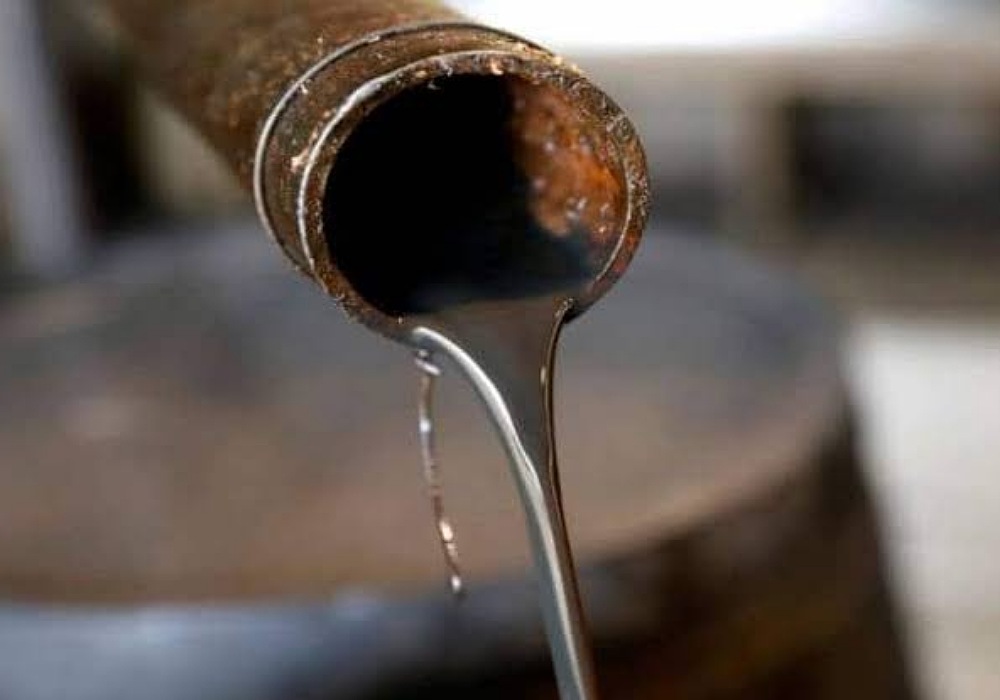 With individual households carving in under prevalent economic pressure, which is biting hard with stagflation, there’s little doubt that the man on the street is being compelled to ponder what has become of the national wealth.
While those in authority have been quick to point accusing fingers at hoodlums, particularly the natives of the Niger-Delta region, those who know maintain that hydrocarbons are of such nature that they cannot be sneaked out of any part of the world without the authority being culpable.
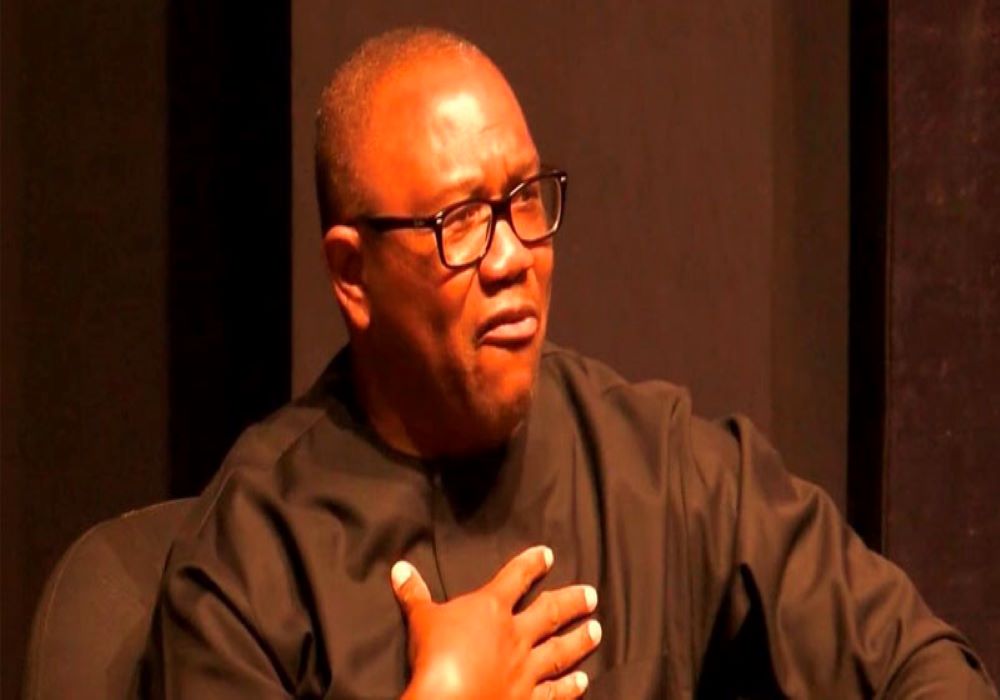
This much the presidential flagbearer of the Labour Party, Peter Obi averred recently.
He also brought it to national consciousness that those behind crude oil theft, having been startled by his posturing that truth must be told are now masterminding his being taken out of circulation.
The elite class would rather that their well-thought-out, and overly played-out narrative, of pointing accusing fingers at criminal elements, especially in the Niger Delta continues to circulate.
But Nigerians appear to have had enough of that and have started going out of their way to share information with the public that buttresses why Mr Obi’s allegations might be true.
In a recent trending video making the rounds on social media, an anonymous vlogger went aboard what he described as “an anonymous vessel” which he categorically averred was capable of loading and lifting up to one million barrels of crude oil.
The male voice in the video described the vessel, as a Very Large Cargo Career (VLCC).
Read Also >> Trending Video: Obasanjo Hands Over His Seat To Obi, Says ‘My Job Is Done’
The man who made or voiced the video appears very familiar with the operations of the oil industry and the security architecture in the sector.
Drawing from inside knowledge, he pinpointed universal vessel tracking standards, which the Navy of sovereign nations deploy to keep all vessels that sail into their territorial waters, for whatever purpose, under the radar.
The trackers, the voice said, aid the Navy in clearly identifying and monitoring vessels up to 1,000 nautical miles from the seaport.
The video showed a piece of equipment, that looked like a clock which he asserted was capable of helping the Nigerian Navy fish out each and every ship sailing into Nigeria’s territorial waters, and have it under the radar, each second of the day.
According to the voice, the Global Positioning System (GPS), Automatic Identification System (AIS) and, Long Range Identification Tracker (LRIT) were all at the disposal of the Nigerian Navy, which reinforces claims in an earlier interview by Obi, that the government officials were behind crude oil theft in Nigeria.
The 2’51” video showed vivid images of a vessel fortified with all the equipment the voice was referring to, to buttress that Obi was right that those, who have been raping the Nigerian economy by lending official channels for crude oil theft were capable of going after the presidential hopeful.
Beaming his camera on the VLCC, he said, “Now, there is no how that a vessel of this magnitude; ship of this size will sail into Nigeria’s territorial waters, load crude oil and sail out undetected, unnoticed.
“And they (the authorities) will be telling the world that nobody knows when the ships sail in, load Nigeria’s crude oil and sail out,” he retorted.
He emphasised that “the moment any ship enters Nigeria’s territorial waters, both the Navy and the Nigerian Customs Service (NCS) have good enough resources (human and equipment) to notice and bring it under the radar, even before it gets into any form of activities.
“And the authorities would be addressing the people as if they cannot reason anything out.”
It does appear that the increasing outcry has gotten to the authorities, though, as relevant agencies of government have begun responding to the issue.
The Nigerian Upstream Petroleum Regulatory Commission (NUPRC), on Wednesday went public with a vow to clear the air on the narrative, by getting to the root of the matter, with a probe.
Chief Executive, NUPRC, Gbenga Komolafe, who personally signed the statement to drive home the importance, vowed that the Commission would investigate the operational and commercial activities of companies licensed to explore and produce crude in Nigeria.
He said, “One of the steps, in line with its (NUPRC) technical and regulatory powers, is to probe into the operational and commercial activities of exploration and production companies operating within the country.
”Komolafe added that the NUPRC would busy itself with determining the level of compliance or otherwise of the oil majors with the terms of their licences.
According to the CE, the main purpose of the probe would be “to ascertain the level of compliance with the terms and conditions in their (oil firms’) operational contracts, as well as the challenges impeding expected deliveries.
“The commission will particularly be interested in the mode of operation of the companies in relation to the approvals as per their operational licences, the level of conformity with the technical provisions and production terms, their level of investments to enhance capacity utilisation, and the challenges they are facing, especially those contributing to the current unacceptable situation.
“Beginning from Wednesday, September 28, the commission will be engaging all the exploration and production companies individually to get to the root of the current situation as it believes strongly that there might be more fundamental issues in the industry affecting expected output and deliveries beyond the much-touted issue of crude theft.
”Biztellers gathered that to demonstrate its seriousness over the matter, the NUPRC had already sent invitations to the identified oil majors to appear before it.
Other voices who have been speaking against crude oil, include elder statesman, Pa Edwin Clark.




Oil marketers have warned that Nigerians may soon pay as much as ₦1,500 per litre for Premium Motor Spirit (PMS), commonly known as petrol, as global oil prices surge following the escalating conflict involving Iran in the Middle East.
The National President of the Petroleum Products Retail Outlets Owners Association of Nigeria (PETROAN), Dr. Billy Gillis-Harry, issued the warning on Tuesday while speaking on a television programme on the impact of the global crisis on fuel prices.
According to him, the current volatility in the international oil market has already pushed petrol prices above ₦1,000 per litre at the depot level, with the ex-depot price from the Dangote Petroleum Refinery now standing at about ₦1,175 per litre.
He explained that once logistics, transportation, and other operational costs are added, the final pump price could rise significantly, possibly reaching ₦1,500 per litre in the near future.
Despite concerns about the rising cost of fuel, Gillis-Harry noted that steady availability of petroleum products from the Dangote Refinery remains a major relief for Nigeria, stressing that consistent supply is better than a nationwide fuel scarcity.
He added that the refinery’s production capacity is helping to stabilize supply across the country at a time when global markets remain highly unstable.
The latest price adjustment by the Dangote Refinery marks the fourth review within two weeks. Petrol prices increased from ₦995 per litre to ₦1,175 per litre, while diesel rose from ₦1,430 to about ₦1,620 per litre.
The development comes amid a sharp spike in international crude oil prices triggered by fears of supply disruptions due to the ongoing Middle East conflict.
Brent crude recently climbed above $102 per barrel, while West Texas Intermediate (WTI) rose to around $101 per barrel.
Industry analysts say the rising oil prices are already having a ripple effect on Nigeria’s downstream petroleum sector, forcing depot operators and fuel marketers to adjust their prices in response to the global market trend.
Meanwhile, the management of Dangote Petroleum Refinery has stated that although Nigeria introduced a crude-for-naira arrangement to support local refineries, the facility still purchases crude oil at international market prices, leaving it exposed to global price fluctuations.
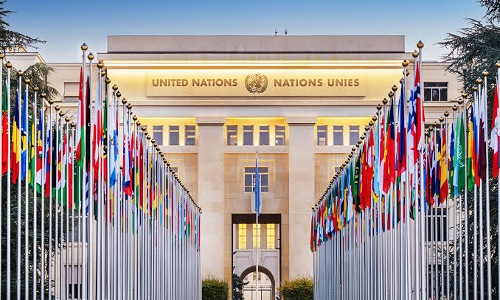
The United Nations has raised the alarm over a dramatic surge in attacks on schools worldwide, reporting a 166% increase between 2021 and 2024.
The rise highlights the escalating dangers faced by children in conflict zones.
United Nations Deputy High Commissioner for Human Rights, Nada Al-Nashif, revealed the figures during the annual meeting of the UN Human Rights Council on the rights of the child on Monday.
The session, themed “Mainstreaming the Rights of Children in Armed Conflict: Prevention and Protection,” focused on protecting children amid global conflicts.
Al-Nashif noted that the attacks were particularly concentrated in Sudan, Ukraine, the Gaza Strip, Myanmar, and Ethiopia, where children remain among the most vulnerable victims.
“In 2024, armed conflict directly affected nearly one in six children globally—about 470 million children,” she said. “Years of lost education, trauma, and lasting mental scars shape societies for generations. Long after the fighting subsides, children continue to face deadly risks.”
She highlighted Gaza as having the world’s highest number of child amputees per capita, warning that the impact of war goes far beyond immediate violence.
In Lebanon, government figures show that more than 450,000 people were displaced in less than a week, with at least 394 fatalities, including 83 children, during the 2024 conflict with Israel.
Al-Nashif also stressed the disproportionate risks for displaced children, who are more likely to die from disease linked to unsafe water and sanitation than from direct violence.
In the Democratic Republic of Congo, a 2025 cholera outbreak killed 340 children, underscoring the long-term consequences of conflict.
She called on states to uphold their international obligations to protect children, insisting that protecting children is “both a legal obligation and a humanitarian moral imperative.”
Also speaking at the council, Vanessa Frazier, Special Representative of the UN Secretary-General for Children and Armed Conflict, warned that violence against children continued at extreme levels in 2025.
She urged mainstreaming child protection across peace, security, humanitarian, human rights, and development efforts, emphasizing that children should actively participate in shaping policies designed to safeguard them.
Frazier highlighted her office’s global campaign, “Prove It Matters,” aimed at amplifying children’s voices in conflict resolution and peacebuilding.
The UN report underscores the urgent need for coordinated international action to protect children and ensure their safety in conflict zones worldwide.
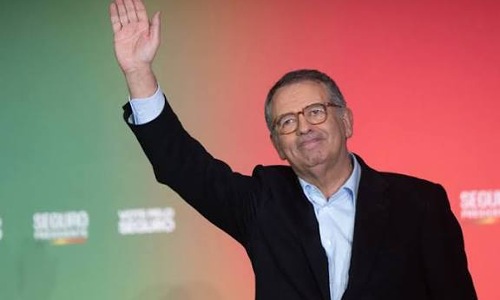
Portugal officially inaugurated its new president, Antonio Jose Seguro, on Monday, pledging to bring stability to a nation shaken by political uncertainty and natural disasters.
Seguro, the centre-left candidate, won last month’s presidential run-off against far-right rival Andre Ventura, following weeks of catastrophic storms that killed at least seven people and caused approximately €4 billion ($4.6 billion) in damage.
Speaking at his swearing-in ceremony in Lisbon’s parliament, Seguro emphasized cooperation with the minority right-wing government and vowed to end the country’s “electoral frenzy.”
SEE MORE: Spain, Portugal Plunge Into Darkness Amid Widespread Power Outage
“I will do everything I can to put an end to this electoral frenzy,” he said, pointing to the inability of previous governments to complete their terms.
Amid global crises, including conflicts in the Middle East and a more isolationist US approach under President Donald Trump, Seguro stressed the importance of multilateralism.
“The force of law has been replaced by the power of the strongest,” he remarked.
Seguro succeeds Marcelo Rebelo de Sousa, a conservative who leaves office at 77 after serving two five-year terms.
While the Portuguese presidency is largely ceremonial, Seguro’s leadership signals a commitment to political stability and international engagement.





Fuel Price Shock: Nigerians May Soon Pay ₦1,500 Per Litre – Marketers Warn

Political Earthquake in Zamfara as Gov Lawal Dumps PDP for APC

Court Pushes Malami, Son’s Terrorism Financing Trial to April 15

African Club Football Gets Major Financial Boost as CAF Hikes Prize Money

Abramovich Clashes with UK Gov’t Over £2.35bn Chelsea Sale Funds

Global Crisis: Attacks on Schools Skyrocket 166% – UN Sounds Alarm on Children’s Safety

Trump’s Family Unveils New Cryptocurrency Platform

Reps Recommend 3-year Jail Term For Aviation minister

Senate Denies Receiving Petitions Against Tinubu’s Ambassadorial Nominees

Dangote Cement Lights Up Benue Host Communities With CSR Initiatives

Things To Know About Threads, Zuckerberg’s Twitter-like App
