
NEWS
Crude Oil Theft: Why Peter Obi’s Allegations Against Nigerian Govt may be True

By Edozie Obasi-Eze
The deafening noise about crude oil theft in Nigeria has gotten to a level where no right-thinking person can continue paying a deaf ear to it.
 With individual households carving in under prevalent economic pressure, which is biting hard with stagflation, there’s little doubt that the man on the street is being compelled to ponder what has become of the national wealth.
While those in authority have been quick to point accusing fingers at hoodlums, particularly the natives of the Niger-Delta region, those who know maintain that hydrocarbons are of such nature that they cannot be sneaked out of any part of the world without the authority being culpable.
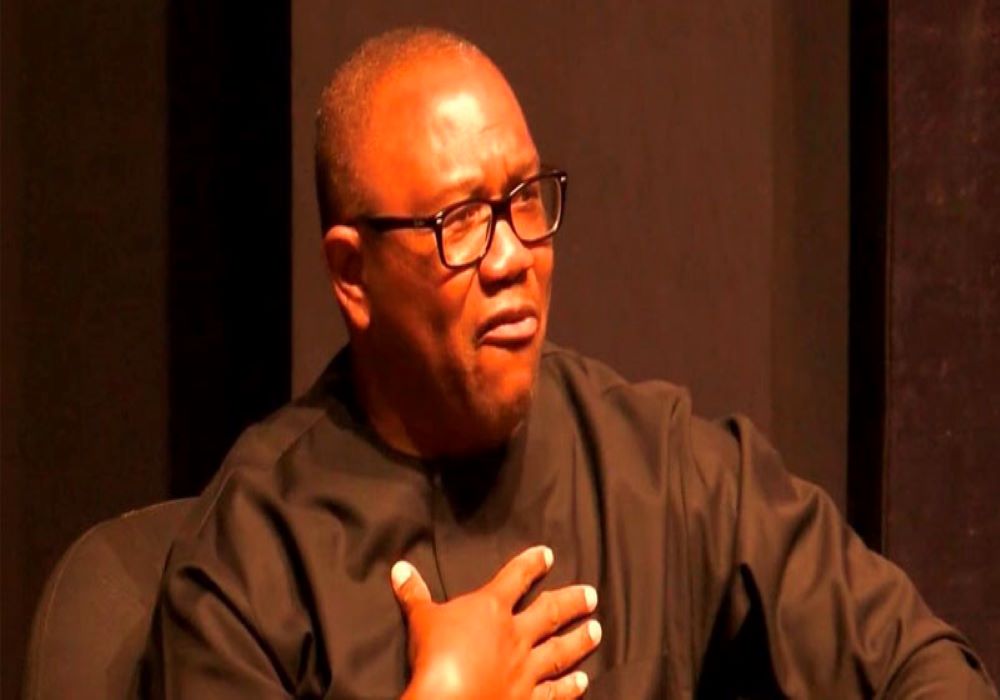
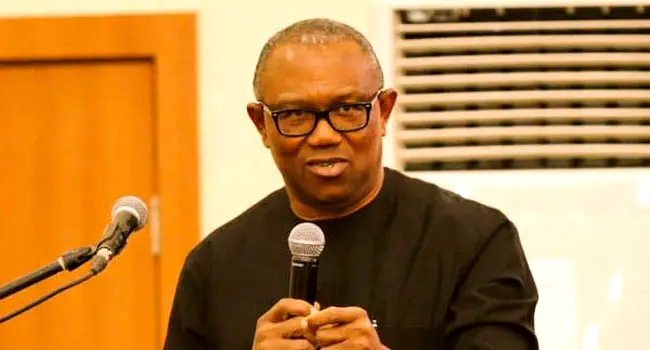
This much the presidential flagbearer of the Labour Party, Peter Obi averred recently.
He also brought it to national consciousness that those behind crude oil theft, having been startled by his posturing that truth must be told are now masterminding his being taken out of circulation.
The elite class would rather that their well-thought-out, and overly played-out narrative, of pointing accusing fingers at criminal elements, especially in the Niger Delta continues to circulate.
But Nigerians appear to have had enough of that and have started going out of their way to share information with the public that buttresses why Mr Obi’s allegations might be true.
In a recent trending video making the rounds on social media, an anonymous vlogger went aboard what he described as “an anonymous vessel” which he categorically averred was capable of loading and lifting up to one million barrels of crude oil.
The male voice in the video described the vessel, as a Very Large Cargo Career (VLCC).
Read Also >> Trending Video: Obasanjo Hands Over His Seat To Obi, Says ‘My Job Is Done’
The man who made or voiced the video appears very familiar with the operations of the oil industry and the security architecture in the sector.
Drawing from inside knowledge, he pinpointed universal vessel tracking standards, which the Navy of sovereign nations deploy to keep all vessels that sail into their territorial waters, for whatever purpose, under the radar.
The trackers, the voice said, aid the Navy in clearly identifying and monitoring vessels up to 1,000 nautical miles from the seaport.
The video showed a piece of equipment, that looked like a clock which he asserted was capable of helping the Nigerian Navy fish out each and every ship sailing into Nigeria’s territorial waters, and have it under the radar, each second of the day.
According to the voice, the Global Positioning System (GPS), Automatic Identification System (AIS) and, Long Range Identification Tracker (LRIT) were all at the disposal of the Nigerian Navy, which reinforces claims in an earlier interview by Obi, that the government officials were behind crude oil theft in Nigeria.
The 2’51” video showed vivid images of a vessel fortified with all the equipment the voice was referring to, to buttress that Obi was right that those, who have been raping the Nigerian economy by lending official channels for crude oil theft were capable of going after the presidential hopeful.
Beaming his camera on the VLCC, he said, “Now, there is no how that a vessel of this magnitude; ship of this size will sail into Nigeria’s territorial waters, load crude oil and sail out undetected, unnoticed.
“And they (the authorities) will be telling the world that nobody knows when the ships sail in, load Nigeria’s crude oil and sail out,” he retorted.
He emphasised that “the moment any ship enters Nigeria’s territorial waters, both the Navy and the Nigerian Customs Service (NCS) have good enough resources (human and equipment) to notice and bring it under the radar, even before it gets into any form of activities.
“And the authorities would be addressing the people as if they cannot reason anything out.”
It does appear that the increasing outcry has gotten to the authorities, though, as relevant agencies of government have begun responding to the issue.
The Nigerian Upstream Petroleum Regulatory Commission (NUPRC), on Wednesday went public with a vow to clear the air on the narrative, by getting to the root of the matter, with a probe.
Chief Executive, NUPRC, Gbenga Komolafe, who personally signed the statement to drive home the importance, vowed that the Commission would investigate the operational and commercial activities of companies licensed to explore and produce crude in Nigeria.
He said, “One of the steps, in line with its (NUPRC) technical and regulatory powers, is to probe into the operational and commercial activities of exploration and production companies operating within the country.
”Komolafe added that the NUPRC would busy itself with determining the level of compliance or otherwise of the oil majors with the terms of their licences.
According to the CE, the main purpose of the probe would be “to ascertain the level of compliance with the terms and conditions in their (oil firms’) operational contracts, as well as the challenges impeding expected deliveries.
“The commission will particularly be interested in the mode of operation of the companies in relation to the approvals as per their operational licences, the level of conformity with the technical provisions and production terms, their level of investments to enhance capacity utilisation, and the challenges they are facing, especially those contributing to the current unacceptable situation.
“Beginning from Wednesday, September 28, the commission will be engaging all the exploration and production companies individually to get to the root of the current situation as it believes strongly that there might be more fundamental issues in the industry affecting expected output and deliveries beyond the much-touted issue of crude theft.
”Biztellers gathered that to demonstrate its seriousness over the matter, the NUPRC had already sent invitations to the identified oil majors to appear before it.
Other voices who have been speaking against crude oil, include elder statesman, Pa Edwin Clark.







The Transmission Company of Nigeria (TCN) has restored bulk power supply to its Katampe 330kV Transmission Substation in Abuja following an earlier disruption caused by a fault on the Shiroro–Katampe 330kV Line 1.
The development was disclosed in a statement released by TCN management on Friday, October 9, 2026.
SEE ALSO: Kainji–Birnin Kebbi Power Line: TCN Begins Final Phase of Restoration
According to the statement, bulk power supply was restored to the Katampe substation at 4:15 p.m. through the Gwagwalada–Katampe 330kV Line 1.
TCN explained that the Shiroro–Katampe 330kV Line 1 remains out of service due to a fault, necessitating the use of the Gwagwalada–Katampe line to restore supply to the substation.
The company also announced the suspension of planned maintenance work on the Gwagwalada–Katampe 330kV Line 1 to enable the line to continue supplying the Katampe substation.
The suspended maintenance work involved replacing defective line isolators and the associated earthing switch.
TCN apologised to electricity consumers in the affected areas for any inconvenience caused by the disruption and maintenance arrangements.
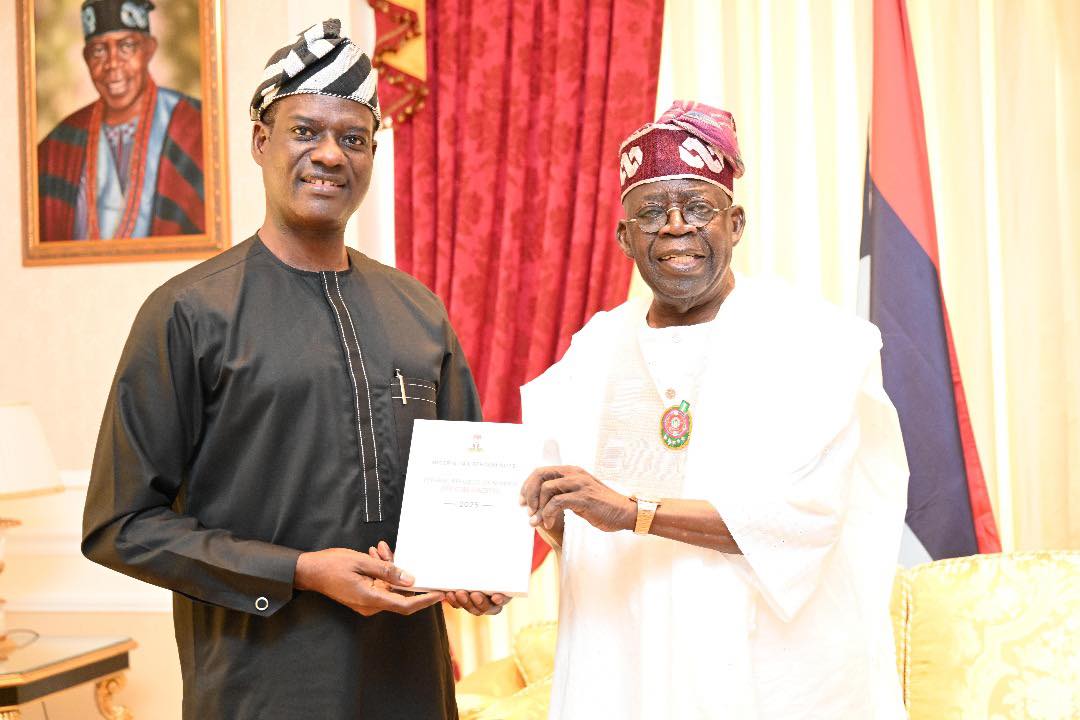
The Federal Government has warned politicians against making promises that could reverse Nigeria’s economic reforms, insisting that it will not restore fuel subsidy amid renewed debate over the Nigerian National Petroleum Company Limited’s (NNPC) petrol discount.
The Minister of Finance and Coordinating Minister of the Economy, Taiwo Oyedele, disclosed this during an interview on Channels Television on Friday, saying the government would not bring back subsidies on petroleum products.
“This government is not bringing back subsidy on fuel products. We need to be clear,” Oyedele said.
ALSO READ: NNPC Petrol Discount: Oyedele Explains How Lower Margins Could Boost Profits
The minister also criticised politicians who, according to him, make promises to win elections without fully considering the implications of implementing them.
He suggested that some politicians make sweeping promises during election campaigns only to offer excuses when confronted with the realities of governance.
“I think I would pardon people who say all manner of things because they want to get elected. It’s almost like ‘whatever I need to say, when I get there, I’ll give excuses.’ But we have the data,” he said.
Oyedele added that he felt a personal responsibility not to remain silent about the economic realities known to the government or allow populist positions to push Nigeria in the wrong direction.
“I feel the personal responsibility that I cannot see what I see and keep quiet, or populism to move our country in the wrong direction,” he said.
NNPC Petrol Discount Sparks Fresh Subsidy Debate
The minister’s remarks come amid renewed debate over fuel subsidy following the Federal Government’s announcement of a 30-day petrol discount at NNPC retail stations.
The initiative was introduced as a temporary measure to provide relief to Nigerians amid elevated global crude oil prices and concerns about the cost of petroleum products.
NNPC Retail had also announced a N66-per-litre petrol discount to mark Nigeria’s 66th Independence Anniversary, with the offer scheduled to run until October 31, 2026, across its retail stations nationwide.
The company maintained that the discount was a customer-relief initiative and did not represent a return to the petroleum subsidy regime.
The distinction has become central to the debate, with the government insisting that temporary price relief at NNPC stations does not amount to restoring the subsidy policy abolished in May 2023.
The administration has maintained that the current arrangement differs from the former subsidy system, under which the government intervened to cover part of the cost of petrol.
FG Defends Economic Reforms
During the interview, Oyedele also referred to a World Bank update, saying the institution had acknowledged a reduction in poverty levels and increased spending on infrastructure, particularly roads.
He urged Nigerians not to reverse the progress he said had been made, arguing that the country was approaching a point where the benefits of ongoing reforms should begin to emerge.

The Kaduna State Universal Basic Education Board (SUBEB) has commenced a promotion exercise for 24,000 eligible staff as part of efforts to clear outstanding teachers’ promotions dating back to 2021.
The development was disclosed on Friday as the administration of Governor Uba Sani intensifies efforts to address promotion backlogs, recognise teachers’ years of service and improve staff welfare across the state.
The exercise covers outstanding promotions from 2021 to 2026 and is expected to provide eligible teachers and other staff with opportunities for career progression.
SEE ALSO: Kaduna Clears N18bn Pension Arrears, Raises Agric Funding to N100bn
According to the announcement, eligible personnel will undergo an assessment process, after which promotions will be implemented for those who successfully meet the requirements.
The initiative is part of efforts to strengthen the education sector by recognising the contributions of teachers and supporting their professional development.
The state government has emphasised the importance of investing in teachers, noting that a motivated and valued teaching workforce is essential to building a stronger education system.
The exercise is also expected to address long-standing staff concerns relating to career advancement within the state’s basic education sector.






2027: Yilwatda Lists Tinubu’s Projects, Appointments as Reasons for North Central Support

Domestic Flight delays, Cancellations Compound Air Travellers’ Woes

2027 Election Might Witness Voter-Apathy as Registered Voters Shun PVC Collection
TCN Restores Power Supply to Katampe Substation After Shiroro Line Fault

2027 Elections: FG Warns Politicians Against Promises on Fuel Subsidy

PETROAN Expects Fuel Discount to Combat Inflation

Trump’s Family Unveils New Cryptocurrency Platform

Senate Denies Receiving Petitions Against Tinubu’s Ambassadorial Nominees

Dangote Cement Lights Up Benue Host Communities With CSR Initiatives

Reps Recommend 3-year Jail Term For Aviation minister

Tems Sets New Record On Billboard Hot 100 Chart
