
Energy
Faulty Meters, Billing Errors Drive Electricity Complaints to 254,000

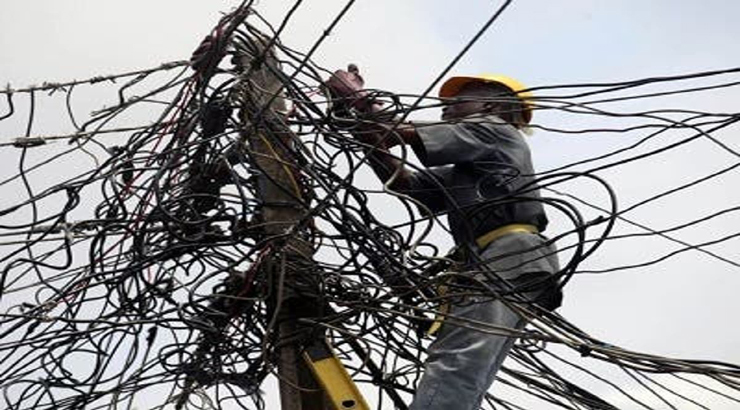
Electricity distribution companies received over 254,404 customer complaints in the first quarter of 2025, largely driven by grievances over faulty metering, erratic service, and inaccurate billing, the Nigerian Electricity Regulatory Commission has said.
In its newly released quarterly report, NERC revealed that a total of 254,404 complaints were lodged by consumers between January and March 2025, marking a 7.72 per cent drop from the 275,681 complaints received in the previous quarter.
The top three issues reported by customers were metering (42.84 per cent), billing (12.27 per cent), and service interruption (7.66 per cent), cumulatively accounting for over 62 per cent of all complaints recorded.
ALSO READ: UK Introduces eVisas for Nigerian Study, Work Visa Applicants
Despite the slight decline in total numbers, NERC noted that Port Harcourt DisCo received the highest number of complaints with 57,843 cases, representing 22.74 per cent of the national total.
Yola DisCo received the least at 2,495 complaints, or 0.98 per cent. Other top complaint destinations included Eko (36,780), Ibadan (42,393), and Ikeja (25,555). Abuja, which had logged 23,963 complaints in the previous quarter, saw a dramatic drop to 6,225, a 74 per cent decline, the steepest among all DisCos.
The report read, “The total number of complaints received in 2025/Q1 was 254,404 across all DisCos; this represents a 7.72 per cent decrease compared to the 275,681 received in 2024/Q4.
Port Harcourt DisCo received the highest number of complaints (57,843), representing 22.74 per cent of total complaints received. Yola DisCo received the least number of complaints (2,495), representing 0.98 per cent of total complaints received.
“Six DisCos recorded declines in the number of customer complaints received in 2025/Q1 compared to 2024/Q4. Abuja (-74.02 per cent), Benin (-30.17 per cent), and Jos (-29.16 per cent) DisCos recorded the most reductions. Kano (+86.12 per cent), Kaduna (+37.33 per cent), Yola (+30.15 per cent), Aba Power (+17.16 per cent), Ikeja (+9.98 per cent) and Port Harcourt (+5.78 per cent) DisCos on the other hand recorded increases in the number of customer complaints received between 2024/Q4 and 2025/Q1.
“The most common issues among the 254,404 complaints received by DisCos in 2025/Q1 were metering (42.84 per cent), billing (12.27 per cent) and service interruption (7.66 per cent). These three (3) categories cumulatively accounted for 62.77 per cent of the total complaints in the quarter.”
NERC’s analysis also showed that while six DisCos recorded drops in complaints, others saw sharp increases. Notably, Kano Electricity Distribution Company experienced an 86 per cent spike, rising from 17,328 complaints in Q4 2024 to 32,251 in Q1 2025. Kaduna (+37.3 per cent), Yola (+30.15 per cent), and Aba Power (+17.16 per cent) also saw marked increases.
The commission said complaints about billing, the second-most frequent category, led to customer refunds totalling N32.2bn in the first quarter alone. The amount was credited to customers’ accounts after verified overbilling claims.
Port Harcourt also topped the billing complaints chart with 5,260 cases, in addition to receiving the highest number of complaints in the “Others” category (28,959). Eko DisCo recorded 17,972 metering complaints, 4,497 service interruptions, and 11,562 others.
Ibadan DisCo saw a significant number of metering issues at 3,200 but was most hit by “Others” at 25,940, suggesting a wide range of additional unresolved issues. Other categories of concern include voltage issues (3,900 cases), load shedding (202 cases), disconnections (1,417 cases), and delays (736 cases).
Notably, Kano DisCo, which received 32,251 complaints, reported 25,988 metering-related issues, the second-highest in that category after Eko. At the central complaint unit of the commission, an additional 4,169 complaints were received directly, with billing, metering, and interruption still dominating the feedback.
Port Harcourt and Ikeja DisCos had the highest billing-related complaints recorded at the NERC CCU, with 91 and 283, respectively. Abuja followed closely with 194 complaints.
While commenting on the development, NERC said, “The credit adjustment on customers’ bills, following resolved complaints, is a strong indicator of our commitment to consumer protection and accountability in the power sector.”
The regulator also reiterated its plan to strengthen enforcement mechanisms and customer service protocols across all 11 DisCos to ensure faster resolution of complaints and reduce recurring grievances.
As Nigeria continues to grapple with power supply inconsistencies, experts believe addressing customer feedback in real time will be critical to restoring public trust in the electricity sector.
The distribution companies collected N553.63bn in the first quarter of 2025 despite widespread complaints of low power supply, billing inefficiencies, and persistent outages. This jump in earnings came even as Nigerians grappled with unreliable electricity, grid frequency instability, and supply fluctuations.
Source: The Punch





From January to September 2026, the domestic refineries in Nigeria received 156.52 million barrels of crude oil.
Of the volume, 125.85million barrels (80.4 percent) were sourced from in-country while 30.66 million barrels (19.6 percent) were imported.
This was contained in the Nigerian Midstream and Downstream Petroleum Regulatory Authority (NMDPRA) Factsheet September 2026 released on Thursday.
The Factsheet specifically revealed that in September 2026, 38.7 million litres of the Premium Motor Spirit PMS (petrol) were received per day, crashing from the 50.5million litres per day received in August by 23 percent.
READ ALSO: Thor Empowers Host Communities with 10 Cassava, Palm Oil Processing Plants
Stock sufficiency in September was 23.9 days, declining below the 30-day threshold.
The NMDPRA stressed that while 28.7million litres were supplied per day from domestic sources, declining by 21 percent from the previous month, 10.2 million litres were imported, reducing imported petrol by 30 percent in the period under review.
According to the Factsheet, “Domestic refining contributed about 65 percent of the national petrol requirement (consumption) in September 2026, and about 74 percent of receipts, supplemented by 26 percent of imports”.
The Dangote Refinery and Petrochemicals Company (DPRP) is the only domestic refinery which currently produces petrol in Nigeria.
The report added that the DPRP produced 47.22 million litres per day of PMS in September, supplying 28.50 million litres per day to the domestic market and exporting (35.2 percent) 15.47 million litres per day.
On capacity utilization, the refinery recorded 105.98 percent of its 650,000 barrels per day capacity in the period under review.
The Factsheet disclosed that 8.7million litres of diesel were consumed in the month under review.
The NMDPRA revealed that modular refineries supplied 4.3 percent of domestic diesel consumption in September.
Aradel and OPAC, said the Factsheet, operated below optimal capacity due to feedstock challenges and maintenance shutdowns.
September diesel receipts, according to the NMDPRA, were the lowest of the 13 months, driven by low imports and low domestic evacuation amid high prices.
The Factsheet said, “Nigeria’s energy-sector transformation is progressing. Domestic refining contributed about 65 percent of the national petrol requirement (consumption) in September 2026, and about 74 percent of receipts, supplemented by 26 percent of imports.
“Priority gas projects have reached significant mileage, with the AKK pipeline at 84 percent completion as of September 2026,” the Factsheet pointed out.

The appetite for improving access to capital for indigenous oil and gas contractors, strengthening the capacity of Nigerian businesses to execute critical energy projects and contribute to the country’s production ambitions, has seen the Renaissance Africa Energy Company Limited (‘Renaissance’) go into a strategic financing partnership with Sterling Bank Limited.
The partnership, formalised through a Memorandum of Understanding (MoU), brings Sterling Bank into the renewed Renaissance Vendor Financing Scheme (RVFS), a structured financing programme designed to address one of the longstanding challenges confronting indigenous service providers in Nigeria’s oil and gas industry: access to timely and affordable funding for contract execution.
READ ALSO: Group Demands Fair Share of NNPC Jobs for Ogoni Oil Exploration
The expanded programme brings together 13 financial institutions with combined financing commitments of $4.1 billion and ₦435 billion, creating a substantial pool of capital to support eligible contractors delivering projects for Renaissance, operator of the former Shell Petroleum Development Company (SPDC) joint venture assets.
Speaking on its participation, Dele Faseemo, Group Executive, Corporate and Investment Banking at Sterling Bank, described the partnership as an important opportunity to connect financial capacity with productive enterprise in one of Nigeria’s most strategically important sectors.
“At Sterling Bank, we believe financing should enable capable businesses to deliver, grow and compete. Our participation in the Renaissance Vendor Financing Scheme reflects that conviction. By providing structured funding to qualified contractors, we are supporting the businesses that keep the energy value chain moving, strengthening Nigerian content participation and contributing to the broader objective of increasing the country’s productive capacity,” Faseemo said.
For many indigenous contractors, securing a major contract represents only the first step towards business growth. The ability to mobilise equipment, procure materials, retain skilled personnel and meet demanding project timelines often depends on access to adequate working capital. Financing constraints can therefore limit the capacity of otherwise qualified businesses to execute contracts, scale their operations and participate more meaningfully in the energy value chain.
Through the RVFS, participating financial institutions will provide structured financing to eligible contractors against confirmed contracts awarded by Renaissance, subject to applicable credit assessment and approval processes. The arrangement is intended to ease funding pressures, improve project execution and strengthen the financial capacity of indigenous service providers.
Tony Attah, Managing Director and Chief Executive Officer of Renaissance Africa Energy Company Limited, highlighted the importance of the financing arrangement to the company’s growth ambitions.
“What we’ve been able to achieve as Renaissance is to go into that partnership with these incredible 13 banks who have come up to support this vendor scheme at over $4 billion and over ₦435 billion funds available for the vendors to be able to support us in our growth agenda,” Attah said.
He further emphasised the financial advantage the scheme offers participating contractors, noting that, “The interest rate that the banks are offering to the contractors is very competitive, and it is certainly better than the vendors going out to the respective banks on their own.”
The Renaissance Vendor Financing Scheme builds on a contractor financing programme established in 2010, which has evolved over the years to support local service providers executing projects across the oil and gas value chain. Its latest expansion comes as Renaissance pursues an ambitious growth strategy, including its aspiration to achieve production of one million barrels of oil equivalent per day by 2030.
Delivering on this ambition will require sustained investment not only in upstream production assets but also in the network of engineering firms, equipment suppliers, logistics providers, technical specialists and other indigenous businesses whose services are essential to operational performance.
With an established presence in corporate banking and energy sector financing, Sterling Bank continues to support businesses operating across critical segments of the Nigerian economy through tailored financial solutions, strategic partnerships and sector-specific expertise.
The collaboration reinforces the Bank’s commitment to supporting indigenous enterprise development, strengthening local capacity and financing productive economic activity, while contributing to efforts to improve Nigeria’s energy security and long-term industrial competitiveness.
The Niger Delta Youths are primed to assume national responsibilities in critical areas of the economy by protecting vital oil and gas assets in the region.
The United Niger Delta Congress (UNDC) gave the assurance at a media briefing in Abuja, over the weekend, adding that the youths of Niger Delta were ready to work with the federal government in this regard.
The group maintained that youths in the region have shown that such responsibilities, including the security of pipelines, can be entrusted to them.
Speaking at the news conference, Niger Delta Youth activist, Mallam Julius Obi, said the Niger Delta is safer while the nation’s crude is flowing based on the fact that youths in the region are doing the job.
He said that being a youth should not be a disqualification from strategic national assignments but when matched with preparation and character, a national asset.
“We are calling on the federal government to note that Nigeria is full of young men and women who are prepared, disciplined and ready to carry out national responsibilities.
“We urge the federal government to keep opening the doors of strategic national service to young Nigerians who have earned trust the only way it can be earned, by delivery,” Obi said.
READ ALSO: JUST IN: Ex-Delta Governor Emmanuel Uduaghan Is Dead
The group commended President Bola Tinubu for sustaining the security reforms in the oil and gas industry and the the National Security Adviser (NSA), Mallam Nuhu Ribadu, for coordinating the protection of the nation’s pipelines, and the management of NNPCL for providing the enabling environment.






₦2.3tn Kaduna Rally Claim: APC Accuses Atiku, ADC of Fake News Plot

Dangote Identifies Power, Financing as Possible Keys to Africa’s Industrial Revolution

Dangote Calls for Stronger Protection of Local Industries, Unveils Pan-African Energy Distribution Network

NMDPRA Issues Updates on Q3 Crude Supplies to Domestic Refineries

FCT Motorists, Commuters Divided over NNPC Petrol Discount

Two Suspected Political Thugs Killed After Attacking NDC Candidate’s Convoy in Ebonyi

Trump’s Family Unveils New Cryptocurrency Platform

Senate Denies Receiving Petitions Against Tinubu’s Ambassadorial Nominees

Dangote Cement Lights Up Benue Host Communities With CSR Initiatives

Reps Recommend 3-year Jail Term For Aviation minister

Tems Sets New Record On Billboard Hot 100 Chart

oc0sbi
gybywu
I enjoy examining and I conceive this website got some genuinely utilitarian stuff on it! .
Hi, Neat post. There’s a problem with your website in internet explorer, would check this… IE still is the market leader and a large portion of people will miss your fantastic writing due to this problem.
I love forgathering useful information , this post has got me even more info! .
913434 144674Hello! I just wish to give a huge thumbs up for the very good info youve gotten proper here on this post. I will likely be coming back to your blog for far more soon. 836193
I like this blog its a master peace ! Glad I noticed this on google .
Fascinating blog! Is your theme custom made or did you download it from somewhere? A design like yours with a few simple tweeks would really make my blog shine. Please let me know where you got your theme. Appreciate it
892601 333640I just put the link of your weblog on my Facebook Wall. really nice blog indeed.,-, 279455
Hello this is somewhat of off topic but I was wanting to know if blogs use WYSIWYG editors or if you have to manually code with HTML. I’m starting a blog soon but have no coding experience so I wanted to get advice from someone with experience. Any help would be greatly appreciated!
742354 628022Oh my goodness! a fantastic write-up dude. Thanks a whole lot Nonetheless We are experiencing trouble with ur rss . Do not know why Not able to sign up to it. Possibly there is anybody obtaining identical rss issue? Anyone who knows kindly respond. Thnkx 933073
Rattling good visual appeal on this web site, I’d value it 10 10.